Natural moisturizing ingredients: how to choose them wisely
To provide long-lasting skin hydration, the most beneficial natural ingredients fall into three complementary categories: humectants that attract water (hyaluronic acid, vegetable glycerin, aloe vera, prickly pear mucilage, honey), emollients that smooth and soften (shea butter, argan and avocado oils), and barrier lipids like plant-based ceramides that help limit evaporation. The secret lies not in a single "super-active" but in the intelligent combination of these three mechanisms.
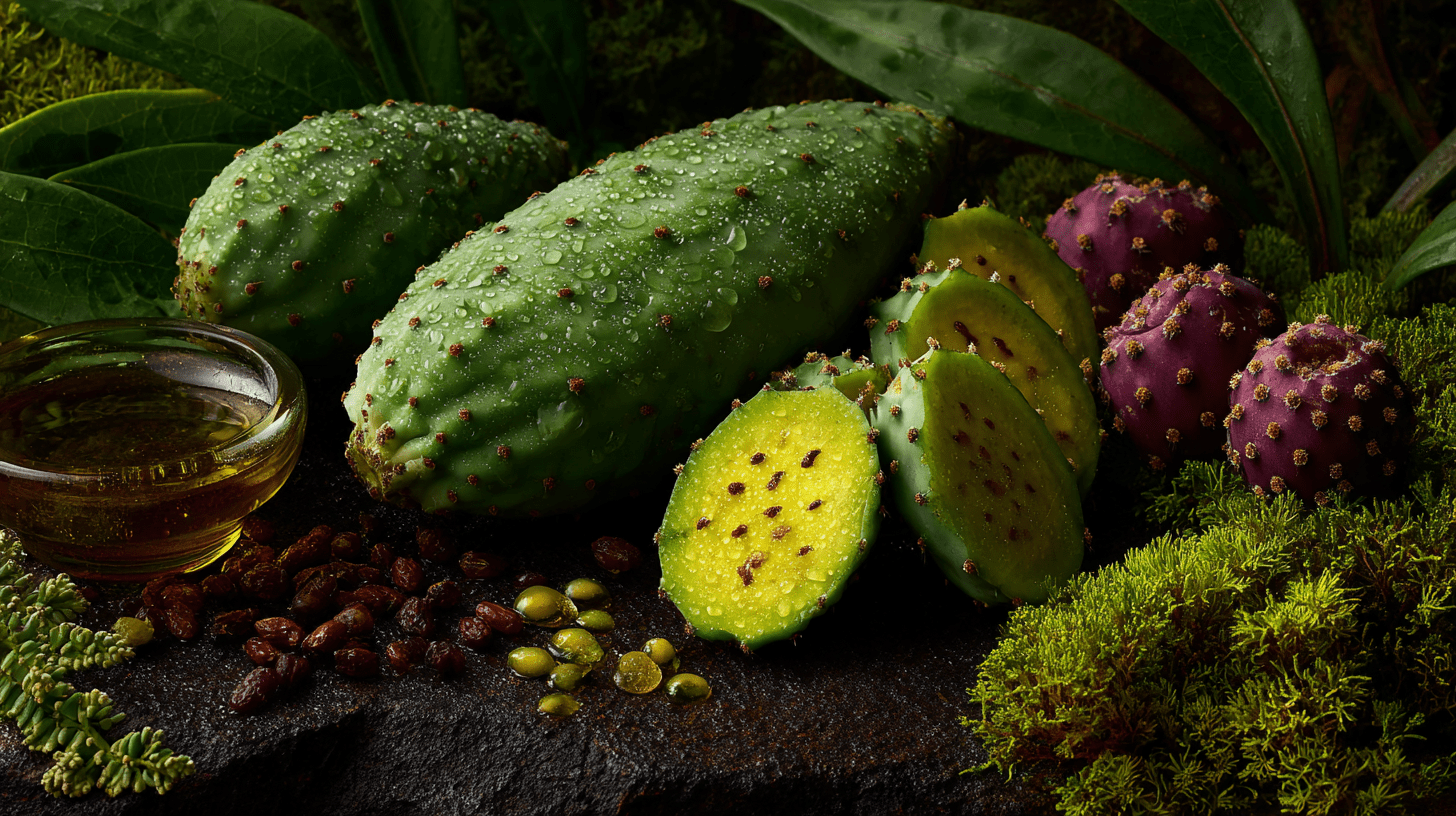
At NOPAL LIFE, we design skincare products inspired by the resilience of the prickly pear, a plant that knows how to retain water in arid environments. In this guide, we review the key active ingredients to prioritize, their mode of action, and how to choose them according to your skin type, with a concrete protocol to get the most out of them.
Understanding the three families of moisturizing agents
Before choosing an ingredient, it's helpful to understand how skin hydration works. Cosmetologists traditionally distinguish three main types of agents:
- Humectants attract and retain water, drawing it into the superficial layers of the epidermis and, in part, from the ambient air. Hyaluronic acid, glycerin, sodium PCA, aloe vera, and honey belong to this family.
- Emollients are essentially fatty substances that smooth the skin's surface and soften its appearance: shea butter, argan, or avocado vegetable oils strengthen the natural hydrolipidic film.
- Occlusives and barrier lipids form a light film that helps limit evaporation; plant-based ceramides are a good example.
A well-formulated product combines several of these mechanisms: attracting water, softening, then helping the skin retain it. It is this complementarity, rather than an isolated ingredient, that makes the difference in daily comfort and radiance.
Comparative table of key active ingredients
Here is a selection of ingredients known for their affinity with water or their softening power, with the texture that best highlights them and the skin type that appreciates them most.
| Ingredient | Family | What it provides | Ideal texture | Skin type that appreciates it |
|---|---|---|---|---|
| Hyaluronic acid | Humectant | Captures and retains moisture; plumping effect | Serum, gel | All, including oily |
| Vegetable glycerin | Humectant | Retains surface moisture, very well tolerated | Gel, milk, cream | All, even sensitive |
| Aloe vera | Soothing humectant | Rich in water and polysaccharides, refreshing sensation | Gel, mist | Combination to oily, reactive |
| Prickly pear mucilage | Humectant | Polysaccharides that support water retention | Serum, cream | Dry to normal |
| Honey | Humectant | Sugars and amino acids with strong affinity for water | Mask, balm | Dry, dull |
| Shea butter | Rich emollient | Nourishes and softens appearance, long-lasting comfort | Balm, cream, body care | Dry, rough areas |
| Argan oil | Emollient | Smooths skin texture, suppleness and radiance | Face and body oil | Dry, mature |
| Avocado oil | Rich emollient | Envelopes and softens, ideal for night care | Oil, rich cream | Very dry, uncomfortable |
| Plant-based ceramides | Barrier lipids | Help strengthen barrier function | Cream, emulsion | Sensitive, dehydrated |
Hyaluronic acid
This is undoubtedly the most well-known humectant. Naturally present in the skin, it contributes to its plump and smooth appearance. Its ability to retain water makes it a prime active ingredient in serums and gels. Our Hyaluronic Acid Plumping Hydrating Gel leverages this for an immediate bouncy effect.
Vegetable glycerin
Glycerin is one of the most studied humectants in cosmetics. Well tolerated, even by sensitive skin, it helps maintain water in the superficial layers and contributes to skin comfort, without leaving a greasy film.
Aloe vera, prickly pear mucilage, and honey
These three natural ingredients share a richness in compounds with a strong affinity for water. The mucilage extracted from prickly pear cladodes is rich in polysaccharides that support the skin's ability to retain its water: it's the signature active ingredient in our formulas. Aloe vera provides freshness and a soothing sensation, while honey acts through its sugars and amino acids, which have a strong affinity for water.
Shea butter and vegetable oils
On the emollient side, shea butter is a benchmark for nourishing and softening the appearance of dry skin, from the face to rough areas of the body. Argan smooths skin texture and provides suppleness, while avocado, richer, envelops very dry skin and is well suited for night care. A few drops are enough to seal in the hydration provided by humectants.
Plant-based ceramides
Ceramides do not "capture" water: they contribute to the cohesion of the skin barrier and thus help limit water loss. They ideally complement water-attracting active ingredients in a cream or emulsion for fragile skin.
The layering protocol: the 60-second rule
Choosing the right ingredients is not enough: the order and timing of application are just as important. Here is the method we recommend so that each layer works with the previous one, morning and evening.
- Cleanse, then blot without drying completely. The skin should remain slightly damp to the touch: this residual moisture nourishes the humectants.
- Within 60 seconds, apply the humectant serum (e.g., hyaluronic acid). On a still damp surface, it retains moisture instead of drawing it from deep within.
- Wait approximately 1 minute for the serum to penetrate.
- Seal with an emollient cream to help the skin retain this hydration. For dry skin, the Hyaluronic Acid Hydrating Day Cream provides this enveloping comfort.
- In the morning, finish with sun protection; in the evening, if needed, add a few drops of argan or avocado to uncomfortable areas. During the day, the Prebiotic Mist can be sprayed for a refreshing boost.
This simple gesture—applying serum to a still damp surface, then sealing it—often makes more of a difference than changing an active ingredient.
Choosing wisely based on your skin type
All skin types need water, but not the same textures, and knowing how to naturally hydrate your skin starts with correctly matching texture to need. Dry skin appreciates rich emollient formulas (shea, argan, or avocado oils) and benefits from a more nourishing night cream. Oily or combination skin prefers light gels with a humectant dominance (aloe vera, glycerin), which penetrate without a greasy film and leave the complexion balanced. Sensitive or uncomfortable skin turns to glycerin and ceramides, which are gentler. Also consider the context: heating in winter, air conditioning, or altitude on a plane dry out the ambient air and increase tightness; this is the time to intensify the most enveloping layer. To precisely identify your needs, our online diagnosis remains the most reliable starting point. Start my free diagnosis.
FAQ
What is the most effective active ingredient for hydration?
There is no single "champion" ingredient. Hyaluronic acid and glycerin are among the most popular, but their benefit is optimal when combined with a softening fatty substance and agents that help limit evaporation.
Is hyaluronic acid natural?
It is naturally present in our skin. In cosmetics, it is most often obtained through bio-fermentation.
Does honey really hydrate?
Honey is primarily a source of humectant agents (sugars, amino acids) that have an affinity for moisture and contribute to skin comfort.
Is prickly pear hydrating?
Its mucilage, rich in polysaccharides, is appreciated for supporting the skin's natural ability to retain hydration; it is our signature ingredient.
Should you choose only one hydrating ingredient?
No. The best approach combines several mechanisms: attracting water, softening the surface, and helping to retain it.
Can a vegetable oil be used alone for hydration?
Argan or avocado oil softens and helps seal in hydration, but does not provide water by itself. These fatty substances work best when applied over a humectant treatment, on a slightly damp surface.
Key takeaways
These active ingredients are not effective in isolation: their strength comes from their complementarity. Three families work together—humectants (hyaluronic acid, glycerin, aloe vera, prickly pear mucilage, honey), emollients (shea butter, argan and avocado oils), and barrier lipids (plant-based ceramides). Apply serum to still damp skin, seal with a fatty substance, and adjust richness to your skin type. To find out which ones are right for you, take our Skin Intelligence diagnosis: it analyzes your needs and guides you to the most suitable routine.
Sources: CeraVe; Epicosm; Weleda; FemininBio.
Information provided for cosmetic and educational purposes; it does not constitute medical advice.
The "Choosing Your Products and Actives Wisely" Series
What to look for on a label, and what truly distinguishes two similar formulas.
- Organic Face Care: Natural, Organic, or Clean?
- Soothing for Sensitive Skin: 6 Gentle Actives and Protocol
- Plant-Based Hyaluronic Acid: How to Choose and Apply It
- Women's Hydrating Face Cream: Choosing According to Your Skin
- Donkey Milk Face Cream: Composition and Choice
- Enzymatic Papaya: Natural Skincare Benefits and Routine P1


Go further than this article
Get our skincare guides by email — and start with your free skin diagnostic: 2 minutes, advice tailored to your skin. We ship to the US, UK, Canada, Australia and 27 European countries; somewhere else? Sign up and you will be the first to know when we deliver to your country.
By signing up, you agree to our privacy policy. Unsubscribe in one click.