Combine prickly pear seed oil and ceramides
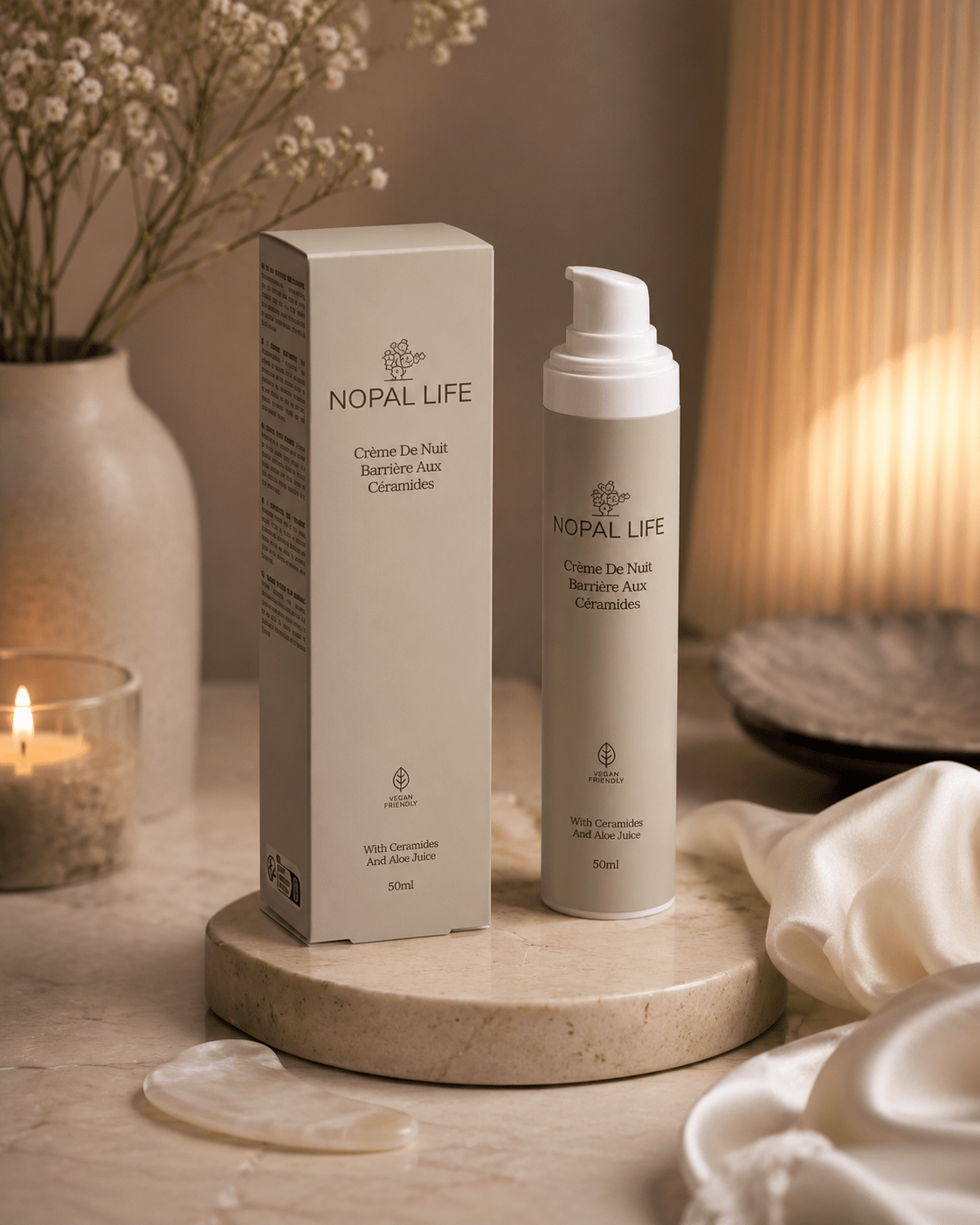
This is one of the most coherent combinations for a compromised skin barrier. Ceramides directly supplement the intercellular cement; prickly pear seed oil provides the linoleic acid the skin uses to produce them. The finished product and the raw material, in the same routine.
Key takeaways
- Order: Ceramide cream first, then botanical oil.
- Quantities: A pea-sized amount of cream, 2 to 3 drops of oil.
- Frequency: Every evening, a lighter version in the morning.
- Timeline: Three to four weeks to assess results.
- Compatibility: Total, no interactions to manage.
Why this order
A botanical oil forms the most occlusive layer of the routine. Placed underneath, it would prevent the cream from being properly absorbed; placed on top, it seals everything in.
The general rule therefore applies without exception here: from thinnest to richest, oil always last. It's simple, and it's the only thing not to reverse.
What each truly provides
Ceramides address a structural deficit. On sensitive skin or skin damaged by winter, this deficit is often the direct cause of discomfort, and addressing it yields clear results in two to four weeks.
Prickly pear seed oil works differently. Rich in linoleic acid and tocopherols, it provides the skin with what it needs to maintain its own lipid production — a slower mechanism, but one that doesn't depend on the next application.
A rare oil, and why
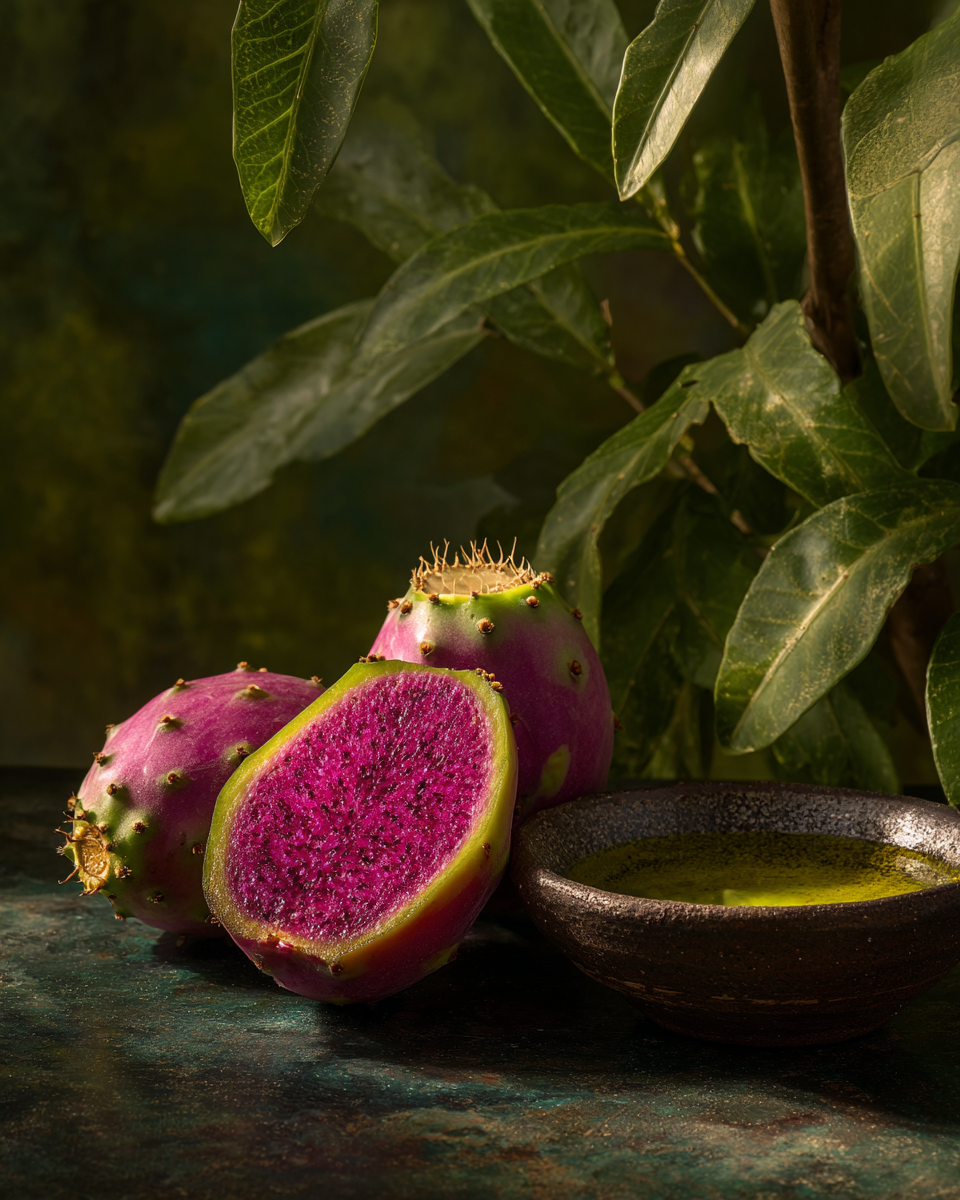
It is pressed from the seeds of the Opuntia ficus indica fruit. Seeds make up only a tiny part of the fruit: it takes nearly a ton of figs to obtain one liter of oil.
At NOPAL LIFE, the fruits come from family farms in the arid highlands of eastern Algeria and Kabylia, where prickly pear grows without irrigation. The oil is obtained by first cold pressing, the only process that preserves fragile compounds. You can find details on the ingredient sheet.
The protocol, evening and morning
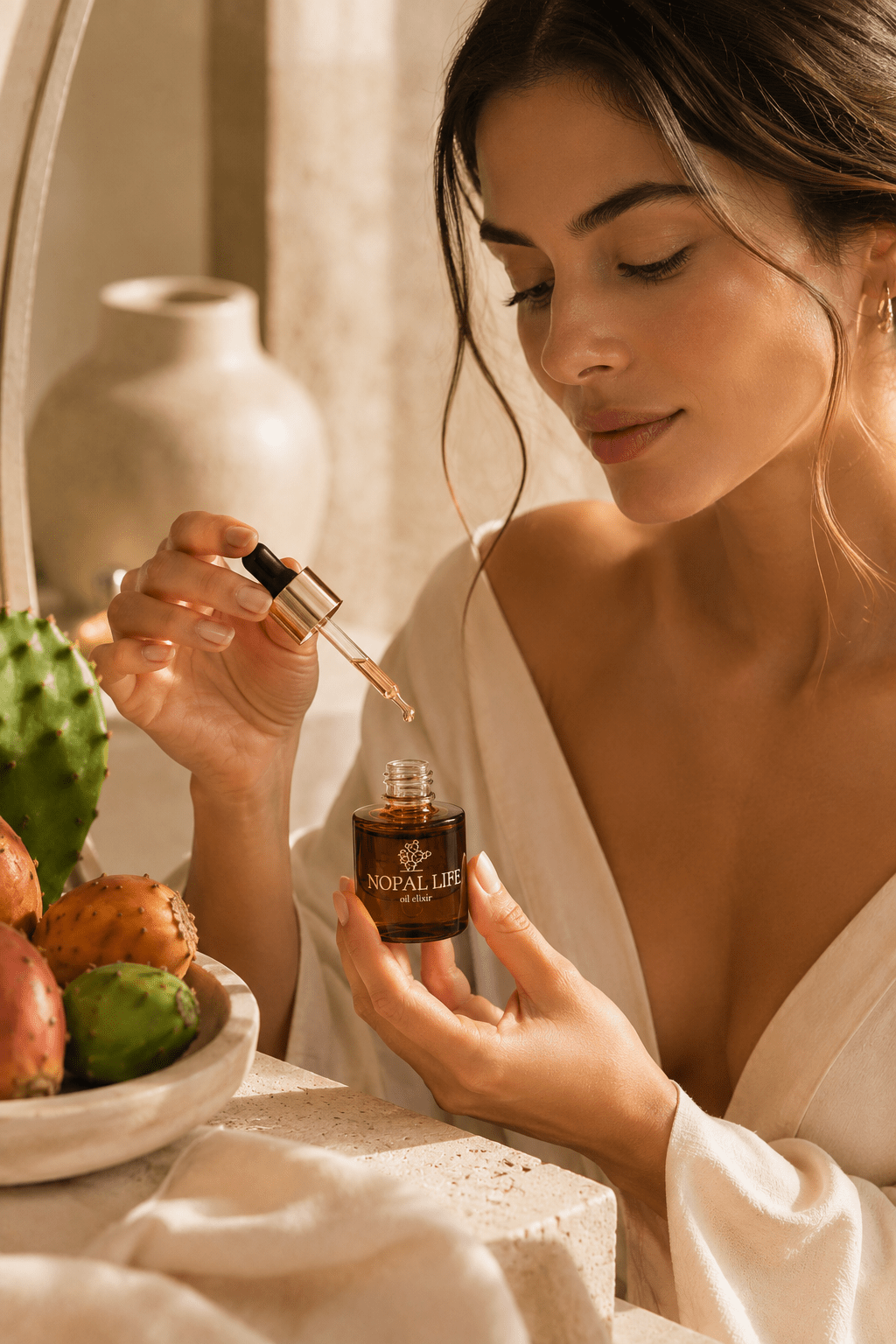
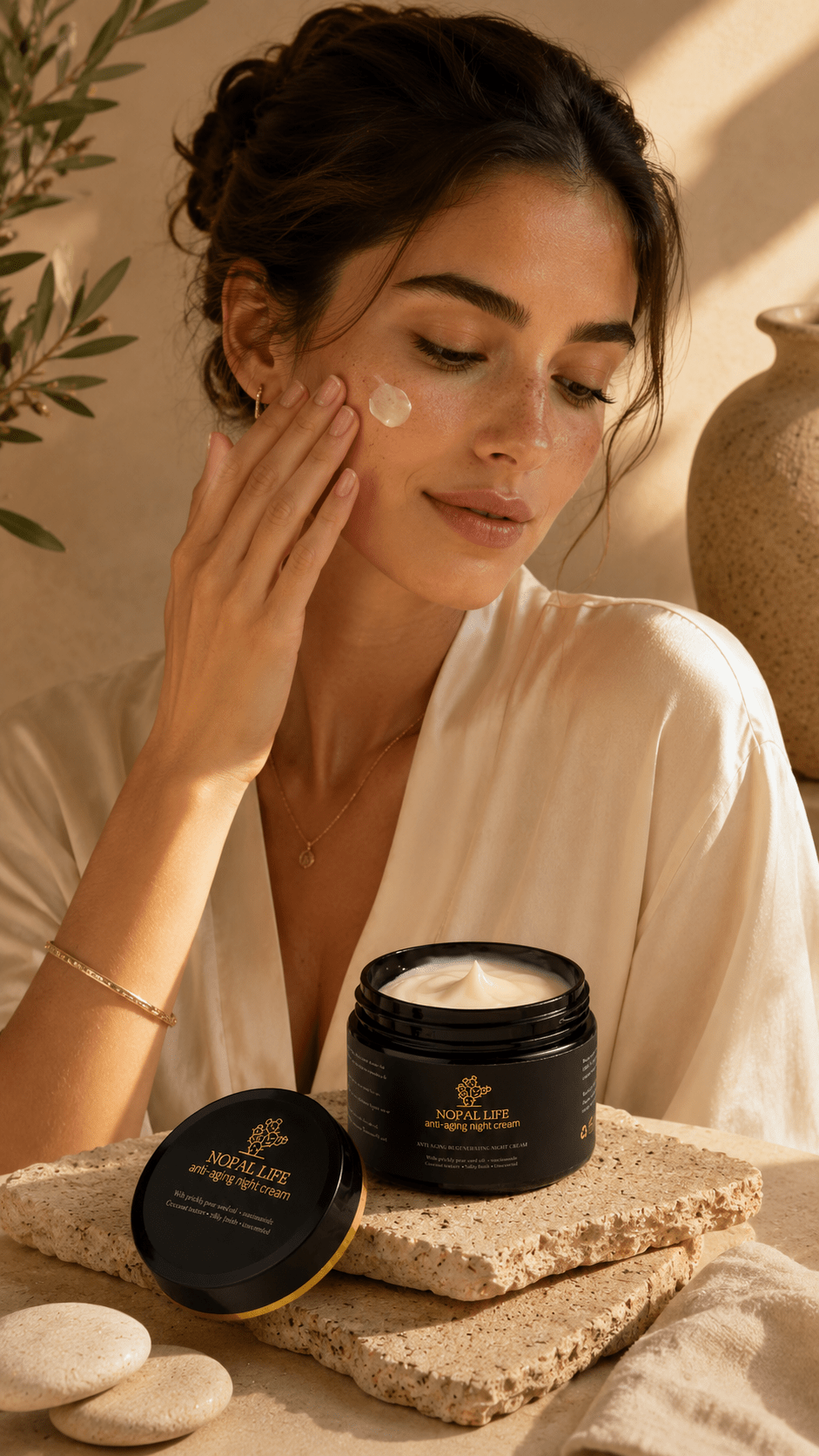
In the evening: Gentle cleansing, aqueous serum if you use one, ceramide cream on still damp skin, then two to three drops of oil warmed between the palms.
In the morning: Same sequence, lightening the last layer to just one drop, and finish with sunscreen.
For the eye contour, one drop dabbed with the tip of the ring finger is enough, without ever pulling the skin.
When this combination is really worth it
Three situations benefit most from it.
Post-winter, when dry air and heating have left skin rough and reactive.
After an excess of active ingredients — exfoliants too close together, retinoids poorly introduced — where the barrier needs to be rebuilt before any resumption.
Mature skin, where natural lipid production decreases and external input becomes essential.
What to expect
Comfort returns quickly, often within the first week. Suppleness and evenness of skin texture require three to four weeks.
Change only one parameter at a time during this period. Adding a new active ingredient in the middle of barrier reconstruction means you can no longer attribute the result to anything.
Common mistakes
Applying oil first, which blocks everything that follows. Using too much, which leaves a film without improving anything. And judging after three days, when surface renewal takes nearly a month.
Benefits of a rare botanical oil
The benefits to expect from a quality oil stem from what it truly contains: abundant linoleic acid, tocopherols, sterols. On the skin, this translates to suppleness and better moisture retention, not a transformation.
Its rarity is real and verified: one liter of oil requires nearly a ton of figs. This is the lowest yield in common botanical cosmetics, and it explains a price that nothing else would justify.
The role of ceramides in the barrier
The stratum corneum functions like a wall: stacked dead cells with a lipidic cement between them. Ceramides make up nearly half of this cement, alongside cholesterol and free fatty acids.
When this cement is depleted, water escapes and irritants enter. This is the direct origin of the sensation of tightness and reactivity, much more often than an isolated lack of water.
Quality: what to check
For the cream, look for several types of ceramides combined with cholesterol and fatty acids. For the oil, look for first cold pressing and tinted glass packaging.
In both cases, a short and legible ingredient list is better than an ambitious promise on the box. The most effective formulas in this area are rarely the most verbose.
Beyond the face
Hands, elbows, and décolletage suffer from the same deficits and rarely receive the same care. The protocol is transposed as is: cream first, a few drops of oil next, on damp skin after showering.
For dry hair ends, one drop of oil is enough — without cream, and without excess, otherwise the result will be heavy.
Why regularity is paramount
A skin barrier is rebuilt through repeated applications, never through a single generous application. Two drops every evening are better than ten drops once a week, and the difference is significant.
This also makes the choice of product less critical than one might think. A decent product applied daily outperforms an excellent product applied occasionally.
An extraction that explains the texture
Prickly pear oil obtained by cold pressing has an surprisingly fine texture for such a concentrated oil: it penetrates quickly and doesn't leave the film expected from a rich fatty substance. This is good news for skins that are reluctant to use oils.
This fineness is due to its profile, very rich in omega-6 essential fatty acids, which are more fluid than saturated acids. Richness and lightness go hand in hand here, which is rare.
Properties and benefits, without exaggeration
Its properties can be summarized in three things: nourishing, limiting evaporation, and providing antioxidants in the oily phase. It is this last property that gives it its reputation for skin aging.
It is also important to know what it does not do. It does not hydrate in the strict sense, it does not target spots, and it does not replace sun protection.
Using prickly pear oil on dry skin
On dry skin, this is where it performs best. Using prickly pear oil on still damp skin, right after the cream, helps retain water instead of sealing an empty surface.
In winter, an extra drop on tight areas is usually sufficient. There's no need to load the entire face to treat two dry patches.
Organic, quality and origin
An organic prickly pear oil is not automatically better, but certification at least guarantees the absence of inputs in cultivation. For a plant that grows naturally without irrigation, this requirement is easy to meet.
What matters more: the freshness of the seeds at the time of pressing, the extraction method, and the packaging. A pure and well-preserved oil is better than a label on a clear bottle left in direct light.
Limitations
These treatments are cosmetic. They improve comfort, suppleness, and the apparent resilience of the skin, without any therapeutic aim. Skin that itches, flakes, or persistently reddens requires dermatological advice.
Our anti-aging treatments