Moisturizer for women: How to choose the right one for your skin
A moisturizer should be chosen based on skin condition, not marketing categories. Dry skin requires more lipids, combination skin a light texture, and sensitive skin a simple formula. The goal is to retain water in the stratum corneum while preserving the skin barrier.
The word "woman" does not define a skin type
A moisturizer should not be chosen based on the gender indicated on the pot. The useful needs are the amount of sebum, the condition of the skin barrier, sensitivity, age, climate, and products already used. Two women of the same age can have opposite needs.
A facial moisturizer becomes relevant when linked to a profile: dry, normal, combination, oily, sensitive, or dehydrated skin. The right product is one that provides enough water and lipids without creating an uncomfortable film.
Humectants, emollients, and occlusives: three functions
Glycerin and hyaluronic acid attract water into the stratum corneum. Emollients like squalane or certain esters improve flexibility. More occlusive agents limit evaporation by strengthening the surface film.
A complete moisturizer often combines these three families in different proportions. For oily skin, the lipid content may be low; for very dry skin, it becomes more important.
Choosing texture according to skin type
| Profile | Useful texture | Ingredients to look for |
| Oily skin | Gel-cream | Glycerin, niacinamide |
| Combination skin | Light emulsion | Humectants + squalane |
| Dry skin | Rich cream | Ceramides, shea butter, squalane |
| Sensitive skin | Simple cream | Panthenol, oat, ceramides |
A moisturizing formula for normal or combination skin does not need to be very rich. Conversely, very dry skin often benefits from a more enveloping base and morning and evening application.
The role of the skin barrier
The skin barrier limits water loss and protects the surface against external aggressions. When it lacks lipids, the skin feels tighter and becomes more reactive to cold, wind, or cleansers.
Ceramides, cholesterol, and fatty acids are useful components in formulas designed for dry skin. They don't create a new barrier overnight but support its function day after day.
Morning routine: hydration then protection
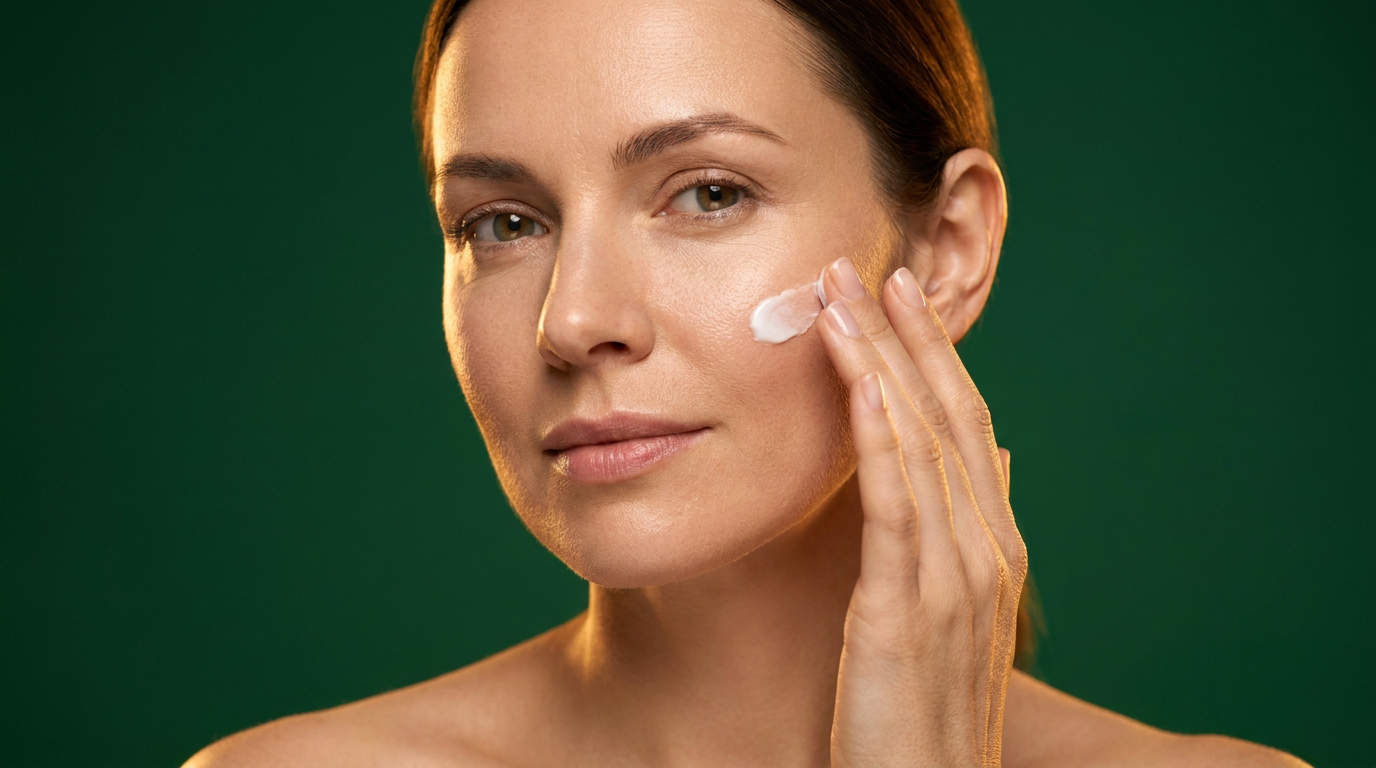
After cleansing, apply a pea-sized amount of cream to slightly damp or dry skin, depending on your comfort. Spread from the center outwards without prolonged massaging. One minute later, apply sunscreen.
- Gentle cleansing
- A pea-sized amount of cream
- Eye contour if necessary
- SPF as the last step
Evening routine: adjust richness
In the evening, the same cream may be sufficient if the skin remains comfortable. Very dry skin can use a richer texture at night, while combination skin often prefers the same emulsion morning and evening.
A moisturizer does not need to be different at every time of day. The priority remains tolerance and the ability to maintain a feeling of comfort for several hours.
After 40 or 50: hydration changes texture
With age, the skin often produces fewer lipids and recovers less quickly after aggressions. A richer cream can become useful even for someone who previously used light textures.
Anti-aging actives are secondary if the moisturizing base is insufficient. Supple and comfortable skin tolerates other actives in the routine better.
Pollution and indoor heating can accentuate the feeling of dryness in winter. A richer cream in the evening and a lighter formula in the morning allow for adapting the routine without changing all products. Climate often matters more than the "woman" label.
Dehydrated skin can be oily and lack water at the same time. In this case, a gel-cream rich in glycerin and hyaluronic acid is often more logical than a heavy balm. The useful diagnosis comes from sensation and observation, not the product's gender.
Dehydrated skin can be shiny and yet lack water. The useful sign is the combination of an oily film with tightness or fine surface lines. An emulsion rich in glycerin and light in fatty substances often responds better to this profile than a very occlusive balm.
Climate greatly alters needs. In winter, indoor heating and wind increase the feeling of dryness; in summer, a rich cream can become too heavy. Adapting the texture from one season to another is often more relevant than changing actives every month.
The amount applied also influences the result. A pea-sized amount is generally sufficient for the face and neck if the formula spreads well. Three successive layers do not necessarily provide more hydration and can cause pilling under sunscreen or makeup.
Sensitive skin benefits from limiting simultaneous sources of irritation. A moisturizing formula without strong fragrance, with panthenol or ceramides, offers a simple base when the routine already contains vitamin C, retinol, or exfoliant. The cream then becomes a point of stability rather than an additional active.
After menopause, the decrease in certain surface lipids can make usual textures less comfortable. This does not mean that a cream must necessarily be labeled anti-aging. A base richer in emollients can be enough to restore suppleness and comfort without multiplying promises.
Foundation quickly reveals an ill-suited cream. If it separates on dry areas, the base may lack comfort; if it slides or pills, the formula is possibly too rich or too heavy in polymers. Observing makeup throughout the day provides a practical compatibility test.
A day cream and a night cream can be identical. The difference becomes useful when morning requires a light texture under SPF while evening allows for a richer emulsion. There is no physiological obligation to own two different jars.
What a moisturizer does not do
A facial moisturizer alone does not correct deep spots, marked loss of firmness, or established wrinkles. Nor does it replace sunscreen or compensate for overly aggressive cleansing.
Its role is more fundamental: to maintain water, improve suppleness, and support the barrier. It is often the simplest, but also the most regular part of the routine.
The "Choosing Your Products and Actives Wisely" Series
What to look for on a label, and what truly distinguishes two similar formulas.
- Organic face care: natural, organic, or clean?
- Natural moisturizing ingredients: how to choose them well
- Soothing sensitive skin: 6 gentle actives and protocol
- Vegetable hyaluronic acid: how to choose and apply it
- Donkey milk face cream: composition and choice
- Enzymatic papaya: natural skincare benefits and routine P1


Go further than this article
Get our skincare guides by email — and start with your free skin diagnostic: 2 minutes, advice tailored to your skin. We ship to the US, UK, Canada, Australia and 27 European countries; somewhere else? Sign up and you will be the first to know when we deliver to your country.
By signing up, you agree to our privacy policy. Unsubscribe in one click.