Prickly pear seed oil vs argan oil: which one should you choose?
Prickly pear oil and argan oil are two exceptional natural skincare products, but they don't quite play in the same league. Prickly pear is richer in vitamin E and more geared towards anti-aging and radiance; argan is a classic nourishing and versatile oil, more accessible. Here's how to choose based on your skin, needs, and budget.
At a Glance
| Criterion | Prickly Pear | Argan |
|---|---|---|
| Vitamin E | Very High | High |
| Linoleic Acid (omega-6) | ~60% | ~35% |
| Texture | Dry, very penetrating | Light to medium |
| Main Benefit | Anti-aging, radiance | Nourishment, versatility |
| Comedogenic Index | Low | Low to moderate |
| Price | High (rarity) | Moderate |
Two Oils, Two Origins
Argan oil is extracted from the kernels of the argan tree, an emblematic tree of southwestern Morocco. Used for centuries, it has become a global classic in natural cosmetics, appreciated for its versatility on the face, body, and hair.
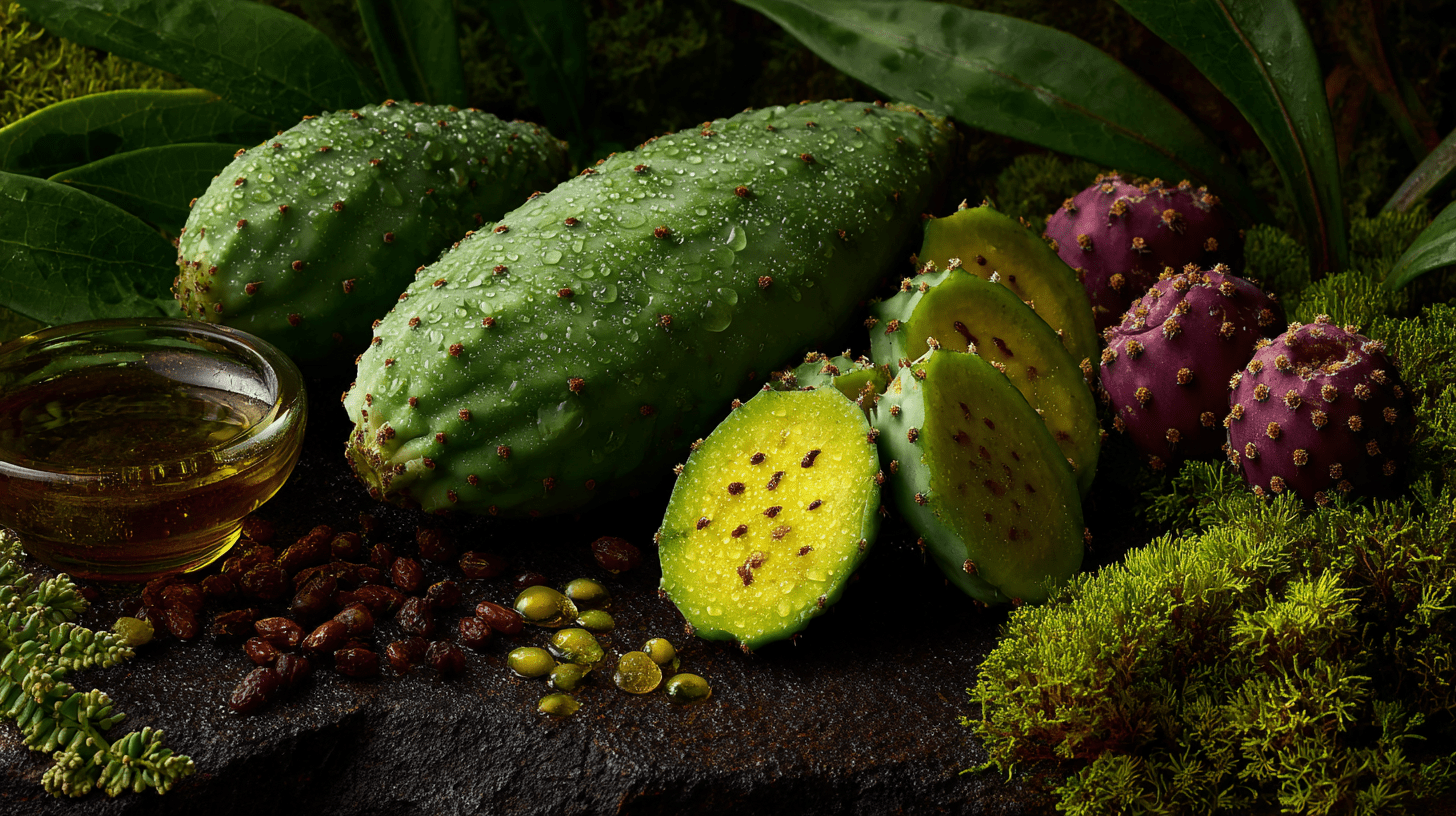
Prickly pear seed oil comes from the tiny seeds of the fruit of the Opuntia ficus-indica cactus. Its yield is much lower: where argan already requires significant work, prickly pear requires nearly a ton of fruit for one liter of oil (see Prickly Pear Seed Oil: All Its Benefits for the Skin).
Composition: What Sets Them Apart
Both oils are rich in essential fatty acids and vitamin E, but in different proportions. Prickly pear oil boasts one of the highest vitamin E contents in the plant kingdom and a particularly high proportion of linoleic acid (omega-6), which enhances its antioxidant action and its affinity with combination skin (see Composition of Prickly Pear Oil: What Makes It Unique).
Argan, on the other hand, has a more marked balance of oleic acid (omega-9), which gives it that nourishing and comforting quality so appreciated by dry skin and hair. This is a difference in profile, not quality: each excels in its own right.
Compared Benefits
- Anti-aging: Prickly pear has an advantage, with its antioxidants helping to preserve apparent firmness and reduce the appearance of fine lines (see Prickly Pear Oil and Wrinkles: What Does Research Say?).
- Radiance: Prickly pear helps revive dull complexions thanks to its protective action.
- Pure nourishment: Argan remains a reliable choice for intensely nourishing skin and hair daily.
- Versatility: Argan is very easy to use on the body and hair lengths; prickly pear is primarily reserved for the face and eye contour, for economy.
- Tolerance: Both are suitable for sensitive skin and, thanks to a low comedogenic index, even for combination to oily skin (see Prickly Pear Oil for Oily Skin: Is It Suitable?).
Price: Why Such a Difference?
Prickly pear oil is significantly more expensive because its yield is extremely low: it takes a mountain of fruit and considerable manual labor to produce a small quantity of oil. Argan, being simpler to produce and with well-established supply chains, remains more accessible. This difference explains the premium positioning of prickly pear (see Why Does Prickly Pear Oil Cost More?).
Which to Choose?
- Anti-aging and radiance priority, seeking an exceptional facial treatment → prickly pear oil.
- Versatile daily nourishing care, face + body + hair, controlled budget → argan oil.
- Combination to oily skin → prickly pear, due to its richness in linoleic acid and dry texture.
- Very dry skin seeking immediate comfort → argan, or both alternately.
The two are not mutually exclusive: many combine them, argan for the body and hair, prickly pear for the face. This is even a very coherent combination from a budget and effectiveness perspective.
Can They Be Used Together?
Yes, and it's even a good idea. They can be alternated (prickly pear in the evening for anti-aging, argan as a hair mask on the weekend) or dedicated to different areas. As always, a few drops are enough, on slightly damp skin, as the last step of your routine (see How to Use Prickly Pear Oil on the Face?).
Frequently Asked Questions
Which is best for wrinkles?
Prickly pear is generally preferred for its more pronounced antioxidant action linked to its richness in vitamin E.
Is argan less effective?
No, it's simply different: more versatile and more nourishing, it's an excellent daily treatment.
Can they be mixed in hand?
It's possible, but alternating them or dedicating them to distinct areas allows you to better leverage the benefits of each.
Which for oily skin?
Prickly pear, thanks to its high linoleic acid content and non-comedogenic dry texture.
Which for hair?
Argan is the classic hair oil; prickly pear can be used on ends, but its cost makes it more suitable for the face.
In Summary
Prickly pear and argan are not truly opposed: one is an exceptional anti-aging and radiance treatment for the face, the other a versatile and accessible nourishing oil. The right choice depends on your priority — and there's nothing stopping you from enjoying both.
Discover NOPAL LIFE Prickly Pear Seed Oil, cold-pressed and organic, to target anti-aging and radiance. Take our skin diagnostic to find out which oil best suits your profile.
This article is provided for informational purposes only and does not replace the advice of a healthcare professional.
Information provided for cosmetic and educational purposes; it does not constitute medical advice.
Our product for this comparison


Mature skin · Dry skin

Go further than this article
Get our skincare guides by email — and start with your free skin diagnostic: 2 minutes, advice tailored to your skin. We ship to the US, UK, Canada, Australia and 27 European countries; somewhere else? Sign up and you will be the first to know when we deliver to your country.
By signing up, you agree to our privacy policy. Unsubscribe in one click.