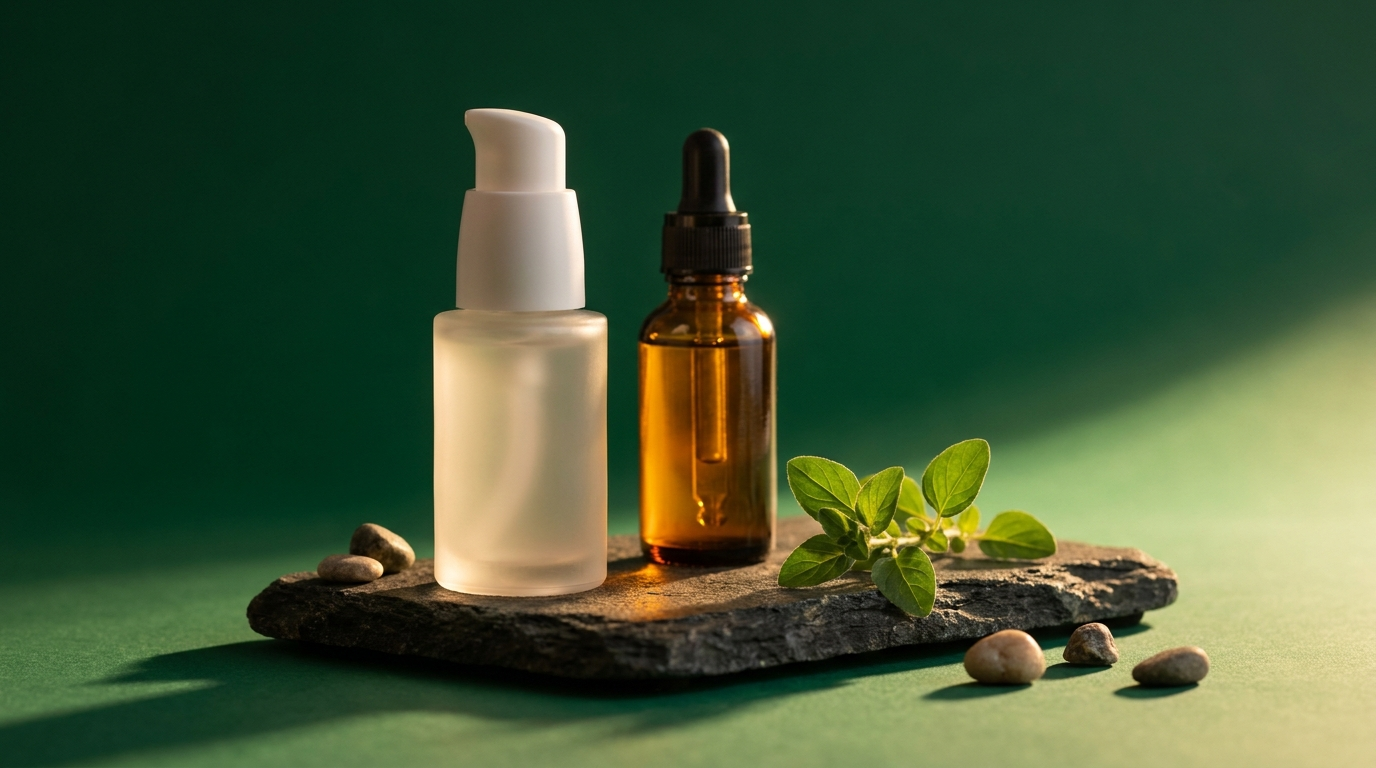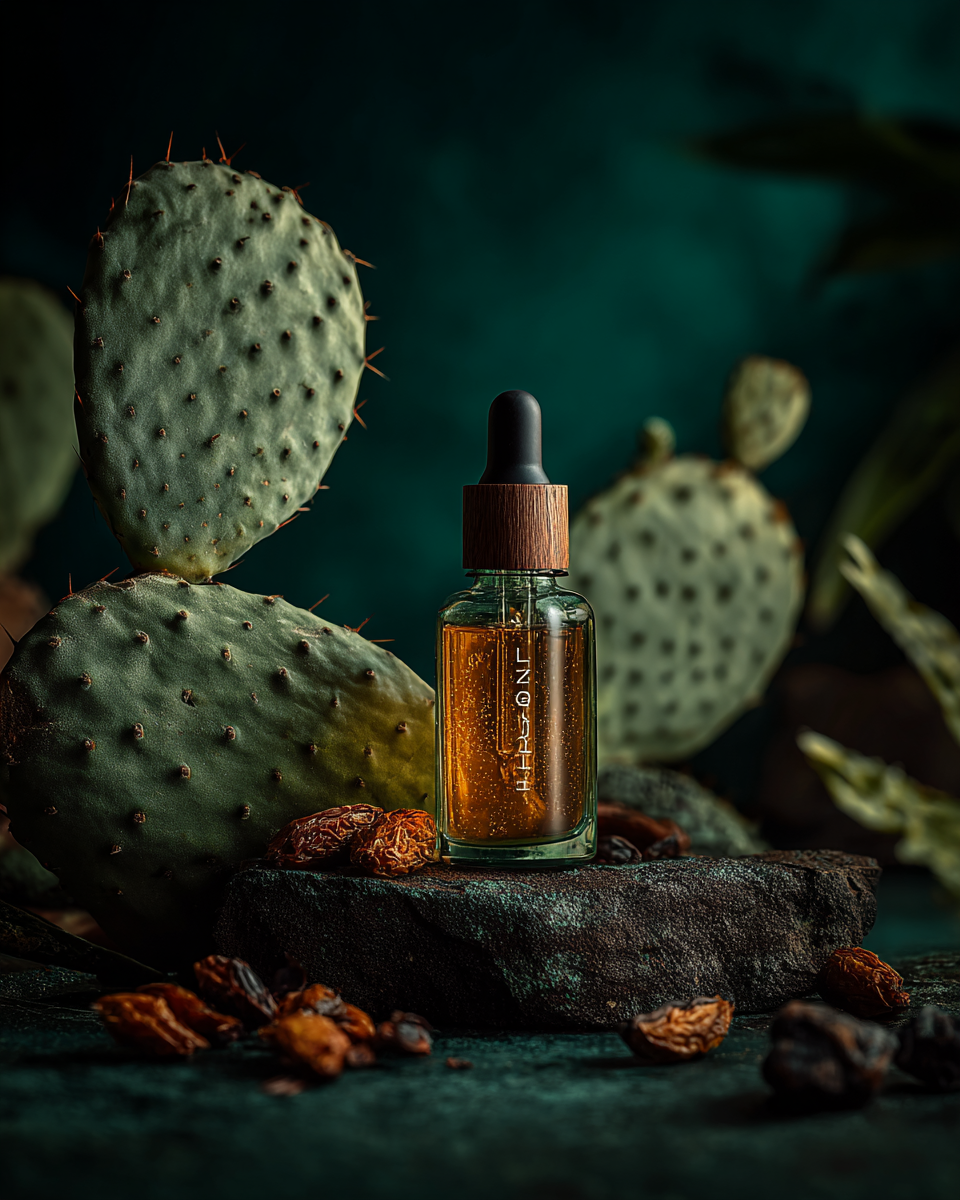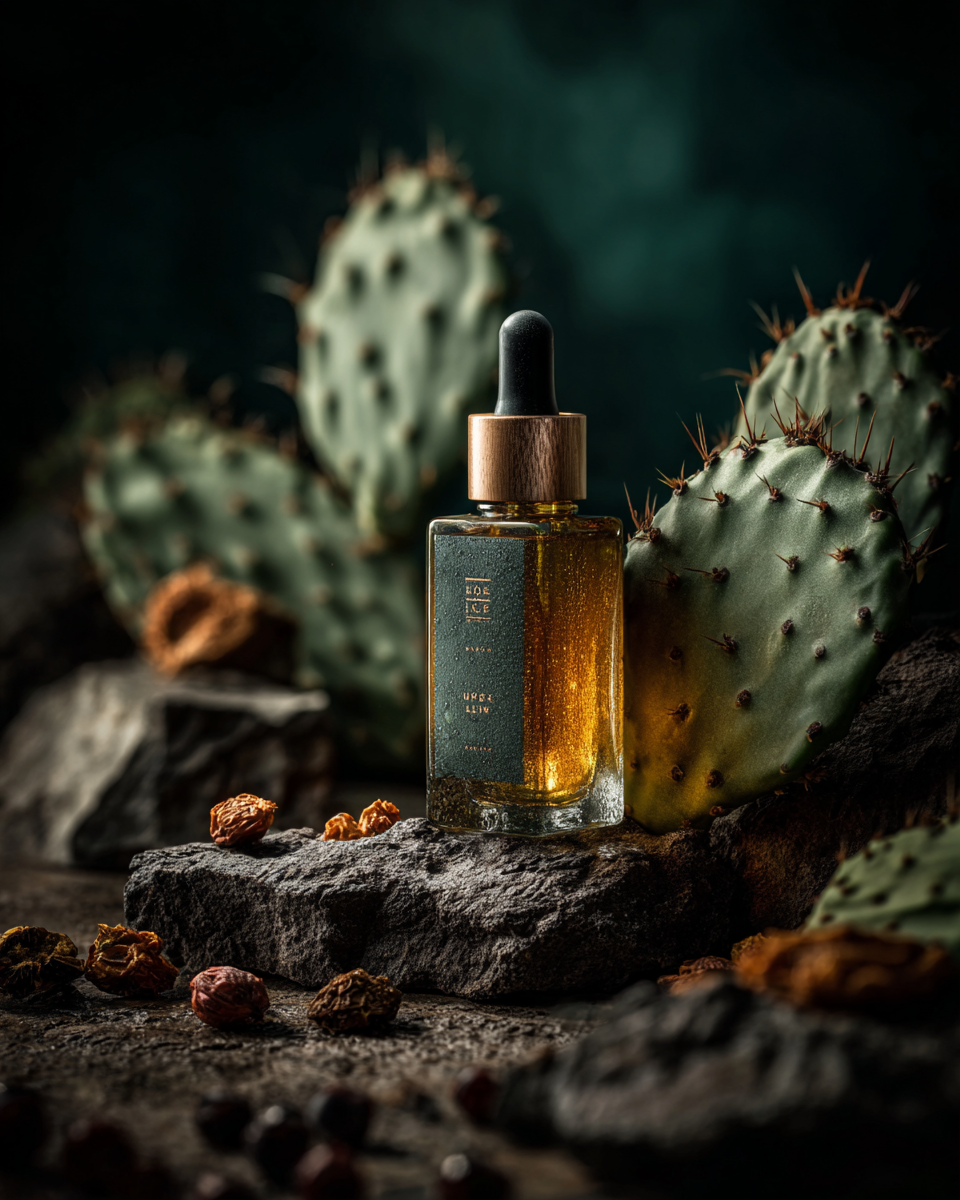
Combine prickly pear oil and argan oil
These two oils pair well, provided you don't double the quantities. They occupy the same spot at the end of a routine and serve a similar purpose. One drop of each is better than two of each—and alternating is often the best choice.
Key takeaways
- Layering: possible, one drop of each, never more.
- Alternating: often preferable, one oil per season or time of day.
- If you have to choose: prickly pear for lightness, argan for richness.
- Mixing: possible in the palm, unlike a water-oil duo.
What sets them apart
Both are vegetable oils from the Maghreb, rich in unsaturated fatty acids and vitamin E. Their difference lies in the proportion of these fatty acids and the resulting texture.
Prickly pear seed oil (Opuntia ficus-indica) is particularly rich in linoleic acid. Its texture is fine, it penetrates quickly and leaves a supple finish without a greasy film. It is a comforting oil, well accepted by reactive skin.
Argan oil is richer in oleic acid, which gives it a more enveloping texture and a more noticeable finish. It is particularly suitable for dry skin and rough skin texture.
Two fruits, two regions, two profiles. Argan comes from southern Morocco, prickly pear from a cactus widespread throughout the Mediterranean basin. Both oils are obtained by cold pressing, but their active ingredients do not overlap.
Argan is richer in oleic acid, prickly pear in linoleic acid and tocopherols. This is what makes the latter more suitable for anti-aging, and the former more nourishing. Their benefits therefore complement each other naturally.
Layering: the method
If you want to use them together, reduce the quantities.
1. After your serum, one drop of prickly pear oil — the finest goes first.
2. Wait one minute.
3. One drop of argan oil, by pressing.
Two drops in total. Skin absorbs only a limited amount of fatty substances; beyond that, the excess remains on the surface without benefit.
Unlike a water-oil duo, you can also mix them in your palm: two oils mix perfectly.
Alternating: often better
By season: argan in winter, prickly pear the rest of the year.
By time: prickly pear in the morning, whose light texture goes better under makeup; argan in the evening.
By cycle: one oil for three to four weeks, then the other. This is the only way to know which one truly suits your skin.
For what skin type
Dry skin: both are suitable, argan more so in winter.
Combination skin: prickly pear alone, or argan reserved for tight areas.
Reactive skin: start with prickly pear, which is better tolerated and lighter.
On dry to mature skin, the two can be layered without difficulty: argan first, which is richer, then prickly pear. On combination skin, alternating is better than layering.
On oily skin, prickly pear alone is more suitable: it is lighter, and its active ingredients—tocopherols, sterols—make it suitable for anti-aging without the heaviness of argan. Its benefits are natural in the strict sense, but that doesn't mean they are suitable for everyone.
A confusion to clarify about the origin
Argan trees grow mainly in Morocco, but also in Algeria. Prickly pear trees are found throughout the Maghreb and far beyond. These two oils belong to the same geographical area without coming from the same country.
Our prickly pear oil is produced in Algeria by Bio Nopal Cactus, from artisanal family plantations in the arid high plateaus and Kabylia. The prickly pear grows there without irrigation. Cold-pressed seeds, according to our published quality criteria.
What this duo does not do
It does not erase established wrinkles and does not replace sun protection. These are cosmetics, whose action focuses on the comfort and appearance of the skin.
Frequently asked questions
Can the two oils be mixed in the palm?
Yes. Two oils mix perfectly, unlike a water-oil duo. One drop of each, warmed between the palms, is applied in one go.
Which one is lighter?
Prickly pear oil, richer in linoleic acid. It penetrates faster and leaves a more supple finish than argan, which is more enveloping.
Do you really have to limit yourself to two drops in total?
Yes, for most skin types. Skin absorbs only a limited amount of fatty substances; the excess remains on the surface and gives a greasy feeling without benefit.
Do these two oils come from the same country?
No. Argan trees grow mainly in Morocco, also in Algeria. Our prickly pear oil is Algerian. They share a geographical area, not an origin.
Our anti-aging treatments