How to naturally hydrate your face: the method
To naturally moisturize your face, a single action is not enough: you need to provide water, fix it with plant-based humectants (glycerin, hyaluronic acid, honey, aloe vera), then seal it with fatty substances. Sprayed alone, it evaporates as quickly as it arrives. Here is the complete method: the right ingredients, the morning and evening routine, homemade masks that deliver on their promises, and what diet provides from within.
Why water alone is not enough
Spraying water on the face provides immediate freshness, but it disappears just as quickly and can even, as it evaporates, carry away some of the surface moisture. For a lasting effect, it must be retained in the stratum corneum, the thin layer of the epidermis where skin comfort is determined. This is the principle of good hydration: slow down transepidermal water loss while providing substances capable of retaining it, without damaging the barrier that protects the skin. (Read: Skin hydration: the complete guide)
Three families of ingredients to combine
Naturally moisturizing your skin—the face first and foremost—relies on three families of ingredients that work in layers:
- Humectants attract and retain water: plant-based glycerin (e.g., from sunflower), hyaluronic acid, sodium PCA, plant-based sugars.
- Emollients soften and smooth the surface: plant oils and butters, ceramides.
- Occlusives form a veil that slows evaporation: rich oils, shea butter, waxes.
The first capture, the second soften, the third seal. It is the combination of all three—and not an isolated miracle ingredient—that truly hydrates. A well-formulated product almost always combines these three functions.
Natural active ingredients that make a difference
- Plant-based glycerin: the benchmark humectant, very well tolerated. Contrary to popular belief, it does not dry out the skin: in a balanced formula, combined with water and fatty substances, it attracts and retains moisture. Its prominent presence in the INCI list is a reliable indicator when choosing a product.
- Hyaluronic acid: it retains a large amount of water, for plump-looking skin from the moment of application. (Read: Hyaluronic acid: role and use for the skin)
- Aloe vera: its gel, largely composed of water and sugars, provides freshness and comfort, ideal under a cream.
- Honey: a humectant used for centuries in beauty rituals, it captures moisture and leaves the skin soft.
- Ceramides: these lipids contribute to the natural cement of the epidermis and help it retain its water.
- Prebiotics: by supporting the balance of the microbiome, they contribute to skin comfort and resilience.
Which vegetable oil to choose for the face?
Not all oils are created equal: some penetrate quickly, others remain on the surface, and some are not suitable for blemish-prone skin. This comparison helps you choose:
| Oil or butter | Profile | Feel | Ideal for |
|---|---|---|---|
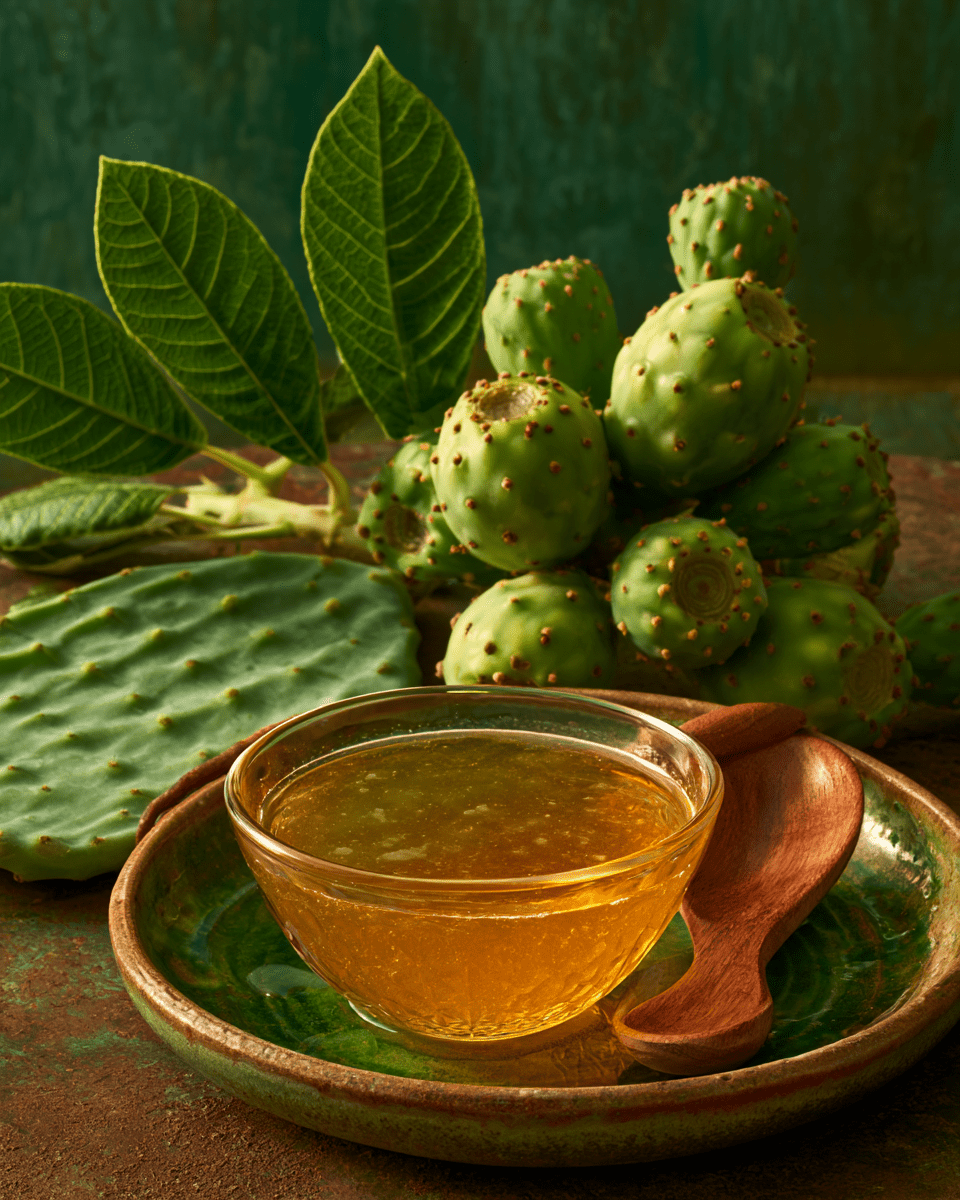
| Prickly pear seed oil | Rich in linoleic acid and vitamin E | Dry, penetrates quickly | All skin types, even combination |
| Sweet almond oil | Softening fatty acids, very well tolerated | Supple, comfortable | Sensitive skin, eye contour |
| Avocado oil | Very nourishing, fat-soluble vitamins | Thick, enveloping | Dry to very dry skin |
| Coconut oil | Occlusive, gourmet scent | Melting then oily | Mainly for body and hair; comedogenic for many skin types |
| Shea butter | Very occlusive, protective | Rich, waxy | Very dry areas, lips, extreme cold |
In practice: a few drops in the evening, as the last step over or mixed with your cream. An oil never replaces water intake: it locks it in.
The routine, step by step
In the morning: a gentle cleanse that doesn't strip the skin (an aggressive cleanser damages the hydrolipidic film and worsens dehydration), then apply treatments to damp skin — a mist or lotion is sufficient. A serum or hyaluronic acid gel then locks in moisture; finally, apply a light moisturizer before sun protection.
In the evening: after cleansing, reapply serum then a richer cream, and lock it in with a few drops of vegetable oil on areas that feel tight.
Once a week: a gentle scrub — never more, at the risk of weakening the barrier — removes dead cells from the surface; the skin then better receives treatments. This can be followed by a hydrating mask.
Daily: avoid hot water, moderate heating, protect the face from cold and wind, and drink regularly.
Homemade masks: what's really worth it
Grandmother's recipes are not all equally effective, but some are based on real humectants:
- Honey mask: a thin layer applied for ten minutes on clean skin, then rinsed with lukewarm water. Simple and effective.
- Avocado and honey: a quarter of a ripe fruit mashed with a spoon of honey, for skin that needs lipids.
- Aloe vera gel: as an express five-minute mask before cream.
Three precautions: prepare the recipe just before use, test it on the elbow crease if in doubt, and avoid lemon or baking soda, which damage the protective film. A homemade treatment complements a routine; it does not replace products formulated to last.
Hydration also comes from within
Drinking about 1.5 liters per day remains the basis, to be adjusted according to activity and heat. Certain foods contribute doubly: water-rich fruits and vegetables (cucumber, melon, citrus), good fats (fatty fish, nuts, rapeseed) that contribute to skin elasticity, and sources of vitamin C and vitamin E, antioxidants useful for overall balance. Food supplements are not essential when the diet is varied; for a targeted need, it is best to seek advice from a healthcare professional.
How to adapt the method to your skin type
Dehydrated skin — which lacks water — prioritizes humectants and light textures, even if it is oily. Dry skin — which lacks lipids — also needs nourishing fatty substances: rich cream, vegetable butter, oil in the evening. (Read: How to recognize dehydrated skin?)
Oily skin also needs hydration, with non-comedogenic gels and fluids: depriving them of water makes them shine more. Sensitive skin benefits from reducing the number of products: a gentle cleanser and a simple, fragrance-free moisturizer.
To avoid choosing the wrong product for your needs, NOPAL LIFE's Skin Intelligence diagnostic identifies what your skin lacks and guides you towards the right textures.
FAQ
Can you moisturize your face only with an oil?
No: it nourishes and limits evaporation, but does not provide water. It should always be combined with a humectant.
Is coconut oil suitable for the face?
Occlusive and pleasant, it is comedogenic for many skin types; it is best reserved for the body. Prickly pear seed oil or sweet almond oil are more suitable.
Should you moisturize even in summer?
Yes. Sun, air conditioning, and swimming promote dehydration; simply lighten the textures.
How many times a day?
Morning and evening are usually sufficient, with a targeted touch-up if the skin feels tight.
In summary
Naturally moisturizing your face means combining plant-based humectants, emollients, and occlusives, applying your treatments to damp skin, preserving the protective film—gentle cleansing, only one scrub per week—and supporting everything from within. No miracle in one action: consistency makes the difference.
To build a routine adapted to your skin with NOPAL LIFE's Skin Intelligence diagnostic: Start my free diagnostic.
Sources: Aroma-Zone (plant-based glycerin, natural hydration); Wikipedia (Skin Hydration); Avène; Bioderma. Informative article, not medical advice.
Information provided for cosmetic and educational purposes; it does not constitute medical advice.


Go further than this article
Get our skincare guides by email — and start with your free skin diagnostic: 2 minutes, advice tailored to your skin. We ship to the US, UK, Canada, Australia and 27 European countries; somewhere else? Sign up and you will be the first to know when we deliver to your country.
By signing up, you agree to our privacy policy. Unsubscribe in one click.