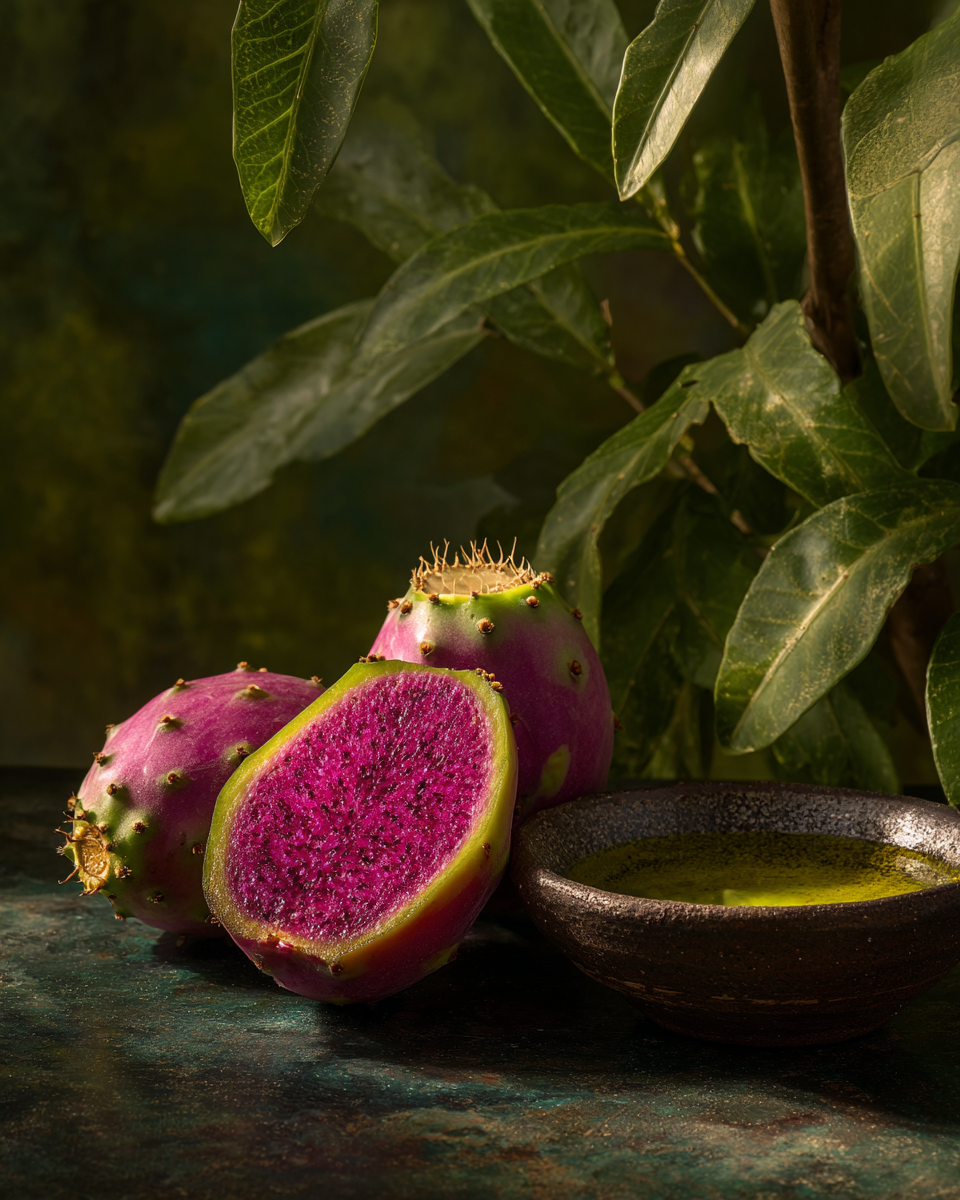
Prickly pear oil or ceramides: which to choose?
Both address the skin barrier, but not in the same way. Ceramides are structural lipids: they are part of the cement that holds surface cells together. Prickly pear seed oil provides linoleic acid, which is one of the raw materials for this cement.
Differences at a glance
| Criterion | Prickly Pear Oil | Ceramides |
|---|---|---|
| Nature | prickly pear oil, vegetable and complete | isolated structural lipids |
| Origin | prickly pear seeds | synthesis or plant origin |
| Role | nourishes, provides linoleic acid | completes intercellular cement |
| Perceived effect | suppleness, comfort | less reactive skin |
| Delay | a few days to three weeks | two to four weeks |
| Skin type | dry skin, mature skin | reactive skin, weakened barrier |
What ceramides are
These are lipids naturally present in the stratum corneum, where they represent almost half of the cement that binds cells together. A barrier poor in ceramides allows water to escape and irritants to enter.
Applied ceramides are well tolerated and work on the surface, where the deficiency is located. Their effect is not immediately visible: it is measured by skin that reacts less, over two to four weeks.
What prickly pear seed oil provides
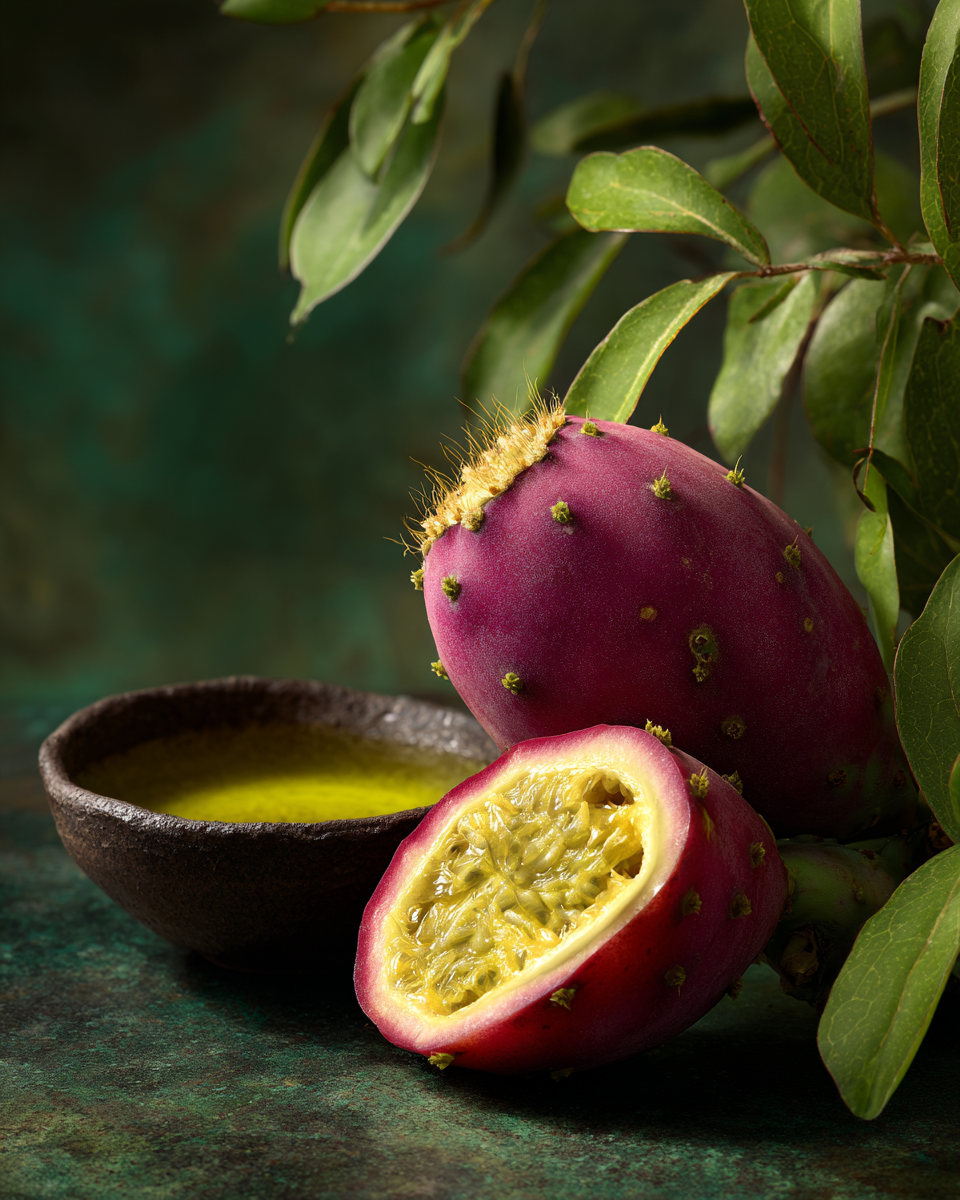
It is extracted from the seeds of the prickly pear, the fruit of a cactus from arid lands, Opuntia ficus indica. Its analysis reveals a very high proportion of linoleic acid for a vegetable oil, accompanied by oleic and palmitic acid.
This omega-6 is precisely one of the precursors of skin ceramides. In other words, the oil does not provide the finished product but one of its raw materials — a different, slower, and perfectly complementary logic.
Prickly pear seed oil also contains tocopherols, which limit the oxidation of the fatty phase and contribute to its interest in skin aging. Cold pressing preserves these compounds; refining removes them.
An origin that matters
It takes nearly a ton of prickly pears to obtain one liter of oil, making it one of the rarest vegetable oils on the market. At NOPAL LIFE, the fruits come from family plantations in the arid highlands of eastern Algeria and Kabylia, where the fig tree grows without irrigation.
This origin is not a decorative argument: the cultivation method and the freshness of the seeds at the time of pressing directly condition the profile of the oil obtained.
Which to choose
Reactive epidermis, which blushes easily: ceramides, which directly target the structural deficiency.
Dry or mature skin, lacking suppleness: prickly pear oil, for the raw material it provides.
Very damaged barrier after a winter or poorly dosed active ingredients: both, and in that order.
Using them together
This is the most complete option, and it presents no difficulty.
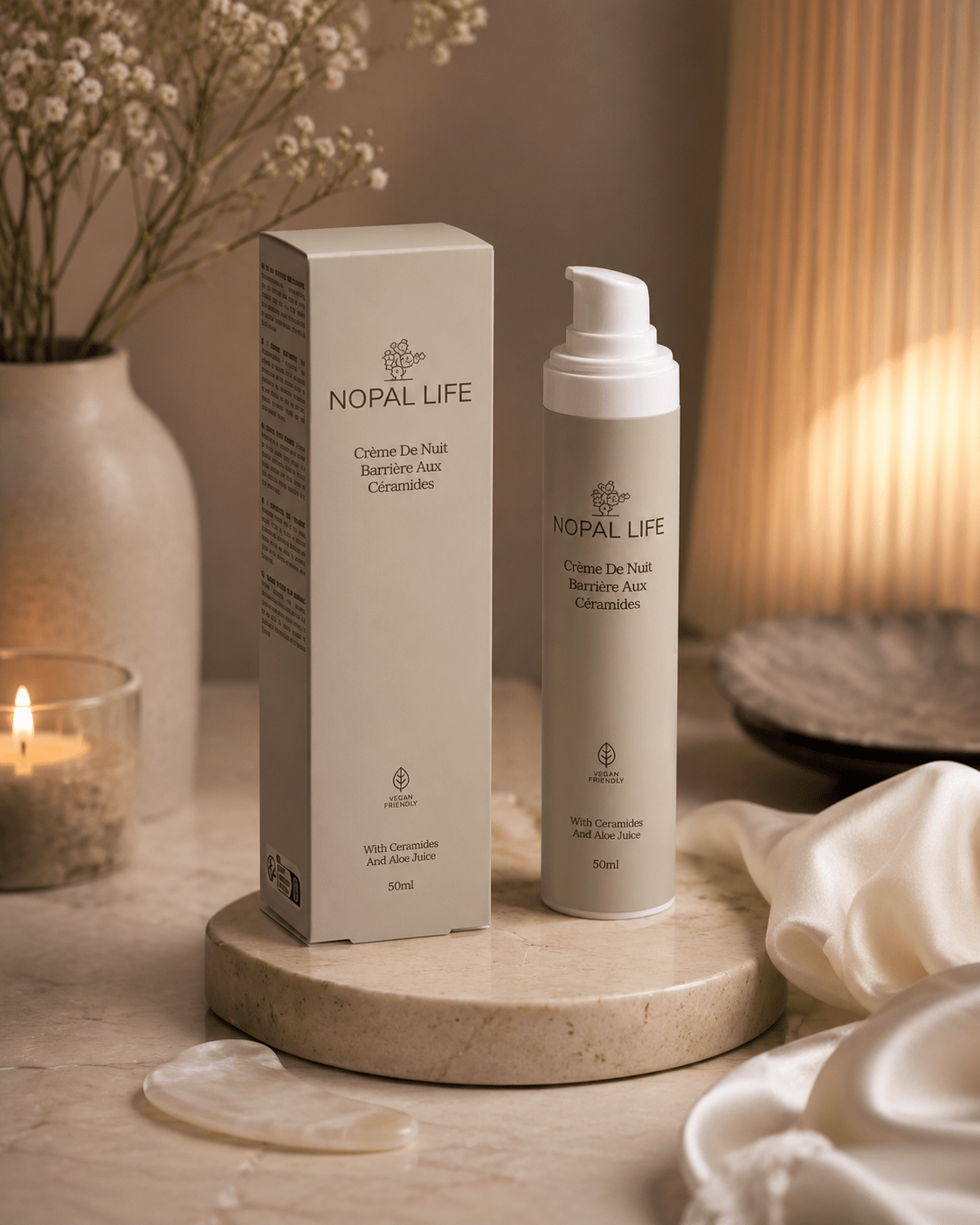
1. A cream containing ceramides, on slightly damp skin.
2. Two to three drops of prickly pear oil as the last layer, applied by pressing.
The cream provides structural lipids; prickly pear oil seals and provides the raw material for the future. On a weakened barrier, this combination gives faster results than either alone.
Apply a few drops, no more
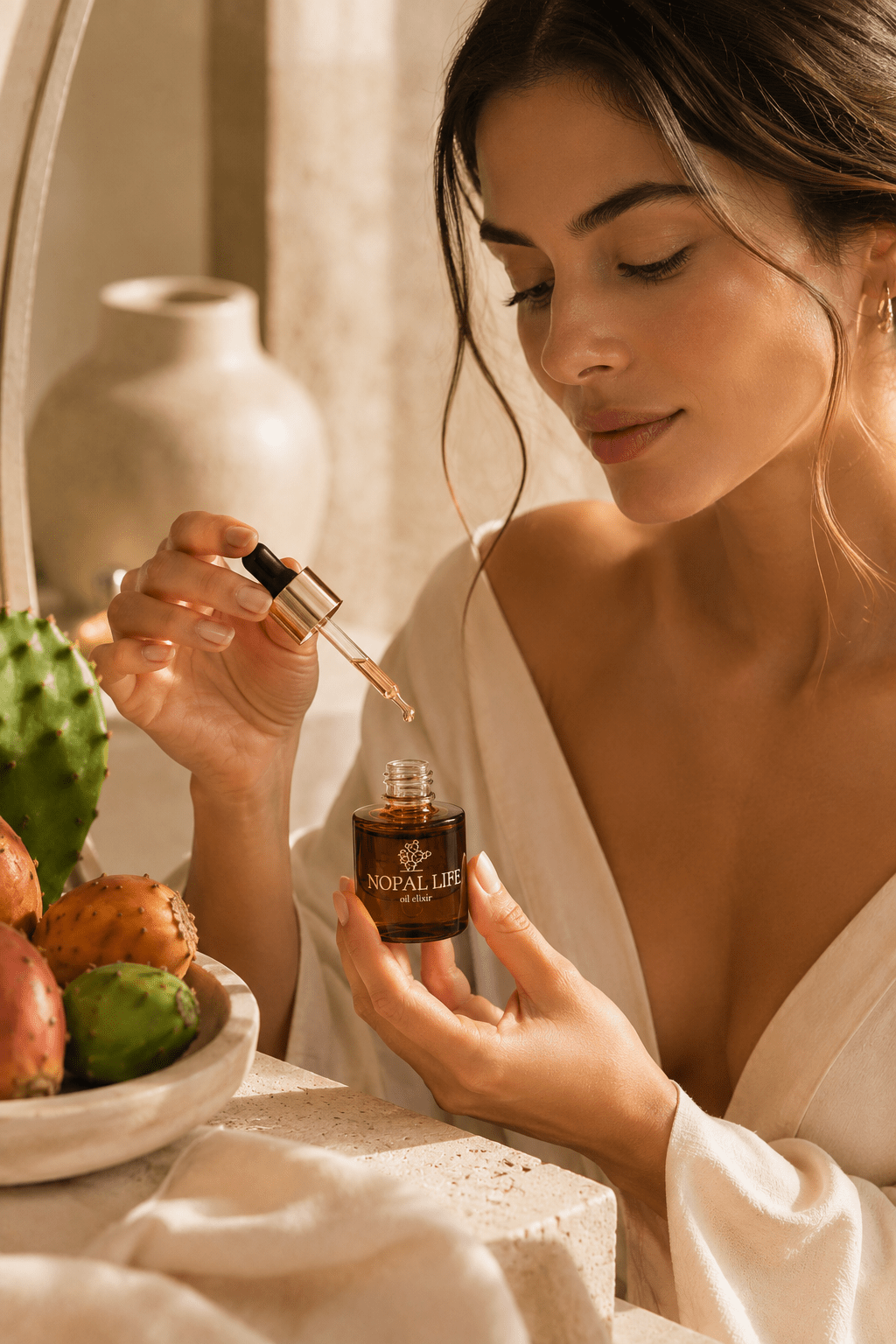
Two to three drops are enough for the entire face. Warm them between your palms before applying them with gentle pressure, without rubbing.
On the eye contour, a single drop patted with the tip of the ring finger. This area is thin and does not tolerate excess product well, regardless of the quality of the treatment.
How long to judge
Comfort returns in a few days. Suppleness and regularity of texture require three to four weeks, the time for a surface renewal cycle.
Reactivity, however, takes longer to decrease. Allow one month before concluding anything, and change only one parameter at a time.
Storage
Tinted glass, away from heat, out of the bathroom. Prickly pear oil is rich in fragile compounds and does not tolerate being left in full light.
A rancid smell indicates an oil at the end of its life: it should no longer be used, even if its appearance has not changed.
Reactive skin: where to start
On fragile skin, the order of introduction matters as much as the choice of products. Start with the ceramide treatment alone, for two weeks, without adding anything. You will then know what it provides.
Then introduce a few drops of prickly pear oil, only in the evening. This slow progression avoids the most common mistake, which is to change everything at once and no longer be able to attribute the result.
Eye contour and delicate areas
The eye contour is the thinnest area of the face and the one that shows signs of aging fastest. Applying a few drops there would be excessive: a single drop is enough, patted with the tip of the ring finger, without ever pulling the skin.
The same principle applies to the sides of the nose and around the lips. In these areas, the quantity does more damage than the choice of product.
Skin aging: what is relevant
Natural lipid production decreases with age, and the barrier becomes more permeable. This is a fundamental mechanism that neither an oil nor a ceramide treatment stops.
What they do, however, is compensate for this deficiency on a daily basis. On mature skin, this daily compensation truly changes comfort — and that is already reason enough.
How to recognize a good product
For ceramides: a respectable position in the ingredient list, and preferably several types combined with cholesterol and a fatty substance, the trio being better documented than ceramides alone.
For prickly pear oil: cold pressing clearly mentioned, tinted glass, a clear vegetable smell. A liter mobilizes nearly a ton of fruit, so a very low price warrants a question.
Fine lines, elasticity and anti-aging
For fine lines, two origins must be distinguished. Those that come from a lack of water fade as soon as the barrier retains better: this is the domain of both treatments, and the result comes quickly. Those that are due to loss of elasticity are something else and do not move in this way.
Neither of these treatments is an anti-aging product in the usual sense. They maintain surface quality, which is already a significant part of what is visible.
Serum, cream, oil: who does what
A serum concentrates active ingredients in a light base and is placed early in the routine. A cream provides both moisturizing agents and a fatty component. An oil only does the second thing, but it does it well.
Knowing what each texture is for avoids stacking three products that do the same thing. This is the most common fault of overloaded routines.
Cellular regeneration: what the word covers
The renewal of surface cells takes about twenty-eight days in adults, and slows down with age. No cosmetic frankly accelerates this cycle; however, a well-supplied barrier allows this renewal to take place under better conditions.
This is why any judgment made before a month is premature. You then observe skin that has not yet finished renewing itself under the new regimen.
Dark circles, spots and delicate areas
Neither acts on pigmented or vascular dark circles, nor on spots: these are other mechanisms, which require other active ingredients. On these areas, apply delicately, in minimal quantity, for comfort only.
A different expectation would inevitably lead to disappointment. It is better to know what a treatment can do before blaming it for what it does not.
Recognized benefits of prickly pear oil
The benefits attributed to prickly pear oil are due to its composition, not its reputation. Its essential fatty acid content nourishes, its tocopherols provide antioxidants in the fatty phase, and its fineness allows for rapid penetration despite this richness.
This explains its place in anti-aging treatments and its use on the eye contour, where an effective oil in very small quantities is sought. A pure, undiluted prickly pear oil remains the most interesting form for this use.
Anti-aging: what prickly pear oil can really do
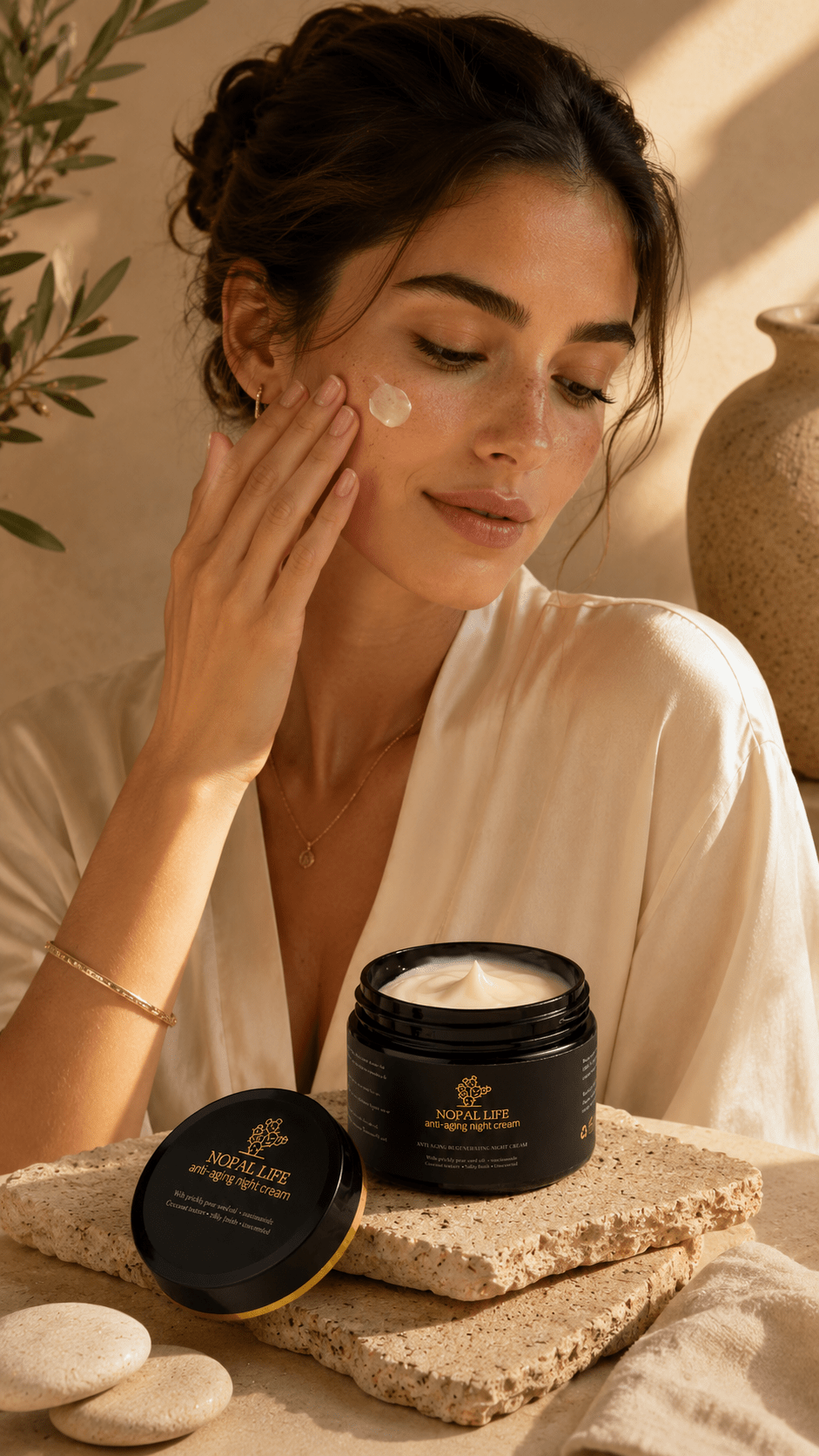
In terms of anti-aging, prickly pear oil acts on surface quality: suppleness, regularity of texture, reduction of fine lines linked to lack of water. These are real effects, measurable to the touch, and they settle in three to four weeks.
It does not fill in an established wrinkle and does not restore lost elasticity. On this point, no vegetable oil lives up to the promise that some communications attribute to it.
Ceramides or prickly pear oil: the last word
If your skin is reactive and lacks comfort, start with ceramides. If it is dry, mature, and lacks suppleness, start with prickly pear oil. If both are lacking, take both — they do not interfere with each other.
In all cases, judge over a full month and change only one parameter at a time. This is the only method that allows a result to be attributed to what produced it.
Limitations
These are cosmetic treatments. They improve comfort, suppleness and the apparent resistance of the skin, without curative aim. Very reactive skin, which flakes or itches persistently, requires dermatological advice.
Our anti-aging treatments