Plant-based Hyaluronic Acid: How to Choose and Apply It
Two bottles can bear the same label — hyaluronic acid — and deliver entirely different experiences on the face. One leaves a supple film upon application, the other tightens after ten minutes. The difference is not due to price or marketing: it's due to the selected molecular weight, the ingredient's place in the formula, and the application method. We'll detail this mechanism here.
A second point rarely explained: the molecule used in cosmetics no longer needs an animal source. The dominant method is microbial fermentation on plant substrates, which yields a chemically identical chain, free from animal derivatives, and with much clearer batch traceability. This is the version we use at Nopal Life, in synergy with our signature active ingredient, prickly pear (Opuntia ficus-indica).
Key takeaways from this page
- Plant and animal sources yield the same molecule; what changes is the process (fermentation on plant sugars) and traceability, not the chemical structure.
- The decisive criterion for a formula is not the displayed percentage but the molecular weight: above 1,000 kDa, a surface film is obtained; around 10–50 kDa, it spreads within the superficial stratum corneum layers.
- A humectant alone is not a complete ritual: without an emollient applied immediately afterward, the captured water will evaporate. This is our 60-second protocol, described below.
- On the label, the ingredient is almost always called Sodium Hyaluronate — knowing how to read the five common INCI variations avoids most bad purchases.
What plant-based hyaluronic acid really is
Hyaluronic acid is a glycosaminoglycan: a very long chain of complex sugars, formed by the repetition of a two-unit motif (glucuronic acid and N-acetylglucosamine). This chain naturally exists in the human body — in the extracellular matrix of the dermis, in synovial fluid, and in the vitreous humor of the eye. In the skin, it is part of the environment that gives the complexion its supple, plump, and comfortable appearance.
Reference literature indicates that the skin's content of this substance decreases with age, particularly in the upper layers, which accompanies changes in the appearance and surface suppleness (Papakonstantinou, Roth & Karakiulakis, Dermato-Endocrinology, 2012). It's important not to overinterpret this: when applied topically, the molecule does not "replace" that of the dermis. It acts where it is deposited, i.e., in the superficial stratum corneum and on its surface — and this is already significant in terms of suppleness and visible radiance.
Animal origin, plant origin: what really changes
Historically, extraction was done from rooster combs or bovine cartilage — a heavy purification process, and an obvious ethical question for anyone building a vegan routine. Fermentation has taken over: microorganisms cultivated on a sugary medium of plant origin (beet, corn, wheat) secrete the chain, which is then filtered and purified.
| Criterion | Animal source (extraction) | Plant source (fermentation) |
|---|---|---|
| Raw material | Rooster combs, bovine cartilage | Glucose / sucrose of plant origin |
| Molecule structure | Identical | Identical |
| Molecular weight control | Uncontrolled, wide dispersion depending on batch | Controlled (strain, duration, controlled hydrolysis) |
| Protein residues to purify | High | Low |
| Vegan routine compatible | No | Yes |
| Batch traceability | Dependent on slaughter chain | Fermentor number, supplier file |
Humectant, film-forming, occlusive: the three roles not to be confused
A moisturizing routine relies on three families of components with distinct roles. Confusing them leads to a flawed regimen.
- Humectants attract and retain water. This includes hyaluronic acid, glycerol, Sodium PCA, and urea in low doses. They fill the reservoir.
- Emollients smooth the surface and fill micro-gaps between corneocytes. Plant oils rich in unsaturated fatty acids, including prickly pear oil, play this role and provide a supple feel.
- Occlusives and film-formers create a film that slows down evaporation (the famous trans-epidermal water loss, or TEWL). Plant waxes, butters, mucilages: they seal the reservoir.
A humectant serum applied alone, in an air-conditioned office with 25% relative humidity, is a reservoir without a lid. Hence the rule that structures this entire guide: never apply a humectant without applying an emollient afterward.
Molecular weight: the only number worth your attention
The most determining parameter, and the least communicated. Chain length is expressed in Daltons (Da) or Kilodaltons (kDa). The longer the chain, the more it stays on the surface; the shorter it is, the more it spreads into the corneal layers.
| Family | Order of magnitude | Where it deposits | Dominant sensation | Typical texture |
|---|---|---|---|---|
| Very high weight | 1,500 – 2,000 kDa | Surface film, does not penetrate | Immediate smoothing, slight tightening | Thick gel, mask |
| High weight | 800 – 1,500 kDa | Epidermis surface | Comfort, helps limit TEWL | Gel, aqueous serum |
| Medium weight | 100 – 500 kDa | Upper stratum corneum layers | Suppleness, velvety feel | Serum, light emulsion |
| Low weight | 10 – 50 kDa | Stratum corneum, diffuse distribution | Hydration that "lasts" throughout the day | Light fluid, lotion |
| Hydrolyzed (very low weight) | < 10 kDa | Short fragments, corneal surface | Invisible texture, zero stickiness | Mist, essence, eye contour |
A well-formulated product doesn't choose: it layers. The long chain creates a comfortable film, while the short chain fills the surface topography — this is the principle of multi-weight formulas.
And the percentage displayed on the packaging?
Less meaningful than you might think. Typical concentrations range from 0.1% to 2% active ingredient: beyond that, the texture becomes sticky without real benefit. A bottle with "5%" uses a diluted mixture or a very low molecular weight family. Only the combination of molecular weight × texture × what you apply on top matters.
Reading the label: the five INCI names to recognize
The ingredient list of a cosmetic sold in the European Union follows the INCI nomenclature, made mandatory by Regulation (EC) No 1223/2009. The molecule appears under a few labels that are good to distinguish.
| INCI Name | What it is | What it tells you |
|---|---|---|
| Sodium Hyaluronate | The sodium salt, most common form | More stable and soluble than the acid form; this is the normal mention, not a byproduct |
| Hyaluronic Acid | The free acid form | Often chosen for label claims; sensory performance very similar to the salt |
| Hydrolyzed Hyaluronic Acid | Fractionated chains, very low weight | Indicates a fine, non-sticky texture — good for eye contour products |
| Sodium Hyaluronate Crosspolymer | Cross-linked chains | More persistent surface film, prolonged comfort |
| Sodium Acetylated Hyaluronate | Acetylated form, more affine to corneal surfaces | Prolonged wear, dry feel — common in high-end products |
Second reflex: the position of the label. Ingredients are listed in descending order of concentration until a threshold of 1%. When it's right after water, the presence is significant; at the very end of the list, it's symbolic.
Adapting usage to your skin profile
This active ingredient's tolerability is among the best in cosmetics: it suits almost all skin profiles. What changes from one profile to another is not the ingredient itself — it's the texture that carries it and what you apply on top.
| Skin profile | Preferred texture | Weight to look for | To apply afterward | Frequency |
|---|---|---|---|---|
| Mature or dull | Gel then rich texture | Multi-weight (high + low) | Cream + 2 to 3 drops of prickly pear oil | Morning and evening |
| Oily or combination | Aqueous gel, oil-free | Dominant low weight | Light fluid, oil only on dry areas | Morning and evening |
| Sensitive or reactive | Gel with few ingredients, fragrance-free | High weight | Simple balm or emulsion | Morning and evening |
| Dry to very dry | Gel applied while still damp | Multi-weight | Essential rich cream + oil in the evening | Morning and evening |
| Temporarily dehydrated | Mist + layered gel | Low weight or hydrolyzed | Evening emulsion boosted for 10 days | 2 to 3 week course |
| Exposed to cold and wind | Gel then balm | High weight | Thick balm, including lips | Morning especially |
Mature skin or dull complexion
This profile is the quickest to show changes: the skin texture becomes deeper, and light reflects less. The key is not to stop at the face – the neck and décolleté should receive the same amount. To decide on the number of steps, see our article on minimalist or comprehensive routines.
Oily or Combination Skin
Counterintuitive but common: shiny skin can be dehydrated. Shine relates to surface lipids, while hydration concerns the water in corneocytes – two separate aspects. For combination skin, apply everywhere, then reserve richer textures for the cheeks and eye contour.
Sensitive or Reactive Skin
The molecule is neutral, does not alter surface pH, and introduces no exfoliating activity. Prioritize a short formula, without fragrance or essential oils: for this skin type, it's almost always the peripheral ingredients, never the humectant, that cause problems.
Dry or Very Dry Skin
Here, the rule of applying an emollient becomes non-negotiable. In dry air, a naked humectant chain can draw from deeper layers rather than the ambient air. The solution involves two steps: apply without drying, then seal within a minute with a rich cream or a few drops of prickly pear seed oil.
The 60-Second Nopal Life Protocol
Its name comes from its only timed constraint: the emollient must be applied within 60 seconds of the humectant, before the watery film dries in the open air. This is the tipping point between a ritual that works and one that leaves your skin feeling tight by 11 AM.
Morning — 4 steps, approximately 3 minutes
- Gentle cleansing (30s). Over-rich cleanser or micellar water, rinse with lukewarm water — never hot. Pat dry with a towel without rubbing, deliberately leaving the surface slightly damp. This residual moisture is not an oversight: it's the first ingredient of the protocol.
- Hydrating gel (20s). On this still-damp surface, apply 2 to 3 pumps of the HA + Sodium PCA Hydrating Gel for a plumping effect. Distribute over the face, neck, and décolleté, then pat for 10 seconds with fingertips instead of rubbing — patting helps distribution without disturbing the film.
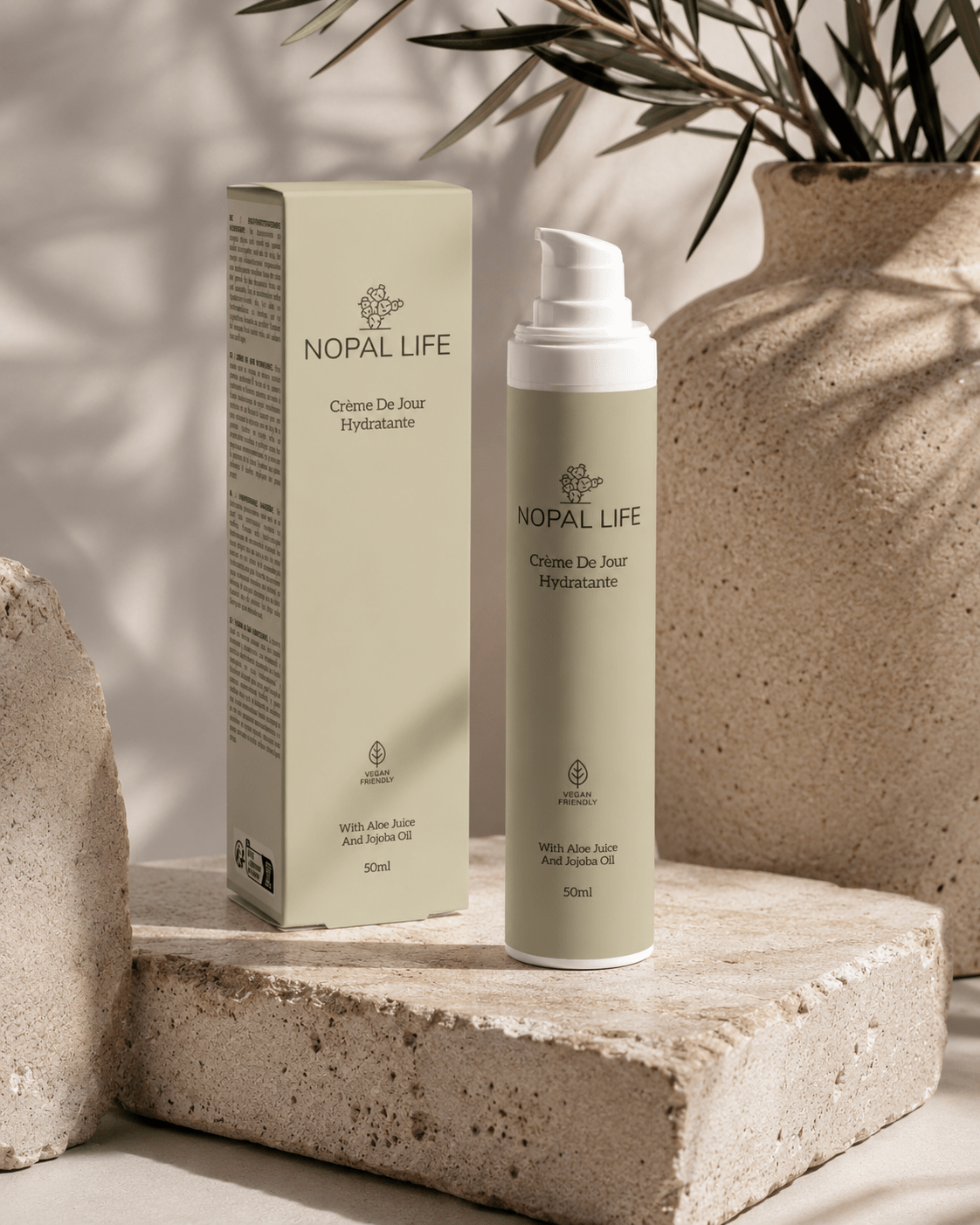
- Sealing (within 60s). Without letting it dry, apply the HA Hydrating Day Cream for plumped skin. Rich in prickly pear mucilages, it helps retain the water brought by the previous step and forms a comforting film against wind, pollution, and diffuse UV.
- Sun protection. An SPF suitable for your skin type systematically concludes the morning routine, including in winter and indoors near a window.
Evening — 4 steps, approximately 4 minutes
- Double cleansing. Cleansing oil first, to dissolve SPF and day's particles; then a gentle cleanser. Finish by patting dry, again without completely drying.
- Targeted active, if your routine includes one. Vitamin C, niacinamide, retinal, or gentle acids are applied before the humectant. The golden rule remains the same: from thinnest to thickest.
- Hydrating gel (20s). Same as in the morning, 2 to 3 pumps, patted onto damp skin.
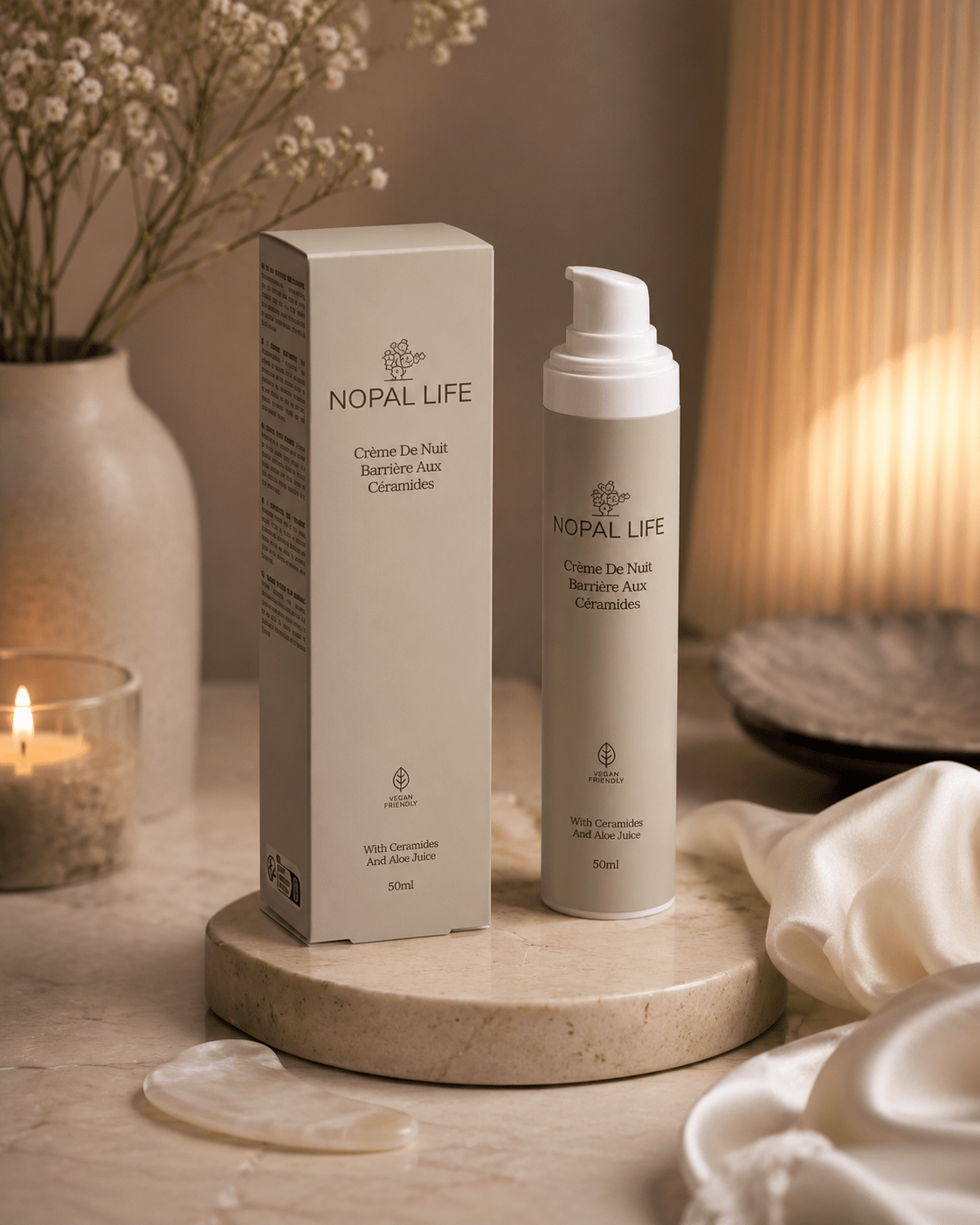
- Nighttime emollient layer. In the evening, you can be more generous: a slightly thicker layer, or 2 to 3 drops of prickly pear seed oil warmed between the palms and then pressed onto the face. In cases of marked dryness, both can be combined — cream first, then oil.
The Realistic Timeline of Sensations
Announcing a transformation in three days would be dishonest. Here are the benchmarks we observe and communicate, with regular twice-daily use.
| Timeline | What you observe | What not to expect |
|---|---|---|
| Day 1 | Softer touch, significant reduction in tightness within the hour | No change in skin texture |
| Week 2 | Suppleness established all day, brighter complexion upon waking | Action on expression lines |
| Weeks 4 to 6 | Plateau: appearance of dehydration fine lines reduced, more even skin texture | Continuous progression beyond – this is a maintenance plateau |
| 1-week break | Gradual return to previous state | No negative rebound: simply a return to the baseline state |
Frequency: This protocol is to be followed morning and evening, 7 days a week, with no habituation phenomenon or need for breaks. It is one of the rare active ingredients that can be used continuously without a rotation strategy.
The Active Ingredients of the Range and Their Exact Roles
| Ingredient | Family | Role in the formula | Felt |
|---|---|---|---|
| Vegetable Sodium Hyaluronate | Humectant | Captures and retains water, in two molecular weights | Immediately |
| Sodium PCA | Humectant (NMF) | Supplements water supply, naturally present in the stratum corneum | Within a few hours |
| Prickly pear mucilages | Vegetable film former | Semi-occlusive film, helps limit water loss | From the 1st week |
| Prickly pear seed oil | Emollient | Linoleic acid and tocopherols (vitamin E), supple feel | Immediately |
| Panthenol (pro-vitamin B5) | Film-forming humectant | Extends the sensation of hydration, soothes the skin | Within a few days |
| Aloe vera | Aqueous base / light emollient | Distribution vector, freshness upon application | Immediately |
Vegetable humectant, the backbone of the range
Obtained by fermentation on plant substrates, we use it in two chain lengths: a long one, which creates a comforting film on the surface, and a short one, which penetrates the superficial corneal layers. It is a vegan ingredient, with no animal derivatives, produced in Europe. Its complete description is available on our ingredient reference guide.
Sodium PCA — reinforcement from NMF
A component of the natural moisturizing factor that the body produces itself, highly hygroscopic. It broadens the relative humidity range over which the formula remains effective — decisive in heated indoor environments during winter.
Prickly Pear — the brand's signature active ingredient
Opuntia ficus-indica is a plant of arid environments, entirely organized around one problem: retaining water. Its mucilages, complex polysaccharides, form a semi-occlusive film that helps limit water loss without clogging pores. Its oil, extracted from the seeds, is rich in linoleic acid and tocopherols (vitamin E), valued for skin comfort. The logic becomes evident once formulated: combining a molecule that attracts water with a plant whose entire biology consists of not losing it.
Panthenol and aloe vera — peripheral comfort
Panthenol extends the sensation of hydration and soothes reactive skin types. Aloe vera forms the aqueous base of several textures: a humectant itself, a light emollient, it facilitates the even distribution of active ingredients and provides freshness upon application.
Combining without error: the compatibility chart
The question constantly arises: what can be layered, in what order, and should there be spacing? Here are the most common combinations, with the recommended order of application.
| Associated active | Compatible | Order | Waiting time | Moment |
|---|---|---|---|---|
| Vitamin C | Yes, a welcome combination | Vitamin C first | 1 to 2 minutes | Morning |
| Niacinamide | Yes, without reservation | Indifferent, often before | None | Morning or evening |
| Retinal / retinol | Yes, very complementary | Humectant first (buffering effect) | 2 minutes | Evening |
| Exfoliating acids (AHA/BHA) | Yes | Acid first | 3 to 5 minutes | Evening, 2 to 3 times/week |
| Vegetable oils | Yes, essential | Oil always last | Less than 60 seconds | Morning and evening |
| Sunscreen | Yes | SPF at the very end | After cream absorption | Morning |
| Peptides | Yes | Peptides first | 1 minute | Evening |
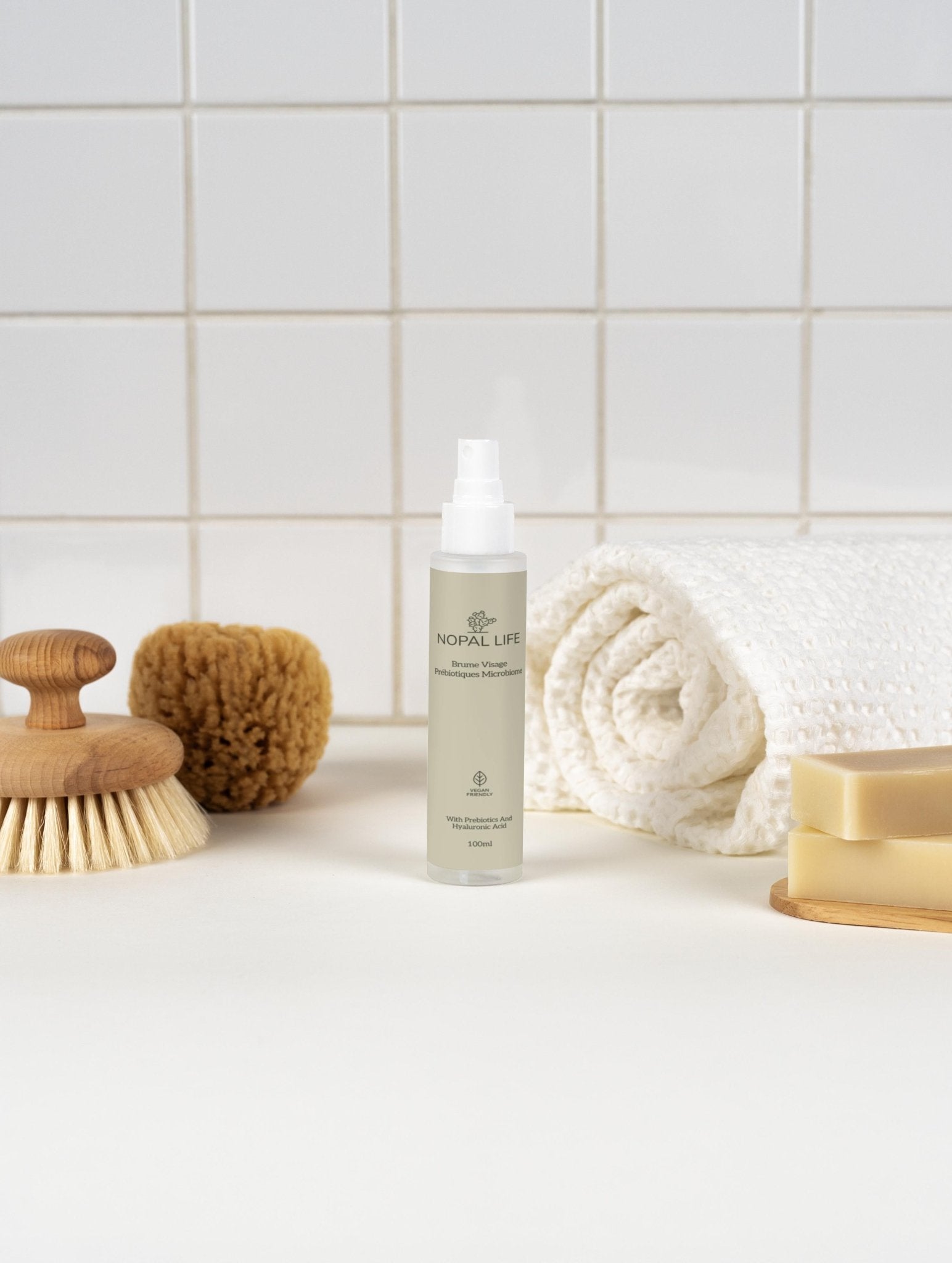
| Thermal water, mist | Yes, very useful | Just before, to moisturize | None | Morning and evening |
| Essential oils | Avoid on reactive skin | — | — | Occasional, never daily |
Serum, cream, mist or mask: choosing the right texture
The same active ingredient behaves completely differently depending on the vehicle that carries it. A serum is not a more concentrated face cream: it is a different product, with a dominant aqueous phase and rapid absorption. Here's how the formats encountered in natural beauty are distributed, and for whom each is truly intended.
| Format | Dominant phase | Dose per application | Place in the routine | For whom |
|---|---|---|---|---|
| Mist / essence | Aqueous, very fluid | 3 to 5 sprays | Before everything else, or as a touch-up | Heated office, travel, skin that feels tight during the day |
| Serum / gel | Gelified aqueous | 2 to 3 pumps | After cleansing, before cream | All skin types — this is the standard format |
| Organic face cream | Aqueous emulsion + oils | A pea-sized amount | Sealing step | Essential as soon as skin feels tight |
| Eye contour care | Light aqueous | A grain of rice per eye | Before the next step | Thin area, pronounced dehydration lines |
| Thick layer mask | Aqueous gel | One teaspoon | 1 to 2 times a week, in the evening | Radiance boost before an event |
| Lip balm | Oily / waxy | A thin layer | At the end of routine, as needed | Lips exposed to cold and wind |
| Sheet mask | Impregnated aqueous | One unit, 15 minutes | Before cream, instead of serum | Occasional — travel, night before an event |
Hyaluronic acid and collagen: two categories not to be confused
This is the most common confusion in the beauty aisle, perpetuated by visuals of "rebuilding fibers". Let's set the record straight, because understanding this distinction avoids many disappointments and unnecessary purchases.
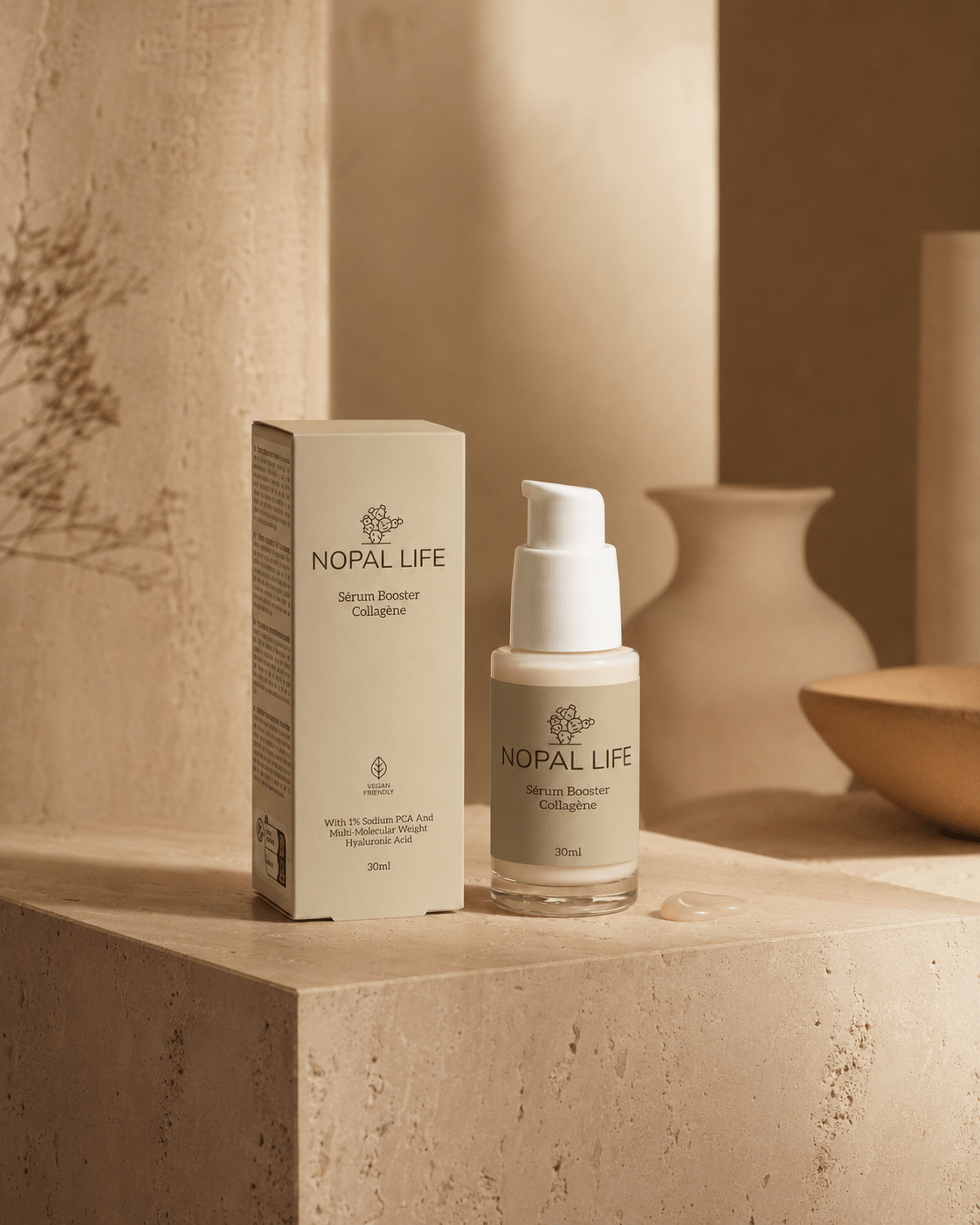
Collagen is a structural protein of the dermis: these are the fibers that give it its mechanical strength. Plant-based hyaluronic acid, on the other hand, is a complex sugar, belonging to the matrix where these fibers bathe. Two chemical families, two functions, two locations. With age, the body modifies its production in both categories, and the appearance of the complexion evolves — suppleness, apparent density, luminosity.
The crucial point: a molecule applied to the surface remains, for the most part, in the superficial layers of the epidermis. It maintains surface hydration — which is enough to modify the appearance of the skin texture and the visibility of dehydration lines. A real cosmetic benefit, measurable in the mirror. Nothing more.
What can legitimately be expected — and what falls under other approaches
| Expectation | Realistic with a moisturizer? | Where the real issue lies |
|---|---|---|
| Skin feels softer to the touch | Yes, from the first day | Stratum corneum |
| Brighter, more radiant complexion | Yes, within 2 weeks | Surface condition, light reflection |
| Less visible dehydration lines | Yes, 4 to 6 weeks | Hydration of superficial layers |
| Pronounced expression lines | No | Other approaches, professional guidance |
| Deep dermal firmness | No | Outside the scope of cosmetic care |
| Prevention of daily dryness | Yes, this is the core issue | Regular routine + sun protection |
Five mistakes that ruin results
Even a good active ingredient disappoints if misused. Here are the five most common mistakes we encounter – and the immediate correction for each.
Mistake 1: applying to completely dry skin
A humectant needs water to work. Applied to perfectly dry skin in a low-humidity environment, it will draw moisture from deeper layers rather than from the air – and the sensation of dryness will increase. Correction: spray with thermal water or apply immediately after rinsing, on a simply dabbed surface. It should feel cool to the touch, not dripping wet.
Mistake 2: not applying anything on top
This is by far the most frequent mistake. An aqueous serum alone is not a complete ritual: it attracts water but does not retain it without a layer that slows down evaporation. Correction: emulsion, balm, or oil, systematically, within a minute. If you were to remember only one line from this page, this would be it. Our guide on minimalist or complete routine helps decide the number of steps that actually suit you.
Mistake 3: reversing the order with cream
The chain is aqueous and light: it always comes before thick textures. Applied after a fatty substance, its distribution is blocked by the oily film and its benefit plummets. Correction: from most aqueous to most oily, from most fluid to most nourishing. This rule has no exception in a face ritual.
Mistake 4: confusing dehydration and dryness
Two distinct problems, two distinct answers. Dehydration is a lack of water in the skin layers: the humectant is the answer. Dryness is a lack of lipids in the barrier: vegetable oils are essential. The two often coexist, which is precisely why the ritual must combine both families. Quick test: skin that feels tight but remains supple when pinched is more likely dehydrated; skin that peels and appears rough is more likely dry.
Mistake 5: expecting spectacular results in three days
The action takes place in the superficial layers of the epidermis. Comfort is felt from the first few days; the appearance of dehydration lines, if it changes, does so more slowly — we place this milestone around the fourth to sixth week of twice-daily use, and pronounced expression lines, on the other hand, require other approaches. Correction: calibrate your expectations with the table of sensations above, and judge at six weeks, not three days.
Are you torn between a light gel and a rich cream, or are you unsure if your skin feels tight due to lack of water or lack of lipids? The Skin Intelligence™ diagnostic answers the question in two minutes and guides you to the corresponding protocol.
Frequently asked questions
Is the plant-based version as effective as the animal-derived one?
In terms of chemical structure, both are identical: same sugar sequence, same physico-chemical properties, same qualities of use. What differs is the production process and therefore traceability — as well as more precise control over molecular weight through fermentation. There's no reason to consider the plant-based route as a compromise: it is now the predominant route in the industry, including for high-end formulations.
Is it suitable for blemish-prone skin?
Yes, in a non-comedogenic, aqueous gel texture. The active ingredient itself does not clog pores, and its moisturizing action often brings comfort to skin that appears oily due to lack of water. The focus is on the rest of the formula — heavy oils, thick silicones, fragrance — rather than the humectant, which is rarely the cause.
Which molecular weight to choose for the eye contour?
Prefer low-molecular-weight or hydrolyzed forms (less than 50 kDa), which give a fine texture, without stickiness or migration towards the eye. A very long chain in this area leaves a film that can show under makeup. Apply with the tip of your ring finger, dabbing from the outer corner towards the inner corner, without stretching the area.
Is the ingredient compatible with a vegan and cruelty-free approach?
Yes, when it results from fermentation on plant substrates, with no animal derivatives at any stage of the process. Nopal Life products adhere to a cruelty-free approach, without animal testing, and with ingredients whose traceability is verified with suppliers.
The ten-criteria buying guide
The market is saturated and the arguments are similar. Here is the guide we apply to a botanical hyaluronic acid treatment — ours and other brands'.
| Criterion | Good sign | Weak signal |
|---|---|---|
| Molecular weight | Order of magnitude indicated, or multiple chain lengths | Complete silence on the subject |
| Origin | "From fermentation", non-animal origin specified | Bare mention, without process |
| Place in INCI | Sodium hyaluronate near the beginning of the list | Stuck between two preservatives |
| Organic mention | Applies to genuinely present agricultural materials | Decorative argument on a 95% aqueous base |
| Vegan mention | No animal derivatives in the full list | Claim without a consultable list |
| Sealing step | Cream or oil included in the ritual | Aqueous care sold alone |
| Container | Pump or airless, consistent dosage | Open jar, finger contact |
| List length | Short, fragrance-free — reactive skin benefits | Thirty components including a complex fragrance |
| Price | Compared per milliliter and per usage dose | Price per bottle, volume in small print |
| Customer reviews | Reviews written after one month of use | Reviews at three days, on texture alone |
Three often-confused words, clarified
- Hyaluronic acid — the name of the molecule, almost always of plant origin in cosmetics today.
- Sodium hyaluronate — its salt, the most commonly used form because it is more stable and more soluble. Seeing it in INCI is a good sign, not a byproduct.
- Collagen — a structural protein of the dermis, unrelated in function to the former. Collagen evolves with age, but a treatment applied to the surface works on the appearance and radiance of the complexion, never on deep fibers. This is why established expression lines do not fall under this category.
The eye contour deserves its own rule
The thinnest area of the face, the first where dehydration becomes visible. Three markers: a low molecular weight rather than a long chain, a dose the size of a grain of rice per eye, and application by tapping from the outer corner to the inner corner. Many eye contour treatments are classic serums repackaged — acceptable if the texture follows suit, less so if the price triples.
Discover the hydrating range
Our hydrating treatments are available in the online store, with free shipping starting from the threshold indicated at checkout. Each formula is developed in France, with traceable ingredients, without parabens, silicones, or synthetic dyes.
- Hydrating HA + Sodium PCA Plumping Effect Gel — the humectant step, which fills the reservoir. Two to three pumps on damp skin, morning and evening.
- Hydrating HA Day Cream for plumped skin — the film-forming step with prickly pear mucilage, which seals in moisture within 60 seconds.
- Pure Prickly Pear Oil — the evening emollient boost, 2 to 3 drops pressed onto the face after the cream.
RECOMMENDED TREATMENT
Pure prickly pear oil
Natural formula · Origin Algeria
DISCOVER THIS PRODUCT →PERSONALIZED ROUTINE
Nopal Life Skin Intelligence™
Free diagnosis · 2 minutes
START MY FREE DIAGNOSIS →Cited source: Papakonstantinou E., Roth M., Karakiulakis G., "Hyaluronic acid: A key molecule in skin aging", Dermato-Endocrinology, 2012, vol. 4(3), p. 253-258. Regulatory framework: Regulation (EC) No 1223/2009 of the European Parliament and of the Council on cosmetic products (INCI nomenclature, labelling, period after opening).
Read more
Information provided for cosmetic and educational purposes; it does not constitute medical advice.
The "How to choose your products and active ingredients" series
What to look for on a label, and what really distinguishes two similar formulas.
- Organic face care: natural, organic or clean?
- Natural moisturizing ingredients: how to choose them well
- Soothing ingredients for sensitive skin: 6 gentle actives and protocol
- Moisturizing face cream for women: choosing according to your skin type
- Donkey milk face cream: composition and choice
- Enzymatic papaya: natural skincare benefits and routine P1
Our anti-aging treatments