Argan Oil or Shea Butter: Which One for Your Skin?
A fluid oil versus a thick butter: texture dictates, much more than composition. Argan oil is suitable for the face, shea butter for truly dry areas.
Comparison
| Criterion | Argan oil | Shea butter |
|---|---|---|
| Origin | argan tree, Morocco | shea tree, West Africa |
| Texture | fluid, absorbs quickly | thick, occlusive |
| Common use | face, hair | body, dry areas |
| Composition | oleic, linoleic, tocopherol | oleic, stearic, unsaponifiables |
| Shelf life | 12 to 18 months | 1 to 2 years |
Argan oil
Argan oil is extracted from the kernels of the argan tree, a tree native to southwestern Morocco. Its composition is rich in oleic acid and linoleic acid, with a fraction of vitamin E.
Its texture is fluid: it penetrates in a few minutes and leaves no film. This makes it a facial oil usable even on combination skin.
Argan oil is also one of the most versatile—face, body, hands, hair ends. A single bottle covers these natural uses.
Shea butter
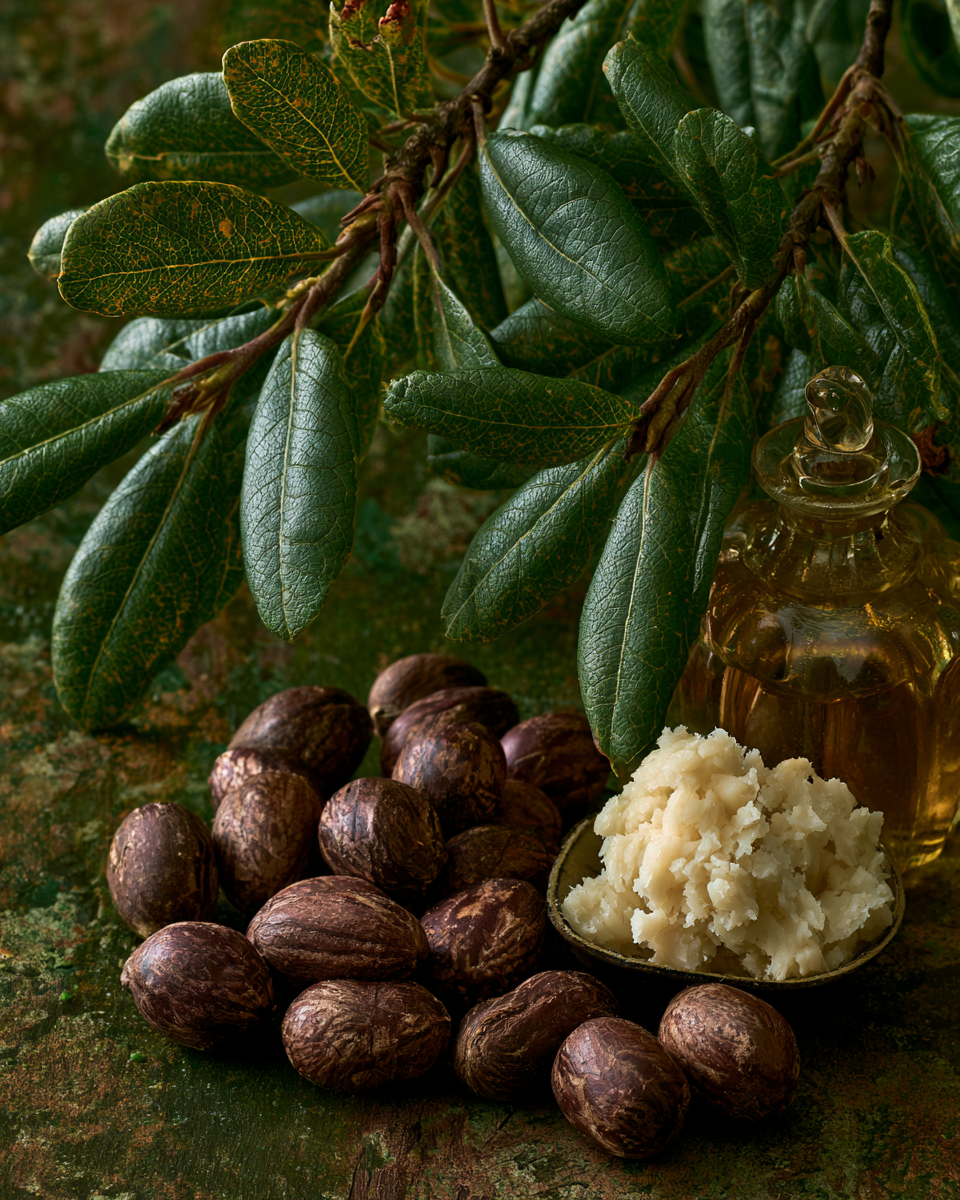
Shea butter is extracted from the nuts of Vitellaria paradoxa, a tree native to West Africa. Solid at room temperature, it melts on contact with the skin.
Its composition is rich in oleic acid and stearic acid, with a fraction of unsaponifiables. Shea butter intensely nourishes and forms a layer that significantly limits evaporation.
This occlusivity makes it strong for very dry areas and its limitation for the face: applied pure, it weighs down and bothers combination or oily skin.
Which one to choose
Face, normal to combination skin: argan oil, lighter.
Elbows, heels, chapped hands: shea butter, significantly more effective.
Hair: argan oil on the ends; shea butter only as a mask, before washing.
One product for everything: argan oil, whose texture is suitable for more uses.
Using them together
On the body in winter, it works well: argan oil first, then shea butter on top for the roughest areas.
On the face, it's rarely useful. Only one of the two, chosen according to your skin, produces more than a poorly controlled layering.
The gesture and the moment
Apply to damp skin, within three minutes of showering for the body. These fatty substances retain water in the skin; they do not provide it.
A small amount of shea butter covers an area—a knee, two hands, an elbow. It melts, spreads a lot, and the excess remains sticky: this is the most common mistake with this product.
Choosing them well
For argan oil: first cold press, non-deodorized, dark bottle, and a list that fits on one line—Argania spinosa kernel oil. A toasted hazelnut smell indicates a food-grade oil.
For shea butter: unrefined preferably, ivory color, slightly smoky smell. A perfectly white and odorless butter has been refined, which removes some of its unsaponifiables.
Two artisanal sectors
These two fatty substances come from sectors where processing remains largely manual, often carried out by women's cooperatives. This is a point that packaging highlights, and it corresponds to a reality.
This says nothing about the cosmetic quality of the product, which is judged by cold pressing, absence of refining, and freshness. The two criteria are independent.
Shelf life
Argan oil lasts twelve to eighteen months after opening, away from light. Shea butter lasts one to two years, away from heat.
A butter that has become grainy has not gone bad: it is a recrystallization linked to temperature variations, which disappears by warming it between the hands. A rancid smell, however, indicates a product to be discarded.
Their limits
Neither of them acts on wrinkles, spots, or deep texture. These are comfort care products, and they fulfill this role without exceeding it.
Neither protects against radiation, despite what is written about the natural SPF of shea butter. Daily sun protection remains essential.
To conclude
These products are cosmetics and improve skin comfort without treating any condition. Deep chapped skin or dryness that resists appropriate care deserves medical advice.


Go further than this article
Get our skincare guides by email — and start with your free skin diagnostic: 2 minutes, advice tailored to your skin. We ship to the US, UK, Canada, Australia and 27 European countries; somewhere else? Sign up and you will be the first to know when we deliver to your country.
By signing up, you agree to our privacy policy. Unsubscribe in one click.