Enzyme Papaya: natural skincare benefits and P1 routine
Behind every beautiful ingredient, there is a botanical story and specific uses. This guide on Enzymatic Papaya gives you the essentials: what it is, for which skin types, how to use it — and what to pair it with in a NOPAL LIFE routine.
Enzymatic papaya: enzymatic exfoliation in skincare
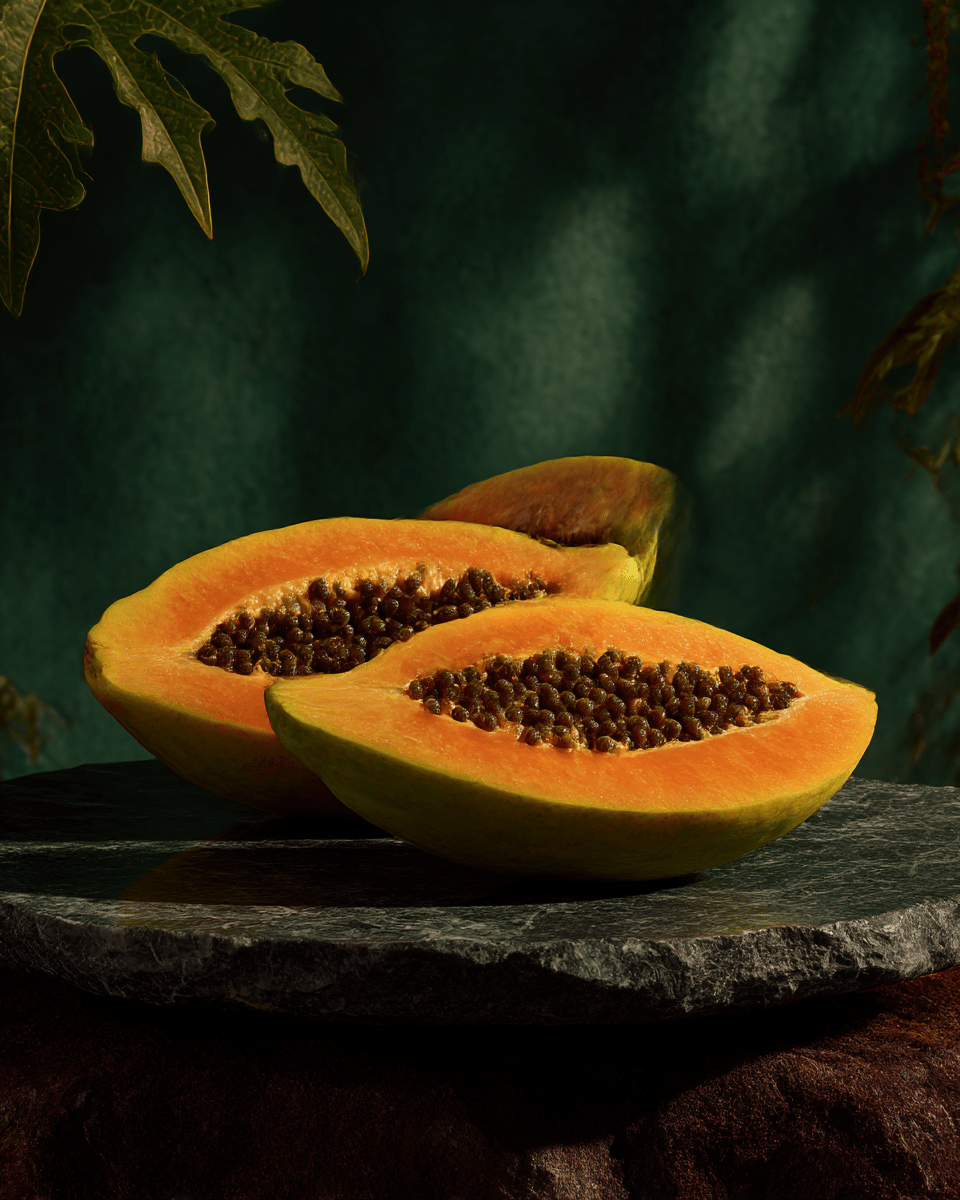
Papaya (Carica papaya) is much more than a tasty tropical fruit: its pulp and skin contain enzymatic compounds, of which papain is the most well-known and best-documented in cosmetology. Papain is traditionally associated with gentle exfoliation, and this is precisely what makes it so popular in skincare. On the surface of the epidermis, horny layer cells naturally accumulate, and with age, this surface renewal slows down, which can lead to a dull complexion. Papain aids in the natural elimination of superficial cells already ready to shed, for a smoothed surface effect, without mechanical abrasion. This enzymatic exfoliation offers several advantages compared to acid exfoliants (AHA, BHA): it is used at a neutral pH, making it compatible with a wide range of skin types and formulations; it is appreciated for its gentle use; and its surface action is gradual, which helps limit the discomfort of over-exfoliation. These properties make it a choice active ingredient for gentle exfoliating care, especially for sensitive skin that tolerates AHAs or BHAs less well.
Benefits of enzymatic papaya for every skin type
Papain is remarkable for its versatility: it provides different benefits depending on the skin type, but always in the direction of improving texture and radiance. For oily skin with enlarged pores, its surface exfoliating action helps to unclog the appearance of pores and improve their visible clarity. For dull skin with slow renewal (mature skin), papain aids in the elimination of accumulated superficial cells, revealing skin that looks brighter and is more receptive to subsequent treatments. For skin marked by blemishes, its exfoliating action helps to refine the surface appearance, contributing to a more uniform complexion over successive applications. For sensitive skin, papain can be used at low concentrations as a gentler alternative to AHAs, with less potential for discomfort. Papaya also contains other compounds valued in cosmetics: vitamin C, carotenoids (beta-carotene, lycopene, zeaxanthin), flavonoids, and B vitamins, which support papain for overall skin surface care.
Routine protocol with papaya enzymes: usage and frequency
Papain is found in various galenic forms in cosmetics: enzymatic masks, serums, exfoliating toners, and more rarely in day creams. The enzymatic mask is the most common and popular form for concentrated, occasional action. It is applied to clean, slightly damp skin (humidity favors application comfort), left on for 5 to 15 minutes depending on concentration and skin sensitivity, then rinsed thoroughly. For normal to oily skin, a frequency of two to three times a week is optimal. For sensitive or dry mature skin, once to twice a week is more appropriate. An enzymatic serum or toner with papain can be used in a daily routine for oily skin, or two to four times a week for more delicate skin. In all cases, papain should only be used in the evening, because like any exfoliant, it can slightly increase skin's sensitivity to the sun. The next morning, SPF 50 sun protection is essential. Papain combines well with niacinamide (to be applied after the enzyme to nourish and soothe the skin), hyaluronic acid (hydration after exfoliation), and ceramides (for skin barrier comfort). It should not be combined in the same routine with retinol or concentrated AHAs to avoid an accumulation of exfoliating active ingredients.
Mistakes to avoid with enzymatic papaya skincare
The first mistake is to excessively prolong the contact time of the enzymatic mask, believing that it will improve results. Unlike AHAs, whose perceived effect increases with exposure time, papain acts quickly (5 to 15 minutes are sufficient) and prolonged contact time can cause reactive discomfort on sensitive skin. The second mistake concerns storage: enzymes are fragile compounds that degrade with heat, light, and in an oxidizing environment. A papain mask stored in a hot, humid bathroom, or exposed to direct light, quickly loses its effectiveness. Storing it in a cool, dark place is essential to preserve the product's qualities. The third mistake is using fresh papain in DIY at uncontrolled concentrations: the content of fresh fruit is highly variable and can be much higher than that of standardized cosmetic formulas, with a higher risk of discomfort or sensitivity. The fourth mistake concerns people reactive to latex: papain can trigger cross-reactions in people with latex sensitivity (latex-fruit syndrome), who should therefore test with caution or consult an allergist before using products containing papain.
Enzymatic exfoliation and skin renewal: what to remember
The benefits of regular exfoliation on the skin's surface appearance are among the most well-documented topics in cosmetology. Enzymatic exfoliants like papain support the skin's natural surface renewal by helping to remove superficial cells already ready to shed. This support for natural renewal has positive consequences for the skin's appearance: a smoother and more even-looking surface, better light reflection (increased radiance), and improved receptiveness to subsequently applied treatments (serum, cream). For mature skin, where surface renewal naturally slows down, this support provides real comfort, leading to a fresher-looking complexion over weeks of regular use.
The Nopal Life answer: enzymatic papaya and prickly pear seed oil, the exfoliation-nutrition duo
In the Nopal Life skincare strategy, enzymatic papain and prickly pear seed oil form a particularly coherent duo for skin that seeks to reconcile surface renewal and nutrition. Papain, used two to three times a week in a mask or enzymatic serum, prepares the skin's surface by aiding in the elimination of superficial cells and refining the appearance of pores for better absorption. Prickly pear seed oil, applied after rinsing the enzymatic mask on still damp skin, is then better absorbed by the superficial layers of the skin, bringing its essential fatty acids, vitamin E, and sterols to skin freshly revealed by enzymatic exfoliation. This sequential approach – exfoliate first to reveal, then nourish to provide comfort – is the concrete expression of the Nopal Life philosophy: natural active ingredients selected for their quality, combined in coherent protocols that enhance their synergy. For a complete customization of this protocol according to your skin type, Nopal Life's Skin Intelligence diagnostic guides you to the exact combination that meets your specific needs.
Frequently Asked Questions
Q: Is papain useful for pigment spots?
A: Papain acts on the surface appearance by aiding in the elimination of superficial cells, which helps to reduce the visible appearance of spots over successive applications. It does not claim to modify pigmentation: it is regular exfoliation, combined with rigorous sun protection, that contributes to a more uniform complexion over 6 to 8 weeks.
Q: Can people reactive to latex use papain?
A: With caution. Latex-fruit syndrome can involve cross-reactions with papaya and its papain. It is advisable to perform a skin patch test 48 hours before the first use or to consult an allergist if you have documented latex sensitivity.
Q: Can papain be used on the body?
A: Yes, and it's particularly beneficial on areas with thickened skin (elbows, knees, heels) where gentle enzymatic exfoliation can reduce roughness and improve texture. Papain body scrubs are highly appreciated for their gentleness and effectiveness.
Q: Can fresh papaya be used directly on the skin?
A: Fresh papaya pulp can be applied as a homemade mask (5 to 10 minutes), but with the usual DIY caveats: the papain content is variable and can be uncomfortable on sensitive skin, and fresh papaya must be of good hygienic quality. Rinse thoroughly and avoid the eye area.
Q: Is papain suitable for skin with active blemishes?
A: With caution. It is more suitable for blemish-prone skin with blackheads, outside of periods of irritation, or as a follow-up to soothe the appearance of residual marks. Avoid direct application on active pimples.
Q: Are enzymatic serums with papain more effective than masks?
A: Different in terms of concentration and contact time. Masks have a higher concentration and longer contact, making them more suitable for intensive, occasional care. Serums with lower concentrations allow for daily or near-daily use for continuous surface renewal. Both have their place in a well-constructed routine.
Q: Can papain help refine enlarged pores?
A: Yes, through its exfoliating action on the appearance of pores. By helping to dislodge surface debris that marks pores, regular enzymatic exfoliation helps to reduce their appearance. For a more pronounced effect on pores, combining it with niacinamide (which helps mattify the appearance of shiny areas) and zinc (appreciated for the tightened appearance of pores) is particularly interesting.
Read More
Information provided for cosmetic and educational purposes; it does not constitute medical advice.
The series "Choosing your products and active ingredients wisely"
What to look for on a label, and what truly distinguishes two similar formulas.
- Organic facial care: natural, organic, or clean?
- Natural moisturizing ingredients: how to choose them well
- Soothing sensitive skin: 6 gentle active ingredients and protocol
- Vegetal hyaluronic acid: how to choose and apply it
- Women's hydrating face cream: choosing according to your skin
- Donkey milk face cream: composition and choice


Go further than this article
Get our skincare guides by email — and start with your free skin diagnostic: 2 minutes, advice tailored to your skin. We ship to the US, UK, Canada, Australia and 27 European countries; somewhere else? Sign up and you will be the first to know when we deliver to your country.
By signing up, you agree to our privacy policy. Unsubscribe in one click.