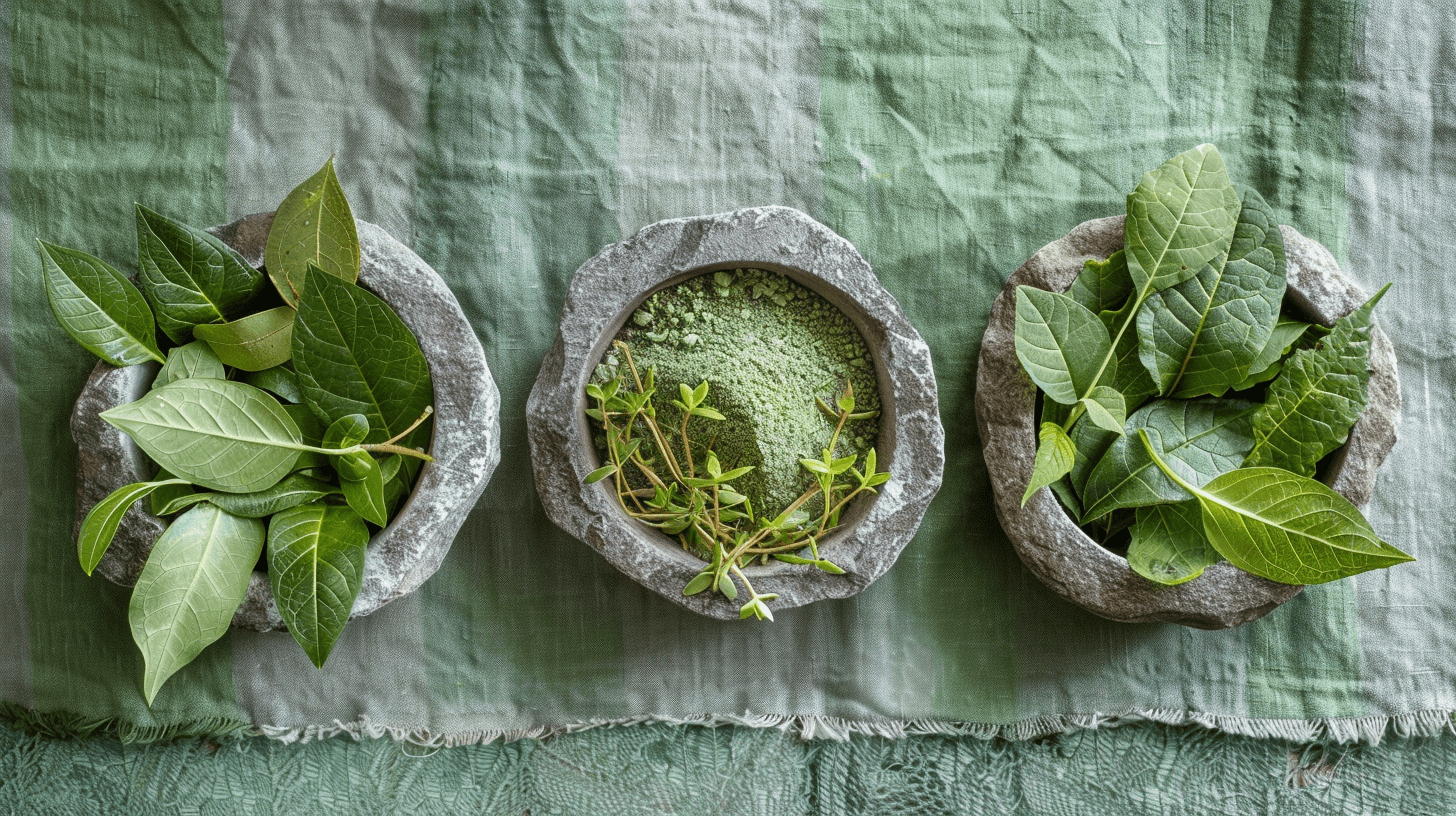
Organic facial care: natural, organic, or clean?
Responsible beauty has its own vocabulary, and it must be admitted: it often causes confusion. Natural, organic, clean… these three words appear on bottles as promises, but they don't quite tell the same story. Through this Beauty Lab guide, NOPAL LIFE helps you see clearly—to choose your skincare products knowingly, with that demand for accuracy and that touch of botanical nutrition that are so dear to us.
Why these three words are not synonymous
In the skincare market, "natural," "organic," and "clean" are sometimes used interchangeably. However, each refers to a different logic: the origin of ingredients for natural, the method of cultivation and production for organic, and a formulation philosophy for clean.
Understanding this distinction is not trivial. It's what allows us to go beyond mere labeling to assess what a product actually brings to the skin. A product can be natural without being organic, clean without being 100% natural, or combine several of these qualities at once. The whole point is to read beyond the big words displayed on the packaging.
A useful clarification: "natural" and "clean" are not regulated in the same way as organic. Their definition can vary from brand to brand, due to the lack of a single regulatory framework. Hence the importance of looking at the ingredient list (INCI) rather than stopping at the marketing discourse. Deciphering these three notions means empowering yourself to choose knowingly.
Natural cosmetics: a question of origin
Natural cosmetics emphasize the origin of ingredients. They prioritize components derived from nature—vegetable oils, butters, plant extracts, floral waters, waxes—and limit, or even exclude, synthetic ingredients.
Its major advantage lies in the richness of botanical raw materials: fatty acids, vitamins, and antioxidants naturally present in plants provide suppleness, comfort, and radiance to the skin. Cold-pressed vegetable oils, for example, retain a large part of their precious compounds, whereas more aggressive processes would deplete their quality.
Be careful, however: "natural" does not automatically mean "better for all skin types." A natural formula can be perfectly well-tolerated and comfortable, provided it is suitable for your skin type. Some plant extracts may also not be suitable for reactive skin. Again, observation is key. To discover botanically inspired formulas, NOPAL LIFE's Natural Face Care collection and Face Oils collection bring together products designed around plant active ingredients.
Organic cosmetics: a requirement for cultivation and certification
Organic cosmetics add a layer of demand to the natural dimension: they focus on the method of cultivation and production of ingredients. Plant components must come from organic farming, without pesticides or synthetic fertilizers, and the formula must comply with precise specifications.
This is where labels come into play. Certifications like COSMOS Organic or Ecocert regulate the percentage of organic ingredients, the natural origin of the formula, and the absence of certain substances. Unlike "natural" or "clean" mentions, organic is based on independent control and verifiable criteria, regularly audited.
Choosing an organic product often means favoring a more environmentally friendly approach and enhanced traceability, from plant to bottle. For the skin, this translates into quality raw materials, cultivated with care. The cold-pressed and certified organic prickly pear seed oil illustrates this approach: a precious raw material, rich in vitamin E and essential fatty acids, from controlled cultivation.
Free skin diagnosis
Curious to know what skincare products truly suit your skin?
Take my 2-min diagnosis →
Clean beauty: a philosophy of formulation
Clean beauty, or "clean" cosmetics, approaches the issue from another angle: that of formulation. Rather than focusing on origin or cultivation, it emphasizes what the formula does not contain.
The central idea is transparency: clearly displaying the composition and excluding certain ingredients deemed undesirable or controversial. Clean beauty does not necessarily oppose synthetic ingredients: a well-tolerated and useful synthetic ingredient can certainly have its place, as long as the formula remains clear and designed for skin comfort. It is a pragmatic, user-centered approach.
Its weakness? The lack of a single official definition. Each brand draws up its own list of excluded ingredients, and the perimeters vary significantly. Clean beauty is therefore judged less on the word itself than on the coherence and transparency of the approach. A good reflex: check if the brand clearly explains its formulation choices and publishes the complete list of its ingredients.
How to choose according to your skin and values
Rather than opposing these three approaches, it is better to see them as complementary benchmarks. A successful routine often combines the best of each: naturally derived ingredients, respectful cultivation where possible, and transparent formulation.
Start with your skin type. Before any label, the decisive criterion remains the suitability of the formula for your skin's needs—dryness, lack of radiance, desire for suppleness. A perfectly "clean" but unsuitable product will not provide the expected comfort.
Read the INCI list. Ingredients are listed in descending order of quantity. This is the most reliable tool to evaluate a product beyond its marketing claims.
Identify the labels that matter to you. If the organic dimension and traceability are important to you, rely on independent certifications rather than simple mentions.
Test gently. As with any new product, introduce it gradually and observe your skin's reaction. NOPAL LIFE's Hydration & Comfort collection can support this step with textures designed for daily comfort. And if a persistent reaction appears, seek advice from a healthcare professional.
Review with a personalized diagnosis
Beyond the labels, the most useful thing is to know what your skin truly needs. This is precisely what a structured diagnosis provides, by putting the skin—and not the label—at the center of the decision.
The Nopal Life Skin Intelligence™ asks you a few targeted questions in two minutes and guides you towards products truly adapted to your skin, natural and botanically inspired. It's the ideal step to transform the jungle of appellations into informed choices. You can then delve deeper into each need using the Skin Guide.
Frequently Asked Questions
Q: What is the difference between natural and organic?
A: "Natural" concerns the origin of ingredients (derived from nature rather than synthesis). "Organic" adds a requirement for the cultivation method—organic farming, without synthetic pesticides—and relies on labels and independent control. A product can be natural without being organic.
Q: Is clean beauty necessarily natural?
A: No. Clean beauty is primarily defined by transparency and the absence of certain controversial ingredients. It can incorporate well-tolerated synthetic components, as long as the formula remains clear and designed for skin comfort.
Q: Is a natural product suitable for all skin types?
A: Not automatically. A natural formula can be very comfortable, but the essential thing is that it is adapted to your skin type. The origin of an ingredient alone does not guarantee that it will suit you: observation remains your best guide.
Q: How do I verify that a product is truly organic?
A: Rely on certification labels such as COSMOS Organic or Ecocert, which regulate the percentage of organic ingredients and are based on independent control. The mention "organic" without a verifiable label has less value.
Q: Why read the INCI list?
A: The INCI lists ingredients in descending order of quantity. It is the most reliable tool to understand the actual composition of a product, beyond the words "natural" or "clean" displayed on the packaging.
Q: Is natural always more ecological?
A: Not necessarily. Environmental impact depends on many factors: cultivation, transport, packaging, manufacturing processes. Certified organic generally offers better guarantees in this regard, thanks to its specifications.
Q: Does an online diagnosis replace the advice of a dermatologist?
A: No. The Skin Intelligence™ diagnosis is a cosmetic guidance tool for choosing a suitable routine. In case of persistent redness, itching, or established patches, consult a healthcare professional.
RECOMMENDED PRODUCT
Cold-pressed organic prickly pear seed oil
DISCOVER THIS PRODUCT →
PERSONALIZED ROUTINE
Nopal Life Skin Intelligence™ · Free diagnosis · 2 minutes
DISCOVER MY ROUTINE →
Natural, organic, clean: three words, three complementary logics. Natural speaks of the origin of ingredients, organic of their cultivation and certification, clean of transparent formulation. Rather than opposing them, learn to read them together—and above all, to compare them to your skin's real needs. To transform these benchmarks into confident choices, the Skin Intelligence™ diagnosis guides you towards the routine that suits you.
Read more
Information provided for cosmetic and educational purposes; it does not constitute medical advice.
The "How to choose your products and active ingredients" series
What to look for on a label, and what truly distinguishes two similar formulas.
- Natural moisturizing ingredients: how to choose them well
- Soothing ingredients for sensitive skin: 6 gentle actives and protocol
- Vegetal hyaluronic acid: how to choose and apply it well
- Women's hydrating face cream: how to choose according to your skin
- Donkey milk face cream: composition and choice
- Enzymatic papaya: natural skincare benefits and routine P1


Go further than this article
Get our skincare guides by email — and start with your free skin diagnostic: 2 minutes, advice tailored to your skin. We ship to the US, UK, Canada, Australia and 27 European countries; somewhere else? Sign up and you will be the first to know when we deliver to your country.
By signing up, you agree to our privacy policy. Unsubscribe in one click.