Skin hydration or nourishment: make your choice in 4 minutes
Hydrating means providing water to the skin; nourishing means providing lipids. These are two distinct needs, two families of formulas—and a confusion that is costly: we pile on bottles without ever addressing the right demand. One can lack hydration, lack oil, or both. This guide provides the method to decide: a 4-minute observation test, nine quantitative reading tables, the calculation of the real cost of a routine, and a 21-day protocol to verify that you have hit the mark.
Key takeaways
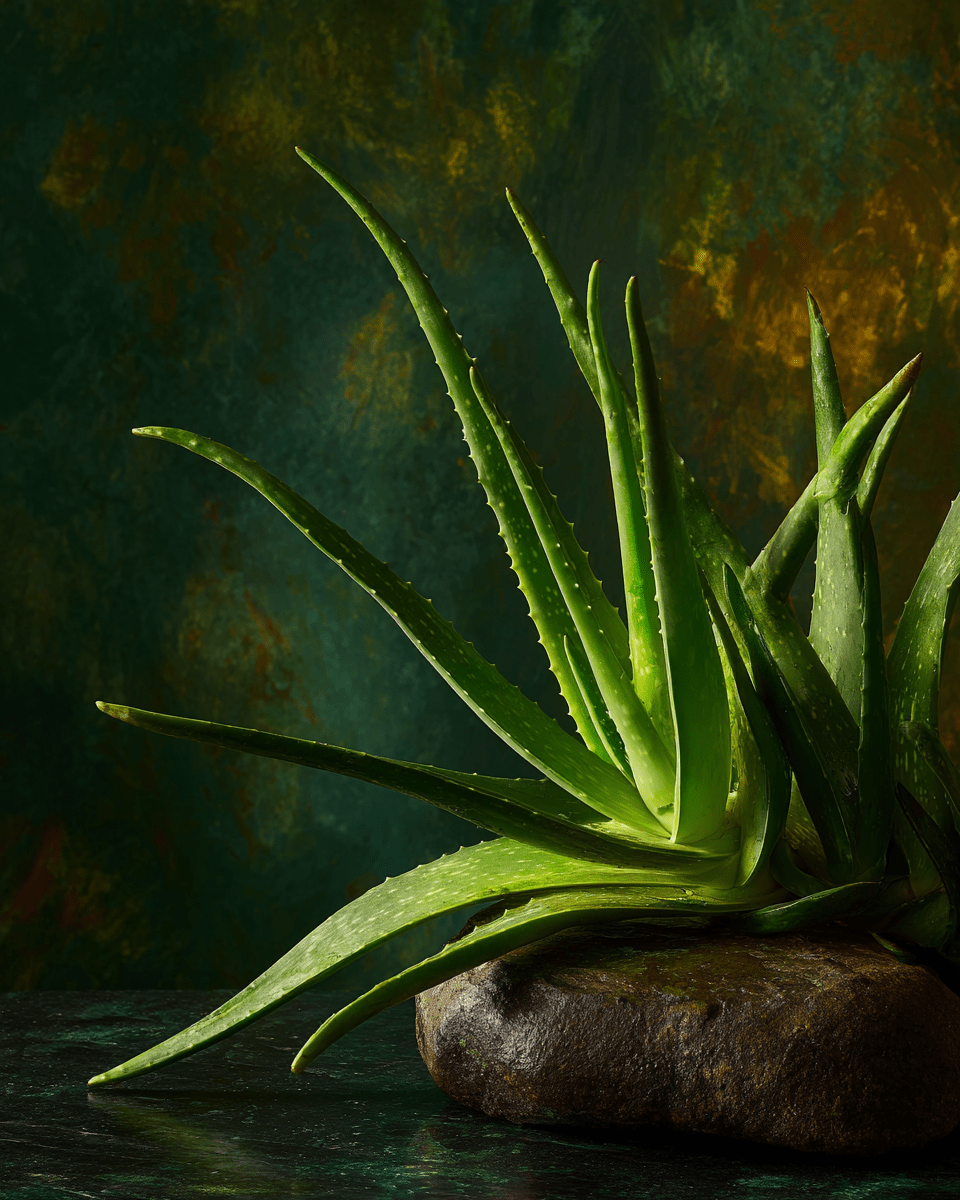
- Hydrating = water supply + humectants (hyaluronate, glycerin, aloe vera) retained in the stratum corneum.
- Nourishing = lipid supply (cold-pressed seeds, butters, ceramides) that help restore the surface hydrolipidic film.
- Dehydration is a temporary condition that also affects oily skin. Dryness is a lasting skin type that produces little sebum.
- The decisive test: pinch your cheekbone for 3 seconds. Fine lines that are slow to disappear = need for water. A rough texture under your fingertip = need for oil.
- The rule that changes everything: apply within 3 minutes after rinsing, on still-damp skin.
- The speed of response is diagnostic: 24 to 72 hours for a hydration need, 2 to 4 weeks for a lipid need.
- Properly hydrated skin is not necessarily nourished—and the reverse is equally true.
Hydrate and nourish: two actions, two targets
Skincare vocabulary has blended the two words for so long that you can find "intense hydrating nourishing emulsion" on the same jar. Yet the difference is physical before it is commercial.
- Hydrate = provide water to the stratum corneum, retain it there, slow its evaporation.
- Nourish = provide fatty substances—cold-pressed seeds, butters, ceramides—to compensate for a deficit and seal the surface.
In other words: the first action affects the content—the amount retained. Nutrition affects the container—how well that reserve remains trapped. Skin that is well-replenished but poorly sealed empties in a few hours; well-sealed but never replenished, it feels supple to the touch yet appears dull, without bounce.
Therefore, opposing the two is a false question: the balance can only be adjusted at a given moment, in a given area. The real question is never "one or the other?", but "which one do I need more, now, in this area?". Two articles complement this one depending on which side of the balance concerns you: dehydrated skin for the hydration aspect, dry skin for the lipid aspect.
Where water goes, where oil goes
The stratum corneum—the visible surface—is a stack of about fifteen layers of flattened cells, corneocytes, 10 to 20 micrometers thick. The classic image is that of a wall: corneocytes are the bricks, and between them a lipid cement made of ceramides, cholesterol, and free fatty acids ensures impermeability. The molar proportions of this cement are around 50% ceramides, 25% cholesterol, 15% free fatty acids.
Inside the bricks is the NMF (Natural Moisturizing Factor), a mixture of amino acids, urea, and lactates whose function is to capture moisture. A healthy stratum corneum has a water content of 20 to 30%; below approximately 10%, its suppleness collapses.
A part of this reserve constantly passes through the epidermis to the outside, where it evaporates: this is transepidermal water loss (TEWL). In a resting adult, it commonly ranges from 5 to 10 g/m²/h. This evaporation is normal. The problem begins when it accelerates—depleted cement, dry air, overly alkaline cleanser, friction. And this is where the difference between the two actions becomes operational:
- If the leakage comes from a lack of stock (few available humectants), the answer is hydration.
- If it comes from a failing seal (depleted cement, too thin a surface veil), the answer is nourishment.
Above extends the hydrolipidic film, a very fine emulsion of sweat and sebum whose pH is usually between 4.7 and 5.5. It is the first line of protection, and the most fragile: a classic soap (pH 9 to 10) is enough to disrupt it for several hours. Remember the hierarchy of action, from fastest to slowest: correcting cleansing (3 to 5 days), adding humectants (24 to 72 hours), reconstituting the fatty cement (2 to 4 weeks, the time of an epidermal renewal cycle, about 28 days in young adults). The article on skin barrier details this architecture.
A simple image to clarify ideas: the epidermis builds the brick, the hydrolipidic film applies the varnish, and the skin barrier is the result of both. When this barrier functions, the surface remains supple, without signs of discomfort, and moisturizing treatments deliver on their promises. When it cracks, every formula seems to "no longer work"—when in fact it is the underlying structure that has changed, not the formula.
The reading table: two columns, two needs
Here is the grid we use to make a decision. Each line is an observable criterion, not an impression.
| Observable criterion | Dehydration (lack of water) | Dryness (lack of lipids) |
|---|---|---|
| Nature | Temporary and reversible state | Lasting condition, often constitutional |
| Appearance upon waking | Dull complexion, pillow marks that linger | Matte, granular, sometimes flaky surface |
| Pinch test (3 s) | Fine fan-shaped lines, slow to disappear | Few folds, but rough texture under fingers |
| After cleansing | Tightness that subsides as soon as an aqueous fluid is applied | Tightness that persists until oil is applied |
| T-zone | May remain shiny despite discomfort | Rarely shiny, uniformly matte |
| Makeup | Foundation settles into fine lines | Foundation clings and flakes in patches |
| Triggers | Dry air, heating, air conditioning, airplane cabin | Worsens in cold weather, but present in summer |
| Ingredients to target | Hyaluronate, glycerin, aloe vera, urea, panthenol | Vegetable oils, butters, ceramides, squalane |
| Suitable texture | Aqueous fluid, gel, light emulsion | Balm, dense texture, oily veil |
| Improvement time | 24 to 72 hours | 2 to 4 weeks |
This last line is the most useful in practice: the speed of response is diagnostic. If everything feels significantly better by the second day with an aqueous fluid, it was thirst. If nothing changes until the third week of a lipid treatment, it means the surface cement is rebuilding—and it was indeed oil that was missing.
Lack of hydration: a condition, not a category
A dehydrated epidermis lacks moisture, not necessarily oil. The condition is temporary and affects everyone, including oily, combination, or young skin. The combination "shiny and thirsty" is even the most common before age 30—and the most often mistreated.
Signs of dehydration: very fine micro-creases in a network on the cheekbones and under the eyes, which disappear as soon as you hydrate; dull complexion, because a depleted surface reflects light less well; feeling that everything disappears in a few seconds; discomfort varying according to location; tingling upon application of a formula usually well-tolerated.
External causes dominate: cold, wind, heating—the relative humidity of a heated interior often drops to 25-30%, while comfort is between 45 and 55%—air conditioning, hard water, long hot showers, harsh cleansers. Everyday habits themselves are often to blame:
- Double cleansing morning and evening when not needed.
- Too high a temperature: above approximately 37°C, the solubilization of surface fats accelerates.
- Accumulation of chemical exfoliants without recovery time.
Correction is done in three steps, in this order: supply (mist, lotion, or simply staying damp after rinsing); fix with humectants; seal with an emulsion or a light lipid veil. The third step is the one most often skipped—hence the unsettling impression that a hyaluronate fluid "dries out": in very dry air and without sealing, the action is not wrong, it is incomplete. See also how to recognize it and daily natural gestures.
Lack of lipids: a lasting condition
Here, the surface fats are insufficient. It is a constitutional condition: the surface film, too poor in fat, protects less effectively and allows moisture to escape—which explains why an established dry condition almost always ends up being accompanied by a hydration deficit. Dry skin then accumulates both deficiencies. The most constant signs:
- Rough, sometimes powdery surface that snags cotton or a scarf.
- Fine flaking on the sides of the nose, eyebrows, chin, shins, and forearms.
- Barely visible pores, uniformly matte complexion, never shiny at the end of the day.
- Permanent discomfort, independent of the weather, accentuated by cold.
- Marked sensitivity to rough textiles, scented detergents, friction.
The strategy is simple: provide oil to help reconstitute the protective veil and restore lasting comfort. Three families act in complementarity—vegetable oils, rich in unsaturated fatty acids, which integrate into the surface and immediately soften; butters (shea, cocoa, mango) and waxes, which are more occlusive; ceramides and squalane, which complement the composition of the intercellular cement. See how to recognize a dry skin type.
The 4-minute test
Here is the self-observation protocol we recommend. It does not replace a complete diagnosis, but it eliminates most common errors in product selection. Do it in the evening, on bare skin, never after an exfoliation or the day after sun exposure.
Protocol — 4 minutes flat
- Minute 0. Cleanse with your usual cleanser, lukewarm rinse. Pat dry without rubbing. Do not apply anything.
- Minutes 1 to 3. Wait, away from a heat source, without touching your face.
-
Minute 3 — pinch. Gently pinch your cheekbone between your thumb and index finger for 3 seconds, release, observe in grazing light.
- Fine, fan-shaped lines that take more than a second to fade → need for water.
- Few folds, but a rough, granular texture under the pulp → need for oil.
- Both → mixed need, the most common case in winter.
- Minute 4 — blotter. Press a paper tissue on your forehead for 10 seconds, then on your cheek. An oily trace on the forehead only, with a tight-feeling cheek, indicates a thirsty mixed profile: you need to quench without weighing down.
- Write down the result. Repeat the test in 21 days to measure progress.
A complementary, free, and surprisingly reliable benchmark: absorption time. Place a dab of your usual formula on your forearm and count. Absorbed in less than 30 seconds without leaving anything: too light for a lipid need. Still sticky after 5 minutes: too dense or too occlusive for the season. Satiny and supple finish between 1 and 3 minutes: the dosage is just right.
If you prefer a more detailed reading, combining zones and the order of steps, NOPAL LIFE's Skin Intelligence diagnostic separates hydration needs from lipid needs and guides you to the corresponding textures.
Humectants, emollients, occlusives: the three functions of a formula
Every hydrating or nourishing ingredient belongs to one of these three families. Knowing how to recognize them on an INCI list is more valuable than any packaging claim.
| Family | Function in the formula | INCI Examples | Usual dosage | Who it benefits |
|---|---|---|---|---|
| Humectants | Attract and retain moisture in the stratum corneum | Sodium Hyaluronate, Glycerin, Aloe Barbadensis, Urea, Panthenol, Betaine | Glycerin 3 to 10% Hyaluronate 0.1 to 2% |
Thirsty skin, all skin types |
| Emollients | Smooth the surface, fill in between corneocytes, soften | Vegetable oils, Squalane, Ceramide NP, light esters | 2 to 20% depending on texture | Established dryness, rough texture, winter |
| Occlusives | Form a barrier that slows down evaporation | Shea butter, Cera Alba, waxes, fatty alcohols | 1 to 10%, often at the end of the formula | Exposed areas, cold, wind, very dry skin |
A well-constructed emulsion combines all three: humectants for hydration, emollients for immediate comfort, and a touch of occlusive to last all day. The ratio between these families dictates the sensorial experience—and explains why the same formula suits one person but overwhelms another.
Three simple steps are enough to read an INCI list. One: look at the first five ingredients; they make up the bulk of the formula. Aqua at the top followed by Glycerin = water-based orientation; a fat in the first three = nourishing orientation. Two: look for "Oil", "Butter", or "Seed Oil"—if they only appear at the end of the list, the nourishing aspect is symbolic. Three: count the humectants; a single one at the end of the list will never make a good moisturizing product.
Five Moisturizing Actives Compared
"Moisturizing" means nothing until you know which one. The five most common humectants do not work in the same place, at the same speed, or with the same feel.
| Active | INCI Name | Usual Cosmetic Dosage | Where it acts | Watch-out point |
|---|---|---|---|---|
| Glycerin | Glycerin | 3 to 10% | Small molecule, diffuses well into the stratum corneum | Sticky above 12%; the best documented and cheapest |
| Hyaluronic Acid | Sodium Hyaluronate | 0.1 to 2% | Surface for high molecular weights; low fractions diffuse slightly more | Immediate but short-lived rebound effect without sealing; requires a layer on top in dry air |
| Panthenol (pro-vitamin B5) | Panthenol | 1 to 5% | Stratum corneum; humectant with a distinct softening feel | Very well tolerated; useful when the surface is irritated |
| Urea | Urea | 2 to 5% on face; 5 to 10% elsewhere | Natural component of NMF: directly replenishes intracellular stores | Above 10%, the action becomes exfoliating; may tingle on compromised skin |
| Aloe Vera | Aloe Barbadensis Leaf Juice | 5 to 40% in gel | Surface; provides hydration and film-forming polysaccharides | Immediate freshness; on its own, it evaporates quickly and needs a follow-up |
The cross-sectional reading: the duo of hyaluronic acid + glycerin covers the essential hydration needs — one for immediate effect, the other for lasting results. Panthenol is added when discomfort is dominant, urea when the skin texture is rough, and aloe vera when a fresh texture is desired. None of these eliminate the need for a sealing step.
Vegetable Oils Compared
Not all of them nourish in the same way. What differentiates them is their fatty acid profile—and especially the ratio between linoleic (light, penetrating, affinity with combination skin types) and oleic (more enveloping, more occlusive, affinity with dry skin types).
| Plant | Linoleic | Oleic | Feel | Corresponding Profile |
|---|---|---|---|---|
| Prickly Pear Seed | ≈ 60 % | ≈ 17 % | Dry, penetrates quickly, satin finish | Dry to combination, mature skin, daily use |
| Hemp | ≈ 55 % | ≈ 12 % | Very dry, non-film-forming | Combination to oily, with hydration deficit |
| Rosehip | ≈ 45 % | ≈ 15 % | Dry, oxidizes quickly | Dry skin, store in a cool place |
| Argan | ≈ 35 % | ≈ 45 % | Moderately oily, enveloping | Dry, body and hair |
| Sweet Almond | ≈ 25 % | ≈ 65 % | Oily, film-forming | Very dry, body, reactive skin |
| Jojoba | Traces | Traces | Liquid wax (≈ 97 % esters), dry feel | Universal, excellent stabilizer |
| Virgin Coconut | ≈ 2 % | ≈ 6 % | Very occlusive (≈ 48 % lauric acid) | Body only; avoid on imperfection-prone skin types |
Orders of magnitude derived from fatty acid composition analyses published on these oilseeds; values vary depending on origin and extraction method.
Only one reading to remember: the more linoleic acid dominates, the drier the feel and the faster the penetration; the more oleic acid dominates, the more enveloping the result, perfect for very dry areas and often too heavy for a combination cheekbone. Jojoba is an exception, technically a liquid wax. Two comparisons extend this table: prickly pear or argan and prickly pear or aloe vera.
Prickly pear, in between
At NOPAL LIFE, prickly pear is not an argument: it is the primary raw material. It takes about a ton of fruit to obtain one liter of cold-pressed seed oil — an extreme yield that explains its rarity.
Its profile: around 60% linoleic acid, a significant amount of palmitic acid (≈ 13%), and a remarkable content of tocopherols (especially gamma-tocopherol) and phytosterols. In concrete terms: an active ingredient that nourishes the surface while maintaining a dry feel, usable even on combination skin, and provides the sealing that most routines overlook.
The method we recommend: 3 to 5 drops warmed between the palms, applied by pressing (never rubbing) onto a surface still damp with mist. For combination skin, reduce to 2 drops reserved for the cheeks and contour, avoiding the T-zone. The complete factsheet on prickly pear seed oil details its composition, and its use on dry skin specifies the application.
The True Cost of a Just Right Routine
The most common reflex is to compare products by the price displayed on the label. This is the wrong denominator. What matters is the cost per day of use — and that primarily depends on the amount actually applied. A universal dosage benchmark: 1 drop ≈ 0.05 ml (i.e., 20 drops per milliliter), a pea-sized amount of cream ≈ 0.5 ml, one spray of mist ≈ 1 ml.
From there, everything can be calculated. Here is the theoretical duration of a bottle based on its format, and the corresponding daily cost if we take a product sold for €25 as a baseline.
| Format | Capacity | Dose per application | Applications / day | Bottle duration | Cost / day (based on €25) |
|---|---|---|---|---|---|
| Humectant Serum | 30 ml | 4 drops ≈ 0.20 ml | 2 | ≈ 75 days | ≈ €0.33 |
| Cold-pressed Seeds | 30 ml | 4 drops ≈ 0.20 ml | 1 (evening) | ≈ 150 days | ≈ €0.17 |
| Day Cream | 50 ml | 1 pea-sized amount ≈ 0.50 ml | 2 | ≈ 50 days | ≈ €0.50 |
| Rich Balm | 30 ml | ≈ 0.50 ml | 1 (winter) | ≈ 60 days of use | ≈ €0.42 |
| Mist / Lotion | 100 ml | 1 spray ≈ 1 ml | 2 | ≈ 50 days | ≈ €0.50 |
Purely arithmetic calculation based on the doses above; recalculate with the actual price of your own products.
Two conclusions emerge from this table, and they are not intuitive. The most expensive format per bottle is often the cheapest to use: a dropper is dosed by the drop, whereas you apply ten times more product with a jar. And a stack of four products costs more than it delivers if two of them serve the same function.
In other words, price says nothing about relevance. The right indicator is the adequacy between what the formula does and your actual need. To compare creams, our guide how to choose your face cream according to your needs reviews the criteria one by one.
The Age Factor: The Cursor Shifts
Needs are not the same at 25 and at 60. The ratio between hydration needs and lipid needs slowly shifts, and most routines take years to adjust. As a general rule, without rigidity: at 20, the question is almost always hydration; at 60, almost always lipid.
| Age Group | Dominant Need | Most Common Sign | Practical Adjustment |
|---|---|---|---|
| 18 – 29 years | Clearly dominant hydration need | Shiny T-zone and tight cheeks | Humectant fluid + light gel; no balm |
| 30 – 44 years | Hydration need, with addition of oil in winter | Persistent fine lines upon waking | Add 2 to 3 drops in the evening from November to March |
| 45 – 59 years | Balance, often favoring lipids | Comfort that doesn't last all day | Denser texture in the evening, humectant maintained in the morning |
| 60 years and over | Dominant lipid need | Rough texture, fine flaking, no shine | Balm or seed drops daily, cleansing without harsh surfactants |
The classic pitfall, at any age: keeping the same routine for fifteen years that worked at twenty. A greasy profile in adolescence can become combination, then normal to dry—without anything in the bathroom having changed. Retaking the 4-minute test once a year is enough to spot the discrepancy. To determine your starting point, see how to easily identify your skin type.
Last nuance: skin does not age at the same rate everywhere. The eye contour requires a moisturizing texture much earlier than the cheek; the décolletage is the first to shift towards a nourishing need. Hence the benefit of thinking by zone: a rich balm in the evening on rough areas, and nourished skin without being weighed down.
The 21-Day Protocol: Checking if You've Hit the Mark
Changing three formulas at once means condemning yourself to understanding nothing. Here's the sequence for testing a hypothesis—"I need more hydration" or "I need more oil"—without confounding variables. An epidermal renewal cycle lasts approximately 28 days; three weeks are enough to see the trend.
| Period | What you change | What you observe | Decision |
|---|---|---|---|
|
Days 1 to 7 Reset |
Gentle cleanser only, lukewarm rinse, single simple formula. No exfoliants, no scrubs. | Does post-rinse tightness disappear? | If yes, the problem was cleansing: don't change anything else. |
|
Days 8 to 14 "Hydration" Test |
Add a humectant fluid morning and evening, to damp skin, under your usual formula. | Radiance, fine lines, makeup hold at 4 pm. | Clear improvement in 48 to 72 hours = confirmed hydration need. |
|
Days 15 to 21 "Nourishment" Test |
Add 3 to 5 drops of prickly pear seed oil in the evening, as the last step, without removing anything. | Roughness upon waking, flaking, comfort in cold weather. | Smoother texture by the end of this week = confirmed lipid need; allow 2 to 4 weeks for full results. |
|
Day 21 Check |
Repeat the 4-minute test, under the same conditions as at the start. | Compare to the note written on Day 0. | Keep what worked, remove the rest. |
Two rules without which the protocol is worthless. One variable at a time, and always the same time, the same light: a cheek observed near a window then under a ceiling light does not tell the same story.
The 3-minute rule
If you only remember one change, it should be this: apply within 3 minutes of rinsing, to still-damp skin. After cleansing, the stratum corneum is saturated with moisture, and this reserve will evaporate in a few minutes. Applying a humectant on top gives it material to retain; applying a rich product on top seals it before it escapes.
The complete sequence, from most fluid to most dense:
- Cleansing, lukewarm rinse, light patting — damp, not dripping.
- Lotion or mist (optional): an additional watery layer.
- Watery serum: hyaluronate, glycerin, aloe vera. This is the step that provides water.
- Emulsion: the compromise between the two needs, adjusted to the season.
- Oil or balm (in the evening, or as needed): the nourishing step and sealing.
This order is not decorative: a rich product applied first would mechanically prevent the watery fluid from penetrating. The article in what order to apply each texture covers each step in detail, and deep hydration explains why layering matters more than the number of bottles.
Four profiles, four skincare routines
| Profile | Dominant Sign | Morning | Evening | Pitfall to avoid |
|---|---|---|---|---|
| Thirsty, not dry | Fine lines, dull complexion, shiny T-zone | Humectant fluid + light gel | Humectant fluid + fluid emulsion | Dense balms, which weigh down without correcting the moisture deficit |
| Dry, not thirsty | Constant roughness, no shine | Nourishing care in a comfortable texture | Dense emulsion + 3 to 5 drops of seeds | Multiplying watery fluids without ever sealing |
| Dry AND thirsty | Permanent tightness + fine lines | Humectant fluid + emulsion | Humectant + emulsion + rich product for sealing | Alternating randomly instead of layering in order |
| Combination to oily, thirsty | Shiny forehead, tight cheeks | Humectant fluid + non-comedogenic texture | Humectant + 2 drops rich in linoleic, on cheeks only | Stripping the T-zone, which accentuates the imbalance |
The fourth profile is the one that suffers most from misconceptions. A shiny skin does not necessarily have enough moisture: it produces surface oil, which is a completely different parameter. Depriving it of everything only accentuates the discomfort — see hydrating oily skin.
Adjust according to the season
The same face does not have the same needs in February and July. Instead of changing everything, we adjust a single variable: the density of the last layer.
| Period | Dominant constraint | Seasonal priority | Concrete adjustment |
|---|---|---|---|
| November to February | Cold, wind, heating (indoor humidity ≈ 25-30%) | Rich product input | Prickly pear seed oil drops or balm in the evening; humidifier or bowl placed on the radiator |
| March to May | Temperature fluctuations, return of sun | Rebalancing | Lighten texture, keep humectant fluid, reintroduce sun protection |
| June to August | Heat, perspiration, air conditioning | Hydration input | Light gel during the day, rich product reserved for the evening on dry areas |
| September to October | After-sun, weakened surface | Comfort and regularity | Simplify for three weeks, then resume |
Air conditioning deserves special mention: tightness in the middle of August in an air-conditioned open space does not call for a thick balm, but for humectants. The same logic applies in an airplane cabin, where relative humidity commonly drops to 10-20%. The complete calendar is in adapting your routine according to the seasons, and winter is the subject of a dedicated article: caring for dry skin in winter.
Frequently Asked Questions
What is the difference between hydration and nutrition, in one sentence?
Hydration provides moisture to the stratum corneum and retains it there; nutrition provides the lipids that seal this veil and prevent the reserve from escaping. Well-hydrated and well-nourished skin has received both.
Can oily skin be dehydrated?
Yes, very often. It produces sebum — hence oil — but may lack water. It is then hydrated with light textures, watery fluid and light gel, without heavy oils.
Can one be both dry and dehydrated?
Yes, and it's common in winter. Dry skin retains moisture poorly: both are then needed, in this order — humectant, then rich products.
Does a nourishing product also hydrate?
Good formulas combine both: humectants (glycerin, hyaluronate, aloe vera) for water intake, and rich ingredients to nourish and seal. Check for the presence of Glycerin in the first five lines.
Which hydrating active ingredient should be chosen first?
Glycerin remains the benchmark, dosed between 3 and 10%, often combined with hyaluronate (0.1 to 2%). This duo covers most needs.
How many drops are really needed?
3 to 5 drops of prickly pear seed oil on dry skin, 2 drops reserved for the cheeks on a combination profile. Beyond that, the surplus remains on the surface — about 0.05 ml lost per excess drop.
Is an expensive bottle necessarily better?
No. Between two comparable creams, the cost per day of use and the placement of active ingredients in the ingredient list say much more than the displayed amount. A €12 product correctly dosed in glycerin does better than a €60 bottle whose active ingredient is listed in the penultimate position.
Is drinking a lot of water enough?
Adequate hydration is essential for the body's functioning, but it is primarily distributed to deep organs. It does not compensate for excessive surface evaporation: it is the applied gesture that makes the difference.
In summary
Hydration provides water, nourishment provides lipids: two distinct needs, two response speeds. Dehydration is a temporary state, corrected in a few days with properly sealed humectants; dryness is a lasting condition, requiring lipid input and several weeks of consistency.
Four benchmarks are sufficient for daily use: the pinch test to know what's missing, the 3-minute rule to avoid waste after rinsing, the order from most fluid to most dense so that each layer serves a purpose, and the cost per day rather than the displayed price to decide between two products. Two well-chosen products are better than five approximate ones: the rest is just a matter of dosage, season after season.
To accurately identify what you lack — hydration, lipids, or both, and in what proportions depending on the areas — start my free diagnosis.
To learn more
- On hydration — dehydrated skin, how to recognize it, going further, oily skin, the natural approach.
- On nourishment — dry skin, the complete guide, how to recognize it, ceramids, winter care.
- Ingredients — hyaluronic acid, vegetable glycerin, aloe vera, panthenol, prickly pear seed oil, jojoba, prickly pear seed oil for dry facial skin.
- The method — identifying your skin type, the order of textures, choosing your cream, routine throughout the seasons, skin barrier, prickly pear seed or argan, prickly pear seed or aloe vera.
Sources: Rawlings AV, Harding CR. "Moisturization and skin barrier function", Dermatologic Therapy, 2004;17(S1):43-48. — Verdier-Sévrain S, Bonté F. "Skin hydration: a review on its molecular mechanisms", Journal of Cosmetic Dermatology, 2007;6(2):75-82. — Ramadan MF, Mörsel JT. "Oil cactus pear (Opuntia ficus-indica L.)", Food Chemistry, 2003;82(3):339-345. — Ingredient nomenclature: INCI reference, CosIng database (European Commission).
Information provided for cosmetic and educational purposes only; it does not constitute medical advice.
The "Method" series
The right gesture counts as much as the product. These guides review the principles that make a routine work.


Go further than this article
Get our skincare guides by email — and start with your free skin diagnostic: 2 minutes, advice tailored to your skin. We ship to the US, UK, Canada, Australia and 27 European countries; somewhere else? Sign up and you will be the first to know when we deliver to your country.
By signing up, you agree to our privacy policy. Unsubscribe in one click.