How to recognize dehydrated skin?
Dehydrated skin lacks WATER, not lipids: it feels tight in localized and temporary areas (often after showering), the complexion looks dull and tired, fine dehydration lines appear around the eyes and on the forehead, and the skin remains uncomfortable even when it shines. This is a temporary and reversible condition, not a skin type: anyone can experience it, including oily skin.
Skin dehydration is one of the most common—and most misinterpreted—situations. It is almost systematically confused with dryness, when the two have neither the same cause nor the same solution. This guide helps you recognize the signs, perform a home test, and adopt the right habits.
Characteristic Signs
- Localized and temporary tightness, especially after cleansing or showering. The discomfort is not permanent: this is a key indicator that distinguishes dehydration from dryness.
- Dull and tired complexion, visible lack of radiance, as if light no longer "bounces" off the skin.
- Dehydration lines: fine, superficial lines, especially around the eyes and on the forehead, which significantly diminish once the skin is properly hydrated.
- Feeling of discomfort even when the skin is shiny in the T-zone.
- Makeup that "holds" less well, accentuates fine lines, or smudges during the day.
Essential point: dehydration can affect all skin types. Oily skin can be oily on the surface and dehydrated in the deeper layers—this is even a very common case.
How to Test at Home
The skin pinch test provides a simple initial indication. Gently pinch the skin of your cheek between your thumb and forefinger, then release: on well-hydrated skin, it immediately returns to its place; if it takes a fraction of a second to spring back or shows fine wrinkles, it is a sign of lack of water.
A second indicator is the cleansing test: observe your skin a few minutes after cleansing, without applying anything. Does tightness disappear after applying a moisturizing product? Likely dehydration. Does discomfort persist for a long time, with flaking? This points more towards dry skin.
Finally, the end-of-day mirror test: a complexion that has dulled over the hours, and fine lines that are more pronounced in the evening than in the morning, are typical markers of a lack of water.
(To read: How to recognize dry skin? ; How to recognize oily skin?)
Not to Be Confused With…
Dry skin. This is the most common confusion. Dehydrated skin lacks WATER: it is a temporary condition, which comes and goes depending on the season, fatigue, or skincare. Dry skin lacks LIPIDS (sebum, natural moisturizing factors): it is a lasting skin type, with constant tightness, sometimes flaking, and a rougher texture. One can certainly be oily and dehydrated at the same time—which makes visual diagnosis tricky.
Sensitive skin. Redness and reactivity are in a different category, even if a barrier weakened by dehydration can increase sensitivity.
To confirm your skin type and receive a personalized routine, take the Skin Intelligence diagnostic. In a few minutes, it helps distinguish between condition (dehydration) and type (dry, oily, combination).
The Adapted Routine
Two objectives: provide water then retain it to limit its evaporation.
- Gentle cleansing, without harsh surfactants or overly hot water, morning and evening. Aggressive cleansing worsens water loss.
- Provide water with humectant active ingredients: hyaluronic acid, glycerin, sodium PCA. Applied to slightly damp skin, they capture and retain water. The Plumping Hydrating Gel with hyaluronic acid (https://nopal-life.com/products/gel-hydratant-ha-sodium-pca-effet-repulpant) is designed for this immediate plumping effect.
- Seal it in afterwards with a product suited to your skin type, or a few drops of prickly pear seed oil, rich in vitamin E, to help limit water loss without suffocating the skin.
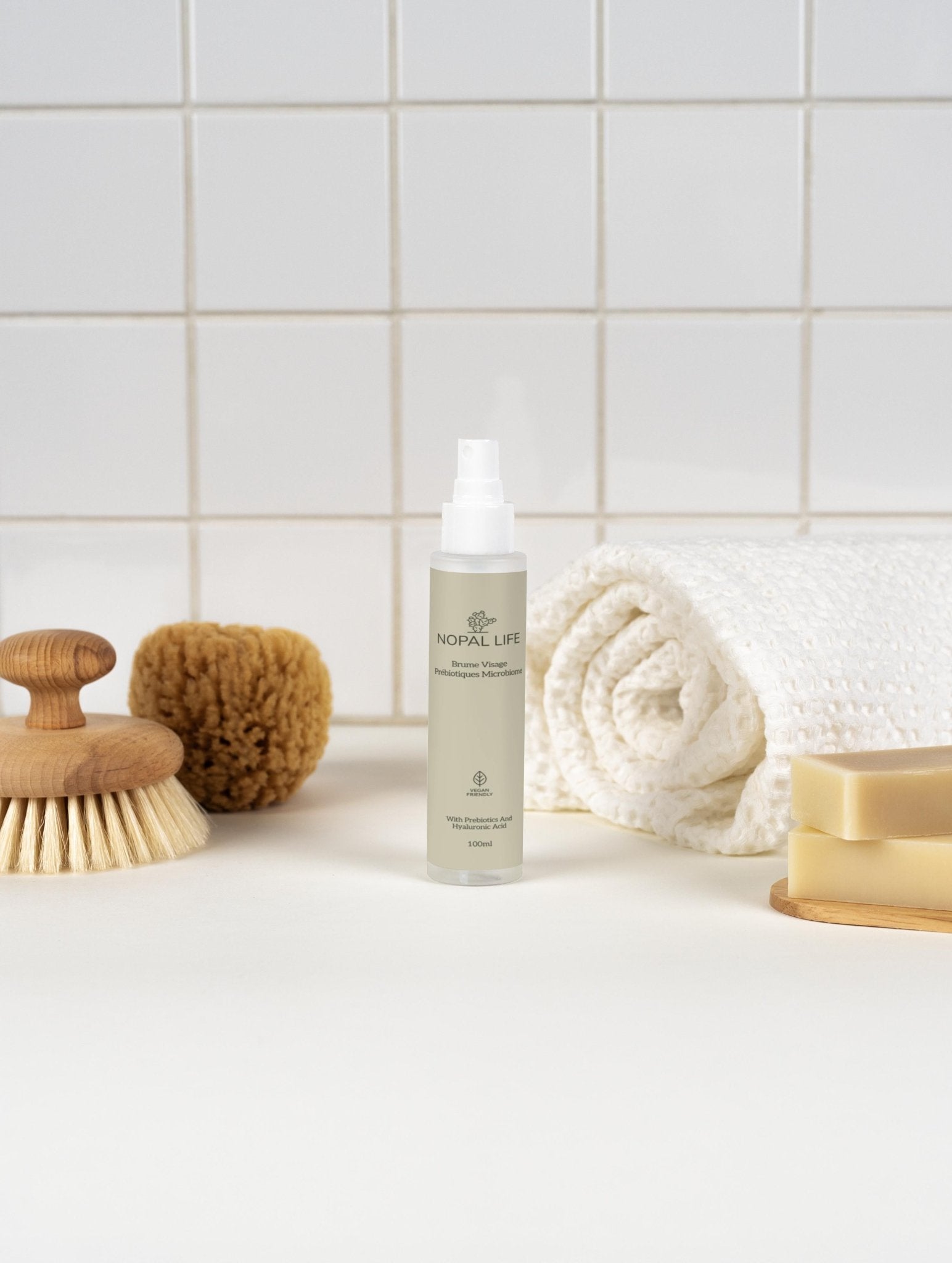
- Refresh during the day with a mist: the Gentle Prebiotic Mist (https://nopal-life.com/products/brume-prebiotiques-hydrate-calme-protège) helps hydrate, soothe, and support skin balance throughout the day.
- Support the skin barrier, the last defense against evaporation: textures that strengthen the hydrolipidic film, gentle actions, and internal hydration (drinking enough).
Natural active ingredient families to prioritize: humectants (hyaluronic acid, glycerin, aloe vera), light lipids and antioxidants (prickly pear seed oil and its vitamin E), prebiotics for skin balance.
Frequently Asked Questions
Can oily skin be dehydrated?
Yes, very often. It shines on the surface (excess sebum) but lacks water in the deeper layers. The reflex to "strip" it then worsens dehydration. It's better to use gentle cleansing and light, non-greasy hydration.
How long does it take to correct dehydration?
Immediate discomfort often improves within a few days with the right steps. For lasting comfort and a brighter complexion, allow a few weeks of regular routine.
Is drinking plenty of water enough?
Internal hydration helps, but does not replace topical treatments: you also need to capture water on the surface and limit its evaporation with appropriate products.
Are dehydration lines wrinkles?
No. These are fine, superficial lines linked to lack of water, which diminish with good hydration—unlike established wrinkles of mature skin.
What actions should be avoided?
Harsh cleansers, scalding water, overly frequent exfoliation, and over-nutrition (confusing dehydration with dryness by applying overly rich products that do not provide water).
In Summary
Dehydrated skin lacks water, not lipids: temporary tightness, dull complexion, reversible fine lines, possible on all skin types. It is a temporary condition that is corrected by providing water (humectants) and retaining it (barrier, appropriate products). The right reflex: do not confuse it with dry skin, and confirm your skin type to adjust the routine.
(To read: How to recognize dry skin? ; Prickly pear seed oil: all its benefits.)
Sources: Lancôme — Dehydrated or dry skin; Ducray — Dry and dehydrated skin; Filorga — Dry or dehydrated skin. Informational article, not medical advice.
Information provided for cosmetic and educational purposes; it does not constitute medical advice.
Our anti-aging treatments