Prickly Pear Seed Oil: Composition and Benefits
It takes nearly a ton of fruit to obtain a single liter of this oil – highlighting its rarity. Radiance, appearance of firmness, nourishment: prickly pear seed oil is the signature active ingredient around which NOPAL LIFE was built. Here is the complete guide to understanding, choosing, and using this desert treasure.
What is prickly pear oil?
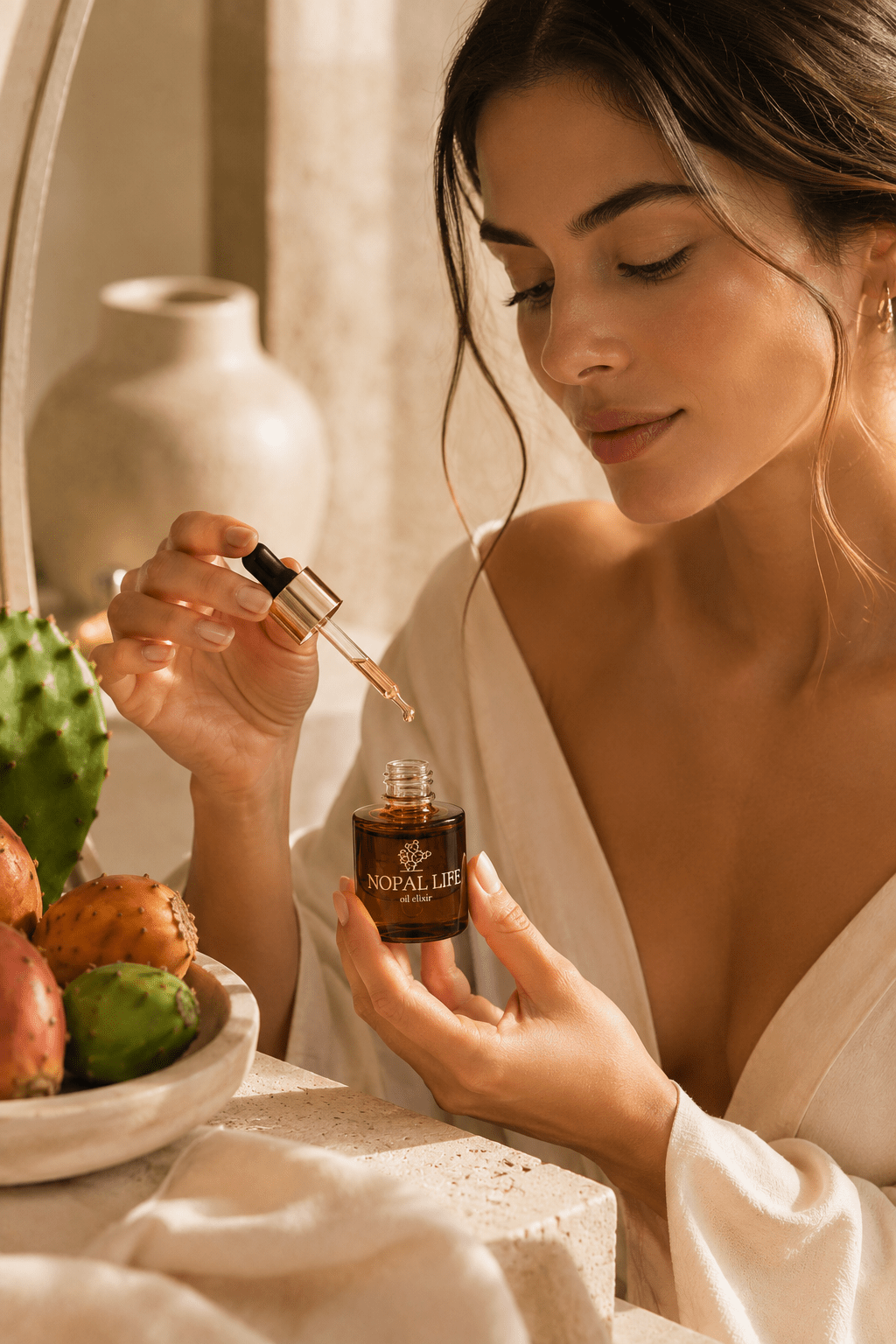
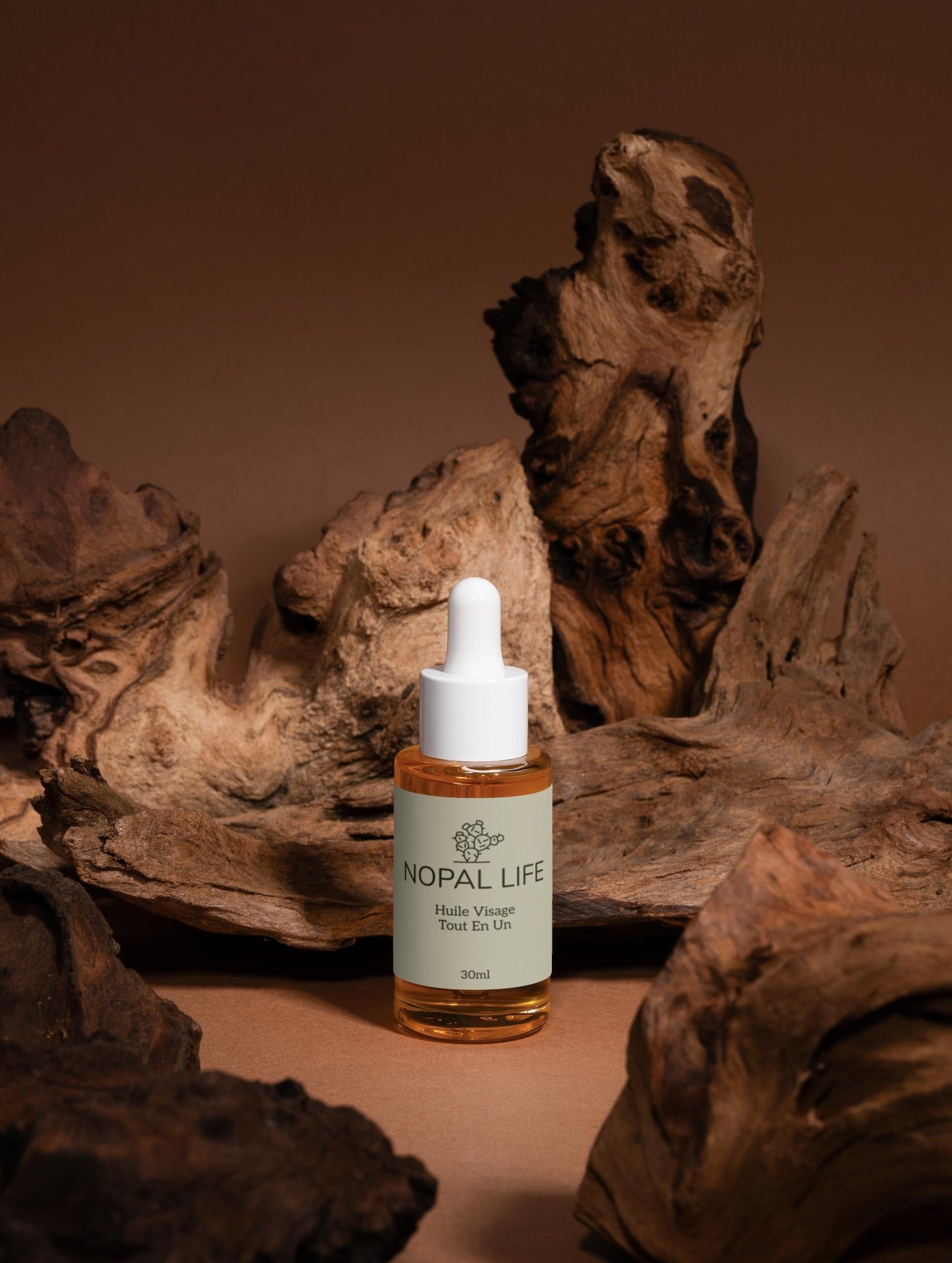
Prickly pear oil (Opuntia ficus-indica) is obtained by cold-pressing the tiny seeds nestled in the fruit — each fruit contains only 5 to 8% seeds. This minuscule yield makes it one of the rarest vegetable oils in the world. This rarity would only be anecdotal if it weren't accompanied by a remarkable cosmetic profile, which the beauty sector only seriously began to explore in the 2010s. At Nopal Life, this oil is our founding ingredient, the one around which our entire skincare philosophy is built.
Be careful not to confuse it with the much cheaper oily macerate of prickly pear flowers or pads: only the extraction of the seeds yields the virgin concentrate sought after in cosmetics, ideally chosen organic, pure, and first cold-pressed.
The benefits of prickly pear oil for the skin
If this oil has become a staple in premium cosmetics, it is primarily for what it visibly brings to the skin — an essential in natural beauty.
A boost for radiance and the appearance of firmness. Rich in gamma-tocopherol and sterols, it helps to reduce the appearance of fine lines and wrinkles and maintain the firm and plump appearance of the skin's texture. Applied in the evening, it helps all skin types achieve greater suppleness, and the complexion appears more luminous upon waking.
An ally for the eye contour. Its delicate texture allows it to be used on this sensitive area; the precise application is detailed below, in the beauty rituals section.
Composition: what analyses reveal
The first distinguishing feature is the concentration of linoleic acid (omega-6, LA): from 45 to 65% depending on the batches and origins — our 2026 batch, analyzed by GC-MS, contains 48.4% — one of the highest among oils used in cosmetics. This essential lipid is recognized for its kinship with components naturally present on the skin's surface. Skin whose comfort is compromised often appears duller and prone to tightness; a rich intake of omega-6 helps it appear more supple and better nourished.
Gamma-tocopherol, signature antioxidant
The total tocopherols in this oil are among the highest of known plant references: our 2026 batch, assayed by HPLC (CRAPC Expertise S14-01/2026 report), contains 137.6 mg/100 g, or 1,376 mg/kg. What radically differentiates it from its competitors is the dominant form of these tocopherols: gamma-tocopherol represents 90% of the total in our batch, compared to less than 10% elsewhere. This form of vitamin E, less common than alpha-tocopherol, is valued in cosmetics for its antioxidant qualities, which help the complexion stay fresh and radiant.
In practice, this predominance offers particularly valuable antioxidant protection in daily life. For skin exposed to urban pollution and environmental oxidative stress, this active ingredient helps maintain skin radiance.
Phytosterols and unsaponifiable fraction
The unsaponifiable fraction — the part of the oil that does not turn into soap and concentrates the active ingredients — represents 4 to 5% of the total here, which is double the average for vegetable oils. Phytosterols — beta-sitosterol (50–60% of sterols), campesterol, stigmasterol — have molecular structures similar to lipids naturally present in the skin. Applied to the skin's surface, they help the skin remain supple and comfortable, and contribute to reducing the sensation of tightness. Beta-sitosterol is also valued for helping to mattify the appearance of shiny areas, making it an asset for combination skin.
Free amino acids, polysaccharides, and flavonoids present in high-quality extractions (unfiltered, unrefined product) contribute to the overall nourishing and soothing effect: the skin feels comfortable immediately upon application. This complete profile also contributes to a more even and radiant complexion.
How to use prickly pear oil on the face
Regular and properly dosed application makes all the difference. Here is our protocol, morning and evening.
In the morning:
- Gentle facial cleansing.
- Hydrating serum with hyaluronic acid applied to still-damp skin.
- 3 drops of prickly pear oil warmed between palms.
- SPF 30+ mineral sunscreen.
This routine helps the skin stay comfortable throughout the day and maintain its radiance against pollution and sun exposure.
In the evening:
- Double cleansing: makeup remover followed by gentle foam.
- Active serum according to your concern: niacinamide for the appearance of spots, azelaic acid for the appearance of imperfections, peptides for the appearance of signs of aging.
- 4 to 5 pure drops, or mixed with a complement: borage for sensitive skin, rosehip for mature skin.
At night, the skin is in a resting phase: lipid textures are particularly appreciated for supporting skin comfort until morning.
Hair, eye contour, body: beauty rituals
Beyond the face, prickly pear oil lends itself to true rituals. On dry hair and ends, it provides shine and softness without weighing it down — a weekly gesture appreciated by curly and colored hair. On this fragile area, a few drops gently tapped with fingertips help to smooth the appearance of fine lines and reduce the tired look of the eyes.
For the body, the oil is applied to dry areas (elbows, hands, décolleté) to nourish and leave the skin more supple. Stored away from light, its beauty qualities remain intact for many months thanks to its richness in vitamin E and sterols.
Mistakes to avoid
Buying at the lowest price. Rarity — one ton of fruit for one liter of oil — makes any offer under €80–100 for 30 ml of a truly pure and concentrated product illusory. Cheap references are systematically diluted mixtures (often with argan or sunflower) without mentioning the actual proportion. Check that the only INCI ingredient is Opuntia ficus-indica seed oil.
Using excessive quantities. This richness means that a small amount is enough to cover the entire face. An excess does not multiply the effect but can leave an uncomfortable greasy film and promote the appearance of enlarged pores on blemish-prone skin.
Combining it with strong acidic actives at the same time. High-percentage AHAs and BHAs (glycolic > 10%, salicylic > 2%) can alter the unsaponifiable fraction. Wait 20 to 30 minutes after an exfoliating treatment, or use them on alternate days.
Thinking that it is enough on its own. As remarkable as it may be, this treatment does not provide water. Integrate it into a routine including humectants (hyaluronic acid, urea) for a complete hydration sensation: it helps retain the water provided by these actives, it does not replace it.
Prickly pear, argan or jojoba: how to choose?
Each vegetable oil has its own field of expression. Jojoba, similar to sebum, is often preferred for its dry feel by combination skin; argan, more nourishing, is suitable for very dry skin; prickly pear oil, on the other hand, stands out for its rare antioxidant profile, making it a benchmark choice for mature skin attentive to signs of aging. The table below summarizes the measurable differences between the three.
| Criterion | Prickly Pear | Argan | Jojoba |
|---|---|---|---|
| Linoleic Acid | 45 to 65% (Lot 2026: 48.4%) | ~37% | < 2% |
| Oleic Acid | ~15 to 25% (Lot 2026: 24%) | ~43% | ~10% |
| Total Tocopherols | Very High (Lot 2026: 1,376 mg/kg) | ~600 mg/kg | Low (< 100 mg/kg) |
| Dominant Tocopherol Form | Gamma-tocopherol (Lot 2026: 90% of total) | Gamma-tocopherol (lower total content) | Tocopherols sparingly present |
| Comedogenic Index | 0 to 1 | 0 | 0 to 2 |
| Feel | Dry, penetrating | Rich, nourishing | Dry, similar to sebum |
| Most Suitable Skin Types | Mature, combination, blemish-prone | Dry, devitalized | Combination to oily |
| Indicative Price (30 ml) | €80 to €100 | €10 to €20 | €8 to €15 |
These differences explain the uses: jojoba regulates the feel, argan nourishes dry skin, and prickly pear oil relies on its high concentration of gamma-tocopherol — which also explains its price, directly linked to its rarity.
Algeria, Morocco, Tunisia: does the origin really change the oil?
Moroccan and Tunisian oils are often contrasted as if one were better than the other. Published data invites nuance. The available characterizations — El Mannoubi et al. (2009) on Tunisian seeds, Ramadan & Mörsel (2003) on other provenances — describe very similar profiles from one country to another: same predominance of linoleic acid (around 60%), same high tocopherol content, same unsaponifiable fraction rich in phytosterols. In other words, this species yields an oil with a remarkably stable composition across its entire Mediterranean and North African range — from Algeria, where prickly pear covers the high plateaus, to Morocco and Tunisia.
What truly varies the quality from one batch to another is not so much the country as three measurable factors: the freshness of the seeds (an oxidized seed loses its tocopherols), cold extraction without solvent or refining, and a cold chain respected until bottling. Two "Moroccan" labeled oils can therefore differ more from each other than a Moroccan and a Tunisian oil produced with the same care. The flag on the label is reassuring; it is the harvesting and pressing conditions that determine the final active ingredient content.
Nopal Life's commitment: traceability and batch analyses
At Nopal Life, our prickly pear oil comes from Opuntia ficus-indica plants cultivated in Algeria, on the high plateaus of the M'sila region, by our family farm Bio Nopal Cactus. Extraction is done cold, without solvent, without refining, without decoloration. Each batch is verified in the laboratory: fatty acid profile by gas chromatography-mass spectrometry (GC-MS) and vitamin E by HPLC — latest analysis report: CRAPC Expertise n° S14-01/2026 of 07/30/2026. This verified origin and controlled composition are at the heart of our commitment to transparency: the analysis report is communicated to customers who request it.
The concentration of gamma-tocopherol in our 2026 batch, assayed by HPLC, reaches 1,238 mg/kg (123.9 mg/100 g), at the higher end of known analyses for this oil. This is the result of rigorous selection of varieties, harvesting at the optimal stage of fruit maturity, and a cold chain respected from seed to bottling.
To learn more, the profile of this oil is documented in scientific literature: Ramadan M.F. & Mörsel J.-T., « Oil cactus pear (Opuntia ficus-indica L.) », Food Chemistry, 2003; El Mannoubi I. et al., « Characterization of Opuntia ficus indica seed oil from Tunisia », Chemistry of Natural Compounds, 2009.
Frequently Asked Questions about Prickly Pear Oil
Is this oil suitable for blemish-prone skin?
Yes. It is even one of the rare oils recommended for this case thanks to its richness in linoleic acid (48.4% in our 2026 batch), a fatty acid whose contribution is appreciated by oily or combination skin. It helps to mattify the appearance of shiny areas and maintain a clearer skin texture. It is considered non-comedogenic (index 0-1/5).
Why is this oil so expensive?
It takes about a ton of fruit to produce one liter of oil. Harvesting is manual (cactus pads have thorns) and cold-pressing the seeds yields a very low return. This combination of rarity, labor, and low yield explains the price.
What is the difference between prickly pear oil and argan oil?
Their profiles are very different — and so is their origin: argan comes from Morocco, while our prickly pear oil is produced in Algeria. Argan is rich in oleic (43%) and linoleic (37%) acids, with a nourishing action. Prickly pear oil is dominated by linoleic acid (48% in our 2026 batch) and contains up to 3 times more gamma-tocopherol than argan. It is more appreciated for the appearance of comfortable and radiant skin than for pure nourishment.
Can prickly pear oil be used on hair?
Yes, as a mask or finishing serum. Its linoleic profile brings suppleness to the hair fiber, helps reduce the appearance of frizz, and provides shine. For a mask, apply 5 to 10 drops to dry lengths and ends, leave on for 30 minutes under a warm towel, then shampoo normally.
How long before seeing results on the skin?
The initial effects (comfort, feeling of suppleness) are often noticeable within the first few days. Visible improvement in texture, radiance, and complexion appearance becomes noticeable in 3 to 4 weeks. Comfort and suppleness become long-lasting after 8 to 12 weeks of regular use.
How to verify the authenticity of prickly pear seed oil?
Request the batch's certificate of analysis (GC-MS or HPLC). It must indicate a linoleic acid content of at least 45%, a gamma-tocopherol level greater than 400 mg/kg, and name the laboratory that performed the analysis. The color should be pale yellow to golden, and the smell light and almost neutral.
RECOMMENDED TREATMENT
Pure prickly pear seed oil
Natural formula · Origin Algeria
DISCOVER THIS TREATMENT →PERSONALIZED ROUTINE
Nopal Life Skin Intelligence™
Free diagnosis · 2 minutes
START MY FREE DIAGNOSIS →
Ingredient Reference
Prickly Pear Seed Oil
Radiance, intense nutrition & rare tocopherols — botanical treasure of the desert.
Discover the sheet →Read more
Information provided for cosmetic and educational purposes; it does not constitute medical advice.
Our anti-aging treatments