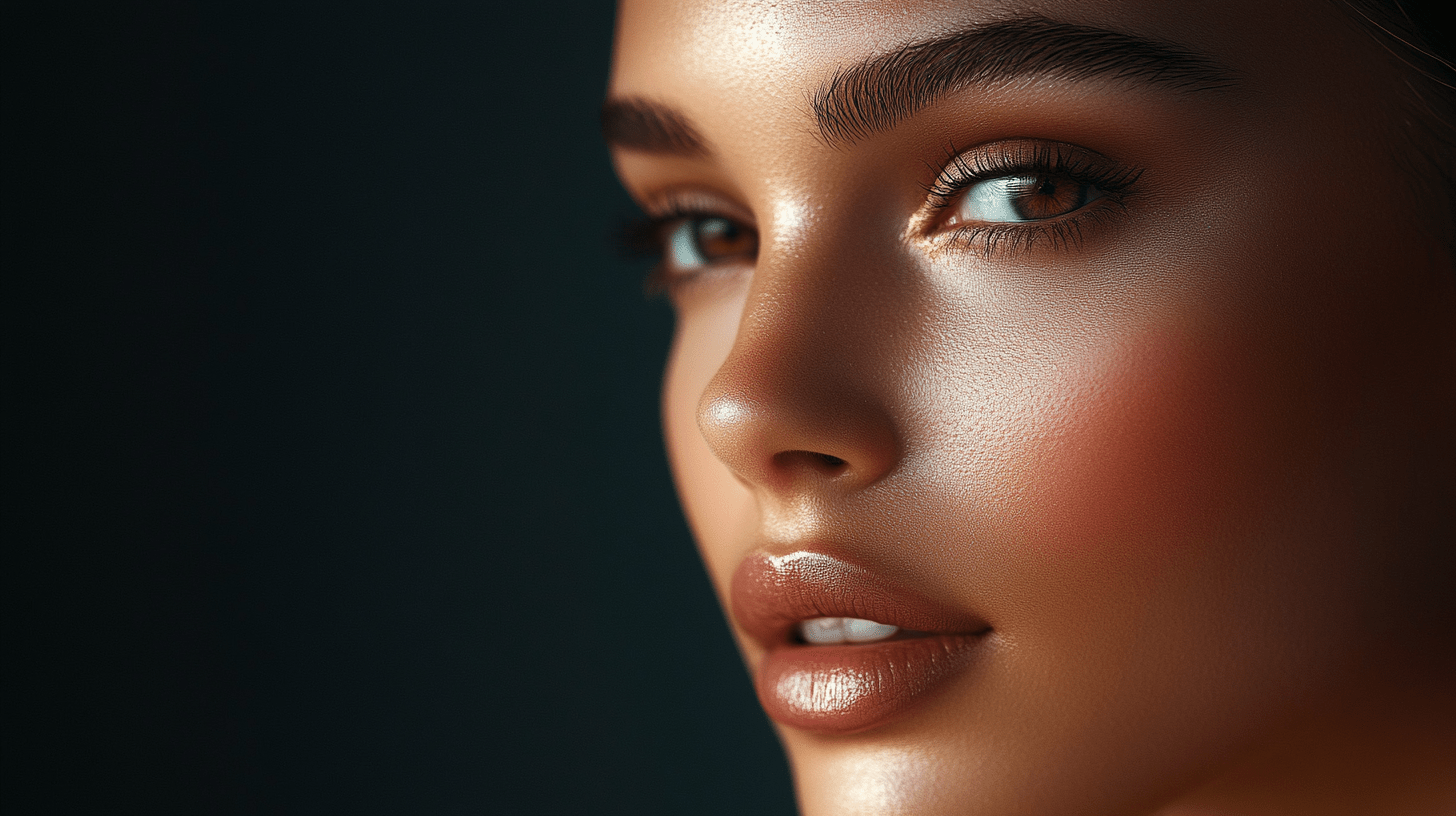
Dehydrated skin: causes, active ingredients, and comfort routine
Tightness, dull complexion, fine lines more visible at the end of the day: surface dehydration can affect all skin types. This guide explains how to help it regain a feeling of hydration and maintain its comfort over time.
A temporary condition, not a skin type
Dehydration is often confused with dryness, when in fact they are two distinct realities. Dryness is a genetically determined skin type: sebum production is naturally low and lipids are chronically lacking. Dehydration, on the other hand, is a temporary condition that can occur in any skin type — including oily skin — and results in a feeling of discomfort in the superficial layers of the epidermis. Oily skin can be affected, normal skin can experience temporary episodes, and even an already dry skin type can present an additional layer of this imbalance.
| Criterion | Dry Skin | Dehydrated Skin |
|---|---|---|
| Nature | Skin type, genetically determined | Temporary, reversible condition |
| What's missing | Lipids (sebum, ceramides) | Water in the surface layers |
| Who is affected | Mainly profiles with low sebum | All skin types, including oily skin |
| Priority active ingredients | Fats: oils, ceramides, butters | Humectants: hyaluronic acid, glycerin, urea |
| Pinch test | Rough and not very supple continuously | Wrinkles for a few seconds then returns |
This distinction guides the entire choice of skincare. A dry profile primarily needs lipids. A dehydrated profile primarily needs humectants — ingredients known to capture and retain water on the surface. Relying solely on fats, or conversely, solely on humectants, often yields disappointing results: this is the first key to effectively helping the epidermis regain its comfort.
Where does this dehydration come from?
The phenomenon reflects an imbalance between perceived intake and loss. Losses increase when the barrier is challenged: overly harsh cleansers, climatic variations, sun exposure, repeated exfoliation, or simply the passage of time. Intake decreases when water consumption is insufficient, the ambient air is dry (heating in winter, air conditioning in summer), or the skin's natural moisturizing factors (NMF) become scarce.
Dry indoor air, with low relative humidity, is often accompanied by a more pronounced feeling of tightness — which explains the frequency of these discomforts in winter.
Understanding humectant active ingredients
Humectants are hygroscopic ingredients: they capture water from their immediate environment — atmosphere and superficial layers — to help bind it in the stratum corneum. Hyaluronic acid is among the most popular; modern formulas combine several molecular weights for an action perceived both on the surface (high molecular weight) and on finer layers (low molecular weight). Here are the main ones and their roles.
| Active Ingredient | Perceived Role | Good to know |
|---|---|---|
| Hyaluronic Acid | Captures and retains a large amount of water on the surface | Several combined molecular weights |
| Glycerin (glycerol) | Reference humectant, maintains the suppleness of the stratum corneum | 5 to 10%, non-comedogenic |
| Urea (low dose) | Humectant and softening | 5 to 10%, useful for visible roughness |
| Beta-glucan, sodium PCA | Hygroscopic polysaccharides that complement the action | Often associated with desert plant extracts (aloe, cactus) |
| Prickly Pear Seed Oil | Emollient: forms the lipid film that limits evaporation | Complementary to humectants, rich in linoleic acid |
To remember: prickly pear seed oil acts as an emollient, not a humectant. It helps form the lipid veil that limits the evaporation of captured water — a complementary role, valuable for prolonging the feeling of comfort.
Mistakes that perpetuate discomfort
- Spraying water without sealing it. A thermal water mist applied alone evaporates, taking with it some of the surface moisture, which can increase tightness. Without an occlusive product afterward, this action perpetuates discomfort over repeated applications.
- Over-cleansing. Overly harsh products or very hot water often leave the skin tight for several hours after washing.
- Over-exfoliating a compromised barrier. Concentrated AHAs and BHAs, on already sensitive skin, create discomfort that worsens the feeling. It's better to wait for comfort to return before resuming exfoliation.
- Confusing formulas. Buying an oil without a humectant, thinking it will soothe tightness, leads to a dead end.
The order to keep in mind is always the same: humectant on damp skin, then emollient to seal. Applying the latter quickly after cleansing helps preserve the feeling of comfort.
The routine, step by step
Once the distinction is made and the right active ingredients are identified, everything depends on the order of steps, morning and evening: a humectant on slightly damp skin, then an emollient to seal. To avoid making this article too long, we detail the procedure — from gentle cleansing to the step that "seals" hydration — in our dedicated guide: Dehydrated skin, what to do: the 5-step protocol.
A few drops of prickly pear seed oil after the serum are enough for a night veil: non-comedogenic and rich in linoleic acid, it helps to seal in water while providing comfort to profiles lacking lipids.
The Nopal Life approach
At Nopal Life, our approach meets the needs of dehydrated skin, regardless of its basic type. Pure Prickly Pear Seed Oil is the very last step: after humectants, it helps form a lipid veil that helps retain water without hermetically occluding, leaving a feeling of comfort while limiting perceived nightly losses.
To precisely determine your hydration status and get a customized routine, our Nopal Life Skin Intelligence™ tool analyzes your profile. Also find our other articles on hydration and humectant active ingredients in the Skin Guide.
Frequently Asked Questions
Q: How to distinguish dehydration from dry skin?
A: The pinch test is revealing: gently pinch your cheek. If the area wrinkles for a few seconds before returning to place, it's a sign of dehydration. If it remains rough, dull, and not very supple in all circumstances, dryness is more likely. Oily skin that shows fine lines and feels slightly tight is dehydrated, not lacking in lipids.
Q: Can oily skin be dehydrated?
A: Yes, it's very common. Excess sebum does not mean the skin is well supplied with water. Subjected to overly harsh cleansers or drying active ingredients, oily skin often shows this underlying imbalance: it shines while feeling tight, and may appear shinier in reaction to this discomfort.
Q: How long does it take to regain comfort?
A: With an adapted protocol (humectants, emollients, and gentle cleansing), the first visible improvements often appear within 48 to 72 hours. Lasting comfort generally takes 2 to 4 weeks. Discomfort can reappear if the causes persist: aggressive cleansers, dry environment, diet poor in water and lipids.
Q: Is hyaluronic acid alone sufficient?
A: No. It captures water, but without a cream or oil to cover it, it evaporates, taking surface moisture with it. The rule remains: hyaluronic acid on damp skin, then emollient immediately afterward to provide comfort to the barrier.
Q: Should I drink more to improve my skin?
A: Good internal hydration is useful, but it alone does not correct significant skin dehydration. Drunk water first benefits the body as a whole; the surface benefits last. Topical humectant care remains essential for a direct and rapid feeling of hydration.
Q: Are thermal water mists effective?
A: Temporarily. Without sealing, they can increase tightness over time. If you use one, immediately apply a moisturizing or emollient product to retain the water provided. Mists enriched with hygroscopic active ingredients (glycerin, hyaluronic acid) are significantly preferable to pure water.
Q: Does this imbalance promote imperfections?
A: It can be accompanied by a tendency to imperfections. Faced with perceived dehydration, the skin may appear shinier and show more comedones and pimples. Non-comedogenic humectants often help soothe this cycle of discomfort.
Q: Does prickly pear seed oil help dehydrated skin?
A: Yes, as an emollient that helps seal in water. It does not replace humectants (hyaluronic acid, glycerin) but helps create the lipid film that helps retain them. Its richness in linoleic acid also provides comfort to the barrier. Our diagnosis determines whether your skin primarily needs humectants or emollients.
Information provided for cosmetic and educational purposes; it does not constitute medical advice.
Read more
- Combination Skin: Guide P1 for Mature / Dehydrated Skin and Fine Lines, Firmness
- Skin Barrier: Guide for Mature Dehydrated Skin, Fine Lines and Firmness
- Mask: Guide P1 for Dehydrated / Sensitive Skin and Skin Barrier
This content is for informational and educational purposes only; it is not a substitute for medical advice, diagnosis, or dermatological consultation. If in doubt or experiencing a persistent skin problem, consult a qualified healthcare professional.


Go further than this article
Get our skincare guides by email — and start with your free skin diagnostic: 2 minutes, advice tailored to your skin. We ship to the US, UK, Canada, Australia and 27 European countries; somewhere else? Sign up and you will be the first to know when we deliver to your country.
By signing up, you agree to our privacy policy. Unsubscribe in one click.