Organic Hyaluronic Acid: Origin, Quality, and Use
What effect can you expect from hyaluronic acid on the skin? Applied in cosmetics, this humectant active ingredient works on the surface: it captures water and retains it in the stratum corneum, for an immediate plumping effect and comfort. The skin appears smoother, plumper, and dehydration lines seem smoothed. This result is real, but it remains superficial and temporary: it has nothing to do with the filling obtained by injections in aesthetic medicine. This page focuses on the visible effects and results of hyaluronic acid applied to the skin — to concretely know what it is (and what it isn't), see our complete hyaluronic acid information sheet.
Visible effects of hyaluronic acid on the skin
Hyaluronic acid is a molecule naturally present in the body's tissues, including the skin, where it helps maintain hydration and bounce. Its sugar chain is highly hydrophilic: it behaves like a sponge and fixes water in the stratum corneum. These properties explain the effects observed once the product is applied to the face.
In practice, there are two timeframes for its results:
- Immediate effect: upon application, the skin captures available water on the surface. The complexion appears fresher, the texture more supple, and dehydration lines are temporarily reduced. This is the desired bounce.
- Medium-term effect: used regularly, morning and evening, in a routine that seals in the captured water, this active ingredient helps the skin stay well-hydrated day after day. Comfort sets in and the overall appearance gains radiance.
However, it is important to keep in mind what a humectant does not do. Here, without exaggeration, is what can really be expected from this active ingredient.
| What hyaluronic acid does | What it does not do |
|---|---|
| Captures and retains water in the stratum corneum | It does not provide fatty substances or lipids |
| Gives an immediate plumping and smoothing effect | It does not fill deep-set wrinkles |
| Improves comfort and the appearance of skin texture | It does not stimulate collagen production |
| Suitable for most skin types | It does not replace a nourishing treatment for dry skin |
Surface care or deep filling?
This is the most common confusion surrounding this molecule. The same name actually covers two very different uses, which have neither the same mode of action nor the same results.
In cosmetics, hyaluronic acid is a topical ingredient. It acts on the surface of the skin, on the stratum corneum, without crossing the skin barrier. Its action is surface hydration and bounce, reversible and non-invasive. In aesthetic medicine, its injectable version is a device of a completely different order: applied by a healthcare professional, it creates volume in a specific area — pronounced wrinkles, lips or cheekbones. The table below summarizes the distinction.
| Cosmetic Hyaluronic Acid | Injectable Hyaluronic Acid | |
|---|---|---|
| Method | Serum, cream, gel applied to the skin | Injection performed in a medical office |
| Level of action | Surface (stratum corneum) | Dermis, below the surface |
| Main effect | Hydration, plumping effect, comfort | Filling, volume, correction of specific areas |
| Duration | The duration of the routine, maintained daily | Several months depending on the product |
| Supervision | No constraints, free use | Medical procedure, possible side effects |
This distinction is essential: a cosmetic product does not "fill" and does not replace an aesthetic medicine procedure. Conversely, injections fall under surgery and medical aesthetics, with a framework, a professional, and side effects to evaluate. Before any injectable treatment, a qualified practitioner should be consulted: only they can determine the indication, and it is prudent to consult them to assess possible side effects. This page only details the results of the product applied to the skin.
Molecular weight, the key to perceived results
Not all forms of hyaluronic acid act at the same level, and it is the molecular weight that makes the difference in the perceived results:
- High molecular weight: its large molecules remain on the surface and form a film that limits insensible water loss. Result: immediate, very noticeable smoothing and bounce.
- Low molecular weight: its smaller molecules diffuse into the upper layers of the epidermis, for more lasting surface hydration.
The most advanced formulas often combine several molecular weights to act at different levels. Sodium hyaluronate, the salt form of the molecule, is frequently used because it is more stable and more penetrating. Understanding this parameter helps to read a label and anticipate the type of result a product can offer.
Hyaluronic acid or retinol: what effect for what need?
The question of "hyaluronic acid or retinol" often comes up, as both ingredients are associated with signs of aging. However, they do not have the same purpose at all, and they complement each other more than they oppose.
| Hyaluronic acid | Retinol | |
|---|---|---|
| Family | Humectant (attracts water) | Vitamin A derivative |
| Targeted effect | Hydration, immediate plumping effect | Appearance of skin texture and fine lines over time |
| Tolerance | Very well tolerated, all skin types | Can be sensitizing, gradual introduction |
| Timing | Morning and evening | Preferably in the evening |
In short: hyaluronic acid provides water and an immediate feeling of comfort, while retinol works more on the appearance of signs of skin aging over time. Many routines combine them — this humectant specifically helps preserve the comfort of skin otherwise exposed to retinol. They are therefore not competitors, but partners with complementary roles.
Hyaluronic acid and signs of aging: what real result?
With age, the amount of hyaluronic acid naturally produced by skin cells decreases, and tissues retain moisture less effectively. This is one of the reasons why this molecule is so often associated with treatments targeting signs of skin aging. However, it is important to be realistic about the results obtained.
Applied to the surface, it does not restart collagen production or replenish deep tissues: no cosmetic product does. Its action remains that of a humectant. However, by maintaining good hydration, it helps the skin preserve its supple and plump appearance, which visually reduces fine lines related to lack of water. This is a real but measured appearance benefit, to be distinguished from the excessive promises sometimes read on certain products.The benefits of hyaluronic acid for the skin
Beyond the plumping effect, the benefits of hyaluronic acid for the skin are often summarized in a few concrete points:
- Surface hydration that helps the skin appear more supple and smoother.
- An immediate plumping effect that temporarily reduces the appearance of dehydration lines.
- Good tolerance: it suits most skin types, including oily and combination skin, because it hydrates without fatty substances.
- High compatibility with other treatments and active ingredients in a routine (serums, creams, oils).
These benefits make hyaluronic acid a particularly relevant ally for dehydrated skin, which lacks water. Dry skin, which lacks lipids, will combine it with a nourishing treatment: it provides water, and lipids retain it. This complementarity summarizes well the place of this active ingredient in facial and body care.
How to get the best results
The effects of this active ingredient depend largely on how it is applied. The most common mistake is to apply the product to perfectly dry skin, in a dry atmosphere: as it attracts moisture, it needs available water to be fully effective.
- Apply it to slightly damp skin, after a mist or lotion.
- Then seal it in with a cream or oil, to prevent the captured water from evaporating.
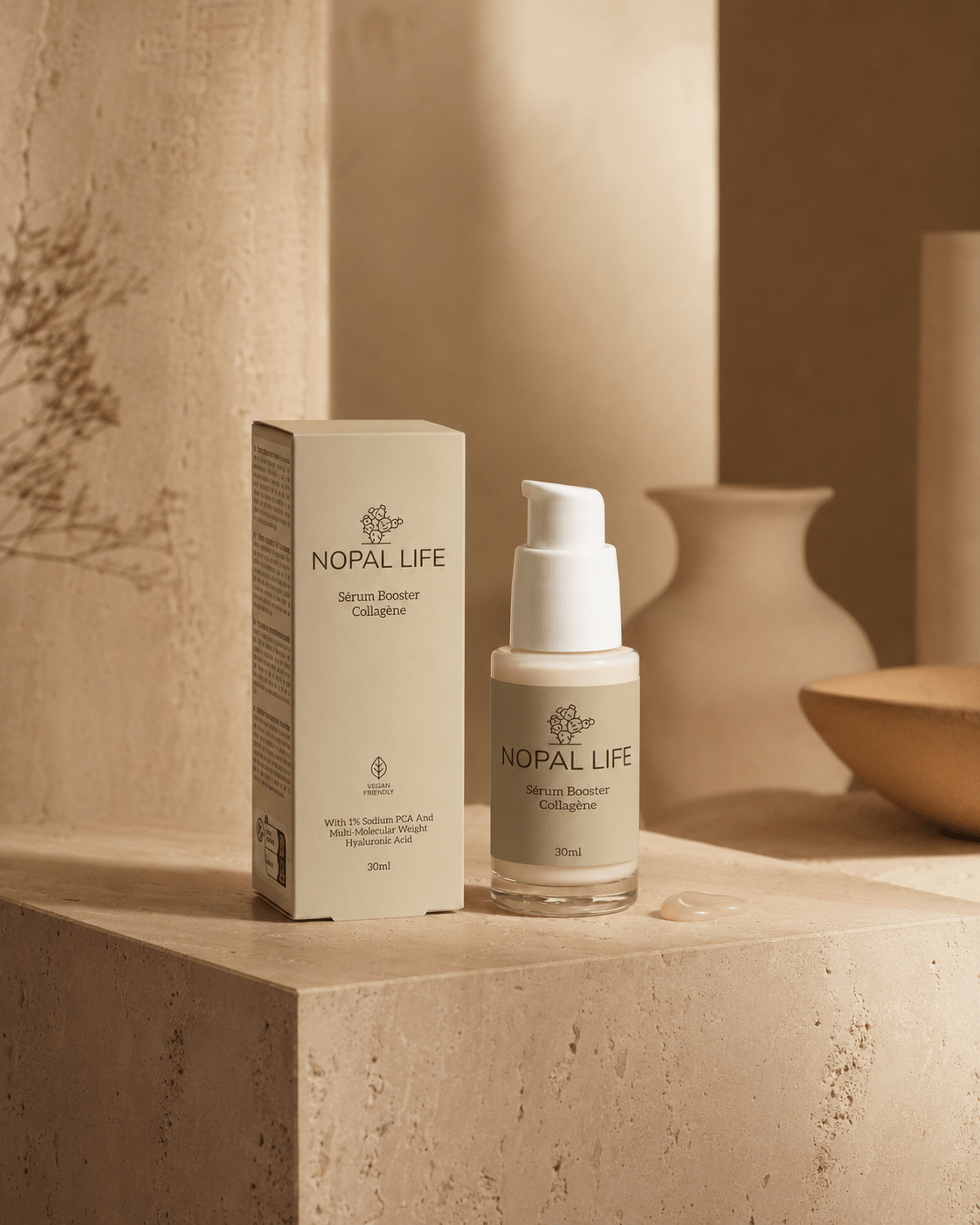
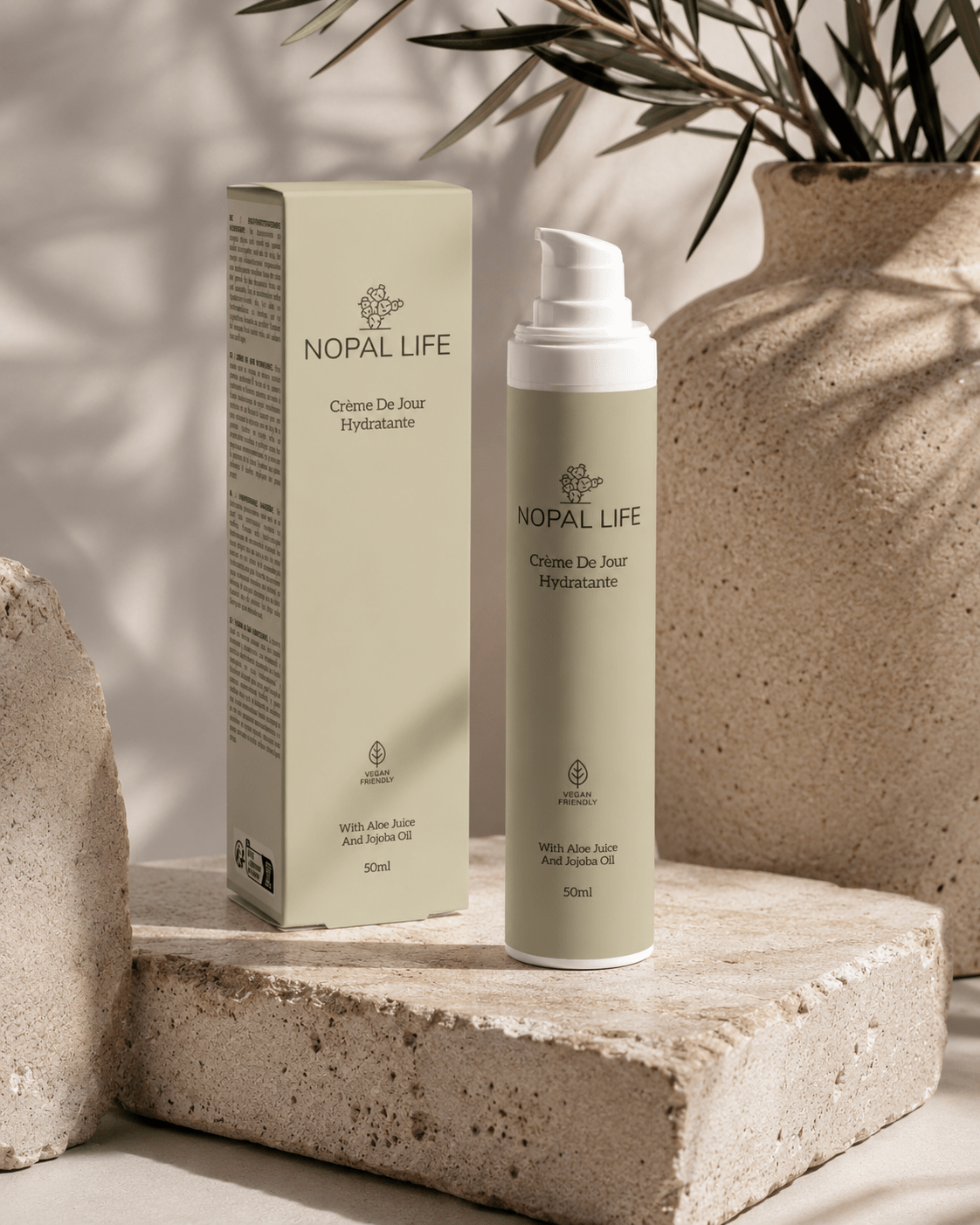
The plumping hydrating gel with hyaluronic acid and sodium PCA from NOPAL LIFE, or the hydrating day cream with HA, illustrate this logic: capture water, then retain it. Whether in serum or cream form, these products aim for the same result. For details on the application rhythm — whether to use it morning or evening on the face — we have a dedicated guide.
FAQ
Can hyaluronic acid dry out the skin?
In very dry air and without a product to seal it in, a humectant can theoretically draw water from the surface. This is why it is applied to damp skin, then covered with an occlusive treatment that locks in hydration.
Should you choose low or high molecular weight?
The two weights are complementary: high molecular weight acts on the surface for an immediate effect, low molecular weight more lastingly in the upper layers. Combined formulas are often the most interesting.
Is cosmetic hyaluronic acid like injections?
No. In cosmetics, it acts on the surface as a humectant; filler injections are a distinct aesthetic medicine procedure, performed by a professional, with its own effects and side effects. The two are not comparable.
Does hyaluronic acid act on wrinkles?
Cosmetic care temporarily reduces the appearance of dehydration lines thanks to its plumping effect. It does not erase established wrinkles, which require other approaches. It is an appearance benefit, reversible.
Can it be used every day?
Yes, morning and evening. It easily integrates into a daily routine, before moisturizing care.
What to combine it with?
With a mist or lotion beforehand, and a cream or oil afterwards, to seal it in. It also pairs very well with most cosmetic products.
In summary
The effect of hyaluronic acid on the skin is that of a humectant: it captures and retains water in the stratum corneum, for an immediate plumping effect and comfort. Its results depend on the molecular weight and, above all, on how it is used — on damp skin, then sealed with a treatment. It hydrates but does not nourish, and its action remains on the surface: nothing like aesthetic medicine injections. Used correctly, it is one of the most reliable and well-tolerated hydrating ingredients in a routine.
To build a hydrating routine around this active ingredient, tailored to what your skin really needs, start with NOPAL LIFE's Skin Intelligence diagnostic. In a few questions, it guides you towards the most relevant textures and effects for your skin.
Sources: Wikipedia (Hyaluronic acid); La Roche-Posay; SkinCeuticals; Sanoflore. Informative article, not medical advice.
Information provided for cosmetic and educational purposes; it does not constitute medical advice.
Our anti-aging treatments