Jojoba Oil: Skin Benefits and Routine | Nopal Life
Jojoba oil is one of the most fascinating ingredients in natural cosmetics. Extracted from the seeds of Simmondsia chinensis, a shrub from the deserts of North America, it is technically a liquid wax—and not a vegetable oil in the chemical sense of the term—a peculiarity that largely explains its skincare qualities. At Nopal Life, we work daily with the noblest raw materials from the plant kingdom, and this precious ingredient holds a special place in our formulas, alongside our signature active ingredient, prickly pear seed oil (Opuntia ficus-indica). This guide brings together the essentials: botanical origin, precise composition, benefits for each skin type, application protocol, preferred associations, and common mistakes to avoid. Whether you are new to natural skincare or refining your daily routine, this page is your ingredient reference.
Origin and composition: a unique plant wax
To understand what this ingredient brings to the skin, you must first understand what distinguishes it from all other oils in your bathroom.
A unique liquid wax in the plant kingdom
Unlike classic oils, which are composed of triglycerides, jojoba consists of 97% wax esters—long-chain molecules whose structure resembles that of skin sebum. This affinity is precious in cosmetics: the skin recognizes this material as familiar, which promotes rapid absorption and remarkable tolerance, even on reactive skin. The ester structure also confers exceptional oxidative stability—it preserves naturally, without rancidity and without added antioxidants.
Detailed cosmetic profile
Its composition is particularly rich in cosmetically interesting molecules:
- Long-chain wax esters (about 70%): dominated by eicosenoic acid (C20:1, also known as gadoleic acid), they form a flexible and protective film with remarkable skin affinity.
- Vitamin E (tocopherols): natural antioxidant, helps protect against environmental stress.
- Phytosterols (stigmasterol, campesterol): contribute to the comfort of the skin barrier on the surface.
- Linoleic acid (traces): essential fatty acid, helps soothe feelings of tightness.
- Trace elements (zinc, copper): naturally present in trace amounts, they support the skin's natural radiance.
This composition makes it a multi-functional raw material: at once emollient, film-forming, and antioxidant, it also helps to mattify the appearance of shiny areas. Applied regularly, it helps maintain the comfort and suppleness of the skin's surface by limiting the feeling of tightness, without excessive occlusion.
How it compares to other skincare oils
Not all vegetable oils are created equal. The table below positions jojoba among three lipid care references, based on the criteria that truly matter when choosing.
| Vegetable Oil | Comedogenic Index | Affinity with Sebum | Feel | Best Suited Skin Type |
|---|---|---|---|---|
| Jojoba | 2 / 5 | Very High (similar structure) | Dry, satin | Combination, oily, sensitive |
| Prickly Pear Seed | 1 / 5 | High | Melting, light | Dry, mature, dull |
| Argan | 0 / 5 | Medium | Nourishing | Dry, normal |
| Coconut | 4 / 5 | Low | Rich, occlusive | Body rather than face prone to imperfections |
This positioning explains why jojoba is often the first choice for combination skin: its moderate comedogenic index and its similarity to sebum make it one of the few lipidic materials well-tolerated by shiny complexions.
An ingredient compatible with all natural formulas
At Nopal Life, we select cold-pressed, unrefined jojoba to preserve its full profile. Its fluid texture, golden hue, and high stability make it an ideal vehicle in our formulas, where it joins prickly pear seed oil—Nopal Life's signature ingredient, derived from Opuntia ficus-indica cultivated in Algeria. Together, these two active ingredients form a rare lipid synergy: the former brings its compatibility with sebum and its lightness, the latter its unique sterols (beta-sitosterol) and its richness in vitamin E.
How to use it well according to your skin type
One of its great strengths is its versatility: few active ingredients are as well tolerated by such different skin profiles. The quantity and associations, however, vary according to your skin.
Oily and combination skin: mattify without drying
This is the most counter-intuitive use—and one of the most appreciated. Its wax ester structure, similar to sebum, helps to mattify the appearance of shiny areas: by providing the skin with lipids it recognizes, jojoba leaves a more balanced and comfortable finish. It is used in small quantities, pure or in a light serum, preferably in the evening.
For combination skin with enlarged pores, our accompanying article on its daily benefits details the steps for targeted application to the T-zone.
Dry and sensitive skin: nourish and protect the barrier
On dry skin, this active ingredient acts as a protective film-forming agent that helps preserve the hydration of the stratum corneum. It does not replace a moisturizing (humectant) treatment, but it seals the water provided by a serum or moisturizing gel by forming a surface lipid film. On sensitive skin prone to redness, its exceptional tolerance ranks it among the best-suited fatty substances—with virtually no reported cases of contact sensitivity.
Our article dedicated to dull and mature skin explores how this active ingredient, combined with prickly pear, supports the radiance and visual density of the skin over time.
Mature and dull skin: support radiance and suppleness
From 35-40 years old, the skin naturally produces less sebum, and its surface lipids become depleted. Through its phytosterols and vitamin E, jojoba helps preserve the comfort and suppleness of the skin barrier on the surface while leaving an immediate veil of comfort. Combined with prickly pear—rich in linoleic acid and beta-sitosterol—it helps maintain skin with a more luminous appearance.
If you are not yet sure of your skin type or the most suitable routine for your profile, the Nopal Life Skin Intelligence™ Diagnostic offers a personalized analysis in a few minutes, based on HAUT.AI technology.
The Nopal Life protocol, step by step
Integrating this wax into an effective routine requires respecting certain principles of order and dosage. Here is the Nopal Life protocol, designed to get the most comfort from this active ingredient.
Step 1 — Gentle cleansing with an adapted base
It all starts with a cleanse that respects the hydrolipidic film. This is the role of our Gentle Gel-Oil Cleansing Make-up Remover, a bi-phase gel-to-oil formula that dissolves makeup, SPF, and impurities without harming the skin barrier. This step prepares the skin to receive subsequent active ingredients with maximum receptivity: overly alkaline cleansing denatures the protective film and reduces the perceived comfort of anything applied afterward.
Step 2 — Serum or moisturizer (humectant first)
Then apply your hydrating serum (hyaluronic acid, aloe vera, niacinamide) to slightly damp skin. This is an essential step, because jojoba is emollient but not humectant: it doesn't create hydration, it preserves it. This is the rule of layered skincare—humectant first, emollient second, occlusive last if needed.
Step 3 — Application of the wax or the product containing it
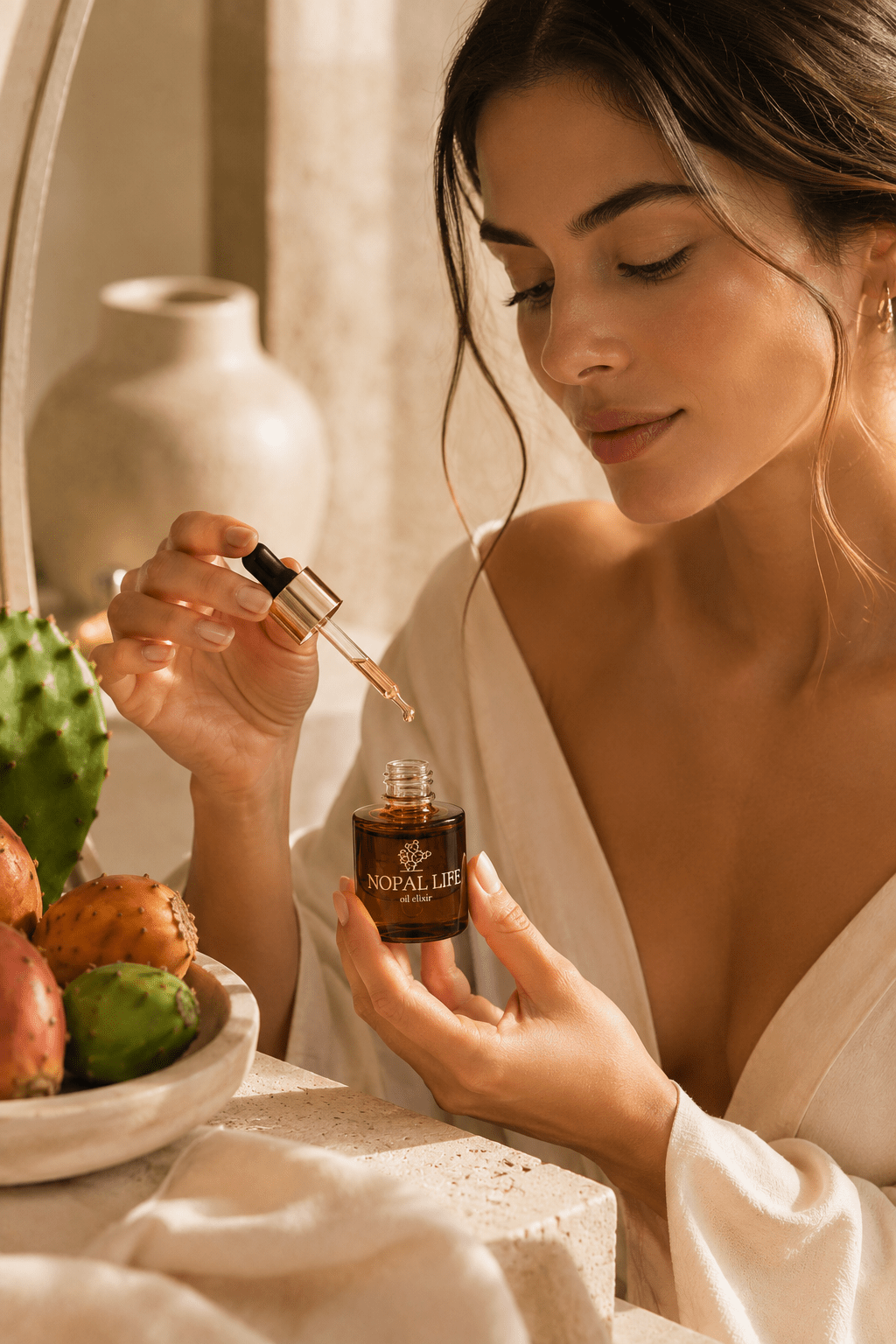
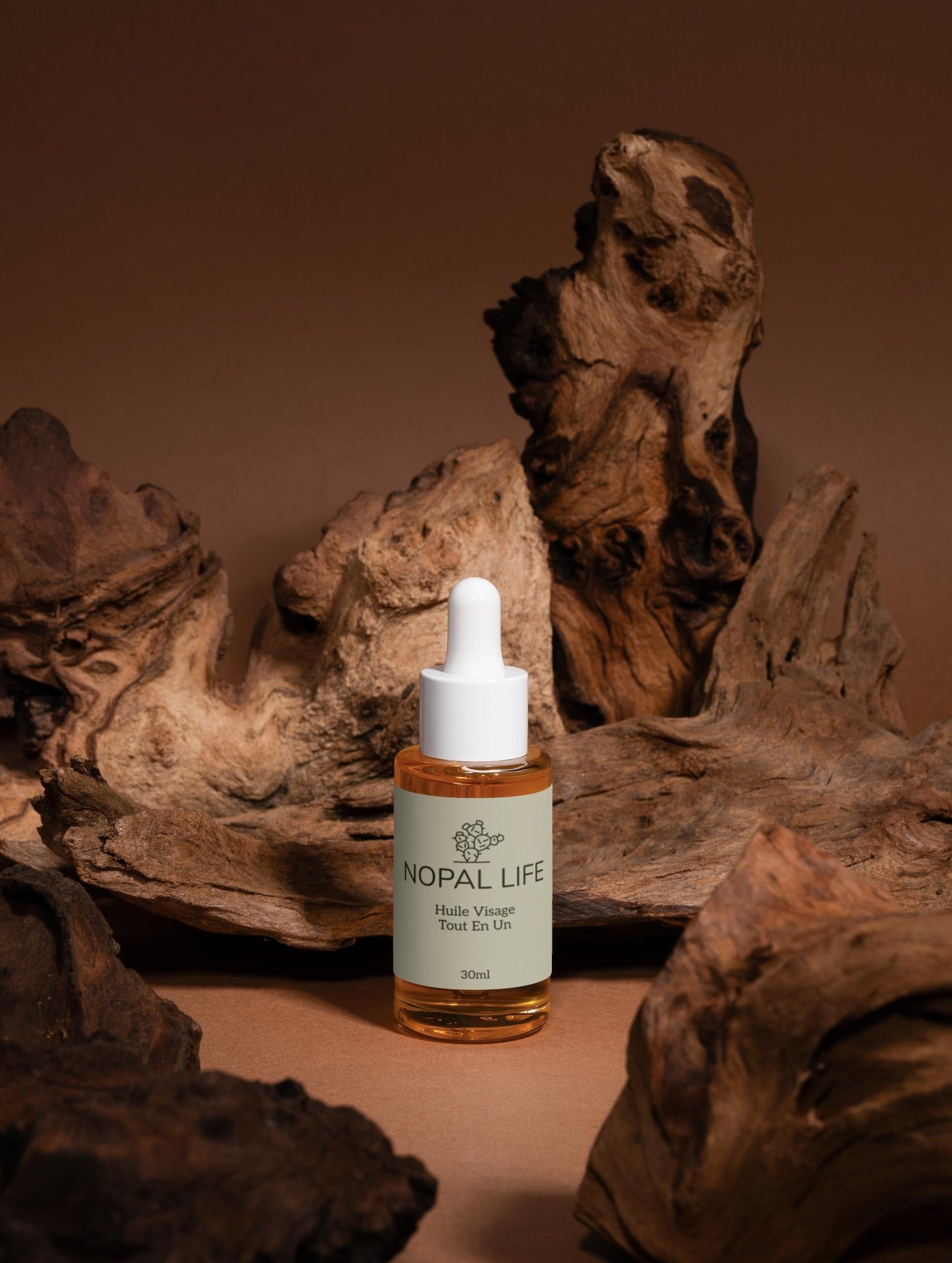
Pure jojoba is applied by warming 2 to 4 drops between the palms, then gently pressing them onto the face with patting motions—never circular rubbing, which pulls the tissues. Our Glow & Comfort Multi-Purpose Facial Oil combines it with prickly pear seed oil and other carefully selected lipidic active ingredients, for an immediate glow and lasting comfort; it is integrated at this Step 3, morning or evening.
Morning or evening: adjust the dosage
- Morning: 1 to 2 drops are enough for comfort and protection. Apply before your SPF; this active ingredient is not photosensitizing.
- Evening: 3 to 4 drops to nourish and provide comfort during the night—ideal for dry or mature skin.
- Frequency: daily for dry to mature skin, alternating (evening only) for combination skin.
Find more detailed protocols according to your profile in our article on its daily integration for mature and dull skin.
A synergy of natural active ingredients around prickly pear
This active ingredient only fully delivers its benefits when combined with the right active ingredients. At Nopal Life, we have built our formulation philosophy on precise plant synergies—with prickly pear as the common thread.
Prickly pear seed oil (Opuntia ficus-indica): the Nopal Life signature
Prickly pear seed oil is our signature ingredient. Cold-extracted from the seeds of the Opuntia ficus-indica cactus cultivated in Algeria, it is among the rarest and most precious oils in natural cosmetics. Its components:
- Linoleic acid (55-65%): essential fatty acid, helps preserve the comfort of the skin barrier
- Vitamin E (tocopherols): among the highest concentrations of all known vegetable oils
- Beta-sitosterol: rare phytosterol, appreciated for the comfort of dry skin on the surface
- Oleic acid (20-25%): provides nourishment and a melting feel to the upper layers
Combined with jojoba, it forms a complete lipid synergy: one provides its compatibility with sebum and its protective film, the other its cocktail of vitamins and phytosterols for radiance and visible firmness.
Natural Vitamin E (tocopherols)
Present in both jojoba and prickly pear, cosmetic vitamin E acts as a surface antioxidant: it helps protect skin lipids against oxidation linked to free radicals (pollution, residual UV, stress). Regular topical application helps preserve the comfort of the surface lipid film.
Plant phytosterols
Phytosterols are the "guardians" of the skin barrier in plant-based cosmetics. Present in jojoba (stigmasterol, campesterol) and abundantly in prickly pear (beta-sitosterol), they contribute to the comfort of the surface lipid structure and participate in the skin's natural protective appearance. This is one of the reasons why dry and mature skin appreciates these plant associations so much.
Nopal Life Sourcing: a demand for traceability
All our ingredients meet strict criteria: cold pressing, absence of synthetic solvents, producer traceability. The jojoba we use comes from organic farming and sustainable cultivation; the prickly pear is harvested in Algeria, on the arid high plateaus. This rigorous sourcing is at the heart of our promise of transparent and quality natural cosmetics.
Common mistakes to avoid
Even such a well-tolerated ingredient can be used incorrectly. Here are the five most common mistakes we observe—and how to correct them.
Mistake 1 — Applying to dry skin without prior humectant
Jojoba is an emollient film-former, not a moisturizer. Alone on dehydrated skin, it seals in existing dehydration instead of remedying it. Always apply a humectant first (aloe vera, glycerin, aqueous tonic), then seal with the wax. Our guide on the order of skincare application precisely details this layering logic.
Mistake 2 — Using too much
The material is concentrated: a small dose is enough for the entire face. Excess leaves an unpleasant shiny film and can promote microcysts on combination skin. Start with 1 to 2 drops and adjust according to your skin's feeling.
Mistake 3 — Confusing it with a comedogenic oil
Its comedogenic index is 2 out of 5—considered low in cosmetological literature. The confusion comes from its slightly oily texture, but it is not comedogenic for the vast majority of skin types. However, skin very prone to imperfections can test it on a small area before generalized use.
Mistake 4 — Neglecting quality and pressing method
Refined, discolored, or deodorized jojoba has lost some of its components (vitamin E, phytosterols). Always prefer a cold-pressed, unrefined, organic version. The color should be golden to slightly amber: a translucent and clear oil has often been over-processed.
Mistake 5 — Believing it is sufficient on its own for radiance and firmness
For mature skin, it is not enough on its own. It is part of a complete protocol, alongside other active ingredients known for radiance and visible firmness (retinol, bakuchiol, peptides) and antioxidants (vitamin C, vitamin E). Prickly pear seed oil is an ideal natural partner here, due to its density in antioxidants and soothing phytosterols.
Where to find it in the Nopal Life range
At Nopal Life, jojoba is included in several key formulas. It is never alone: always combined with prickly pear and complementary active ingredients, for multiplied synergy.
Glow & Comfort Multi-Purpose Facial Oil
Our lipid best-seller. A combination of jojoba + prickly pear seed oil + glow actives, for immediate and lasting results. Suitable for all skin types, morning and evening. Discover the Glow & Comfort Facial Oil.
Gentle Gel-Oil Cleansing Make-up Remover
The basis of any effective ritual. Gel-to-oil formula that removes makeup without stripping the skin: jojoba plays the role of the main lipid vector, dissolving oily impurities while preserving the barrier. Discover the Gel-to-Oil Cleanser.
Find your personalized routine
Not sure which product is right for you? The Nopal Life Skin Intelligence™ Diagnostic analyzes your skin profile in 11 questions and recommends a tailor-made routine adapted to your needs, skin type, and goals. Immediate results, no registration required.
RECOMMENDED CARE
Pure Prickly Pear Seed Oil
Natural formula · Origin Algeria
DISCOVER THIS PRODUCT →PERSONALIZED ROUTINE
Nopal Life Skin Intelligence™
Free diagnostic · 2 minutes
DISCOVER MY ROUTINE →Frequently Asked Questions
Can it replace a moisturizer?
No: jojoba is an emollient, not a humectant. It helps preserve existing hydration by forming a protective film, but cannot create hydration from scratch. Use it as a complement to a moisturizing product, never as a replacement.
Can it be applied around the eyes?
Yes, with caution. The periorbital skin is thin and sensitive: a tiny drop applied with a fingertip, delicately patted onto the eye contour, is enough. Avoid direct contact with the eye. Its exceptional tolerance makes it one of the most suitable fatty substances for this delicate area.
Can it be used on hair?
Yes. Its similarity to the skin's natural oils also makes it a valuable ally for lengths and ends: a few touches smoothed onto damp or dry hair bring shine and suppleness, without a greasy effect if applied lightly. Its versatility extends its use far beyond the face.
What is the difference between golden and light golden shades?
The unrefined golden version retains its natural amber color and all its components. The clear version has been decolorized by filtration or light refining: it remains functional, but is poorer in micronutrients. For optimal skincare results, prefer the unrefined golden version.
Is it compatible with vitamin C?
Perfectly. First apply your vitamin C serum (aqueous phase), let it penetrate, then apply the jojoba (oily phase). It also helps preserve vitamin C on the surface by protecting it from oxidation, thanks to its own vitamin E.
 Jojoba Oil - NOPAL LIFE" style="width:88px;height:88px;object-fit:cover;border-radius:8px;flex-shrink:0;" loading="lazy">
Ingredient Reference
Jojoba Oil
Mattified appearance & balancing hydration — natural sebum mimic.
Discover the sheet →Read more
Information provided for cosmetic and educational purposes; it does not constitute medical advice.
Next to read
Our anti-aging treatments