



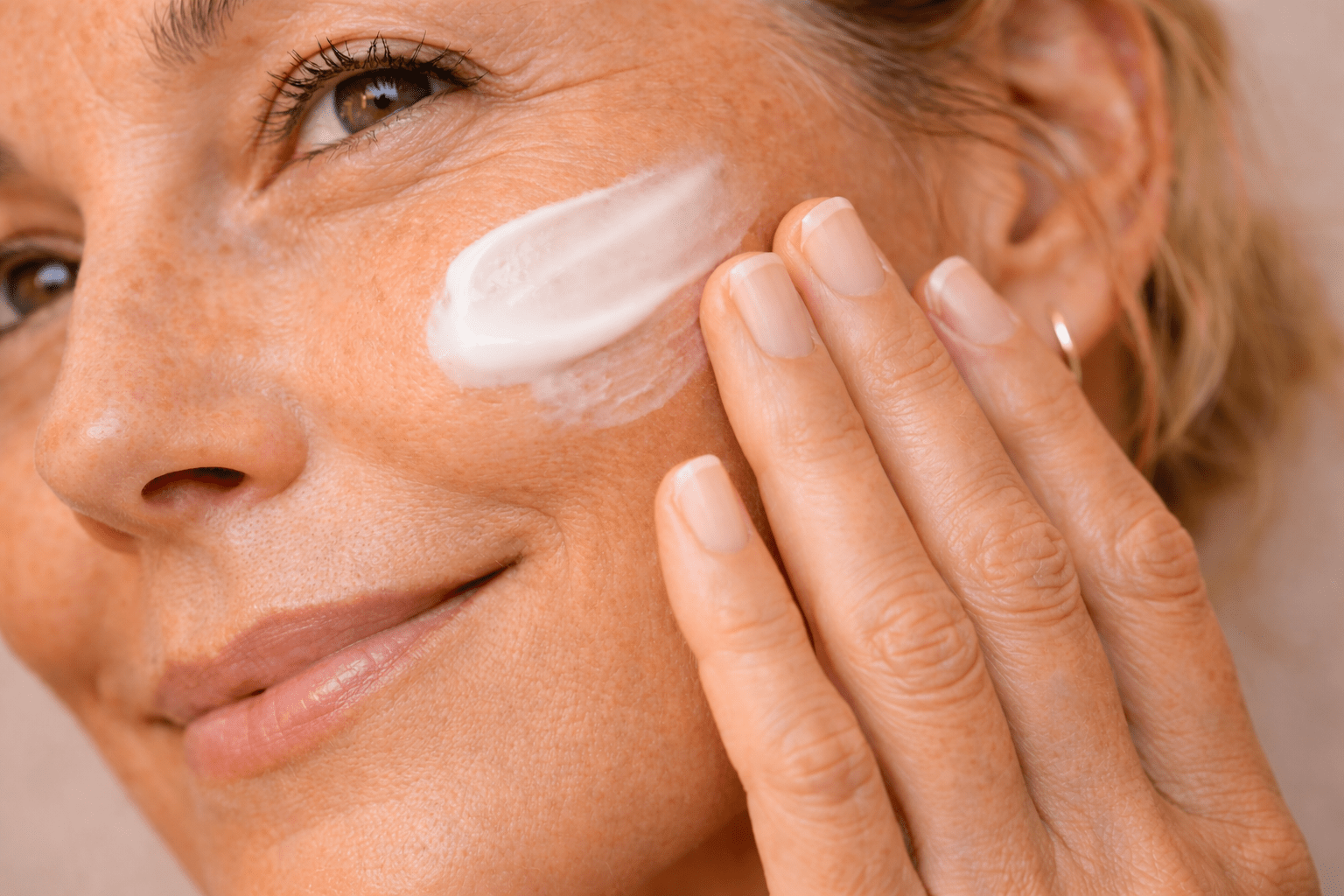
Face Cream: How to choose based on your actual needs
Hydration, comfort, radiance, imperfections or anti-ageing: a good face cream is not chosen only according to skin type, but according to the real need of the moment. Discover how to choose a face cream using a simple matrix, understand the role of ceramide NP, squalane and aloe, and build a more consistent organic, natural and vegan routine.
The Right Cream, at the Right Time
Choosing a face cream seems simple… until you start comparing promises: hydrating, soothing, plumping, anti-ageing, sensitive skin, combination skin, organic, natural, vegan, glow, skin barrier, intense comfort. In the end, you're not always sure if you need a light cream, a rich cream, a gel-cream, or a comforting balm.
The real problem is that we often try to choose our cream based on a single label: dry skin, oily skin, combination skin. However, in reality, skin is more subtle than that. Combination skin can lack moisture. Oily skin can be sensitized. Dry skin can need comfort… but also radiance. And mature skin, depending on the period, may primarily crave calm, bounce, or suppleness.
So the real question isn't just:
“What is the best face cream?”
The real question is rather:
“How do I choose my face cream according to my skin's actual needs?”
This is where a needs matrix becomes useful. It allows us to move away from the vague logic of marketing and return to a simple logic: observe your skin, identify the current priority, then choose a consistent texture and active ingredients.
In this article, we will look at:
-
why choosing your cream by “need” is more effective than choosing solely “by skin type”;
-
how to use a simple matrix to make the right choice;
-
how to understand the role of three key active ingredients: ceramide NP, squalane, and aloe;
-
how to build a consistent routine that is organic, natural, and vegan if that is your preference;
-
which mistakes to avoid;
-
and finally, the answers to frequently asked questions in the FAQ.
Why a face cream should not be chosen solely based on skin type
We have long been taught to classify skin into broad categories: dry, oily, combination, normal, sensitive. This classification remains useful, but it doesn't explain everything.
Let's take a very concrete example. Two people might say they have combination skin:
-
the first one's forehead is mostly shiny, but her skin feels tight after showering;
-
the second one has enlarged pores and a few blemishes, but no discomfort.
On paper, they have the same "skin type." In practice, they don't need the same face cream.
This is why it is more intelligent to think in terms of skin needs. Skin needs answer the question:
what does my skin need right now?
This need can be:
-
more hydration;
-
more comfort;
-
more skin barrier repair;
-
more radiance;
-
more balance;
-
more suppleness and anti-ageing support.
A well-chosen cream is often less about one that "promises everything" and more about one that precisely meets that need.
 |
 |
Understanding the Role of a Face Cream in a Skincare Routine
Before choosing a cream, it's important to understand what it does.
A face cream generally has three main functions:
1. Provide comfort
A cream helps reduce feelings of tightness, dryness, or discomfort. This is particularly important when the skin is sensitized or dehydrated.
2. Strengthen the skin barrier
The skin barrier is, in a way, the skin's "shield." When it is weakened, the skin becomes more reactive, drier, more uncomfortable, and sometimes even shinier, because it tries to compensate.
A good face cream often acts as a support for this barrier.
3. Limit water loss
Even if a hydrating serum provides targeted active ingredients, it is often the cream that helps "seal" in hydration and maintain comfort throughout the day or night.
In other words:
the serum may be the message, but the cream is often the protective envelope.
The Needs Matrix: How to Choose Your Face Cream More Intelligently
To simplify the choice, we can use a needs matrix divided into 5 main families. Regardless of the exact name we give them, the idea is always the same: identify what is dominant.
1. Hydration Need
Frequent signs:
-
skin feeling tight after cleansing;
-
dehydration fine lines;
-
skin that appears "creased";
-
makeup that quickly settles into lines.
In this case, you should look for a face cream that provides water, comfort, and a texture suitable for the skin. Aloe can be particularly interesting here, especially in fresh or light textures.
2. Comfort / Skin Barrier Need
Frequent signs:
-
redness;
-
stinging;
-
skin that reacts quickly;
-
discomfort with otherwise "classic" products;
-
skin becoming unstable.
Here, creams containing biomimetic lipids or barrier-supporting ingredients, such as ceramide NP and squalane, are particularly relevant.
3. Radiance / Evenness Need
Frequent signs:
-
dull complexion;
-
visually tired skin;
-
lack of freshness;
-
surface irregularities.
In this case, the cream should primarily avoid suffocating the skin, maintain good hydration, and support an overall glow-oriented routine.
4. Balance / Imperfection Need
Frequent signs:
-
visible pores;
-
shine;
-
occasional imperfections;
-
cream too rich that "overloads" the skin.
Here, a lighter cream with a fine, non-suffocating texture, but one that doesn't dry out the skin, will often be chosen.
5. Anti-ageing / Suppleness / Bounce Need
Frequent signs:
-
established wrinkles;
-
loss of suppleness;
-
less comfortable skin;
-
lack of elasticity.
In this situation, a face cream that combines comfort, barrier support, light to moderate nourishment, and good sensoriality is generally sought. Squalane and ceramide NP can be very beneficial.
Simple Table: Which Cream to Choose According to the Needs Matrix
| Dominant Need | What the Skin Requires | Interesting Actives | Often Suitable Texture | Ideal Time |
|---|---|---|---|---|
| Hydration | Water + comfort | aloe, humectants, light squalane | gel-cream, light emulsion | morning and/or evening |
| Barrier / comfort | Protection + soothing | ceramide NP, squalane, aloe | cocooning cream, comfort cream | morning and evening |
| Radiance / evenness | Hydration + fresh finish | aloe, light squalane | light cream, gel-cream | morning |
| Balance / imperfections | Comfort without suffocating | aloe, well-dosed squalane | fluid, light cream | morning and evening as needed |
| Anti-ageing / suppleness | Nourishment + bounce + comfort | ceramide NP, squalane, aloe as support | more enveloping cream | especially evening, sometimes morning |
This table is not a fixed rule. It serves to guide the choice, not to restrict it.
The 3 Key Actives to Know
In the context of this article, three ingredients deserve particular attention: ceramide NP, squalane, and aloe.
They do not have the same role, do not give the same sensation on the skin, and do not address exactly the same needs.
Ceramide NP: the ultimate barrier active
Ceramide NP is part of the ceramide family, lipids naturally present in the skin. Their role is essential: they contribute to the cohesion of the skin barrier and help the skin retain water.
When the skin lacks comfort, becomes sensitive, or seems "fragile," a cream containing ceramide NP can become an excellent ally.
Why it's interesting
Ceramide NP is primarily sought after for:
-
supporting the skin barrier;
-
improving the sensation of comfort;
-
limiting water loss;
-
helping the skin become more stable on a daily basis.
For what type of need?
It is particularly interesting if:
-
your skin is dry or uncomfortable;
-
your skin reacts easily;
-
you use active ingredients that can weaken the skin;
-
you are looking for an anti-ageing cream that remains gentle and consistent.
The sensation on the skin
Unlike some "spectacular" active ingredients, ceramide NP works discreetly. It may not give an immediate "wow" effect, but it can help the skin become calmer, more supple, and less unstable over time.
And in a skincare routine, it's often this kind of silent progress that yields the best long-term results.
Squalane: intelligent comfort
Squalane is highly valued in modern face creams, especially in the world of natural, organic, or vegan skincare, because it offers an excellent compromise between comfort and lightness.
It is often derived from plant sources, particularly olive or sugarcane.
Why it's so popular
Squalane helps to:
-
provide suppleness;
-
reduce the feeling of tightness;
-
improve comfort;
-
give a silkier feel without necessarily being heavy.
For what type of need?
It's interesting if:
-
the skin lacks comfort;
-
the skin is dehydrated;
-
mature skin becomes "thinner" or drier;
-
you want a nourishing cream that is more elegant than a thick balm.
What makes it strong
Squalane is often well tolerated and easily integrated into light creams as well as richer textures.
It's a bit of a "chameleon" active ingredient for comfort: it knows how to make itself forgotten, while significantly improving the skin's feel.
Aloe: moisturising freshness
Aloe (often in the form of aloe vera) is a classic in facial care, and it remains highly relevant.
It is often associated with an image of freshness, hydration, and soothing.
Why it is useful
Aloe is often sought after for:
-
providing a fresh sensation;
-
supporting hydration;
-
helping to soothe the skin;
-
lightening the texture of care products.
For what type of need?
It is particularly interesting if:
-
the skin lacks water;
-
the skin prefers light textures;
-
you are looking for a fresh day cream;
-
the skin likes natural and simple routines.
Its real benefit
Aloe alone cannot replace a complete routine, but in a well-formulated cream, it can provide that "fresh, supple, comfortable skin" feeling that many people seek daily.
How to choose an organic, natural and vegan cream without being fooled
The words organic, natural, and vegan are very attractive. And it's understandable: they convey an idea of simplicity, respect, gentleness, and modernity.
But they should be read with a little perspective.
A natural cream is not necessarily better tolerated by all skin types.
A vegan cream is not automatically more effective.
And an organic cream is not always more suitable if the texture or overall composition does not match the skin's actual needs.
What to check first
1. Consistency of the promise
If your skin is fragile, be wary of creams that simultaneously promise intense radiance, a peeling effect, nourishment, complete correction, and instant glow. A consistent cream is often simpler.
2. Texture
Skin with imperfections may not react well to an overly enveloping cream.
Dry skin, on the other hand, will not always like an overly light gel.
3. Fragrance
If your skin is sensitive, highly fragranced creams or those very rich in essential oils are not necessarily the best starting point.
4. Presence of useful active ingredients
Check if the formula contains consistent ingredients such as:
-
ceramide NP;
-
squalane;
-
aloe.
5. Sensoriality
This is often an underestimated point. A face cream can be very well formulated; if you don't like its smell, its texture, or its finish, you won't be consistent.
And in skincare, consistency is often worth more than a "perfect" formula that you don't use.
 |
 |
How to build a simple routine around your face cream
The goal is not to have 8 steps. The goal is to have a consistent routine.
Here are 5 very simple profiles.
Profile 1: dehydrated skin
Morning
-
gentle cleanser;
-
hydrating serum;
-
face cream with aloe and/or light squalane;
-
SPF.
Evening
-
cleansing;
-
hydrating serum;
-
more comfortable cream if needed.
Here, the goal is to restore the skin's suppleness and reduce tightness.
Profile 2: sensitive skin / weakened barrier
Morning
-
rinse or very gentle cleanser;
-
simple serum if well tolerated;
-
face cream with ceramide NP and squalane;
-
SPF.
Evening
-
gentle cleansing;
-
more enveloping barrier cream.
In this profile, the skin does not need to be "stimulated." It primarily needs to be reassured.
Profile 3: dull skin
Morning
-
cleansing;
-
radiance serum if used;
-
light cream with aloe;
-
SPF.
Evening
-
cleansing;
-
more comfortable hydrating cream.
Here, the cream should not suffocate the skin. It should maintain a beautiful freshness.
Profile 4: combination skin with imperfections
Morning
-
gentle cleanser;
-
light serum;
-
fluid cream or gel-cream with aloe;
-
SPF.
Evening
-
cleansing;
-
light cream with well-dosed squalane.
The classic pitfall is to over-dry the skin. However, irritated skin often becomes even more unstable.
Profile 5: mature skin / anti-ageing needs
Morning
-
gentle cleanser;
-
serum if needed;
-
face cream with squalane + ceramide NP;
-
SPF.
Evening
-
cleansing;
-
richer, enveloping, comfortable cream.
Anti-ageing needs are not limited to "smoothing." They also include comfort, suppleness, and the overall quality of skin feel.
Common mistakes when choosing your face cream
Here are the most common mistakes.
1. Choosing a cream based solely on skin type
This is useful, but insufficient. You also need to consider the dominant need at the moment.
2. Thinking that a rich cream is necessarily better
A richer cream is not always more effective. If the texture does not suit the skin, it can become uncomfortable or poorly tolerated.
3. Wanting to treat everything with a single cream
Hydration, radiance, imperfections, wrinkles, pores, redness... a cream can help a lot, but it doesn't replace a coherent strategy.
4. Neglecting the skin barrier
Many skin types primarily need to be stabilized. Ceramide NP and squalane are often more useful than a "spectacular" product.
5. Forgetting SPF in the morning
Even the best anti-ageing cream will not make complete sense without daily sun protection.
6. Changing too quickly
It often takes several weeks to judge if a cream is truly suitable.
7. Confusing active sensation with efficacy
A cream that heats, stings, or "works" is not necessarily better. Comfort remains a true indicator.
8. Over-layering
Serum, essence, cream, oil, mask, sleeping pack... doing too much can sometimes lead to a loss of clarity.
How to know if your face cream truly suits you
A good cream is not necessarily one that transforms everything in 48 hours.
It's often the one that, after 2 to 6 weeks:
-
leaves the skin more comfortable;
-
makes the complexion more stable;
-
reduces feelings of tightness;
-
improves suppleness;
-
easily integrates into the routine;
-
makes you want to apply it morning and evening.
It's very concrete, very simple, and often more reliable than all the packaging promises.
Conclusion
Choosing a face cream becomes much simpler when you stop looking for "the best cream" and start looking for the cream most consistent with your skin's needs.
The right method has a few steps:
-
Observe what predominates: lack of water, discomfort, dull complexion, pores, anti-ageing needs.
-
Choose a suitable texture: light, fluid, enveloping, rich, or gel-cream.
-
Check the consistency of active ingredients like ceramide NP, squalane, and aloe.
-
Maintain regularity for several weeks.
A successful skincare routine isn't necessarily complicated. It's mostly stable, pleasant, and realistic.
FAQ
How to choose a face cream for combination skin?
Combination skin doesn't always need an ultra-light cream. If it lacks water, a well-balanced moisturising cream can be ideal. The most important thing is to observe if the skin feels tight, shiny, or reactive.
Which face cream to choose for sensitive skin?
Sensitive skin often needs a cream that supports the skin barrier. Formulas with ceramide NP and squalane, with little fragrance, are often good starting points.
Which face cream to choose at 30?
At 30, people often primarily seek hydration, prevention, and radiance. A light, comfortable cream with aloe or squalane can be an excellent base.
Which face cream to choose at 40?
At 40, many skin types appreciate slightly more comfortable textures. Squalane and ceramides can become particularly interesting.
Which face cream to choose at 50?
At 50, comfort, suppleness, and barrier support are often essential. A cream containing ceramide NP and squalane can be very relevant.
Is organic cream necessarily better?
Not necessarily. An organic cream can be excellent, but it must above all be adapted to your skin, its tolerance, and your current needs.
Is a vegan cream suitable for all skin types?
A vegan cream can suit many skin types, but it's not the word "vegan" that makes all the difference. It's the overall formula, texture, and compatibility with your skin that count.
Do you need a different cream in the morning and evening?
Not always. Some people use the same cream morning and evening. Others prefer a lighter texture in the morning and a more comfortable one in the evening. Both approaches can be relevant.
Can you use a face oil instead of a cream?
Sometimes, but not always. An oil primarily nourishes with lipids. A cream often provides a more complete balance of hydration, comfort, and protection.
How long does it take to see if a cream is suitable?
It often takes several weeks to get a real idea, unless the skin reacts badly immediately. Comfort and tolerance are already very good initial indicators.
Cosmetic safety reminder:
Before introducing a new face cream, test it on a small area if your skin is reactive. Introduce new products gradually and consult a professional if discomfort or irritation persists.
Our anti-aging treatments

Read more
