Prickly Pear Polyphenols: Nopal Life's Complete Guide
Every day, skin is exposed to an invisible barrage of aggressions: UV radiation, urban pollution, daily stress, and climatic variations. Behind each of these factors, free radicals are often mentioned – unstable molecules associated with visible signs of aging, loss of skin radiance, and discomfort of the skin barrier. This is precisely where prickly pear polyphenols come in — phytochemical compounds renowned for their antioxidant richness, derived from Opuntia ficus-indica, an iconic cactus from the arid regions of the Mediterranean basin and the Maghreb.
At Nopal Life, prickly pear is not just a trendy ingredient. It is the core of our philosophy: natural, rigorously formulated cosmetics that rely on botanical active ingredients valued in plant-based cosmetology. The polyphenols of this plant – flavonoids, betalains, phenolic acids – represent one of the best-documented assets of contemporary plant cosmetology.
In this comprehensive guide, you will discover the characteristics that make these compounds beneficial for the skin, how to adapt them to your skin type, how to integrate them into a daily routine, and which natural active ingredients accompany them in our formulations. You will also find answers to the most frequently asked questions, as well as mistakes to avoid to fully benefit from your routine. This guide is your complete reference on prickly pear polyphenols applied to skin care.
Understanding Prickly Pear Polyphenols
Polyphenols are a family of organic molecules naturally present in plants. Their role in the plant is primarily defensive: they help protect plant tissues from UV rays, unwanted microorganisms, and water stress. Opuntia ficus-indica, which survives in extremely dry and sunny environments, develops a particularly high concentration of these compounds. It is this evolutionary adaptation that explains their value when applied to the skin.
The main polyphenols identified in prickly pear belong to several subfamilies:
- Flavonoids: quercetin, isorhamnetin, luteolin, and kaempferol. These molecules are valued for their antioxidant properties and their contribution to skin comfort.
- Betalains: nitrogen-containing pigments specific to cactaceae, including betacyanins (red-violet) and betaxanthins (yellow-orange). Betalains are recognized for their antioxidant richness.
Their benefit for the skin is appreciated on several levels. First, they are plant antioxidants valued for their contribution to protecting the skin's appearance from external aggressions. Opuntia flavonoids are among the most studied plant antioxidant compounds.
Second, polyphenols are appreciated in synergy with other antioxidants present in prickly pear: vitamin E (tocopherol), which prickly pear seed oil is particularly rich in, and vitamin C, traditionally associated with skin radiance and comfort.
These compounds, the appearance of which is appreciated after several weeks of continuous use, are among the particularly relevant foundational active ingredients in a naturally radiant and firming routine.
Prickly Pear Polyphenols for Your Skin Type
All skin types are exposed to oxidative stress, but they experience it differently and with different visible consequences. Prickly pear polyphenols adapt to this skin diversity, making them an active ingredient that is both universal and customizable.
Dehydrated or Sensitive Skin
This skin type benefits most directly from Opuntia polyphenols. A weakened skin barrier often results in discomfort and tightness. Flavonoids – particularly quercetin – support the comfort of this barrier and contribute to a soothed sensation. Betalains provide a calming sensation that can help reduce the appearance of reactive redness. To learn more about routines adapted to this specific profile, our dedicated article on the skincare benefits of polyphenols for dehydrated skin details the adapted protocols.
Combination or Oily Skin
Paradoxically, oily-prone skin is often subjected to high oxidative stress. Prickly pear polyphenols, thanks to their antioxidant properties, support the comfort of this skin type while respecting its balance. Their lightness allows for pleasant application, without an occlusive effect, and helps to mattify the appearance of shiny areas. Our article on natural radiance with Opuntia polyphenols explores this aspect in a sustainable way.
Mature Skin or Skin Exposed to Premature Aging
With age, skin often appears more vulnerable to external aggressions and loses its visible tone. Prickly pear polyphenols complement the care of this skin type through topical application. Regular application of plant-derived antioxidant active ingredients can help preserve the firm and plump appearance of the skin over time. Our article on prickly pear polyphenols and skin firmness elaborates on this topic with detailed data.
Dull or Tired Skin
Lack of radiance is often one of the first visible signs of oxidative stress: the skin loses its translucency, and the complexion appears duller. Opuntia polyphenols, in combination with the vitamin C naturally present in prickly pear, can help support the visible luminosity of the complexion. For a complete approach, also discover our recommendations for a natural polyphenol anti-dullness routine.
Still unsure about your exact skin type? The Nopal Life Skin Intelligence™ diagnostic analyzes your skin profile in detail to guide you towards the routine best suited to your real situation.
Recommended Routine: The Nopal Life Protocol
The benefits of prickly pear polyphenols largely depend on regular and proper application. An antioxidant active ingredient applied to poorly prepared skin or combined with incompatible products cannot express its full potential. Here is the Nopal Life protocol, designed to highlight polyphenols and their synergy with other active ingredients in your routine.
Morning: Protection and Radiance
In the morning, the priority is to create an antioxidant shield before exposure to the day's aggressions (UV, pollution, heat). Start with a gentle cleanser that respects the skin barrier. Then apply a lightweight serum — the Ginkgo Antioxidant Radiance Boosting Gel is designed for this role: its formula combines prickly pear polyphenols with ginkgo biloba extract, two antioxidant active ingredients whose synergy is valued in natural cosmetology. Its gel texture applies pleasantly, without weighing down the skin. Apply by gently patting from the center of the face towards the temples. Finish with your usual sun protection.
Evening: Comfort and Radiance
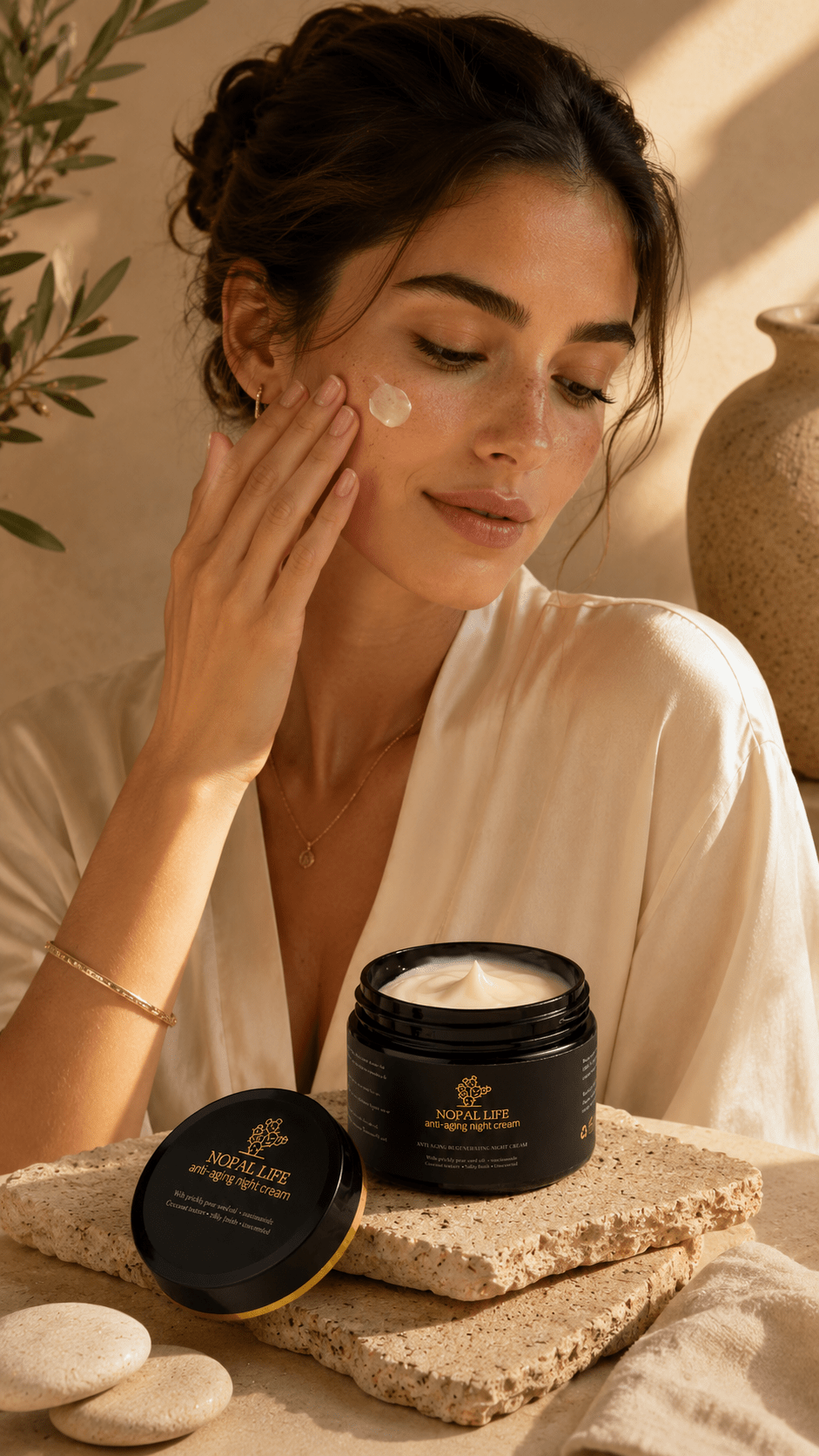
At night, the skin benefits from a period of rest conducive to care. This is the ideal time for a more nourishing supply of polyphenolic active ingredients. The Prickly Pear Regenerating Cream is formulated for this key moment: it combines polyphenolic extracts of Opuntia ficus-indica with a nourishing base that supports the comfort of the skin barrier during rest. Apply to clean and slightly damp skin — this technique promotes a feeling of comfort. Massage in gentle upward movements, focusing on areas of tension (eye contour, nasolabial fold, temples).
Frequency and Duration
Polyphenols are foundational active ingredients: their visible results are appreciated over time. Allow a minimum of 4 weeks of continuous use morning and evening to see the first visible results (radiance, evenness of complexion). A stable routine over 8 to 12 weeks is ideal for appreciating the appearance of firmness and texture. No "break" period is necessary — unlike some powerful dermo-active ingredients, plant polyphenols are well tolerated with daily use.
Recommended Combinations
- Vitamin C: excellent antioxidant synergy — the two active ingredients complement each other harmoniously.
- Niacinamide: complementary for an even complexion appearance, with no negative interaction.
- Hyaluronic Acid: perfect for helping to preserve skin hydration before applying polyphenols.
The Essential Natural Active Ingredients of Prickly Pear
Polyphenols are not the only treasures of Opuntia ficus-indica. Understanding the entire phytochemical profile of prickly pear helps to better grasp why Nopal Life formulations are built around this central ingredient rather than synthetic extracts or isolated molecules.
Tocopherol (Vitamin E)
Prickly pear seed oil is particularly rich in vitamin E — one of the most generous in the plant kingdom. Tocopherol is the reference fat-soluble antioxidant: it is valued for supporting the supple appearance of the skin and the comfort of the barrier function. It is appreciated in direct synergy with water-soluble polyphenols, thus covering both compartments of the skin.
Linoleic Acid (Omega-6)
Rich in linoleic acid, prickly pear seed oil is particularly valuable for dehydrated skin and skin with a weakened barrier. Linoleic acid is an essential fatty acid that the skin does not produce itself: it contributes to the comfort and maintenance of skin suppleness. Its topical application can help preserve the suppleness and comfort of the epidermis.
Betalains
Characteristic pigments of cactaceae, betalains — indicaxanthin and betanin leading the way — exhibit a remarkable antioxidant and soothing profile. Indicaxanthin is among the most appreciated plant antioxidant pigments. Applied to the skin, betalains contribute to a soothed sensation and help reduce the reddened appearance of reactive skin.
Phytosterols
Beta-sitosterol, campesterol, stigmasterol: prickly pear phytosterols are valued for their contribution to skin comfort and supporting the appearance of the lipid barrier. They complement the action of polyphenols by helping to preserve the supple and comfortable appearance of the skin.
Nopal Life Sourcing
Our prickly pear extracts come from cultures located in the historical areas of origin of Opuntia — Maghreb and the Mediterranean basin — where climatic conditions (intense sunshine, controlled water stress) naturally maximize the concentration of polyphenols. We favor cold extractions or low-temperature processes that preserve the integrity of the active molecules. Our formulations contain no synthetic fragrances that could disrupt the activity of polyphenols or irritate sensitive skin. To learn more about our formulation approach, consult our guide on the polyphenol routine adapted to sensitive skin.
Common Mistakes to Avoid
Prickly pear polyphenols are stable and well-tolerated active ingredients, but certain practices can reduce the benefit of your routine or create unnecessary discomfort. Here are the most common mistakes, and how to avoid them.
Mistake 1: Combining Polyphenols with Strong Acids Without Transition
Chemical exfoliants with low pH (concentrated AHAs, BHAs) can destabilize certain polyphenols by altering their molecular structure. If you use acidic exfoliants in your routine, alternate applications (polyphenols in the morning, acids in the evening) or space them out by a few days to allow your skin to adapt.
Mistake 2: Storing Products in Light or Heat
Polyphenols are sensitive to oxidation — this is precisely their strength (they "absorb" free radicals instead of your skin), but it also means that prolonged exposure to light or heat can degrade them even before application. Store your Nopal Life products away from direct light, ideally between 15 and 20°C.
Mistake 3: Expecting Immediate Results
Polyphenols are not flash-effect active ingredients. Their action is appreciated over time and cumulatively: they support skin comfort and radiance over time. Expect gradual results — radiance and evenness of complexion in 4 weeks, improvement in the appearance of texture and firmness in 8 to 12 weeks.
Mistake 4: Neglecting Sun Protection
Polyphenols complement sun protection but do not replace it. They support the skin against external aggressions, but do not filter radiation. Always combine your polyphenol routine with an SPF adapted to your phototype in the morning.
Mistake 5: Using Excessive Amounts
"More is better" does not apply to topical polyphenols. A reasonable amount of product, applied regularly, is far more effective than generous and irregular application. A few drops of serum or a pea-sized amount of cream are enough to cover the entire face and neck.
Prickly Pear: An Exceptional Polyphenolic Fruit for the Skin
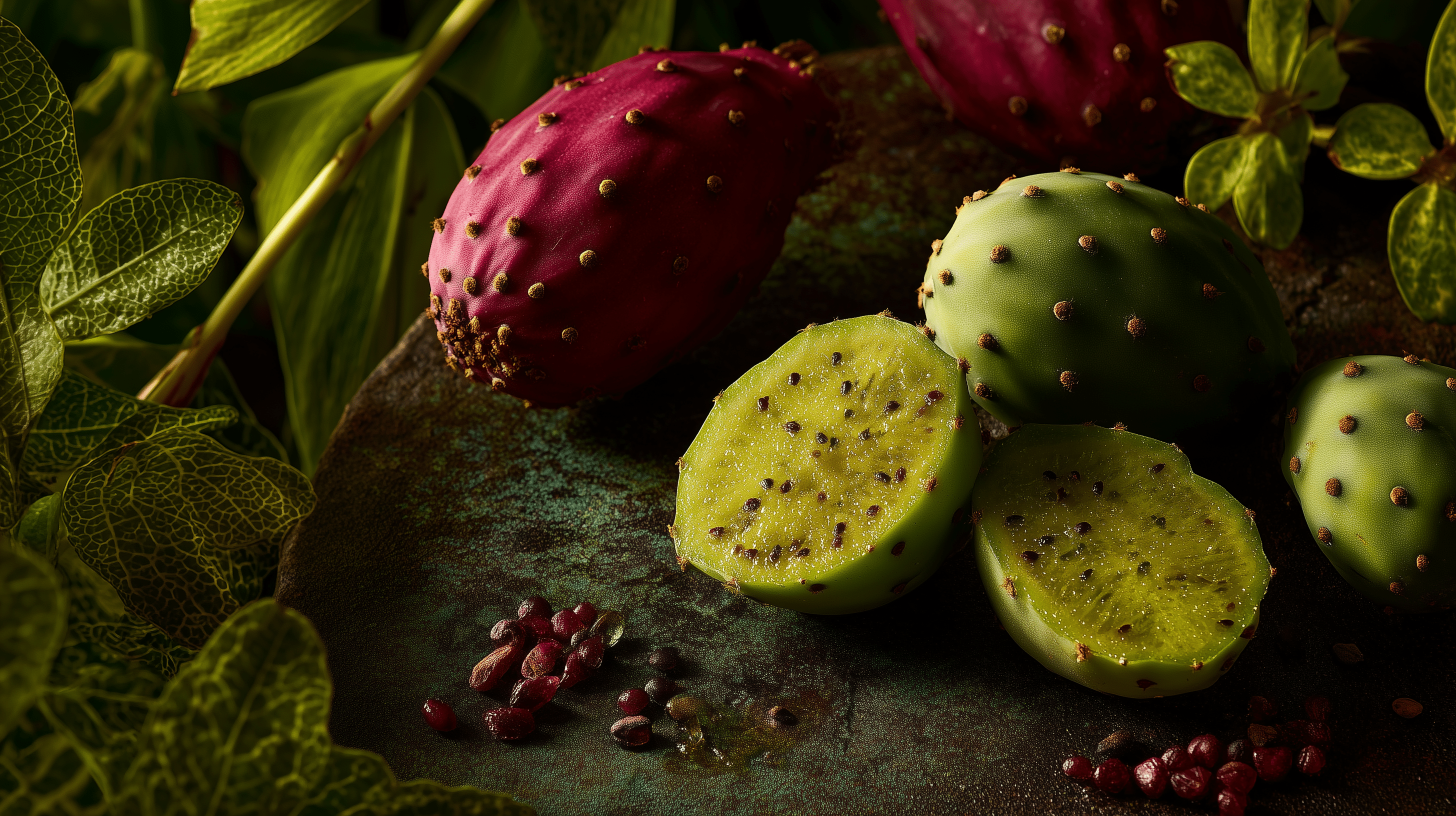
Prickly pear is not just a cosmetic ingredient: it is a botanical fruit with a long history of appreciation. This fruit of the nopal cactus (Opuntia ficus-indica) concentrates, in its pulp, seeds, and peel, three major families of rare polyphenols: flavonoids (quercetin, kaempferol), betalains — water-soluble pigments exclusive to cactaceae — and phenolic acids. This combination is unique in the plant kingdom and explains the remarkable antioxidant richness of this fruit.
The polyphenol content of the fruit varies depending on its ripeness, altitude, and sun exposure. Fruits grown in the arid regions of the Maghreb and the Mediterranean basin — historical origins of Opuntia — develop a higher polyphenol concentration than fruits grown in temperate, humid conditions. This is why Nopal Life exclusively selects its raw materials from certified producers in these regions of origin.
Prickly Pear Polyphenols and Face: Benefits According to Skin Type
Applied daily to the face, prickly pear polyphenols are appreciated for their antioxidant properties, which help preserve the firm and plump appearance of the skin and support natural skin renewal. On mature facial skin, this action is appreciated through a complexion that appears more even, a texture that appears smoother, and a more rested appearance within 6 to 8 weeks of regular application.
For sensitive facial skin, prickly pear polyphenols offer a gentle botanical alternative, valued for their excellent tolerance. For combination skin, they help to mattify the appearance of shiny areas and balance the appearance of the face without drying out dry areas. This fruit is thus one of the rare natural active ingredients suitable for all facial skin types, from the most sensitive to the most mature.
Why Choose Nopal Life for Your Prickly Pear Polyphenol Skincare?
Prickly pear is now cited in many cosmetic formulations. But not all are created equal. The quality of a polyphenolic extract first depends on its sourcing (geographical area, growing conditions), then on its extraction process (cold or not, solvent used), and finally on its concentration in the final formulation.
At Nopal Life, we have chosen transparency and rigor at every step. Our extracts come from selected producers in the historical areas of origin of Opuntia ficus-indica, where the plant expresses its highest concentration of active compounds. Our extraction processes preserve the integrity of the polyphenols. And our formulations are designed to highlight these active ingredients on the skin, without superfluous ingredients that could dilute their effectiveness or irritate the most sensitive skin.
Our prickly pear range includes:
- The Ginkgo Antioxidant Radiance Boosting Gel — morning antioxidant protection, light gel texture
- The Prickly Pear Regenerating Cream — nourishing and comforting night care
And to further customize your routine, our Skin Intelligence™ diagnostic guides you to the most suitable combination of active ingredients for your unique skin profile — in just a few minutes, for free.
RECOMMENDED TREATMENT
Pure Prickly Pear Oil
Natural formula · Origin Algeria
DISCOVER THIS TREATMENT →Frequently asked questions about prickly pear polyphenols
Are prickly pear polyphenols suitable for blemish-prone skin?
Yes, in most cases. Opuntia polyphenols are non-comedogenic — they do not clog pores. Their light soothing sensation can even be pleasant for blemish-prone skin, accompanying skin comfort.
Are prickly pear polyphenols compatible with cosmetic treatments?
Generally, yes. Topical plant polyphenols have a high tolerance profile. Interactions are theoretically possible with some active dermatological treatments — if in doubt, professional advice is recommended.
What is the difference between prickly pear seed oil and a polyphenol extract?
Prickly pear seed oil is rich in unsaturated fatty acids (linoleic, oleic) and vitamin E — lipophilic active ingredients. The polyphenol extract comes from an aqueous or hydroalcoholic extraction of plant parts rich in flavonoids and betalains — hydrophilic active ingredients. Both are complementary: one is appreciated on the skin's lipid layer, the other on the aqueous compartments. Nopal Life formulations integrate these two fractions for optimal coverage.
How long does it take to see results?
The first signs of visible improvement — radiance, a more even-looking complexion — generally appear between the 3rd and 5th week of regular use. The appearance of firmness and texture is appreciated over 8 to 12 weeks. Regularity takes precedence over intensity: two daily applications (morning and evening) are better than occasional application, even generous.
Are polyphenols photosensitizing?
No, on the contrary: they are antioxidants valued for supporting the skin against oxidative stress related to the sun. Sun protection remains essential as a complement.
Read more
Information provided for cosmetic and educational purposes; it does not constitute medical advice.
Our anti-aging treatments