Prickly pear oil: what are its benefits for mature skin?
Prickly pear oil is now one of the most sought-after active ingredients in natural and anti-ageing cosmetics. Renowned for its exceptional richness in antioxidants and essential fatty acids, it is often presented as a premium ingredient capable of effectively supporting mature skin. However, not all prickly pear oils are created equal.
Prickly pear seed oil is today one of the most sought-after active ingredients in natural and anti-ageing cosmetics. Renowned for its exceptional richness in antioxidants and essential fatty acids, it is often presented as a premium ingredient capable of effectively supporting mature skin. However, not all prickly pear seed oils are created equal.
Between variable quality, different extraction methods, and unequal concentrations, it can be difficult to navigate. How to recognize a quality organic prickly pear seed oil? What are the essential criteria to check? And why do these elements directly influence its effects on the skin and wrinkles?
In this article, we give you the keys to understanding this exceptional active ingredient and making informed choices in your anti-ageing routine.
What is prickly pear seed oil?
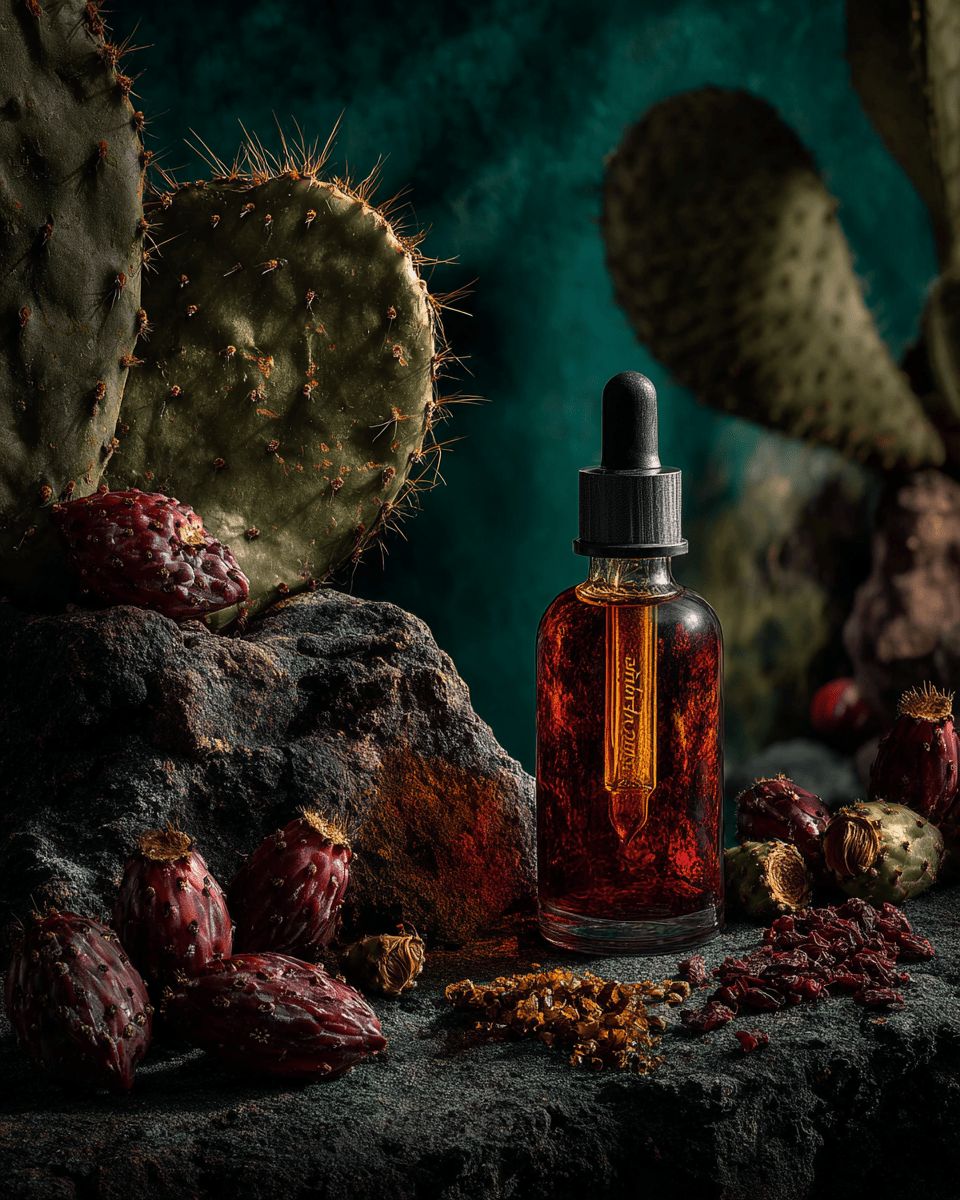
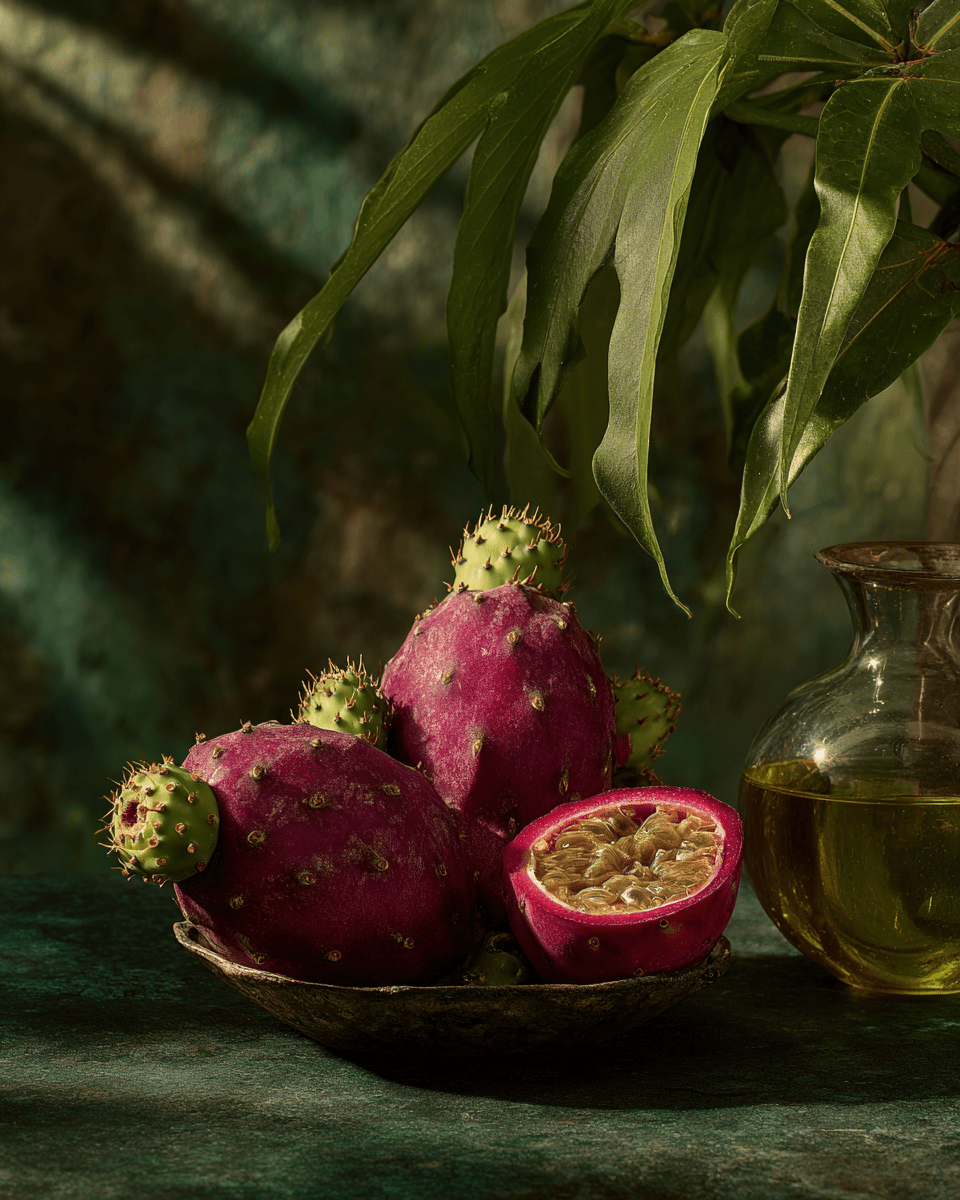
Prickly pear seed oil is extracted from the seeds of the Opuntia ficus-indica cactus fruit.
A demanding production process
Unlike many vegetable oils, its production is particularly complex:
- several hundred kilograms of fruit are needed to obtain one liter of oil
- each fruit contains very few seeds
- extraction requires a long and meticulous process.
👉 This rarity explains its high-end positioning in cosmetics.
An ideal composition for the skin
Prickly pear seed oil is naturally rich in:
- vitamin E (powerful antioxidant)
- essential fatty acids (omega-6 in particular)
- plant sterols.
This composition makes it a particularly suitable active ingredient for anti-ageing care.
Why is oil quality essential in anti-ageing cosmetics?
Not all prickly pear seed oils offer the same benefits.
Variable active ingredient concentration
Depending on its quality, an oil can be:
- rich in nutrients
- or, on the contrary, depleted.
👉 A low-quality oil will have a limited impact on:
- hydration
- nutrition
- the appearance of wrinkles.
A direct impact on efficacy
A well-extracted and pure oil helps to:
- better nourish the skin
- support its elasticity
- preserve its radiance.
How to recognize a quality organic prickly pear seed oil?
Several criteria allow for evaluating the quality of an oil.
Cold-pressed extraction
This is the most important criterion.
👉 A quality oil must be:
- cold-pressed
- unrefined
- not chemically processed.
This process preserves:
- vitamins
- fatty acids
- the natural properties of the oil.
Organic certification (Ecocert)
An organic certified oil guarantees:
- the absence of pesticides
- environmentally friendly cultivation
- a controlled process.
👉 Ecocert certification is a reliable indicator.
A simple and pure composition
A good oil must contain:
- 100% prickly pear seed oil
- no additives
- no added fragrance.
 |
 |
Visual indicators of a quality oil
Even without technical analysis, certain elements can help you.
Texture
- light and penetrating
- non-greasy
- quickly absorbed by the skin.
Colour
- yellow to light green
- never too dark.
Scent
- slightly vegetal
- subtle.
👉 A scent that is too strong or chemical may indicate lower quality.
Common mistakes when choosing an oil
Confusing macerate with pure oil
Some oils are actually macerates (less concentrated).
👉 Always check for the mention "seed oil."
Relying solely on price
A very cheap oil is rarely of good quality.
Neglecting the origin
Geographical origin can influence the quality of raw materials.
How to integrate prickly pear seed oil into an anti-ageing routine?
As a night treatment
It is ideal for evening use to nourish and regenerate the skin.
As a complement to a hydrating serum
Combined with Hyaluronic Acid, it helps maintain hydration.
As a targeted treatment
It can be used on:
- the eye contour
- areas marked by wrinkles.
Expert tips to maximise its effects
To get the most out of prickly pear seed oil:
- choose a certified organic oil
- use it sparingly (a few drops are enough)
- integrate it into a complete routine with complementary active ingredients such as Ceramides.
👉 Consistency is essential to see results.
  |
 |
FAQ – Organic Prickly Pear Seed Oil
How do I know if an oil is pure?
Check the ingredient list: it should only contain the oil.
Why is it so expensive?
Its production is rare and demanding.
Is it suitable for mature skin?
Yes, it is particularly suitable for nourishing and protecting the skin.
Can it replace a cream?
No, it complements a routine but does not replace it.
Can it be used every day?
Yes, in small quantities.
Conclusion
Organic prickly pear seed oil is an exceptional active ingredient in anti-ageing cosmetics, but its quality directly determines its effectiveness. Between extraction method, certification, and purity, several criteria help make the right choice.
By choosing a quality oil, you fully benefit from its nourishing, protective, and regenerating properties. Integrated into an appropriate routine, it becomes a true ally in supporting the skin over time, preserving its radiance, and reducing visible signs of ageing.


Go further than this article
Get our skincare guides by email — and start with your free skin diagnostic: 2 minutes, advice tailored to your skin. We ship to the US, UK, Canada, Australia and 27 European countries; somewhere else? Sign up and you will be the first to know when we deliver to your country.
By signing up, you agree to our privacy policy. Unsubscribe in one click.