Prickly pear or jojoba oil: which one to choose?
Technically, one isn't even an oil. Jojoba is a liquid wax, with a profile similar to human sebum. Prickly pear seed oil is a vegetable oil in the strict sense, rich in linoleic acid. This difference in nature explains almost everything else.
What sets them apart
| Criterion | Prickly Pear | Jojoba |
|---|---|---|
| Nature | vegetable oil in the strict sense | liquid wax |
| Origin | Opuntia ficus indica seeds | Simmondsia chinensis seeds |
| Dominant Acid | linoleic acid | wax esters, few fats |
| Nutritional Contribution | high | moderate |
| Stability | good | excellent |
| Skin Type | mature skin, dry skin | combination skin, blemish-prone skin |
What jojoba provides
Its similarity to sebum gives it a particular behavior: it penetrates easily, leaves no film, and is very well tolerated by skin that rejects richer oils.
Its stability is remarkable: it is one of the few vegetable emollients that practically does not go rancid. However, its omega-6 content is low: this is not where its interest lies.
What prickly pear provides
A significantly richer nutritional profile. Linoleic acid is largely dominant, often over 60%, and it directly contributes to the lipids of the skin barrier.
It also contains a notable amount of tocopherols, which helps limit the oxidation of the fatty phase and explains its use on mature skin. Skin aging does not stop entirely: it is a support, not a treatment.
Its rarity is structural. It takes nearly a ton of fruit to obtain a liter of oil, which places it among the most expensive vegetable oils on the cosmetic market.
The benefits of prickly pear seed oil come from its composition: a high proportion of essential fatty acids, with linoleic acid at the forefront, which the skin does not produce and must receive. This is what classifies it among so-called anti-aging oils, in the sense that it supports the skin film rather than erasing anything.
Under its commercial name of prickly pear seed oil, it can be found in highly variable concentrations and qualities. The skin type guides the choice: dry or mature skin will benefit more than oily skin, which will prefer jojoba.
Which one to choose
Combination skin, shine, visible pores: jojoba, whose sebum-like behavior is better accepted.
Dry or mature skin, lack of suppleness: prickly pear, for its lipid profile.
Sensitive skin: both are well tolerated. Jojoba is the most neutral of the two in terms of smell and composition.
The eye contour
This is an area where both are suitable. The skin is thin, dry, and does not tolerate heavy textures well.
Apply just one drop, gently dabbed with the tip of the ring finger, without ever pulling the skin. In the morning, a minimal amount is sufficient under makeup; in the evening, you can be a little more generous.
Using them together
Nothing prohibits it, and the idea makes sense. Jojoba lightens, prickly pear nourishes: two drops of each, mixed in the palm of the hand, suit many combination skin types that cannot tolerate a rich oil alone.
You can also alternate them according to the season: the richer one in winter, the lighter one in summer.
How to judge their effectiveness
Over three to four weeks, no less. Immediate comfort says nothing about the material actually provided - a mineral oil would give the same sensation without providing anything.
The useful indicator is the skin texture upon waking: more supple, less rough, better absorbing subsequent treatments. This is the effect of a better-supplied skin barrier, and it takes time.
Quality and preservation
Look for the mention of first cold press and a tinted glass bottle. Refining removes the minor compounds that make virgin oil interesting, without any indication of this on the label.
Jojoba keeps for a very long time. Prickly pear seed oil requires more care: away from light and heat, and preferably out of the bathroom.
Opuntia ficus indica and Simmondsia chinensis
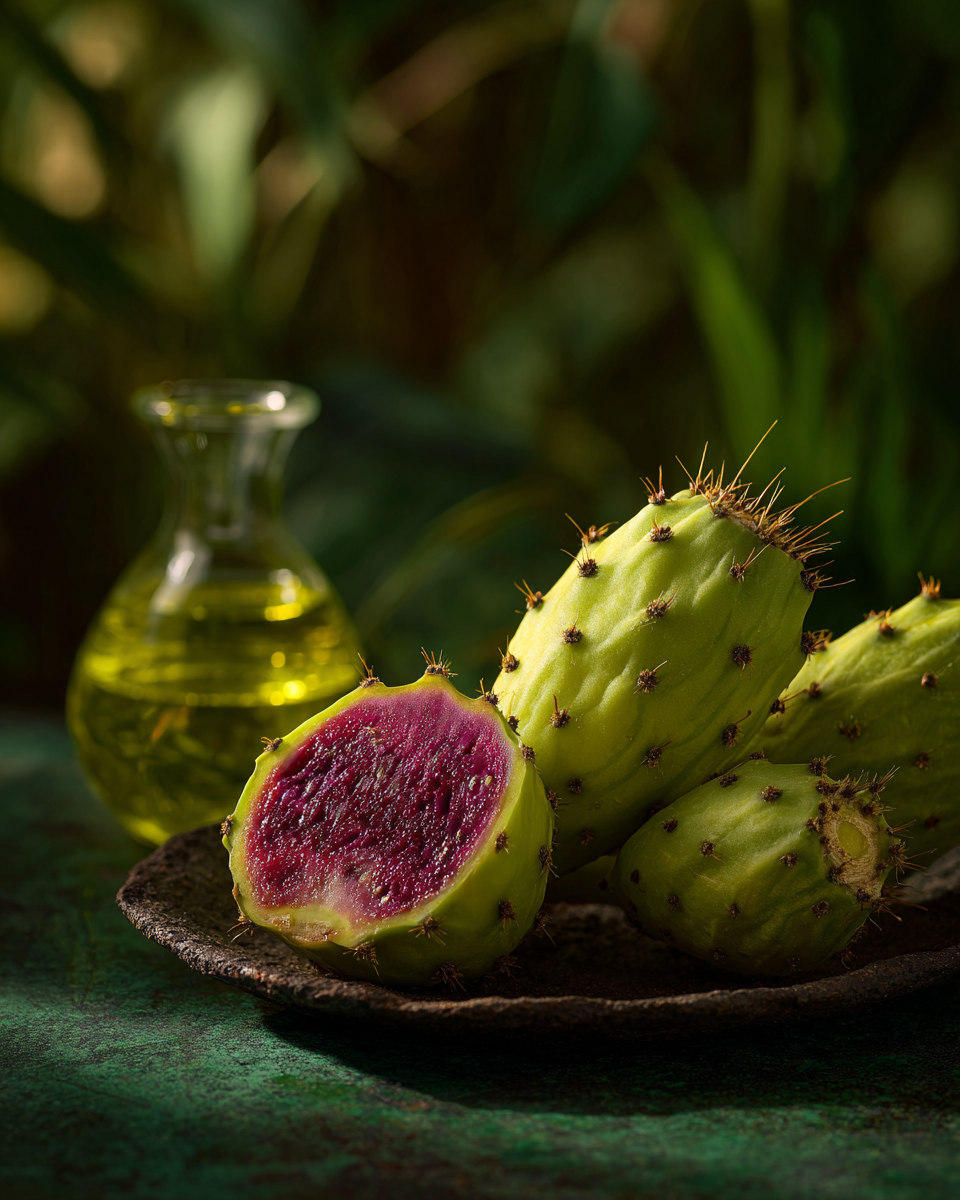
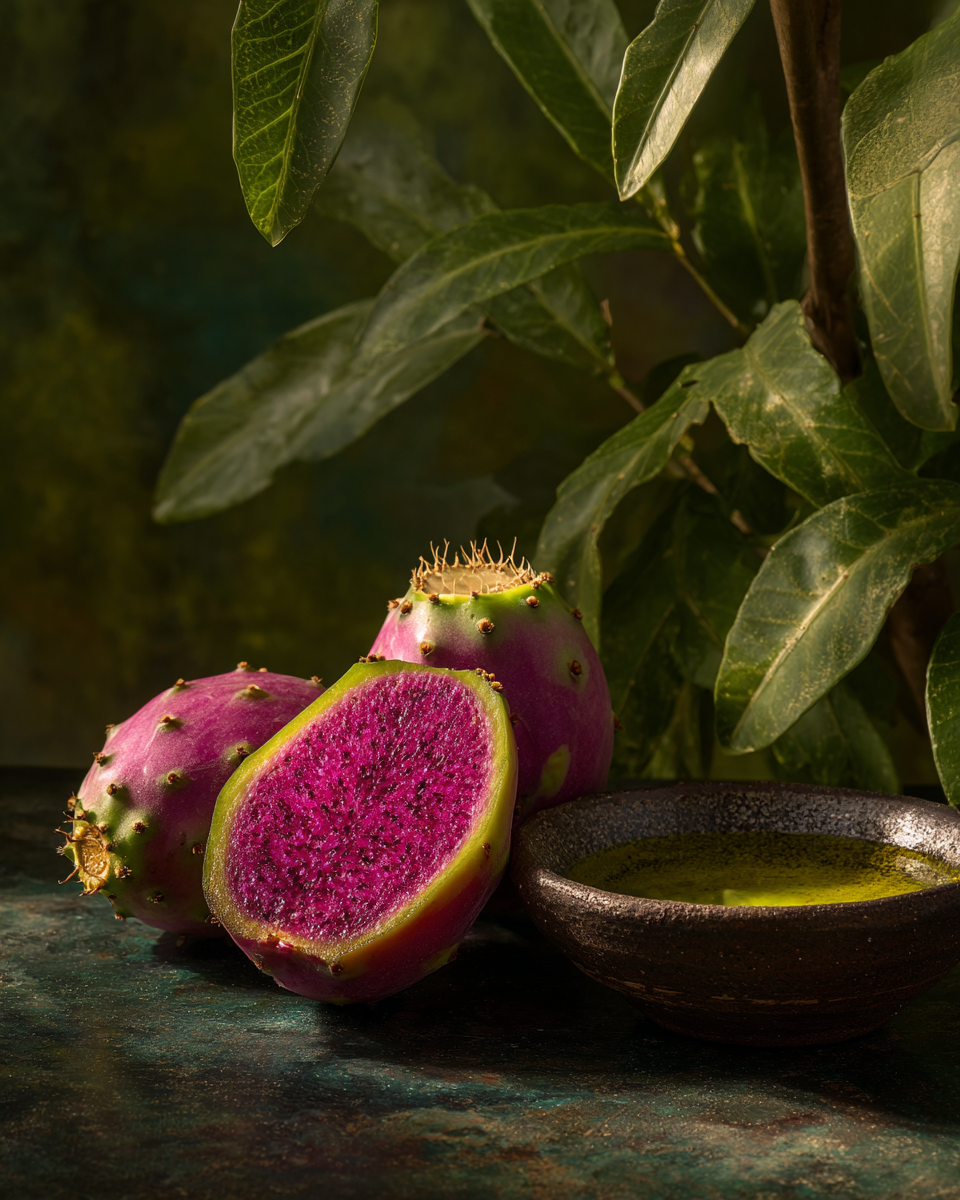
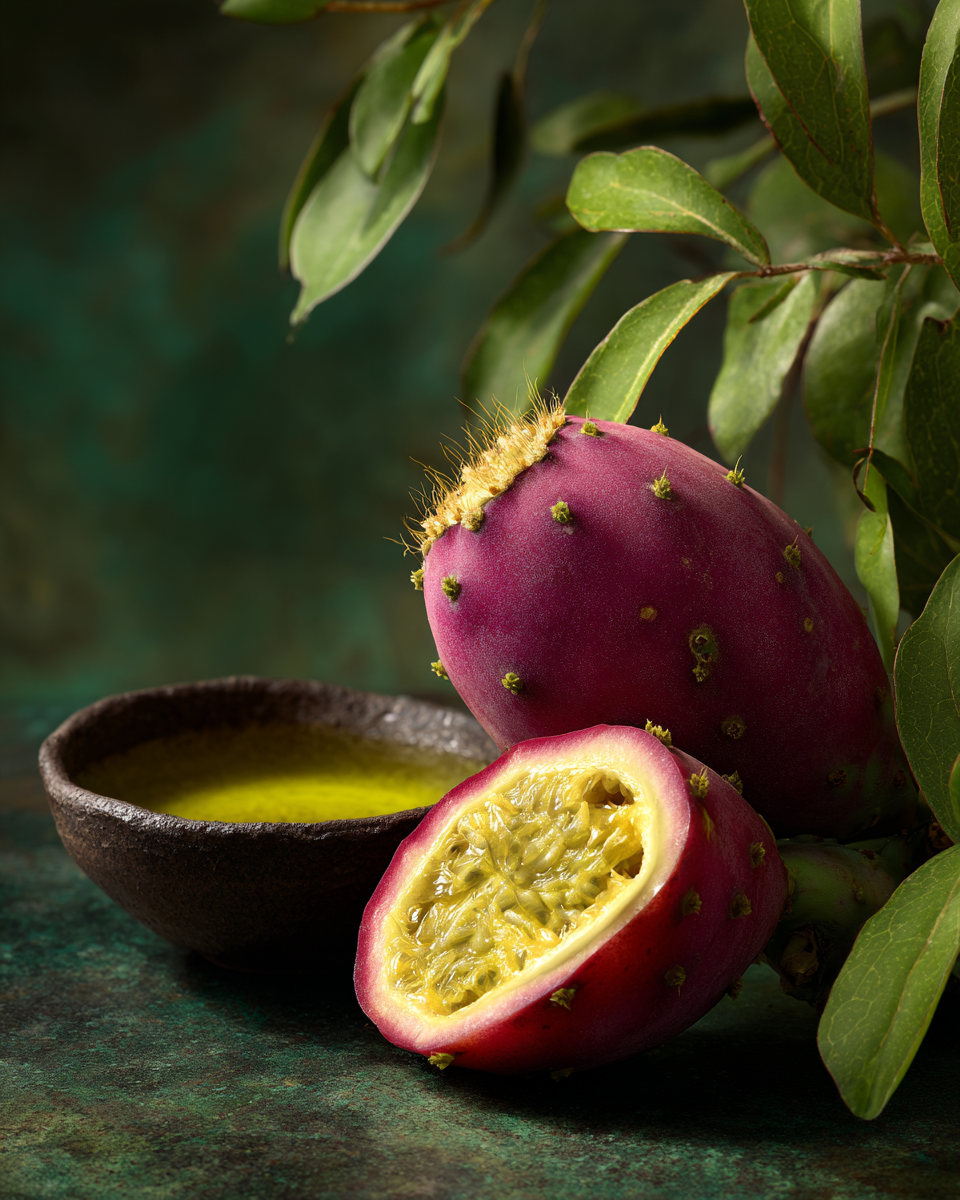
Both plants come from dry environments yet have nothing in common. Opuntia ficus indica is a cactus whose fruit seeds are pressed; Simmondsia chinensis is a shrub from the North American deserts whose seeds are pressed.
At NOPAL LIFE, the figs come from family farms in the arid plateaus of eastern Algeria and Kabylia, where the prickly pear grows without irrigation. Extraction is done by first cold press, the only process that preserves tocopherols.
The price, and what it covers
The difference is considerable: it takes nearly a ton of figs to obtain a liter of oil, whereas jojoba is extracted from much oilier and easier-to-collect seeds.
It is therefore not a matter of positioning but of agricultural yield. For equal quality, a 30 ml bottle of seed oil will always cost several times the price of an equivalent bottle of jojoba.
Apply according to the season
Many skin types change their needs twice a year. In winter, dry air and heating call for a more nourishing oil; in summer, natural production increases and a light texture is sufficient.
Alternating according to the season is often more effective than looking for the perfect oil all year round. Two 30 ml bottles largely cover twelve months of daily use.
Effect on free radicals
The tocopherol content of seed oil plays a role in limiting the oxidation of the fatty phase, which free radicals attack first. Jojoba, very stable by nature, primarily protects the formula in which it is found.
This is a difference in use rather than display. One works for the skin, the other works for the product - and both have their uses.
Limitations
We are talking about cosmetics here. They improve the suppleness, comfort, and appearance of the skin, without medical action. Persistently irritated or reactive skin warrants dermatological advice.
Our product for this comparison


Mature skin · Dry skin

Go further than this article
Get our skincare guides by email — and start with your free skin diagnostic: 2 minutes, advice tailored to your skin. We ship to the US, UK, Canada, Australia and 27 European countries; somewhere else? Sign up and you will be the first to know when we deliver to your country.
By signing up, you agree to our privacy policy. Unsubscribe in one click.