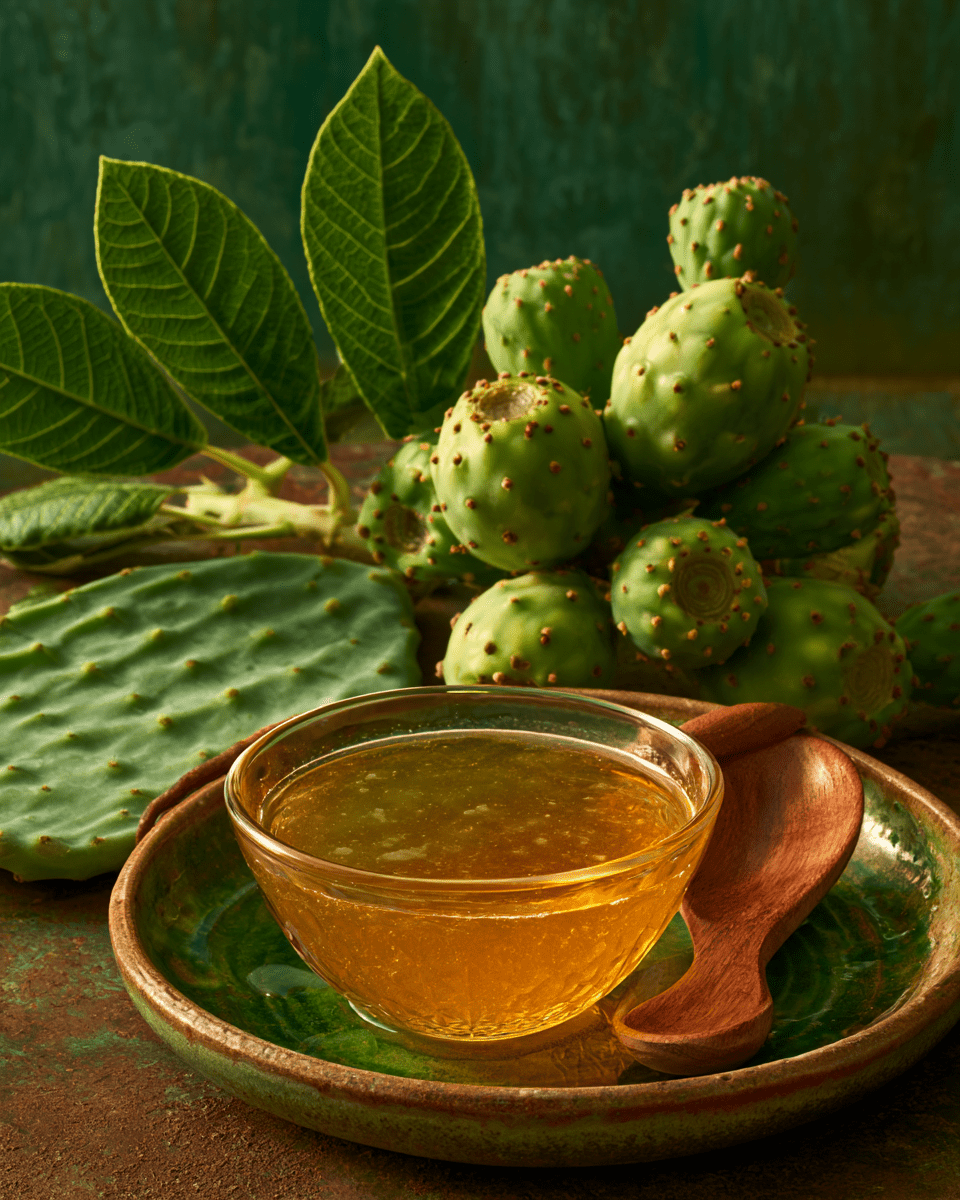
Prickly pear seed oil: benefits for the skin
How to apply prickly pear seed oil? The method can be summarized in one sentence: 2 to 3 drops in the evening, on clean, slightly damp skin, warmed between the palms, then pressed onto the face. When used correctly, prickly pear seed oil helps maintain the apparent suppleness and radiance of the complexion. This guide details everything: the dosage, the order in the routine, the areas to prioritize, the frequency, mistakes to avoid, and how to choose and store quality oil.
The method at a glance
Before the step-by-step guide, here's a summarized method. A few touches are enough: prickly pear seed oil has a fine, dry texture that penetrates quickly without leaving a greasy film.
- When: preferably in the evening, as the last step; in the morning, in very small quantities.
- How much: 2 to 3 drops for the face, 1 drop for the eye contour.
- The right technique: on a damp surface, warmed between the palms, then pressed with fingertips (never rubbed).
- Where: after your targeted treatments, before or instead of your moisturizer.
The right dosage: how much for each area
The most common reflex is to apply too much. With such a concentrate, the right dose makes all the difference: the seed oil should be absorbed by the epidermis in a few seconds, with no shiny residue on the surface. Adjust the quantity according to the area rather than covering everything identically.
| Area | Quantity (drops) | Ideal time |
|---|---|---|
| Entire face | 2 to 3 | Night (1 during the day) |
| Eye contour | 1 | Night |
| Neck and décolleté | 1 to 2 | Night |
| Lips, elbows (dry areas) | 1 | As needed |
| Hair ends, cuticles | 1 to 2 | On dry lengths |
A good dropper helps dispense the right dose: drop the product directly into your palm rather than onto specific areas, to distribute it better. This precision prevents waste of a rare active ingredient.
Step-by-step ritual
This protocol maximizes penetration and comfort. It works for both pure use and mixed with your moisturizer: the guiding idea is to prepare a receptive surface, then apply the oil without forcing it.
Evening routine
- Cleanse your face to remove makeup and impurities: a clean surface receives the treatment better.
- Re-humidify the epidermis slightly: with a hydrolat or a simple mist. Humidity promotes penetration.
- Apply your serum if you use one, then let it absorb for a few seconds.
- Place 2 to 3 drops of prickly pear seed oil in the palm of your hand.
- Warm it between your palms: when warm, it spreads better and penetrates faster.
- Gently press your palms onto your face, from the center outwards, then onto your neck. Press and pat, do not rub.
- Seal if needed with your moisturizer, to prolong comfort.
Morning routine
In the morning, a single drop is enough. Warm it, press it onto your complexion before your day cream for a rested look, then wait a minute before applying sunscreen. In very small quantities, prickly pear oil blends into the routine without weighing down the complexion or leaving a shine.
Where to place the oil in your routine
The golden rule: from the thinnest to the richest textures. Richer than an aqueous lotion, prickly pear oil is therefore placed towards the end. This order applies at night; in the morning, everything is lighter, and the heaviest layer is reserved for sun protection.
| Step | Product | Role of the gesture |
|---|---|---|
| 1 | Cleanser | Prepare clean skin |
| 2 | Lotion / floral water | Re-humidify the surface |
| 3 | Serum | Provide targeted active ingredients |
| 4 | Prickly pear oil | 2-3 warmed drops, pressed |
| 5 | Moisturizer (optional) | Seal in suppleness |
Oil before or after moisturizer? Both work. Applied before, it prepares the epidermis to receive subsequent products; applied after, it forms a final comforting layer. You can also mix 1 drop with your day cream for a more nourishing texture. Maintain the same logic, from thinnest to richest.
On which areas to apply it
Beyond the complexion, this precious beauty ally lends itself to several clever uses. Its dry touch allows it to be used even where fatty substances are usually avoided.
- Face: the core of the action, focusing on areas where the skin feels tight.
- Eye contour: 1 drop dabbed gently with the ring finger, to smooth the appearance of dehydration lines around the eyes.
- Lips: a comforting touch for the appearance of chapped lips.
- Neck and décolleté: extending from the chin, with upward movements.
- Hands and nails: a touch on cuticles and the back of the hands, often forgotten.
- Dry body areas: elbows, knees, or any rough area appreciate a small quantity.
How often to use it
Prickly pear seed oil can be used every night without worry: it's the regular rhythm that establishes its effects on the appearance of the complexion. During the day, reserve this oil for dry skin, in very small quantities. For the first use, apply a drop to the crook of the elbow 24 hours beforehand, as with any new treatment, to check your skin's tolerance. After this first step, integrate it daily: regularity takes precedence over quantity, and it is repeated use that counts.
Adapting the routine to your skin type
The same oil, but with a dosage and rhythm to modulate. Its dry texture makes it versatile: it is suitable for dry and mature skin as well as for combination to oily skin, as its touch penetrates without clogging pores. It is one of the rare vegetable oils so well tolerated by mature skin as by blemish-prone skin.
| Skin type | Quantity | Frequency |
|---|---|---|
| Dry to very dry | 2 to 3 drops at night, 1 during the day, alone or under moisturizer | Day and night |
| Mature | 2 to 3 | Every night |
| Sensitive | 2, after tolerance test | At night |
| Combination to oily | 1 to 2, on dry areas | At night |
For combination to oily skin, the secret lies in moderation: a single targeted touch, where the skin feels tight, is enough to enjoy the silky feel of the oil without overloading the T-zone. Mature skin, on the other hand, appreciates a slightly more generous dose: prickly pear seed oil is indeed most appreciated by mature skin.
Adapting the routine with the seasons
Cold, wind, and heating put the skin to the test, while summer calls for more lightness. Your routine can follow the calendar:
- In winter: cold weakens the epidermis; a slightly more generous layer in the evening, with attention to lips, hands, and cheeks exposed to the wind.
- In summer: a minimal amount, especially at night; during the day, prioritize sunscreen on top.
- In transitional seasons: observe the epidermis and adjust the oil dose according to the areas that feel tight, which are more numerous with temperature changes.
Common mistakes to avoid
A beautiful result in appearance often depends on what you don't do. Here are the most common pitfalls:
- Applying too much: excess remains on the surface and leaves a shine. A small, well-distributed dose is better.
- Spreading it on a perfectly dry surface: penetration is better on slightly damp skin.
- Rubbing instead of pressing: rubbing heats the epidermis and wastes the product.
- Applying it to uncleaned skin: it then traps impurities instead of preserving the appearance.
- Skipping the tolerance test: a simple step, not to be overlooked before first use.
- Leaving the bottle in direct light: heat and sun alter the formula faster than you think.
Choosing the right oil for optimal application
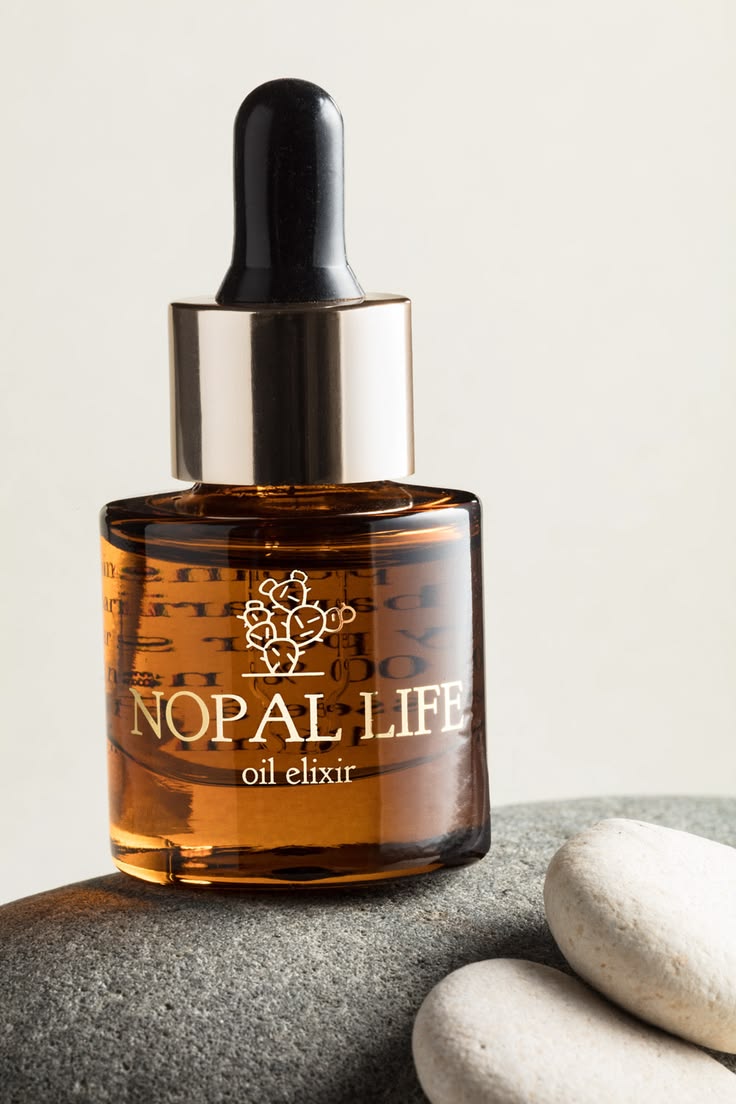
A good application starts with a good oil. Not all prickly pear oils are created equal, and quality directly influences the result: cold-pressed oil retains its active ingredients, while a tinted glass bottle protects them from light. Benchmarks for choosing your oil:
| Criterion | To prefer |
|---|---|
| Extraction | Cold-pressed, from seeds |
| Container | Tinted glass bottle |
| Composition | 100% pure, no additives |
| Label | Organic oil, certified quality |
Its price, higher than that of common vegetable oils, is explained by its genuine rarity and demanding cold extraction—a low price, conversely, often hides an oil that is cut or hot-refined, poorer in active ingredients. So rely on three simple benchmarks: cold-pressed, seeds pressed from the fruit, and certified organic label, in a tinted glass bottle. To understand everything about this rarity (from fruit to liter of oil), its composition, and its botanical origin, consult our reference file: the Prickly Pear Institute.
The botanical name must appear on the label: Opuntia ficus indica. Under the commercial name prickly pear seed oil, qualities vary enormously, and this is the only reliable benchmark along with the mention of cold pressing.
It is its essential fatty acids — linoleic acid foremost — and its vitamin E that explain its action against free radicals. The benefits of prickly pear oil stem from this composition; a refined or cut oil only offers a part of it.
How to store it to preserve its effectiveness
A good application implies an intact oil. Organic prickly pear seed oil, extracted by cold pressing, retains its full benefit provided it is protected. Rich in active ingredients, seed oil is sensitive to light, heat, and air. A few habits will prolong its freshness:
- Keep the tinted glass bottle closed, away from light, in a cupboard rather than on a windowsill.
- Avoid temperature variations near a radiator or heat source.
- Close the cap tightly after each use to limit contact with air.
- Trust your sense of smell: a changing odor indicates that it's time to replace your oil.
Our tips for better penetration
- Apply to damp skin: a mist before application helps the formula penetrate better.
- Always warm it: when warm, the oil spreads better and absorbs faster.
- Press, do not rub: pressing respects the epidermis and limits waste.
- Allow time for absorption: one minute before your day cream is enough for good absorption.
- Apply in small touches: two thin layers are sufficient, rather than one too thick.
How long does it take to see a difference?
Comfort is often noticeable from the first few uses: the skin appears more supple and less prone to tightness. For skin texture and complexion radiance, regularity is key: a few weeks of a daily ritual allow time to observe visibly more rested skin. Prickly pear seed oil is not a one-off treatment but a habit: its benefits are revealed over time.
Frequently Asked Questions
How much prickly pear oil should be used?
2 to 3 drops for the face, 1 drop for the eye contour. It's better to use a small amount that is well distributed than too much: it should be absorbed without leaving a greasy residue.
Should it be used on dry or damp skin?
Preferably on a slightly damp surface: humidity facilitates penetration. A lotion or mist beforehand is ideal.
Morning or evening?
Both. At night, as the last step for a nourishing finish; in the morning, in very small quantities, under day cream, for a rested appearance.
Oil before or after moisturizer?
Most often after serum and before moisturizer. You can also mix it with your day cream, or apply it as a final layer depending on the richness desired.
Can it be used pure?
Yes, this oil can be used very well pure, with fingertips, or as a supplement to a treatment to enhance its suppleness.
Is it suitable for the eye contour?
Yes, a gently dabbed touch helps smooth the appearance of dehydration lines in this delicate area.
In summary
Applying prickly pear seed oil is primarily about dosage: a small dose in the evening, on a damp surface, warmed between the palms, and pressed with the flat of the hands, from the center outwards. Adapt the quantity to your skin type and the seasons, choose an organic cold-pressed oil, apply it after your targeted treatments, avoid excess, and let this regular ritual work on the appearance of your complexion.
Unsure where this oil fits into your routine? Start my free diagnosis to receive a personalized routine in minutes.
Discover NOPAL Prickly Pear Seed Oil, cold-pressed and organic, in its glass bottle with dropper for precise application—and extend its benefits at night with the Prickly Pear Anti-Aging Night Cream.
Information provided for cosmetic and educational purposes; it does not constitute medical advice.
The products mentioned in this article


Mature skin · Dry skin

Go further than this article
Get our skincare guides by email — and start with your free skin diagnostic: 2 minutes, advice tailored to your skin. We ship to the US, UK, Canada, Australia and 27 European countries; somewhere else? Sign up and you will be the first to know when we deliver to your country.
By signing up, you agree to our privacy policy. Unsubscribe in one click.