Organic Prickly Pear Seed Oil: Hair Use
Rich in vitamin E and essential fatty acids, prickly pear seed oil is not just for the face: it helps to nourish thirsty lengths, revive shine, and soothe the scalp, without weighing down the hair thanks to its remarkably dry texture. Here's how to use it on your hair and for which hair types it works wonders.
A precious active ingredient born from the cactus fruit
Before being a beauty gesture, this green gold is the fruit of an extraordinary plant. Opuntia ficus-indica, this desert fig tree, is a cactus that thrives in the arid lands of the Mediterranean basin. Its fruit contains tiny seeds from which a rare vegetable oil is extracted by cold pressing: it takes almost a ton of this cactus fruit to obtain one liter of this oil, which explains its value (see Why is prickly pear seed oil more expensive?).
This rarity goes hand in hand with a remarkable composition. Among its compounds, there is a high concentration of vitamin E, a natural antioxidant, and a high proportion of essential fatty acids, including linoleic acid. These properties are what give it its reputation on the skin as well as on the hair fiber (see Prickly pear seed oil: all its benefits for the skin).
Why it's good for hair
What nourishes the epidermis also benefits the hair. Its lipids help to soften the hair fiber and support the hydration of the lengths, while this antioxidant, with its protective properties, helps to preserve their appearance. All without a greasy effect: this dry texture penetrates quickly and does not weigh down, provided it is used in the right amount.
Its virtues therefore lie in a rare balance between richness and lightness, where heavier fats end up making the roots greasy. This is what makes it valuable for fine hair, often deprived of nourishing care due to a lack of sufficiently light hair oils.
Its benefits for hair
- Nourishes ends: its fatty acids help to smooth and soften dry, damaged, or dehydrated lengths.
- Shine: a light veil captures light and helps to reveal the hair's natural radiance.
- Frizz control: in a thin layer, it helps to tame rebellious strands and static.
- Scalp comfort: when massaged, it helps to comfort a dry, tight scalp.
- Protection: its antioxidants help to preserve the appearance of the hair fiber against external aggressions (sun, pollution, heat from styling tools).
Here, we remain in the cosmetic realm: thanks to its properties, this treatment helps to improve the appearance and comfort of the lengths; it does not mechanically "repair" material that is already broken.
How it compares to other hair oils
Not all vegetable oils have the same properties. This comparison places the green gold of the fig tree among the classics, to help you choose according to your hair type.
| Oil or butter | Main richness | Texture | Ideal for |
|---|---|---|---|
| Fig seeds | Vitamin E, linoleic acid | Dry, penetrating | Dry ends, shine, sensitive roots |
| Argan | Oleic acid, tocopherols | Fluid | Daily nutrition, dull lengths |
| Coconut | Saturated fatty acids | Rich, film-forming | Nourishing bath, thick hair |
| Castor | Ricinoleic acid | Thick | Ends, densified appearance |
| Shea butter | Fatty acids, tocopherols | Solid, rich | Thick curls, kinky hair |
Its advantage over heavier fats like coconut or shea butter: it nourishes without leaving a greasy film, which makes it valuable as a finishing product and for fine hair. Coconut remains unbeatable for a very rich bath, shea butter for tight curls, while this green gold prioritizes lightness.
How to apply it, step by step
On dry ends
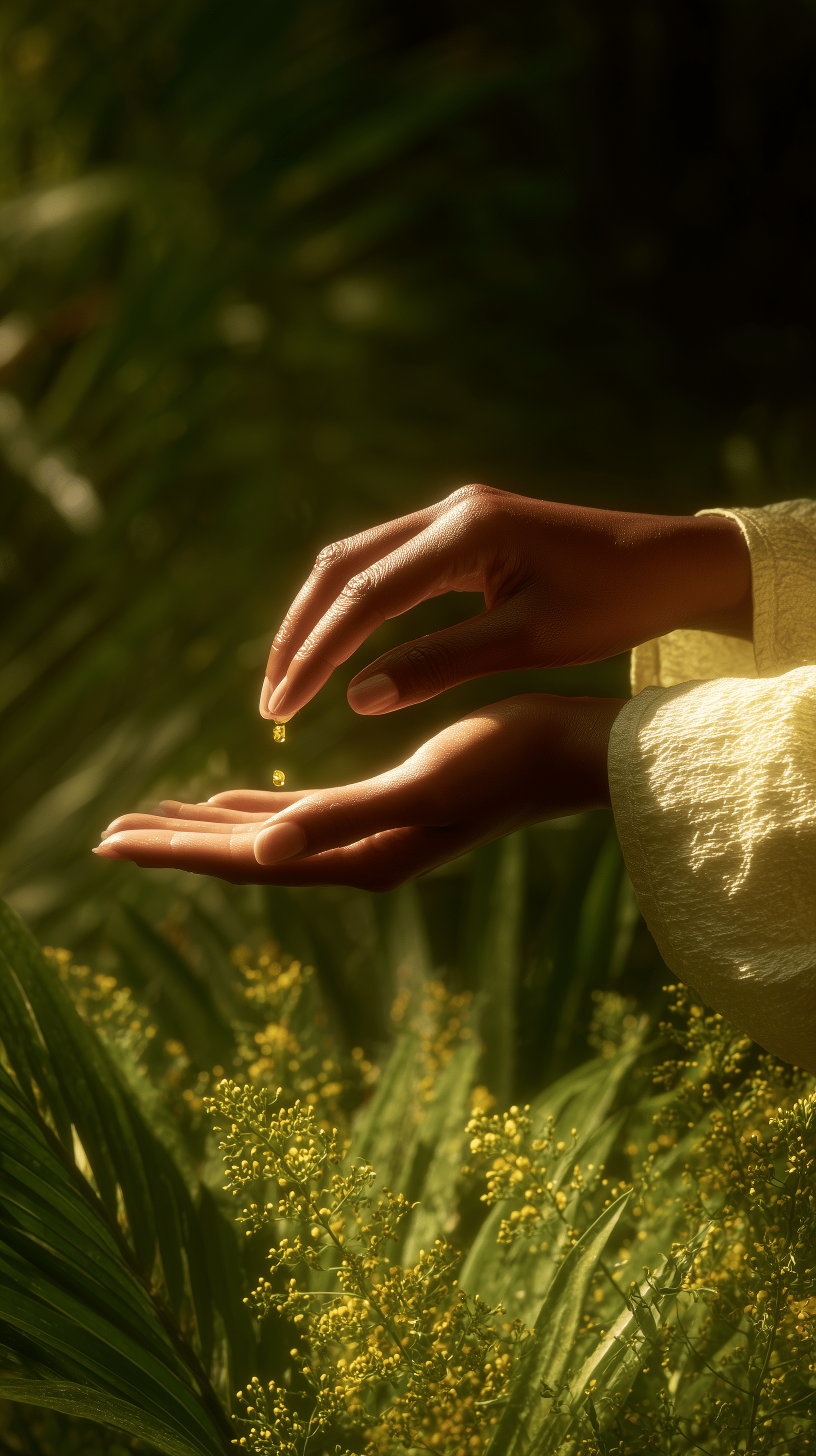
Place 1 to 2 drops in the palm of your hands, warm them, then smooth over the ends and lengths, on damp or dry hair. Avoid the roots if your lengths are fine, so as not to weigh them down.
As a pre-shampoo treatment
Distribute a few drops along the lengths by massaging, leave on for 20 to 30 minutes (or overnight for very thirsty hair), then proceed with shampooing. This is the most nourishing use.
On the scalp
Gently massage with fingertips before washing, to help comfort a tight area and support the hydration of this part.
For an enhanced treatment: the mask
Add a few drops to your usual hair mask to amplify its nourishing effect. A simple way to enrich your care without changing products.
For a touch of shine
Half a drop smoothed on the ends, as a finishing touch and without rinsing, is enough for immediate glossy reflections.
Mistakes to avoid
- Overdosing: too much product weighs down the lengths. For fine hair, half a drop is enough.
- Treating oily roots: reserve these treatments for ends and lengths.
- Neglecting quality: a refined active ingredient loses some of its virtues. Prefer a virgin and organic product.
- Expecting a miracle for hair loss or growth: these are comfort and appearance gestures, not treatments.
For which hair types?
This hair care product is primarily intended for dry, damaged, dehydrated, curly, or frizzy hair, which demands nutrition and discipline. For fine hair, it can still be used with extreme parsimony to preserve volume. For normal hair, it adds shine and protection as a finishing touch.
One bottle for face, body, and hair
This is one of its great assets: a single bottle accompanies the complexion (see How to use prickly pear seed oil on the face?), the body (see Prickly pear oil for the body: uses and benefits), and the hair, on the skin as well as on the lengths. This replaces several products with an exceptional active ingredient: a truly minimalist beauty ritual. Its antioxidant profile, often cited in anti-aging routines, also accompanies hair as it ages, and its richness in fatty acids and nutrients helps support hydration from start to finish.
An organic prickly pear seed oil can be used for all three purposes without changing bottles. For the face, two drops morning and evening; for the lengths, three to four as a leave-in treatment. It's the same product, only the quantity changes.
On mature skin, it is credited with a role in surface cell regeneration and an effect on the appearance of wrinkles. The eye contour area accepts it, provided it is dabbed without stretching.
How to choose and store it
To enjoy all its benefits, opt for a virgin, cold-pressed, and organic extract: these mentions guarantee a natural and plant-based product, unrefined, where vitamin E and fatty acids remain intact. Sensitive to light and heat, it should be stored away from the sun, in a dry place, with the bottle tightly closed, away from any source of water or humidity (see Storage of prickly pear seed oil: our tips). At NOPAL LIFE, it is offered cold-pressed, with careful delivery: a point to compare from one brand to another, as delivery conditions vary.
Frequently Asked Questions
Does it make hair greasy?
No, if the small quantity is respected: its dry texture penetrates quickly. The greasy effect almost always comes from over-dosing.
On wet or dry hair?
Both: on damp hair to facilitate styling, on dry hair for reflections and ends.
Does it help with hair loss or growth?
No cosmetic product can promise this. By supporting scalp comfort and the visibly healthy appearance of the lengths, it only contributes to an environment conducive to healthy-looking hair.
Is it suitable for colored hair?
Yes: its gentleness helps maintain the radiance of colored lengths, without aggressing them, and respects the hair's balance.
Can it be used daily?
Yes on the ends, in very small quantities. For a pre-shampoo treatment, once or twice a week is amply sufficient.
In summary
Nourishing, luminous, and light, this seed oil is an excellent ally for dry, damaged, or dehydrated lengths as well as unruly ends. Properly dosed, it combines comfort, radiance, and protection without ever weighing down: a beauty gesture as simple as it is effective.
Discover our NOPAL LIFE prickly pear seed oil, cold-pressed and organic, multi-purpose for face, body, and hair. To build a customized routine around this active ingredient, start your free diagnosis: Start my free diagnosis.
This article is provided for informational purposes only and does not replace the advice of a health professional.
Information provided for cosmetic and educational purposes; it does not constitute medical advice.
To read next
Our anti-aging treatments
Go further than this article
Get our skincare guides by email — and start with your free skin diagnostic: 2 minutes, advice tailored to your skin. We ship to the US, UK, Canada, Australia and 27 European countries; somewhere else? Sign up and you will be the first to know when we deliver to your country.
By signing up, you agree to our privacy policy. Unsubscribe in one click.