Combine prickly pear oil and jojoba oil
These two are not from the same family, and that's precisely what makes their combination interesting. Prickly pear seed oil is a classic vegetable oil, rich in fatty acids. Jojoba is technically a liquid wax, whose composition is similar to human sebum. They don't do the same job.
The essentials
- Layering: jojoba first, then prickly pear.
- Quantities: one drop of each, or two in total.
- Mixing: possible in the palm, both are fatty substances.
- Skin types concerned: combination and oily skin in particular, thanks to jojoba.
Two very different compositions
Prickly pear seed oil is extracted from the fruit's seeds by cold pressing. It is particularly rich in essential fatty acids — especially linoleic acid — and tocopherols. Its role is to nourish and limit water evaporation.
Jojoba is a special case. What is called "oil" is actually a liquid wax, composed of esters whose structure is similar to that of the sebum produced by the skin. This similarity explains its reputation on combination and oily skin: it doesn't overload and penetrates quickly.
How to combine them
1. After your serum, apply one drop of jojoba. Its very fine texture penetrates quickly.
2. Wait one minute.
3. One drop of prickly pear oil to seal.
You can also mix them in your palm — two fatty substances mix without difficulty. Layering gives a slightly cleaner result; mixing saves time.
Depending on your skin
Combination or oily skin: this is the most interesting indication. Jojoba alone is often sufficient on the T-zone, with prickly pear added to the cheeks.
Dry skin: both together, or prickly pear alone in a slightly more generous amount.
Reactive skin: both are well tolerated. Introduce them one after the other to identify the origin of any reaction.
For combination skin, start with jojoba alone: it's the safest of the two, and often sufficient. Prickly pear becomes useful when dryness sets in despite it, usually in winter.
For mature skin, the order is reversed. The active ingredients of prickly pear — tocopherols, sterols — make it more suitable for anti-aging, and jojoba then takes a secondary role, useful primarily for lightening the texture.
Using both at the same time is only interesting for truly unbalanced skin: dry in some areas, shiny in others. Everywhere else, a single well-chosen oil gives a clearer result, and its effectiveness is easier to judge.
Apply them correctly
Warm the drops between your palms, then press onto your face rather than spreading. Pressing distributes the fatty substance without pulling on the skin, and limits the amount lost on your hands.
On slightly damp skin, spreading is easier and the finish less oily. This is a detail that makes a big difference for skin that is sensitive to rich textures.
What effect to expect
Comfort improves from the first applications. For skin texture, allow several weeks of regularity. These oils nourish and protect: they do not provide water, and therefore do not replace a hydrating serum beforehand.
Limitations
Neither replaces sun protection. They are cosmetics: their scope extends only to skin comfort and appearance.
A vegetable oil and a wax: what that changes in use
Prickly pear seed oil is a vegetable oil in the strict sense, rich in fatty acids. Jojoba is a liquid wax. This difference has a concrete effect: jojoba practically doesn't go rancid, while seed oil requires an opaque bottle and careful storage.
Apply them preferably to slightly damp skin, by pressing. The effect on comfort is felt immediately; on skin texture, allow several weeks of regular care.
What benefits to expect from each oil
Prickly pear provides essential fatty acids and tocopherols, which help limit the action of free radicals. Jojoba, on the other hand, regulates: its similarity to sebum makes it an ally for combination skin, where it avoids the feeling of overload that other fatty substances can give.
Neither provides water. They are applied after a hydrating serum, never in its place — this is the principle of any oil phase.
The benefits of each vegetable oil
The fatty acids provided by a seed oil are not limited to a surface effect: they contribute to the suppleness of the film that covers the skin. Regular care improves comfort in a few days and the appearance of the skin in a few weeks.
Jojoba stands out for its stability. Where other oils require an opaque bottle and careful storage, it withstands time and light better. This is a real practical advantage for daily use.
Apply them at the right time
Evening remains the best time for an oil phase: nothing goes over it and the skin remains in contact with the treatment for a long time. In the morning, reduce to a single drop and wait for it to penetrate before any makeup.
The immediate effect is on comfort. The visible effect on the skin requires regularity — this is the case for all vegetable oils, without exception.
Our oil
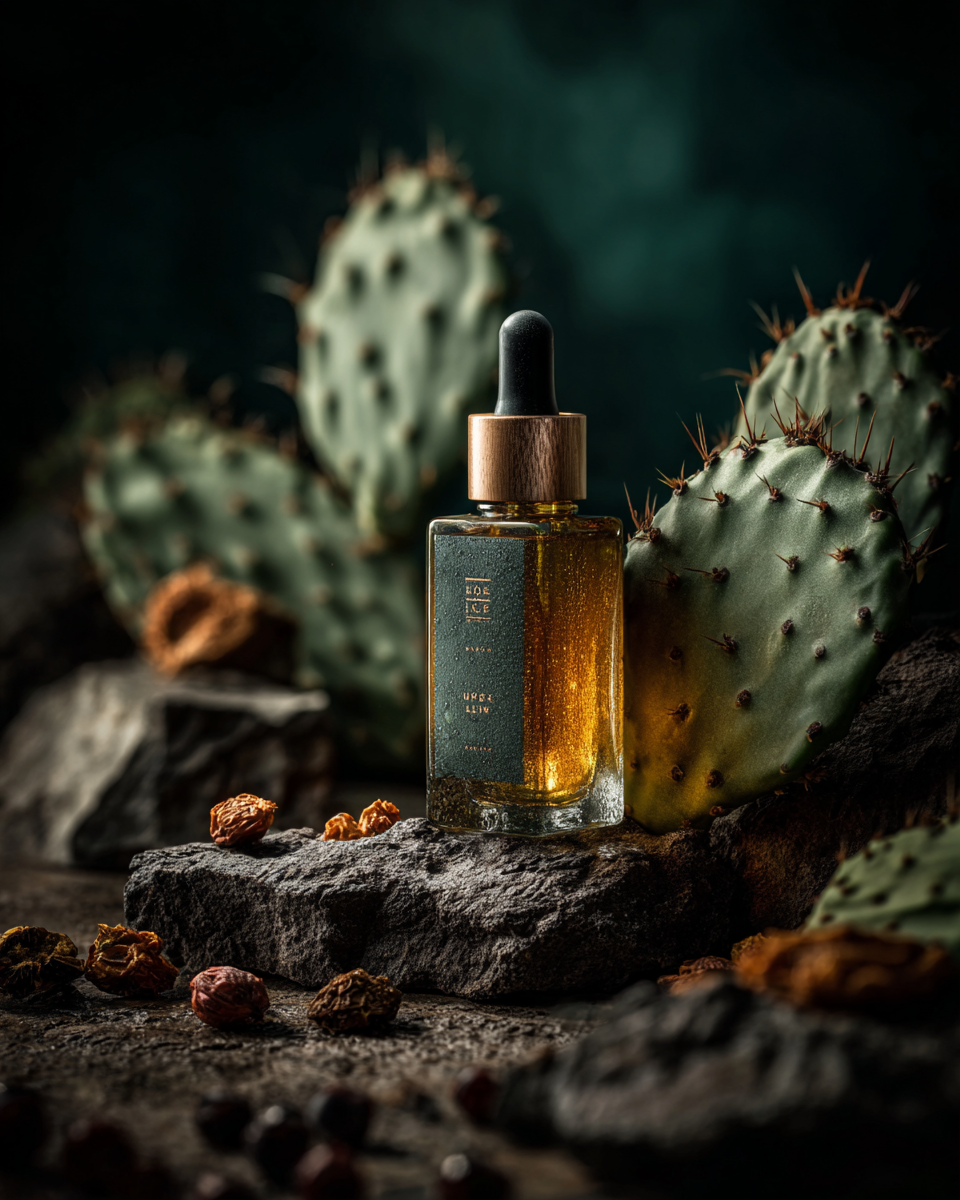
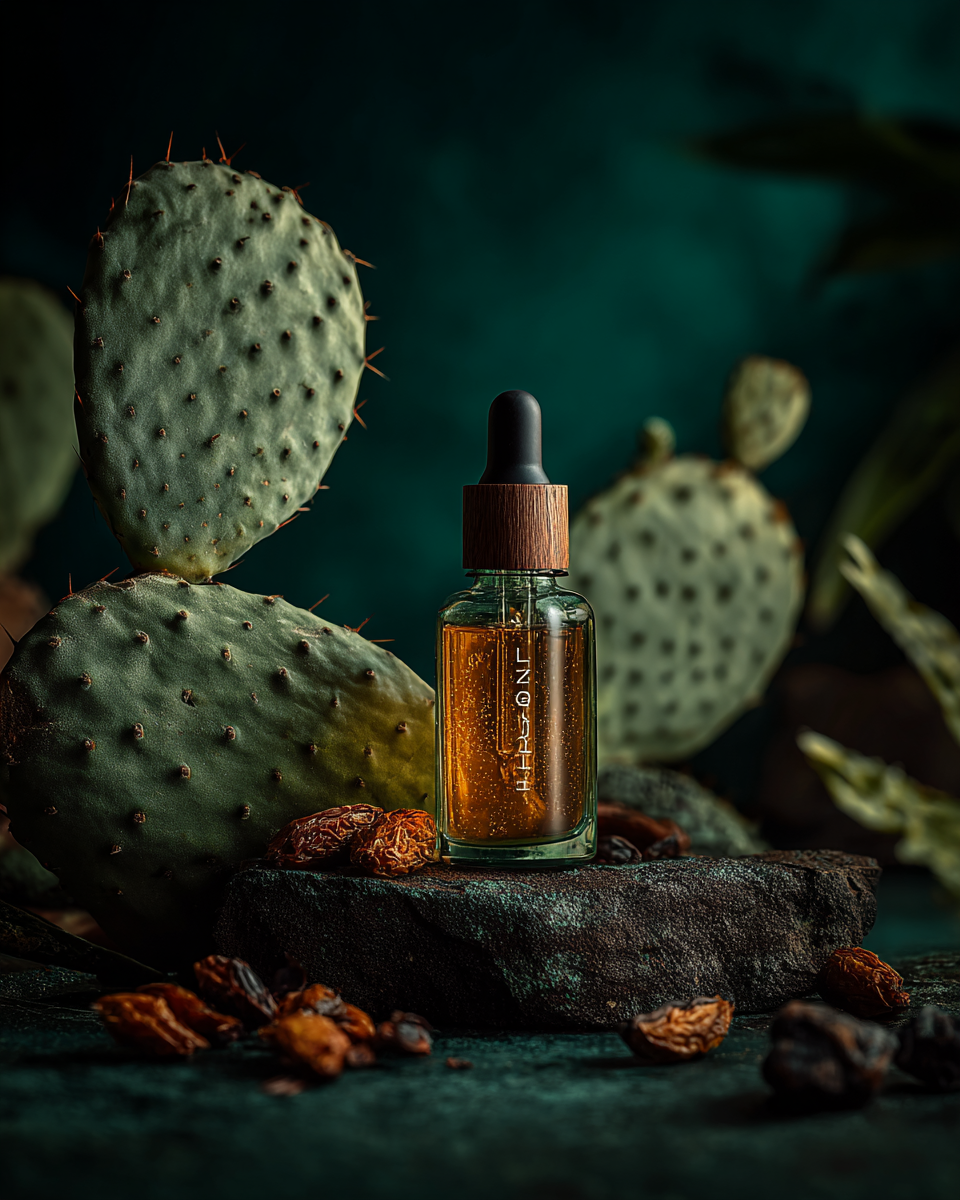
Produced in Algeria by Bio Nopal Cactus, from artisanal family plantations in the arid highlands. The prickly pear grows without irrigation. Cold-pressed seeds.
Frequently asked questions
Is jojoba really an oil?
Technically no: it's a liquid wax, composed of esters similar to human sebum. This similarity explains its good tolerance on combination and oily skin.
In what order should they be applied?
Jojoba first, being finer, then prickly pear to seal. The difference is modest: the main thing is not to exceed two drops in total.
Is this combination suitable for oily skin?
Yes, it is even one of its best indications. Jojoba alone can be sufficient on the T-zone, with prickly pear on drier areas.
Can they be mixed before application?
Yes, unlike a water-oil duo. Two fatty substances mix perfectly in the palm.


Go further than this article
Get our skincare guides by email — and start with your free skin diagnostic: 2 minutes, advice tailored to your skin. We ship to the US, UK, Canada, Australia and 27 European countries; somewhere else? Sign up and you will be the first to know when we deliver to your country.
By signing up, you agree to our privacy policy. Unsubscribe in one click.