Anti-aging vegetable oils: which ones to choose?
Not all vegetable oils are equally effective in anti-aging cosmetics. The most beneficial ones are rich in essential fatty acids and vitamin E (tocopherols), a natural antioxidant. Prickly pear seed oil is among the world's richest in vitamin E, surpassing argan; rosehip oil is prized for its regenerating properties, and jojoba for its lightness, similar to sebum.
The choice primarily depends on your skin type and needs. The Skin Intelligence diagnostic helps you identify the most suitable oil (or formula) for your skin.
Why vegetable oils are beneficial for anti-aging
A vegetable oil is composed of fatty acids (saturated, monounsaturated like oleic acid, polyunsaturated like linoleic acid) and a so-called "unsaponifiable" fraction. It is often in this latter fraction that the most interesting active ingredients are found: vitamin E (tocopherols and tocotrienols), sterols, and carotenoids.
Tocopherols play an antioxidant role: they help protect fatty acids and cell membranes from oxidative stress. Unsaponifiables, on the other hand, contribute to skin comfort and suppleness by supporting the skin barrier. This richness makes certain oils particularly valuable in a natural anti-aging routine.
(To read: Natural anti-aging: the complete guide)
Skin aging first appears in three areas, and rarely at the same pace: the eye contour, where the skin is four times thinner than elsewhere; around the mouth, constantly solicited by speech; and the neck, almost always forgotten in routines. The hands follow closely, exposed as much as the face and protected much less often.
This discrepancy explains why the same person can have an even complexion and noticeable marks elsewhere. Treating the entire face uniformly means doing too much in one area and not enough in another. A beauty routine that takes these differences into account achieves more than a more expensive routine applied everywhere in the same way.
Comparative table of anti-aging vegetable oils
| Vegetable Oil | Fatty Acid Profile | Vitamin E Richness | Cosmetic Benefits | Skin Type |
|---|---|---|---|---|
| Prickly Pear | Very rich in linoleic acid (omega-6, ~60-65%), sterols | Very high (among the richest in the world, ahead of argan) | Antioxidant, nourishing, fast-absorbing, helps visibly smooth and firm | Dry, mature, dehydrated |
| Argan | Rich in oleic and linoleic acid, sterols | High (but lower than prickly pear) | Nourishing, softening, supports elasticity | Dry to normal |
| Rosehip | Rich in polyunsaturated fatty acids (omega-3 and 6) | Present | Regenerating, appreciated for radiance and suppleness | Mature, marked |
| Jojoba | Liquid "wax" similar to sebum (erucic, oleic acid) | Present | Light, balancing, non-greasy | Combination to oily, all types |
Prickly pear seed oil, the anti-aging star
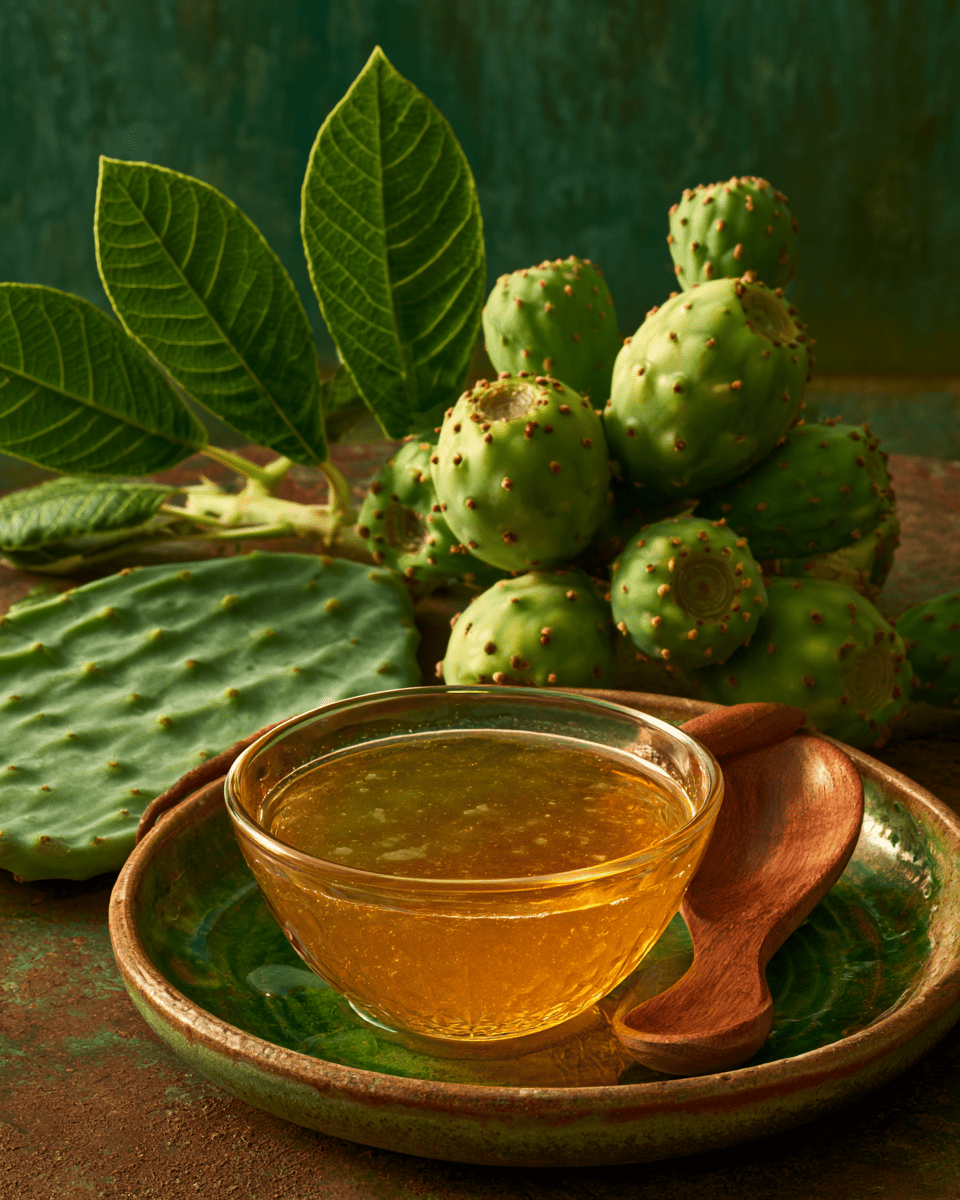
Among these oils, prickly pear seed oil stands out for its exceptional vitamin E content: it is among the vegetable oils richest in tocopherols, significantly above argan. It is also very rich in linoleic acid (omega-6) and sterols, making it an ally for dry, dehydrated, or mature skin.
Its texture absorbs quickly without leaving a greasy film. It can be found pure in Prickly Pear Seed Oil, or integrated into skincare products like the Prickly Pear Regenerating Cream.
(To read: Prickly pear seed oil: all its benefits)
Its reputation rests on one figure: a tocopherol content that far exceeds that of most oils on the market. This is not a sales argument added after the fact, it is a characteristic of the species, verifiable on an analysis report.
However, this figure says nothing about the finished product. A refined oil loses a part, a poorly stored oil even more, and an oil diluted in a cheaper carrier retains only the corresponding fraction. The report concerns the raw material; what ends up in the bottle depends on everything that happened in between.
Hence the importance of looking at the production date rather than just the expiry date. A one-year difference between two identical bottles changes the content more than the brand difference written on them.
How to choose your oil according to your skin
- Dry or mature skin: opt for rich and nourishing oils — prickly pear, argan, rosehip.
- Combination to oily skin: choose light and balancing oils like jojoba, or prickly pear which absorbs quickly.
- Skin seeking radiance: rosehip is often praised for its regenerating effect.
- Sensitive skin: introduce a new oil gradually, testing it beforehand.
Oils can be used in the evening, alone or as the last step to seal in hydration, or mixed with a moisturizer. For complementary hydrating and plumping effects, combine them with a hyaluronic acid serum like the Collagen & Hydration Serum.
Mature skins do not form a homogeneous group. Two people of the same age may have skin that feels tight after cleansing, while the other's skin is still shiny at noon. The first has lost lipids, the second has never lacked them: their needs are completely different, and the same product will serve one while disserving the other.
The simplest indicator remains the sensation thirty minutes after cleansing, without having applied anything. Discomfort and a feeling of tightness on one side, a light film on the other. This test takes half an hour and is a better substitute for most eye-ball diagnostics.
Argan oil occupies a special place in this landscape: light enough for combination skin, covering enough for dry skin, it is a reasonable starting point when still unsure.
How to properly use an anti-aging oil
A few drops are enough. Warm the oil between your palms, then apply with light pressure on clean skin, preferably slightly damp to promote penetration. For the eye contour, prefer a specific treatment. Store your oils away from light and heat to preserve their antioxidants.
(To read: Wrinkles and fine lines: causes and natural solutions)
The order of application determines half the result. An oily texture applied over a day cream does not penetrate: it stays on the surface and gives that shiny appearance wrongly attributed to the product itself. Applied beforehand, it can be covered without difficulty.
The gesture is just as important. Press, don't rub. Two or three palm-to-cheek presses are enough to distribute the dose; rubbing stretches the tissues without making anything penetrate faster. For the eye contour, the rule applies doubly, and the ring finger, which presses less hard than the index finger, remains the safest finger.
In the morning, a reduced dose (half) is sufficient under makeup. The rest of the bottle will be used in the evening, when nothing needs to stay on top.
FAQ — Anti-aging vegetable oils
What is the best anti-aging vegetable oil?
There is no universal oil, but prickly pear is often cited for its exceptional richness in vitamin E. The best choice depends on your skin.
Are oils suitable for oily skin?
Yes, some are. Jojoba, similar to sebum, or fast-absorbing prickly pear, often work well for combination to oily skin.
Can an oil replace a cream?
An oil nourishes but doesn't truly hydrate. Ideally, it should be combined with a source of water (serum, cream) for complete care.
Can oil be applied in the morning?
Yes, in a small amount, under sunscreen. However, many prefer oils in the evening for their nourishing properties.
How to store vegetable oil?
Away from light, air, and heat, to prevent oxidation which degrades fatty acids and vitamin E.
At what age should one start? When the skin asks for it, not when a number suggests it. The first visible signs generally appear between twenty-five and thirty-five years old, with considerable variation from person to person depending on sun exposure, sleep, and smoking.
Can it be used on hair? Yes, on lengths and ends, never on roots. A small amount on damp hair after washing smooths the fiber; the same amount on dry hair weighs it down. This is a different use, with a different dose.
Should it be changed regularly? Nothing requires it. The idea that skin gets used to it and stops responding is not based on solid data. What changes, however, is the need according to the season – and there, adjusting the texture makes sense.
In summary
The best anti-aging vegetable oils are rich in essential fatty acids and vitamin E. Prickly pear stands out for its record tocopherol content, argan and rosehip nourish and regenerate, while jojoba balances. The right choice depends primarily on your skin type.
To identify the most suitable oil and skincare for your skin, take your Skin Intelligence diagnostic.
Sources: Compagnie des Sens (vegetable oils and prickly pear), OCL Journal (vegetable fats, tocopherols), Aroma-Zone (prickly pear oil). Informative article, without medical scope.
Information provided for cosmetic and educational purposes only; it does not constitute medical advice.
Three mistakes are constantly repeated. Applying to perfectly dry skin, which deprives the gesture of its essential benefit. Using too much, which leaves a film without improving anything. And judging in a week, when epidermal renewal takes almost a month for a young person, and even longer afterward.
A restorative action is part of that duration. An effective product is not recognized by the immediate comfort it provides – which mainly depends on the texture – but by what the mirror shows three months later, in comparable light and time.


Go further than this article
Get our skincare guides by email — and start with your free skin diagnostic: 2 minutes, advice tailored to your skin. We ship to the US, UK, Canada, Australia and 27 European countries; somewhere else? Sign up and you will be the first to know when we deliver to your country.
By signing up, you agree to our privacy policy. Unsubscribe in one click.