Prickly pear: benefits of the hydrosol for the skin
Prickly pear hydrosol is oil's gentle companion: this soothing floral water, obtained during plant distillation, helps refresh, lightly hydrate, and comfort skin daily. Ideal as a mist, lotion, or routine supplement. Here are all its uses.
What is a hydrosol?
A hydrosol—or floral water—is the water resulting from the steam distillation of a plant. It contains a tiny fraction of the plant's aromatic and active compounds, in a very gentle aqueous base. It is a much lighter product than oil, perfectly suited for daily use and sensitive skin.
Prickly pear hydrosol shares the same universe as oil but plays a complementary role: where oil nourishes, hydrosol refreshes and soothes (see Prickly Pear Seed Oil: All Its Benefits for the Skin).
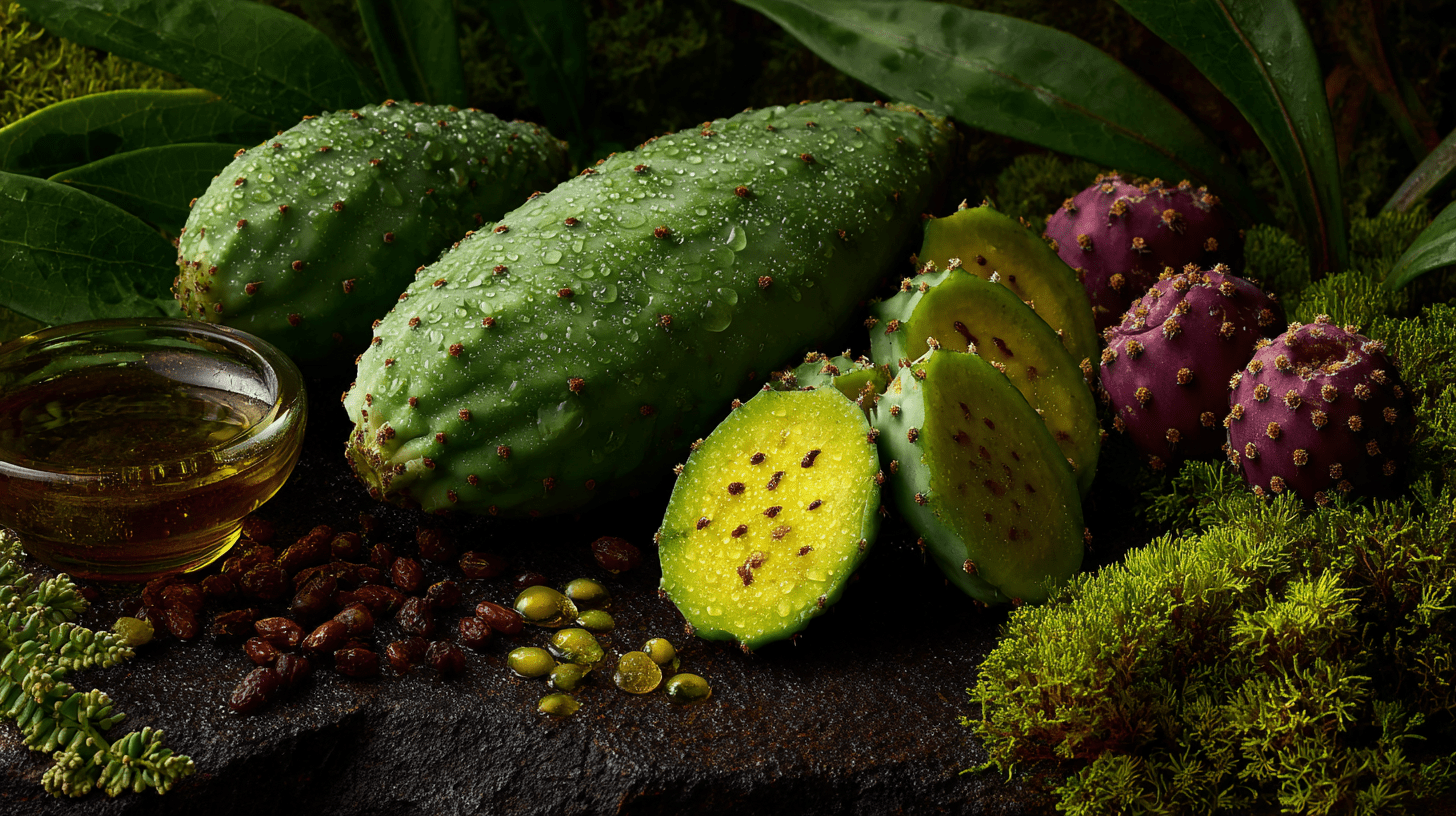
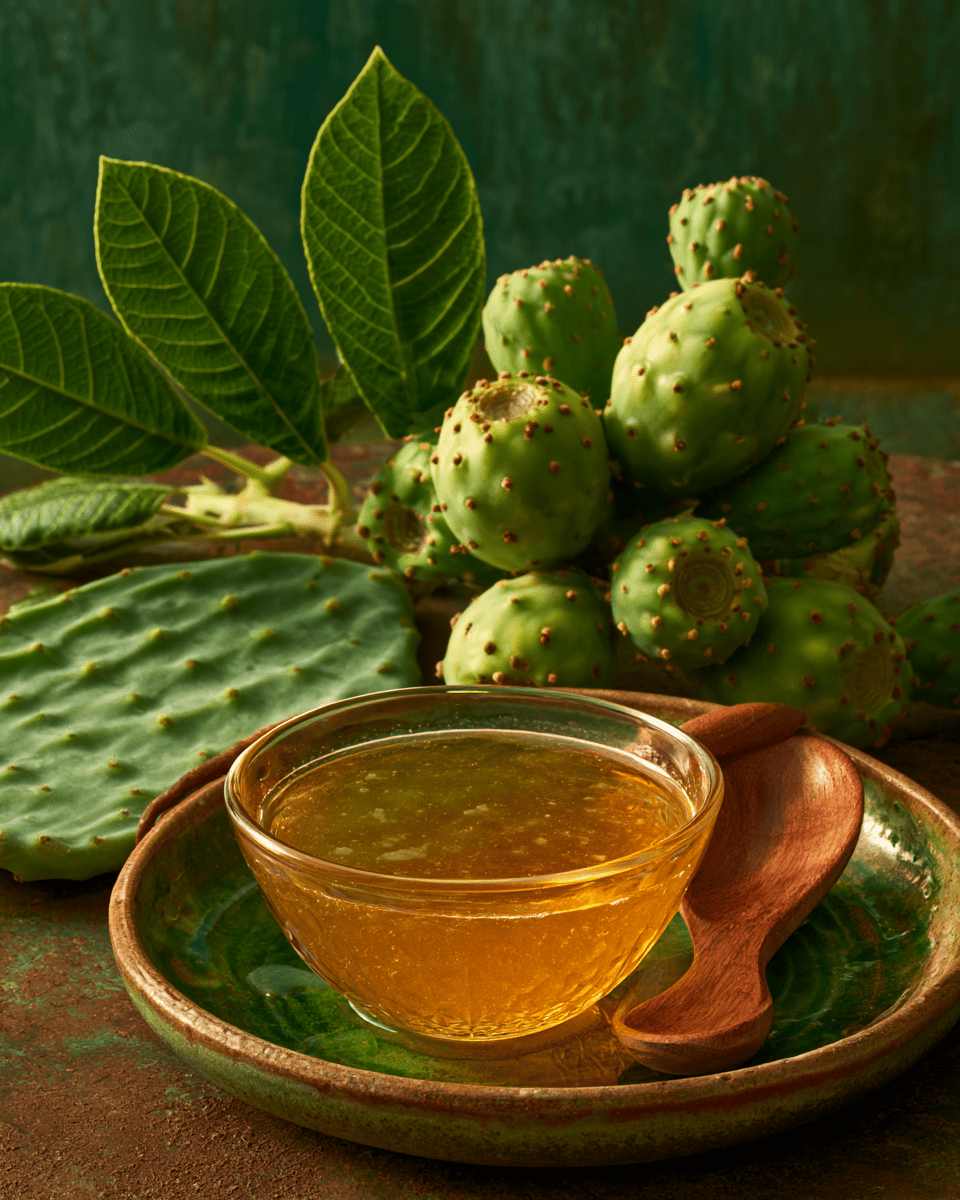
A hydrosol is the water resulting from the steam distillation of a plant. In the case of the prickly pear — a cactus native to Mexico, widespread throughout the Mediterranean region — it is the cladodes, covered with fine spines, that are distilled.
The fruit, meanwhile, takes two other paths: its sweet pulp yields powder, its seeds yield oil. Three processes, three products, one single plant — and the hydrosol is by far the lightest of the three.
The benefits of prickly pear hydrosol
- Soothing: It helps calm feelings of discomfort and is suitable for sensitive or reactive skin (see How to recognize sensitive skin?).
- Freshness and comfort: Sprayed on the face, it instantly refreshes.
- Light hydration: It provides a touch of water on the surface, useful for dehydrated skin (see How to recognize dehydrated skin?).
- Skin preparation: It helps subsequent skincare products penetrate better.
Like all cosmetics, it contributes to skin comfort and appearance, without medical claims.
Its advantage lies in its lightness: it provides water and a little soluble vitamin and minerals, without any fatty substances. It's a post-cleansing water, not a treatment in itself.
On reactive skin, it advantageously replaces a classic, often alcohol-based toner. What it doesn't do: nourish. This function falls to the oil derived from the seeds of the same fruit — the plant provides both, but they are not interchangeable.
How to use hydrosol
As a refreshing mist
Spray it at any time of day, on bare or made-up skin, to refresh and comfort.
As a toning lotion
After cleansing, apply it with a cotton pad or directly by hand to prepare the skin for subsequent treatments.
Before oil
Spray the hydrosol, then, on still damp skin, apply a few drops of prickly pear oil: the oil helps seal in this hydration (see How to use prickly pear oil on the face?).
As a makeup setting spray
A light mist at the end of makeup helps to unify and refresh the complexion.
Spray after cleansing, on clean skin, without wiping. Two or three pumps are enough, and the next treatment can be applied while the skin is still damp.
It can also be used to moisten prickly pear powder to make a mask, or to refresh during the day. Unlike a perfumed floral water, it contains nothing but the distillation water of the cactus.
Hydrosol, oil, powder: the complete range
Prickly pear comes in several complementary cosmetic forms: oil for nourishing and protecting, hydrosol for refreshing and soothing, and nopal powder for a hydrating mask (see Nopal powder: uses and benefits in cosmetics). Together, they allow for building a routine entirely centered on this active ingredient.
Three products, three parts of the plant, three uses. The hydrosol comes from the cladodes, the oil from the seeds, the powder from the dried and ground fruit pulp.
Combining them makes sense: the hydrosol prepares, the powder is used as a mask once a week, the oil seals in the evening. This is the only way to take full advantage of everything the prickly pear offers, with each form providing what the other two don't.
For which skin types?
The hydrosol is suitable for all skin types, especially sensitive, reactive, dehydrated, or heated skin. Its gentleness makes it usable several times a day. As with any new product, a preliminary test is recommended for very reactive skin.
All, without reservation. This is the advantage of a product that contains only distillation water: nothing to tolerate, nothing to measure.
On oily skin, it replaces toner without drying. On dry skin, it prepares the surface before oil. On reactive skin, it soothes without irritating — three different uses for the same bottle.
Storage
Hydrosols are fragile products because they are minimally or not preserved: preferably store them in the refrigerator after opening (which also enhances their refreshing effect) and use them within the indicated timeframe. An unusual smell or appearance indicates that it should no longer be used.
A hydrosol is water: it gets contaminated. Three to six months after opening, preferably in the refrigerator, and always in a spray rather than an open bottle.
A cloudy appearance or a changing smell indicates that it should be discarded. Unlike prickly pear oil, whose vitamin E ensures good stability, it has no natural protection against microbial development.
Frequently Asked Questions
What's the difference between hydrosol and oil?
Hydrosol is a light floral water that refreshes and soothes; oil is a fatty substance that nourishes and protects. They are complementary.
Does hydrosol truly hydrate?
It provides light surface hydration; to retain it, follow with an oil or cream.
Can it be used daily?
Yes, multiple times a day if needed, thanks to its great gentleness.
Should it be stored in the fridge?
It is recommended after opening, for preservation and a cooling effect.
In summary
Gentle, refreshing, and soothing, prickly pear hydrosol is the ideal complement to oil: it prepares the skin, lightly hydrates, and comforts it daily. An essential for sensitive skin and gentle routines.
Discover the NOPAL LIFE Prickly Pear range, including the Gentle Mist with Prebiotics and the Prickly Pear Seed Oil. Take our skin diagnosis test to compose your ideal routine.
This article is provided for informational purposes only and does not replace the advice of a healthcare professional.
Information provided for cosmetic and educational purposes; it does not constitute medical advice.
The products mentioned in this article


Mature skin · Dry skin

Go further than this article
Get our skincare guides by email — and start with your free skin diagnostic: 2 minutes, advice tailored to your skin. We ship to the US, UK, Canada, Australia and 27 European countries; somewhere else? Sign up and you will be the first to know when we deliver to your country.
By signing up, you agree to our privacy policy. Unsubscribe in one click.