Combining Argan oil and vitamin E: the method
Argan oil already contains vitamin E: combining it with additional tocopherol only makes sense in specific cases. This page explains when and how to do it without overcomplicating things.
Key Points
- Most often: Argan oil alone is sufficient.
- Order if layering: Serum first, then oil.
- Quantity: Two to three drops of oil for the face.
- Before: Damp skin, or a product that provides moisture.
- In the morning: Sun protection on top.
What Argan Oil Already Provides
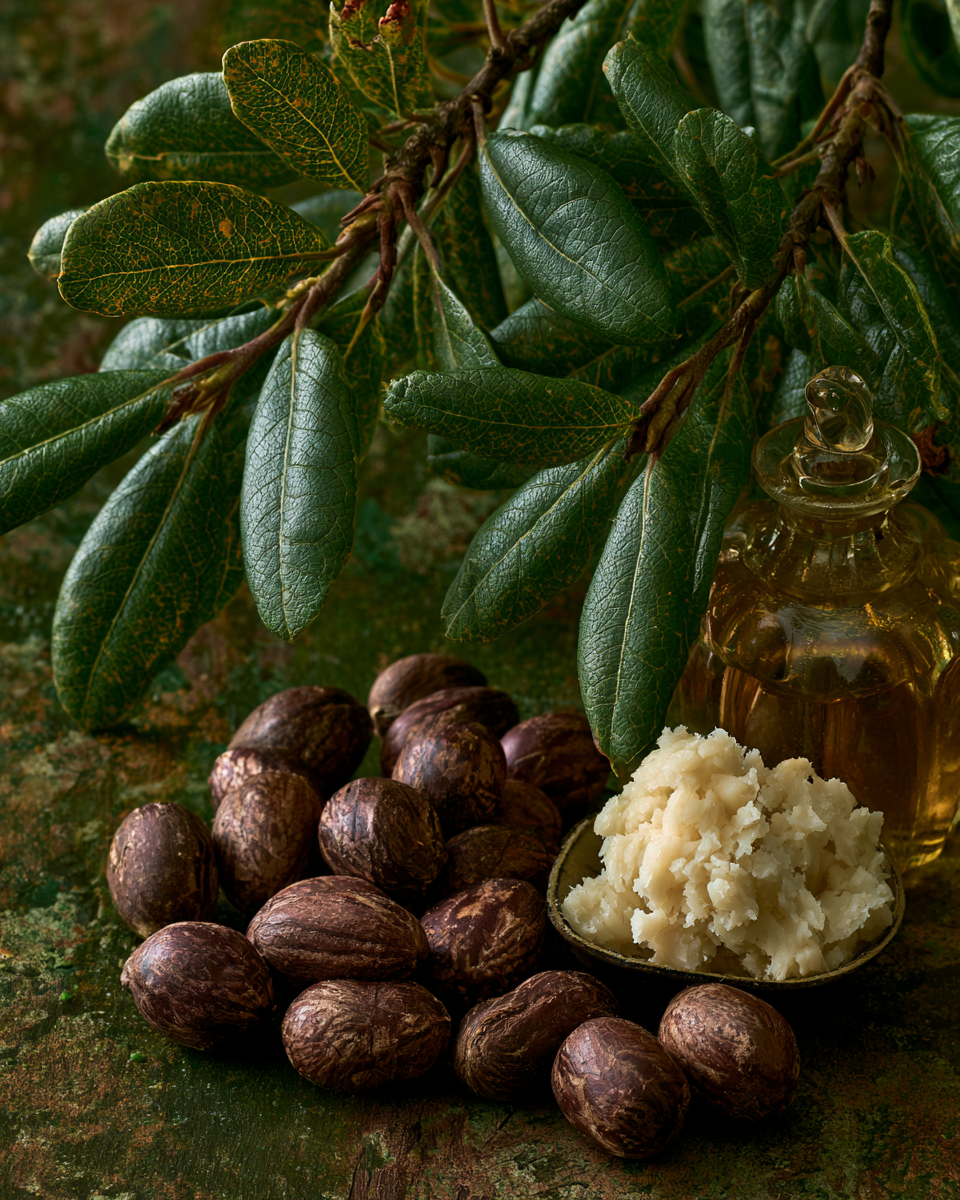
Argan oil is extracted from the kernels of the argan tree, which grows in southwestern Morocco. Its composition is rich in oleic acid and linoleic acid, with a notable fraction of natural vitamin E.
This vegetable oil thus serves two functions on its own: it nourishes with its fatty acids, and it provides an antioxidant through its tocopherol.
For normal or dry skin, this simple use is sufficient. Adding a second product often only overburdens a routine that was working.
When Reinforcing Makes Sense
For very exposed skin — severe cold, wind, sustained urban pollution — an additional antioxidant boost is justifiable.
The same applies to an argan oil that has been open for several months. Its tocopherol is consumed in protecting the oil itself, and its useful fraction diminishes over time.
However, in a routine where the cream already contains tocopherol, there's nothing to add: the function is covered twice.
Order of Application
Apply the serum or cream containing tocopherol first, then argan oil as the final layer. From thinnest to richest, as always.
An oil applied first would form a film that the serum would have to penetrate. This is the rule for all vegetable oils, without exception.
Practical Application
Two to three drops of argan oil for the entire face. Warm them between your palms and press onto the skin rather than spreading.
Apply to damp skin. This oil contains no water: it prevents the skin's water from escaping, which implies there needs to be water to retain.
More oil does not nourish better. Excess oil remains on the surface, shines, and ends up on the pillow — the right amount is what has disappeared after two minutes.
What Not to Do
Adding vitamin E capsules to a bottle of argan oil. This practice is common but poses two problems: the dosage is uncontrollable, and repeated opening of the bottle accelerates oxidation.
An excess of tocopherol can also irritate some skin types. More is not better with this ingredient, and a commercial formula is better dosed than a homemade mixture.
For Hair
Argan oil is firmly established here: a drop on the ends, on damp hair, after washing. For an oil bath before shampoo, allow one hour to sit.
This use requires no additional input. The natural tocopherol in the oil is largely sufficient for the lengths.
According to Your Skin Type
Dry skin: Argan oil alone, generously, morning and evening.
Combination skin: Oil on the cheeks, a light cream elsewhere.
Oily skin: A light treatment with tocopherol rather than an oil.
Sensitive skin: Only one source at a time, and two weeks of observation.
Choosing the Right Argan Oil
First cold-pressed, non-deodorized, in a dark, small bottle. The ingredient list should be one line: Argania spinosa kernel oil.
If the bottle smells like roasted hazelnut, it comes from the food aisle: only culinary argan nuts are roasted.
Buy small and finish the bottle. Twelve to eighteen months after opening, stored away from light — beyond that, the oil will have lost its beneficial properties.
Reading a Label
Tocopherol appears as tocopherol or tocopheryl acetate. Its position at the end of the list is normal: it acts in small doses and also serves as a preservative for the oil phase.
An oil that advertises added tocopherol is not a bad product: it is often a sign of careful formulation, which protects the oil from its own oxidation.
What This Combination Does Not Do
It does not act on established wrinkles, dark spots, or deep texture. It nourishes and protects, which is its entire role.
It does not replace sunscreen. An antioxidant complements protection; it never substitutes it. Daily sun protection remains essential.
Fatty Acids Not Provided by Tocopherol
Argan oil contains linoleic acid and oleic acid. The first is among the essential fatty acids, which the body does not produce.
These fatty acids integrate into the outer layer of the skin and contribute to its suppleness. Isolated tocopherol does not fulfill this function: it protects against oxidation, nothing more.
This is the fundamental reason why a complete vegetable oil is most often sufficient. It provides both fatty acids and an antioxidant in one step.
Free Radicals and What Can Be Done
Free radicals are formed under the effect of radiation, pollution, and smoking. An antioxidant neutralizes some of them, but never eliminates them entirely.
Preventing their formation is more important than neutralizing them afterwards. This is why daily protection takes precedence over any antioxidant intake.
Natural vs. Synthetic Tocopherol
Two forms coexist. Natural tocopherol, found in argan oil, appears as tocopherol or d-alpha-tocopherol. The synthetic form carries the prefix dl-.
The natural form is better absorbed orally, which is well established in nutrition. In topical application, the difference is much less clear-cut, and both fulfill their antioxidant role.
Therefore, it is not a major selection criterion for a skin care product. The freshness of the product and its concentration matter more than the origin of the molecule.
According to Skin Type
Dry skin: Vegetable oil alone, generously.
Oily skin: A light treatment, without added fatty substances.
Combination skin: A few drops of oil on the cheeks only.
Reactive skin: Only one source of antioxidant at a time.
Using This Oil According to Skin Type
A dry skin type can tolerate application morning and evening. A combination skin type will limit application to the cheeks, and oily skin will prefer a treatment without added fatty substances.
These adjustments concern quantity and area, never the principle. Using a vegetable oil remains possible on almost all skin types, at the right dose.
Strengthening the Skin Barrier
A weakened skin barrier allows moisture to escape and irritants to enter. The essential fatty acids in this oil contribute to it, without fully rebuilding it.
To go further, ceramides and cholesterol are needed — the components this layer is made of. A vegetable oil protects; it does not rebuild.
Price, Relative to Usage
A thirty-milliliter bottle, used at two drops per day, lasts about six months. Per day, the cost becomes negligible, even for good quality oil.
Buying small remains more economical than buying large: after six months, the oil loses its beneficial properties, and half the bottle goes to waste.
A Useful Clarification
These products are cosmetics and improve skin comfort without treating conditions. Persistent irritation after discontinuing products warrants medical advice.
What Adding Really Changes
Adding vitamin E to argan oil does not make it more nourishing: it makes it last longer without going rancid, which is important in a warm, well-lit bathroom. A nourishing oil with vitamin E that is already stabilized eliminates the need to recalculate this with each opened bottle.


Go further than this article
Get our skincare guides by email — and start with your free skin diagnostic: 2 minutes, advice tailored to your skin. We ship to the US, UK, Canada, Australia and 27 European countries; somewhere else? Sign up and you will be the first to know when we deliver to your country.
By signing up, you agree to our privacy policy. Unsubscribe in one click.