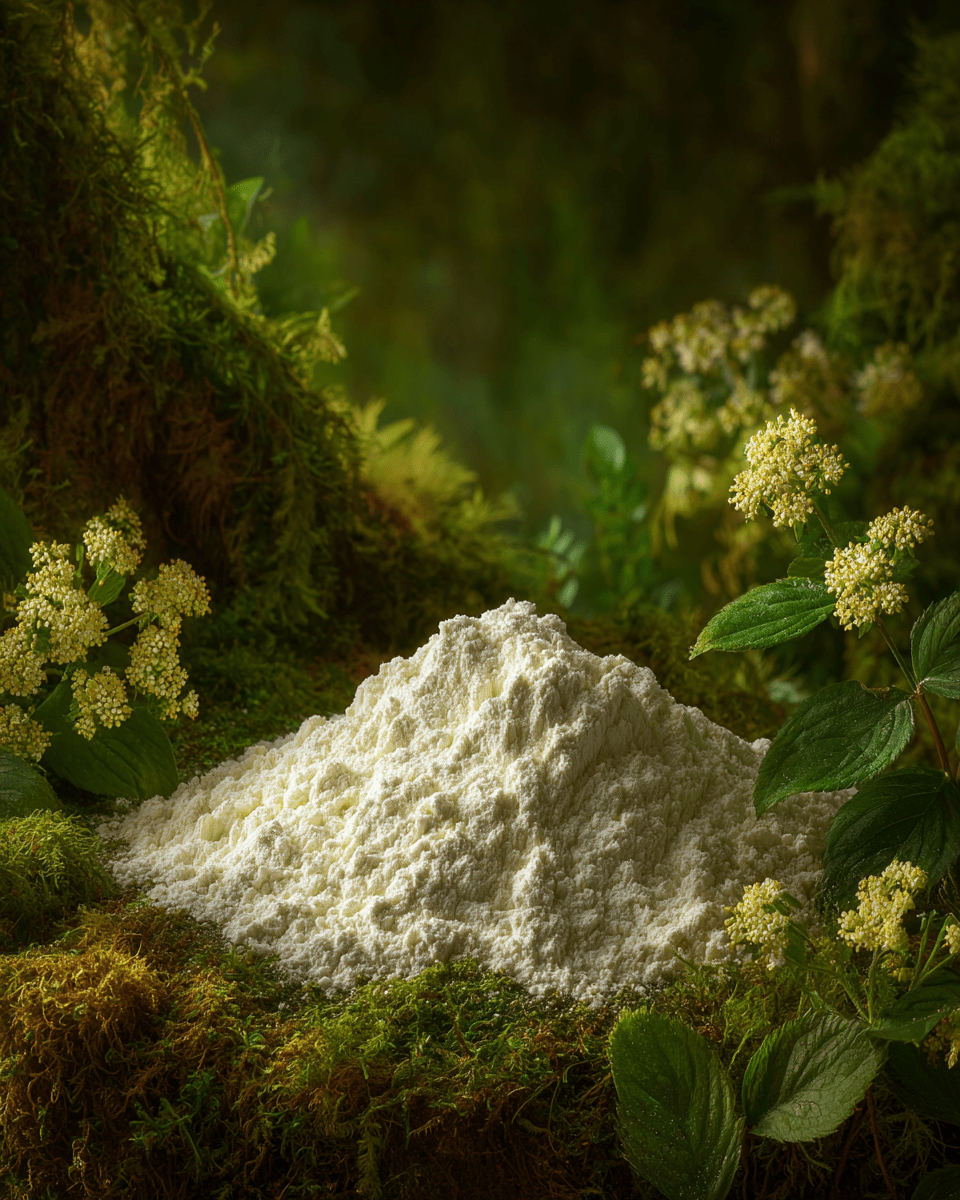
Mature dehydrated combination skin: bi-zonal double mask technique, fine lines and firmness
Mature Combination Skin: Why Standard Care Is No Longer Enough
Dehydrated mature combination skin is one of the most challenging skin types to manage. On one hand, the T-zone—forehead, nose, chin—still produces excess sebum, clogging pores and leading to a "shiny" effect. On the other hand, the cheeks demand intensive hydration, lack firmness, and show the first signs of fine lines and gradual sagging. Skin maturity amplifies this duality: collagen production naturally slows down after age 35, the hydrolipidic barrier becomes less efficient, and sebum itself changes composition. The result: universal skincare products either worsen shininess or dryness—sometimes both at once.
Faced with this challenge, the bi-zonal double mask technique emerges as the most coherent solution. Instead of applying a single mask to the entire face, this method involves simultaneously treating the two zones with distinct yet complementary formulas. A clay mask for the T-zone, a nourishing botanical powder mask for the cheeks. The same treatment session, two targeted actions, zero compromise.
Understanding the Duality of Dehydrated Mature Combination Skin
Before mastering the bi-zonal technique, it's essential to understand what is actually happening in each skin zone.
The sebaceous T-zone exhibits visible pores, recurring midday shine, and sometimes stubborn blackheads. In mature skin, this sebum thickens and oxidizes more easily, worsening the appearance of pores. Clay—kaolin or montmorillonite—is the go-to ingredient for this area: it absorbs excess lipids, tightens pores, and clarifies the complexion without being aggressive.
The dehydrated and loss-of-firmness cheeks present a different clinical picture: tightness, thin skin to the touch, increased visibility of expression lines, and loss of facial contours. Deep skin dehydration weakens collagen and elastin fibers, mechanically accelerating sagging. For these cheeks, the active ingredients of choice are film-forming polysaccharides, vegetable oils rich in essential fatty acids, and plumping botanical powders.
It is precisely at the intersection of these two needs that prickly pear seed oil comes into play, recognized for its exceptional concentration of linoleic acid (omega-6), vitamin E, and plant sterols. Applied in conjunction with the botanical powder mask on the cheeks, it strengthens the skin barrier, nourishes the superficial layers of the epidermis, and helps reduce the appearance of fine lines without clogging pores—a rare characteristic that makes it compatible even with combination-prone areas.
The Bi-Zonal Double Mask Protocol: Step-by-Step
The success of the bi-zonal technique relies on careful preparation and precise application. Here is the complete protocol, as recommended for mature skin seeking firmness.
Step 1 — Preparation (2 minutes). Cleanse your face with a gentle cleanser, free of harsh surfactants. Pat dry. The skin should be clean, slightly damp—this will facilitate the diffusion of active ingredients and prevent a "crusty" effect upon removal.
Step 2 — Visual delineation of zones. Before applying anything, mentally identify your demarcation line: forehead + nose + chin on one side, cheekbones + cheeks + contours on the other. This mapping is the key to the bi-zonal method.
Step 3 — Simultaneous application. Prepare your two masks in separate bowls. First, apply the clay mask to the T-zone with a brush or your fingers, in a thin, even layer. Immediately afterward, apply the nourishing botanical powder mask to the cheeks—working in upward motions to activate microcirculation and support skin tone. Both masks coexist on the face at the same time: this is the entire logic of "simultaneous bi-zonal" application.
Step 4 — Waiting time. 10 to 15 minutes is sufficient. Beyond that, the clay on the T-zone could become excessively tight and weaken the skin barrier. Use this time to keep your face relaxed, without forced expressions.
Step 5 — Differentiated rinsing. First, rinse the cheeks with lukewarm water, using gentle motions. Then, rinse the T-zone with slightly cooler water to tighten pores. This sequential rinsing extends the action of each mask.
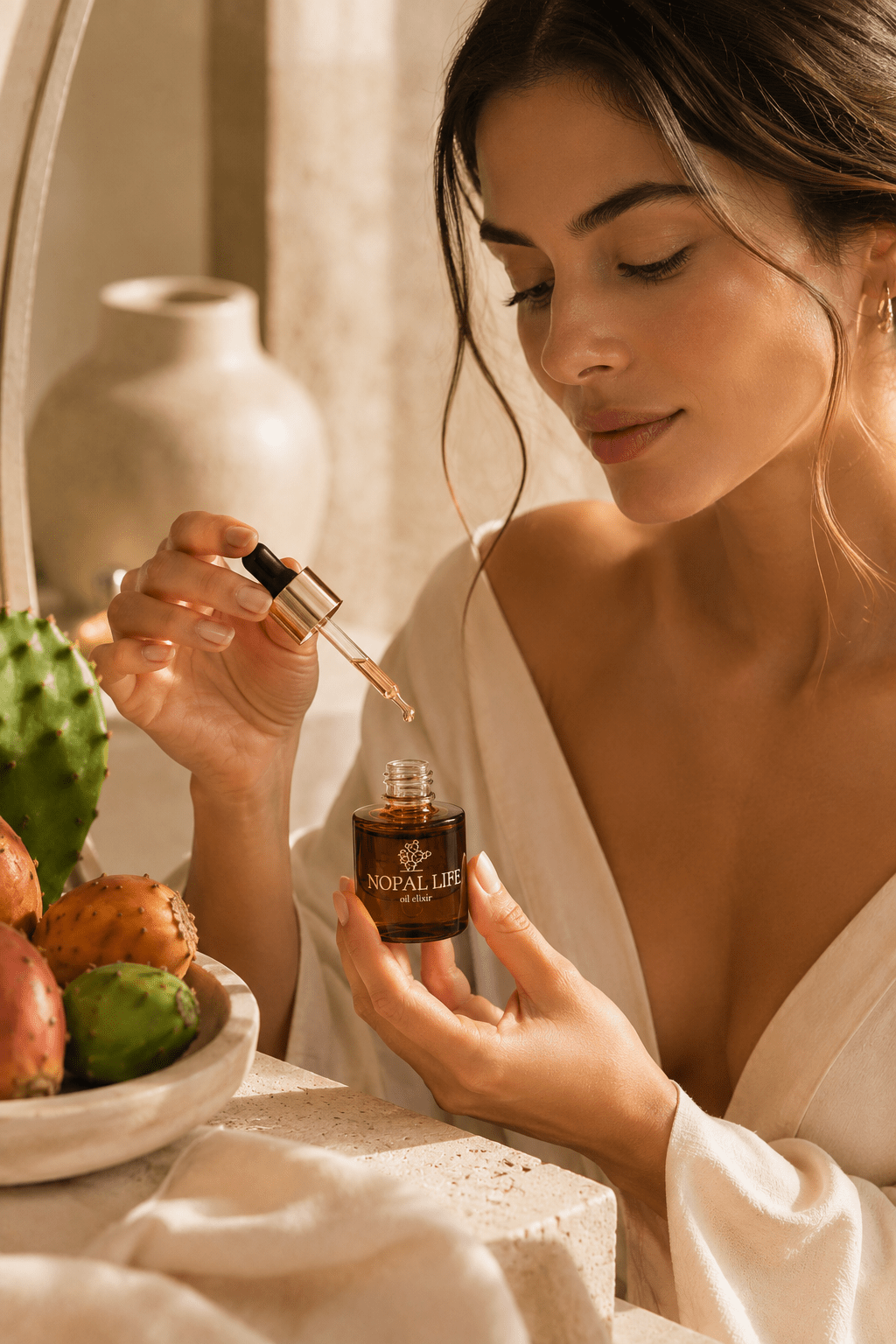
Step 6 — Post-mask care. Apply a few drops of prickly pear seed oil to the cheeks while they are still slightly damp. The light occlusive effect of the oil seals in the hydration provided by the botanical mask and amplifies the plumping action on fine lines and firmness.
Ideal frequency: 1 to 2 times per week. From the 3rd session, mature combination skin generally shows a noticeable difference: reduced shine on the T-zone, plumper cheeks, and improved comfort.
Why Botanical Powder Changes the Game for Mature Cheeks
Botanical powder masks represent a new generation of skincare particularly well-suited for dehydrated mature skin. Unlike tube masks—often loaded with preservatives, thickeners, and free water that doesn't penetrate—botanical powders are concentrated, active, and customizable.
Their active principle relies on the synergy of plants selected for their film-forming properties (which visually "fill in" fine lines), regenerating properties (which stimulate natural renewal), and toning properties (which support dermal structure). Mixed with a hydrosol, floral water, or a few drops of oil, they release their active ingredients upon contact with skin's warmth.
For mature combination skin, the decisive advantage of botanical powder is its non-occlusive texture: it nourishes without smothering. It doesn't worsen the T-zone if it slightly overlaps the contours, and it allows for personalized dosage depending on the severity of dehydration. For very tight skin, a hint of prickly pear seed oil is added to the preparation—for slightly sagging skin, the pure hydrated version is preferred.
This adaptability makes the botanical powder mask a pillar of personalized skincare by skin type, far from generic formulas that neglect the complexity of mature combination skin.
Mistakes to Avoid with the Double Mask on Combination Skin
The bi-zonal technique is simple but requires rigor. Here are the most common mistakes that sabotage results:
Mistake 1 — Applying clay to the cheeks. This is the most common mistake. Clay absorbs everything in its path—including the natural protective sebum on the cheeks. On already dehydrated and mature skin, this causes immediate tightness and a sebaceous rebound effect on the T-zone in the following days. Clay should be strictly confined to the forehead, nose, and chin.
Mistake 2 — Leaving it on for too long. 15 minutes is the absolute maximum. A clay mask that dries completely becomes aggressive for all skin types, especially mature skin whose barrier is weakened. If you feel strong tension before 15 minutes, rinse.
Mistake 3 — Using water that is too hot when rinsing. Hot water dilates blood vessels, can cause redness, and destroys some of the botanical active ingredients still present on the surface. Lukewarm on the cheeks, cool on the T-zone.
Mistake 4 — Neglecting post-mask care. The mask "opens" the skin by removing impurities and dead cells. Without immediate occlusive care (oil, serum), mature skin recovers poorly and can react with increased dryness. The application of prickly pear seed oil within 2 minutes after rinsing is non-negotiable.
Mistake 5 — Excessive frequency. Twice a week is the maximum for this intensive protocol. Beyond that, even the gentlest formulas can disrupt the skin microbiome and weaken the natural lipid barrier.
Integrating the Double Mask into a Coherent Anti-Aging Routine
The bi-zonal technique does not exist in isolation: it must be integrated into a comprehensive routine designed for mature combination skin. In the morning, a gentle cleanse followed by a hydrating serum and a minimum SPF 30 sunscreen. In the evening, oil cleansing—ideally with prickly pear seed oil to benefit from its regenerating plant sterols—followed by a light night cream on the T-zone, and a richer one on the cheeks.
The double mask is incorporated into the evening routine, twice a week, before the serum. This sequence maximizes the penetration of subsequently applied anti-aging active ingredients, as the botanical mask has prepared and "softened" the skin's surface.
To precisely identify your zones and further personalize your protocol, our intelligent skin diagnostic analyzes your skin profile and suggests a suitable routine in minutes. It's the ideal starting point before investing in targeted care.
Dehydrated mature combination skin is not a fate. With the right method—bi-zonal, botanical, regular—fine lines fade, firmness gradually restores, and sebum balance returns. The key is to treat each area for what it is, without ever confusing them.
FAQ — Mature Combination Skin and Bi-Zonal Double Mask
Is the bi-zonal technique suitable for all combination skin types, even young ones?
Yes, the bi-zonal principle is universal for combination skin, regardless of age. On young skin, the proportions change: the emphasis will be on T-zone purification rather than cheek firmness. On mature skin, anti-aging and regenerating active ingredients are boosted on the cheeks. The technique adapts; the logic remains the same.
Can I only use clay on my entire face if I'm short on time?
It's possible occasionally, provided you use white clay (kaolin), the gentlest, and rinse before it completely dries (8-10 minutes). But on dehydrated mature skin, this regular practice worsens fine lines and cheek dryness. The bi-zonal technique only takes 3 to 5 minutes more—the investment is well worth it.
Is prickly pear seed oil suitable for acne-prone skin?
Prickly pear seed oil is one of the few vegetable oils classified as "non-comedogenic" (index 1-2/5). Its richness in linoleic acid regulates sebum production in the long term. For mature combination skin with a slight acne tendency, it should only be applied to the cheeks and contours, avoiding the T-zone. A preliminary patch test on the forearm for 48 hours is still recommended.
How long before I see the first results on fine lines?
The first effects—more even complexion, more comfortable skin, slight reduction in tightness—are noticeable from the 2nd or 3rd session. For a visible improvement in fine lines and firmness, allow 4 to 6 weeks of regular practice (2 sessions/week), combined with suitable daily care. Results on skin structure take time as they involve deeper natural renewal mechanisms.
How to choose the right clay for my T-zone?
Three clays are relevant for mature combination skin: white clay (kaolin, the gentlest, ideal if skin is sensitive), superfine green clay (more absorbent, for very shiny T-zones), and pink clay (kaolin-red mix, balancing gentleness and effectiveness). Avoid classic green clay on mature skin: it's too absorbent and can destabilize the skin barrier around the T-zone.
Can I do the double mask in the morning before applying makeup?
Technically yes, but it's not the optimal time. A clay mask tightens pores immediately but sometimes leaves the skin slightly reactive for 1 to 2 hours. In the evening, you give your skin time to recover and absorb active ingredients without the constraints of makeup. If you absolutely must use it in the morning, allow at least 30 minutes between rinsing and applying foundation.
How do I know if my skin is mature combination or just dehydrated?
The difference is fundamental: dehydrated skin is a temporary condition (any skin can be dehydrated), while combination skin is a permanent skin type. If your T-zone is naturally shiny even after intensive hydration, you have combination skin. If the shine disappears when you hydrate correctly, it's more likely global dehydration. Our skin diagnostic helps you decide in minutes.
Conclusion
Mature and dehydrated combination skin benefits from tailored bi-zonal care. A double mask treats the T-zone and cheeks according to their needs, plumping the skin and supporting firmness. Adapting textures is essential. When well-treated, combination skin regains balance, suppleness, and a refined texture.
Why Choose Nopal Life for Anti-Aging Skincare
The fight against skin aging requires active ingredients whose efficacy is supported by dermatological research. Nopal Life prickly pear seed oil, rich in omega-6 and omega-9 essential fatty acids, vitamin E, and plant sterols, directly impacts the suppleness and density of the skin barrier. It supports collagen synthesis, reduces dehydration lines, and strengthens the epidermal barrier for a visible smoothing effect from the first weeks.
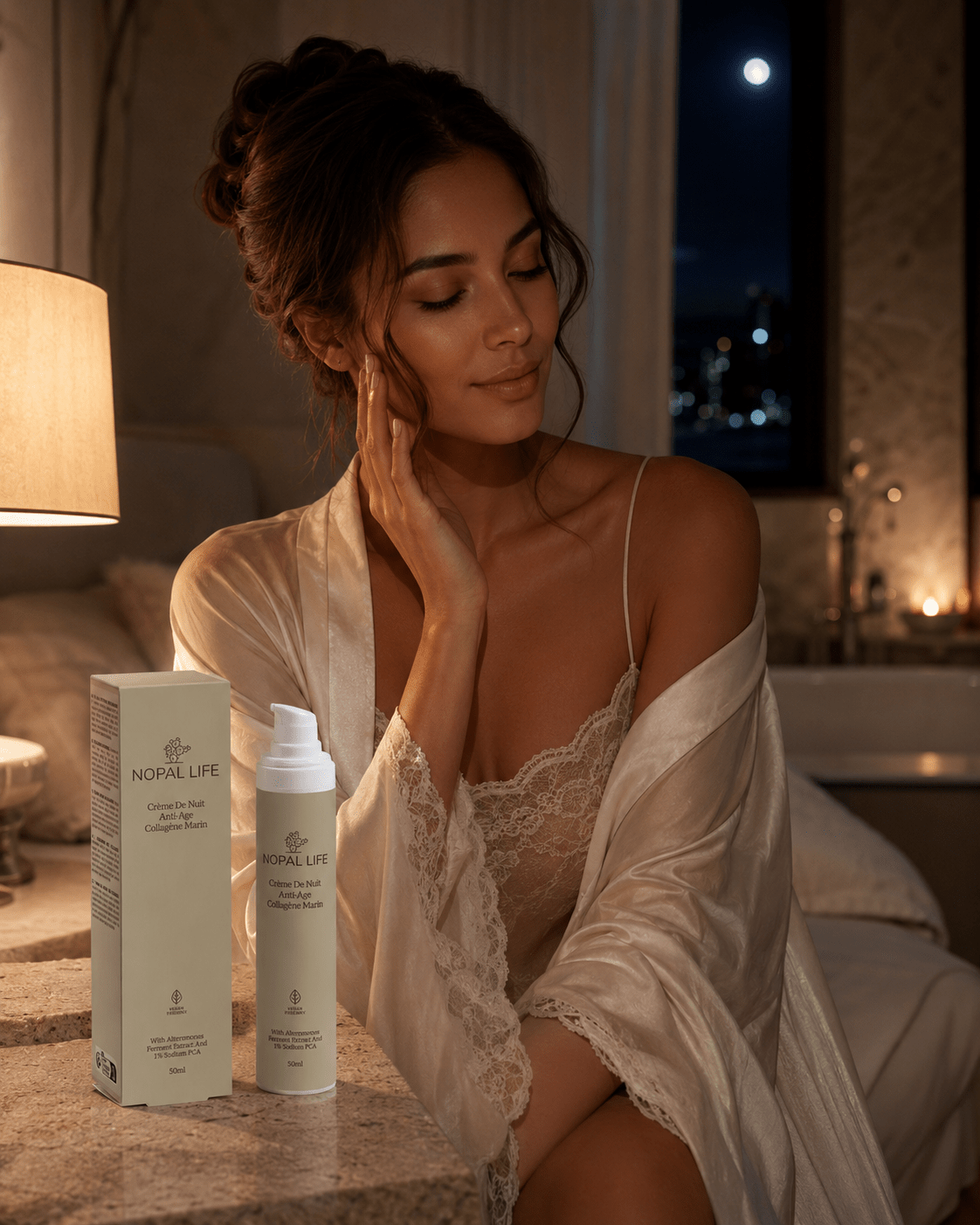
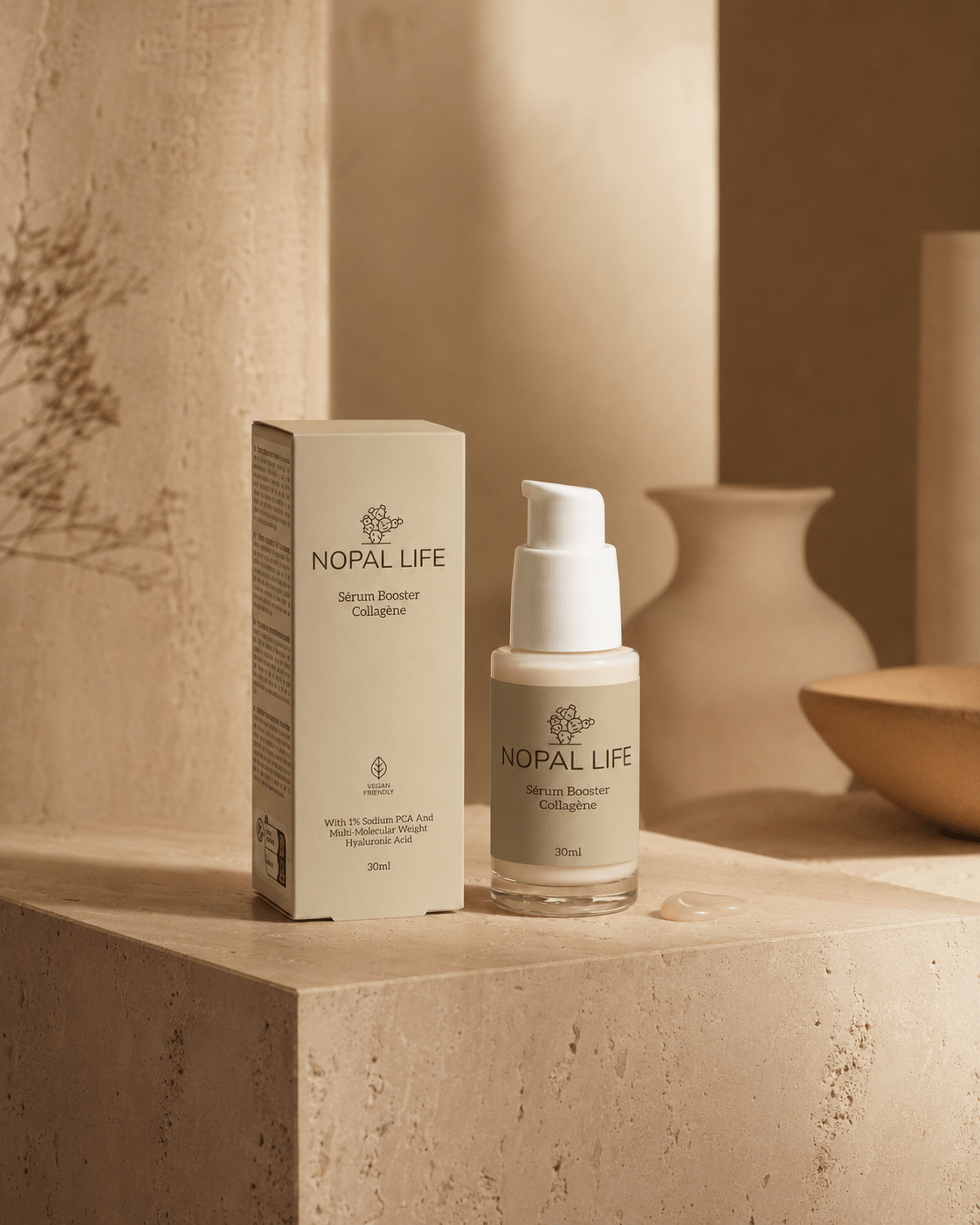
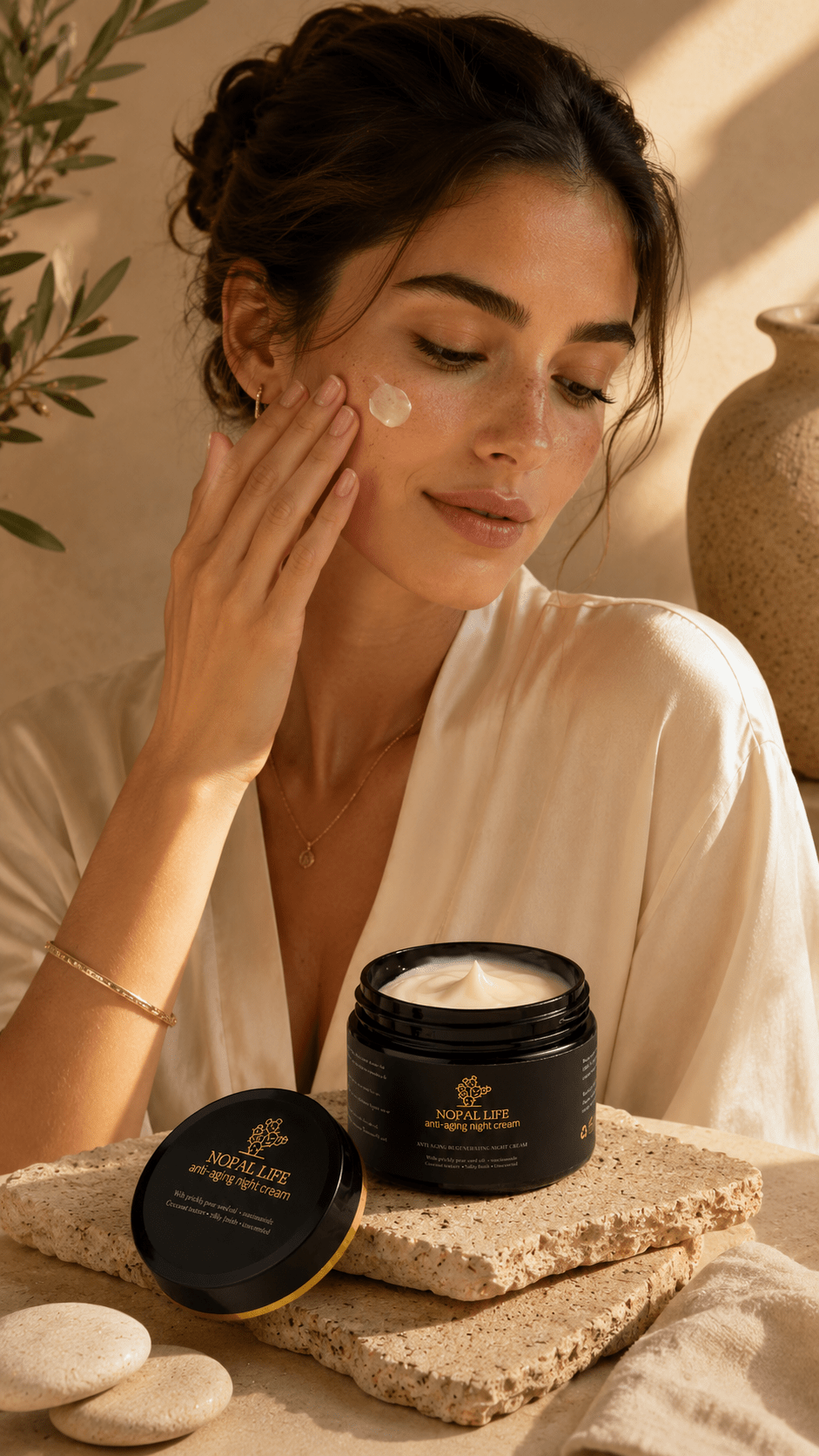
Pair it with our anti-aging night cream and our collagen serum for a complete synergy, day and night. Your skin regains firmness, radiance, and lasting comfort. Discover the Nopal Life formulation designed for your skin profile with our free Skin Intelligence diagnostic.
RECOMMENDED CARE
Botanical Powder Mask
Natural formula · Origin Algeria
DISCOVER THIS CARE →PERSONALIZED ROUTINE
Nopal Life Skin Intelligence™
Free diagnostic · 2 minutes
DISCOVER MY ROUTINE →Information provided for cosmetic and educational purposes; it does not constitute medical advice.
Our anti-aging treatments