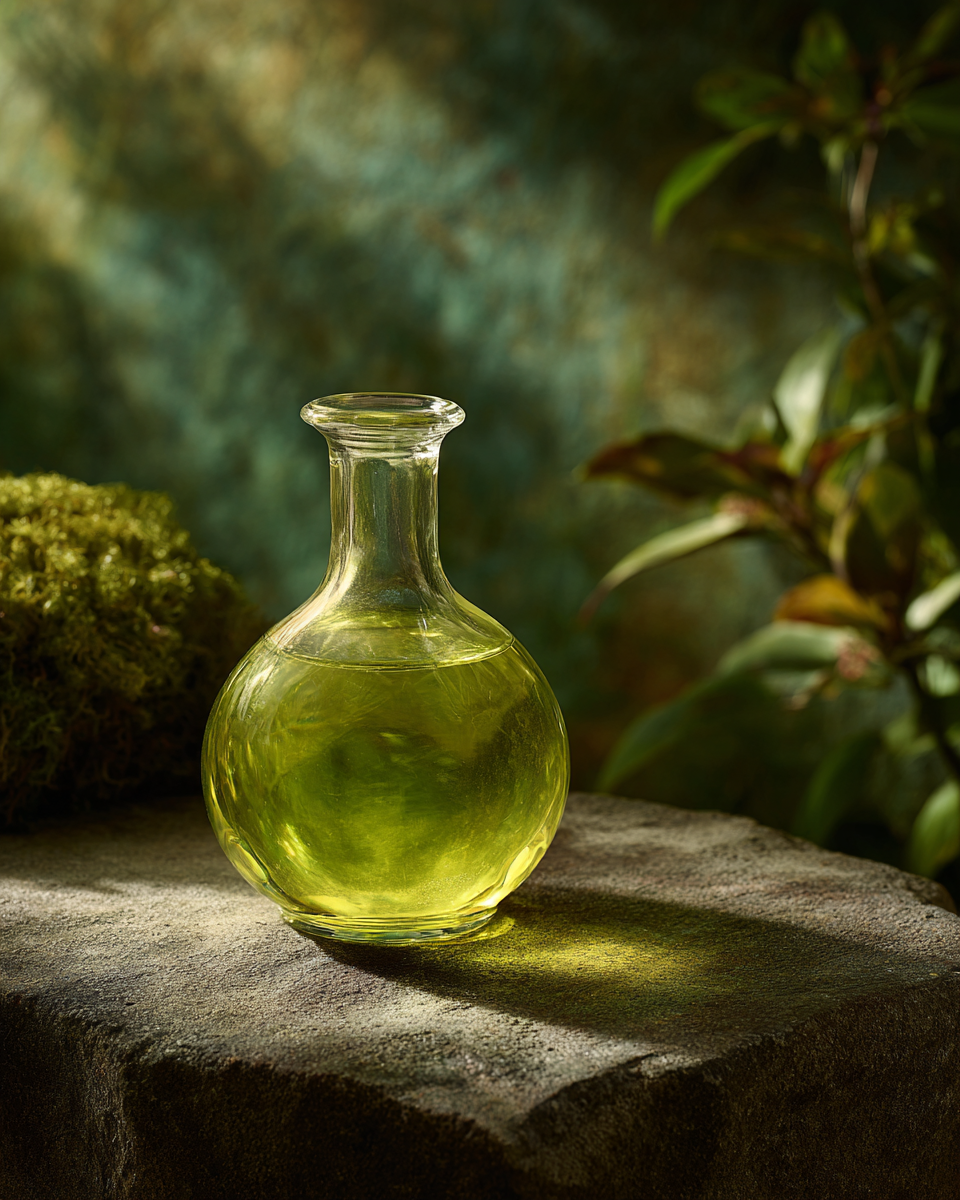
Combining Rosehip Oil and Vitamin E: The Method
This combination solves a concrete problem: rosehip oil oxidizes quickly, and vitamin E slows down this oxidation. The benefit is twofold – antioxidant protection for the skin, and a longer shelf life for the bottle.
The Essentials
- Order: indifferent between them, always after water-based treatments.
- Simplest way: mix in the palm of your hand.
- Quantities: 2 to 3 drops in total.
- When: preferably in the evening.
- Additional benefit: prolonged preservation of the mixture.
Why the Combination Makes Chemical Sense
Rosehip oil is rich in polyunsaturated fatty acids – this is what makes it valuable and fragile. These fatty acids oxidize on contact with air, and an oxidized oil irritates instead of nourishing.
Vitamin E is precisely the antioxidant that formulators add to fatty phases to slow down this process. Associating it with rosehip oil is therefore not a refinement: it is the answer to this oil's main drawback.
Rosa rubiginosa oil is among the richest in linoleic acid and omega-3s – and therefore among the most fragile. It is the double bonds of these fatty acids that react with oxygen in the air.
Vitamin E interrupts this chain reaction. It doesn't make the oil last forever, but it slows down its aging: it plays a preservative role before it plays a skincare role, and that's what makes the duo chemically coherent.
How to Provide Vitamin E
Rarely pure. The simplest way is to use a vegetable oil naturally rich in tocopherols, which provides both the antioxidant and complementary fatty acids.
Many bottles of rosehip oil already contain added tocopherol. This is not a defect in purity but a sensible formulation choice – check the ingredient list before adding it yourself.
In the form of pure tocopherol, a few drops per ten milliliters of oil, or by choosing an oil that already naturally contains it. The second option avoids an additional purchase.
Using rosehip oil without this protection is still possible for small volumes consumed quickly. For dry, mature skin that uses it every evening, the bottle is finished before it turns – this is the simplest way to solve the problem.
The Protocol
After cleansing, dab without wiping. Place one drop of rosehip oil and one to two drops of the tocopherol-rich oil in the palm of your hand, warm for a few seconds, then apply by pressing.
Only one drop of the mixture around the eyes, patted with the tip of the ring finger. In the morning, reduce to one drop in total and finish with sun protection.
One drop of tocopherol per ten milliliters of oil, shaken before each use. Three drops of the mixture in the evening on damp skin, never in the morning — this oil should not be worn under sunscreen.
For reactive skin, test in the crook of the elbow before applying to the face. The mixture remains usable for about six months, compared to three for the oil alone.
The Benefits of Rosehip Oil, and What Vitamin E Adds
The benefits of rosehip oil relate to the suppleness and uniformity of the skin's surface, with results appearing within three to four weeks. Its essential fatty acid content produces these benefits.
Vitamin E does not enhance these results. It protects skin lipids from oxidative stress, which is a distinct and slower benefit — and it preserves the oil itself, ensuring it will still be effective in two months.
The oil provides fatty acids, and vitamin E protects them. The latter does not enhance the action of the former: it prevents it from degrading before it has had a chance to work.
This is a nuance that matters. Many present this duo as an active synergy when it is about preservation – useful, measurable, but of a different nature.
According to Skin Types
Mature skin: the complete combination, morning and evening. This is the area where both benefits matter most.
Dry skin: two drops of rosehip oil to one of the other, with a cream on top in winter.
Combination skin: the opposite, with a single drop in total.
Sensitive skin: introduce both two weeks apart. Recent and well-preserved rosehip oil is very well tolerated; old oil is not.
For dry and mature skin, the mixture is applied pure in the evening, three drops. For oily skin, rosehip oil can be used alone and in minimal quantity, as added vitamin E provides no additional benefit in this context.
Whether to use the oil pure or diluted depends mainly on tolerance. Its linoleic acid is suitable for most skin types, but its richness in omega makes it uncomfortable for epidermises that do not tolerate greasy textures well.
Preparing a Mixture for Storage
This is where the association becomes practically interesting. An equal-parts mixture, in a tinted glass bottle stored in the refrigerator, keeps significantly better than rosehip oil alone.
Prepare small quantities — the equivalent of three to four weeks of use. A large bottle prepared in advance leads back to the initial problem.
How to Tell if the Mixture Has Gone Bad
First, the smell: a pungent, slightly rancid note indicates oxidation. Then, the color, if it darkens significantly.
In this case, discard without hesitation. Oxidized oil applied to the face produces the opposite of the desired effect, and this becomes visible on reactive skin within a few days.
What the Combination Does Not Do
It does not hydrate in the strict sense: these are two fatty substances, which retain existing water without providing any. For dehydrated skin, add a humectant underneath.
It does not act on spots or established wrinkles. Rosehip oil improves skin texture; vitamin E protects. Neither corrects the structure of the dermis.
What You Need to Know
These treatments are cosmetic and improve the appearance and comfort of the skin, without therapeutic action. A changing mark requires medical advice.
Why Are They Almost Always Found Together?
Vitamin E protects the unsaturated fatty acids in rosehip, which are very sensitive to air and light: without it, the oil goes bad faster. A nourishing multi-purpose face oil already formulated this way avoids having to measure out a combination that the formulation provides by default.


Go further than this article
Get our skincare guides by email — and start with your free skin diagnostic: 2 minutes, advice tailored to your skin. We ship to the US, UK, Canada, Australia and 27 European countries; somewhere else? Sign up and you will be the first to know when we deliver to your country.
By signing up, you agree to our privacy policy. Unsubscribe in one click.