Plumping face mask: hydration and bouncy skin
A plumping mask primarily creates a bouncy effect by temporarily increasing water in the stratum corneum and improving surface suppleness. Hyaluronic acid, glycerin, panthenol, and beta-glucans attract or retain water; emollients then limit its evaporation. This effect can make dehydration lines less visible, without altering the deep structure of the face in a few minutes.
Why well-hydrated skin appears plumper
The stratum corneum contains cells surrounded by a lipid matrix. When its water content increases, it becomes more flexible and its surface smooths slightly. Light then reflects more regularly, which can give more radiance and a plumper appearance.
This phenomenon explains the rapid visible effect of many hydrating masks. It primarily concerns the superficial layers and differs from a modification of collagen or elastin, which would require other mechanisms and much more time. The term "plumping" therefore mainly describes a visual and sensory result.
Humectants that make sense in the formula
Hyaluronic acid is a hydrophilic polymer capable of retaining a significant amount of water in an aqueous environment. Glycerin is a smaller humectant, widely used because it remains effective at modest concentrations. Panthenol and certain beta-glucans complement the comfort and suppleness of the surface.
A relevant formula does not need to pile up ten active ingredients. A combination of glycerin, hyaluronic acid, and panthenol in a gel-cream can be more coherent than a very complex product whose tolerance becomes difficult to assess. Sensitive skin often benefits from preferring fragrance-free formulas.
Molecular weight of hyaluronic acid: what it changes
High molecular weight forms mostly remain on the surface and create a moisturizing film. Smaller fractions can alter the sensation and distribution in the superficial layers, but multiplying molecular weights is not in itself proof of superior efficacy. What matters is the entire formula, its dosage, and the quality of the film after drying.
A very viscous gel does not necessarily contain more hyaluronic acid. Gums like xanthan gum or polymers can thicken the texture. Therefore, one must avoid confusing product thickness with active ingredient concentration.
Cream mask, hydrogel, or sheet: three different experiences
| Format | Advantage | Limitation | Typical duration |
| Cream | Lipid comfort | Can be rich | 10 to 15 min |
| Hydrogel | High water content | Higher price | 15 to 20 min |
| Impregnated sheet | Homogeneous dose | Single use | 10 to 15 min |
| Night mask | Prolonged occlusion | Risk of overload | As per instructions |
Dry skin may prefer a rich cream mask with squalane or shea butter. Combination skin often seeks a lighter gel-cream. For very dehydrated skin, a hydrogel or impregnated sheet can provide an immediate sensation of freshness and suppleness, provided it is not allowed to dry on the face.
Fifteen-minute protocol to maximize comfort
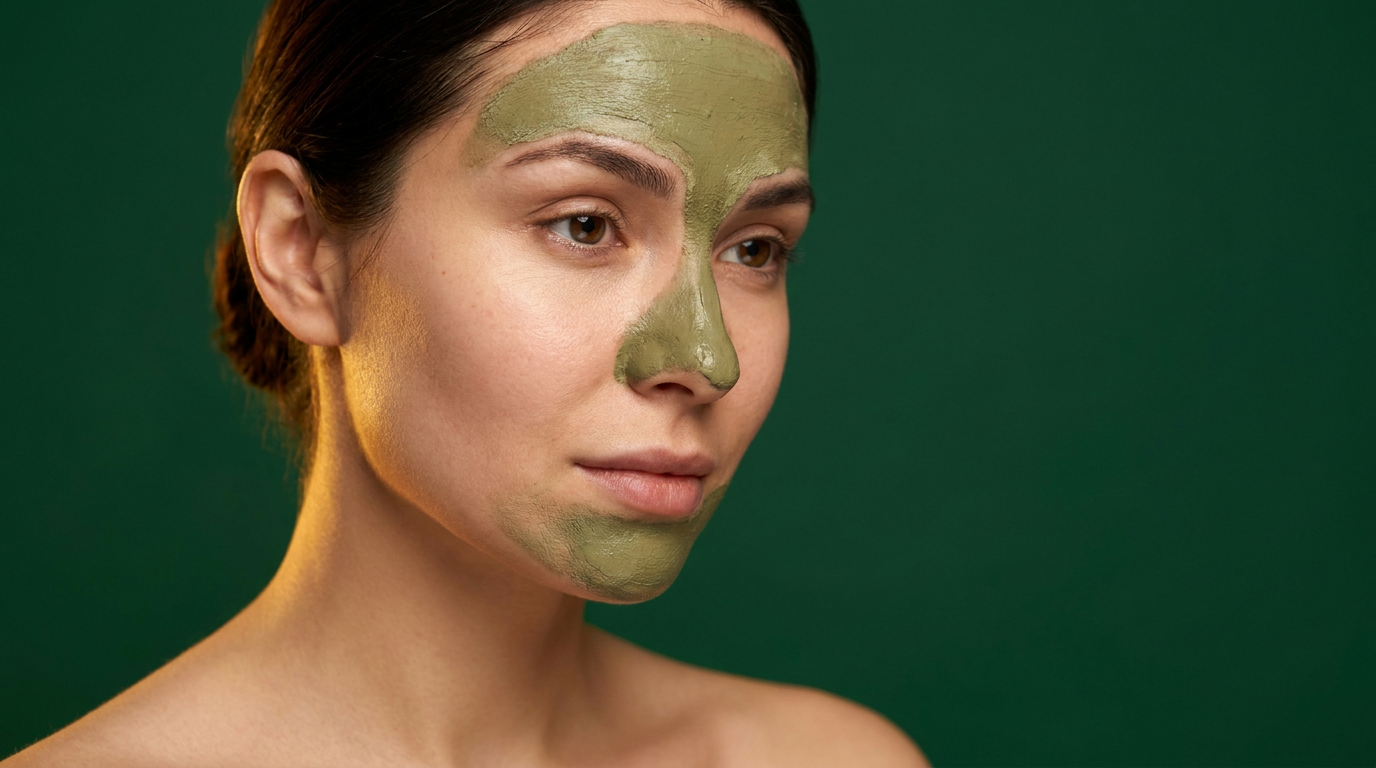
Cleanse the face with a gentle product, then pat away excess water without completely drying. Apply an even layer of product, about the equivalent of a small pea-sized amount for each cheek and half a pea-sized amount for the forehead. Leave on for ten to fifteen minutes without waiting for the surface to dry.
Remove excess with clean fingers or rinse if the formula requires it. Then apply a cream to retain the water absorbed during application. In the morning, finish with sun protection; in the evening, a simple cream is sufficient.
- Gentle cleansing
- Apply to slightly damp skin if the formula allows
- 10 to 15 minutes
- No exfoliation on the same evening
- Cream after application
How often for dry or mature skin
One to two uses per week are sufficient in most routines. Dry skin can temporarily increase frequency during a cold or very dry period, while combination skin can reserve application for the cheeks. The result is judged by comfort, not by the amount of product used.
On mature skin, the plumping effect can make certain dehydration lines less noticeable for several hours. To maintain this appearance, it is especially important to support daily hydration with a suitable cream and limit repeated aggressions. The mask remains a complement.
How to distinguish an immediate effect from a lasting effect
Photograph your face before application and then thirty minutes after, in the same light. You will primarily observe differences in luminosity, suppleness, and the visibility of small surface lines. These rapid changes mainly come from water and the cosmetic film.
A lasting improvement in skin appearance requires a stable routine over several weeks. The product can contribute to this comfort, but one should not attribute to a single session what is due to daily cream, sun protection, and general consistency.
Active ingredients to avoid on the evening of a highly hydrating application
Sensitive skin does not need a strong exfoliant just before strong occlusion. The combination of an AHA, BHA, or retinoid with prolonged application can increase tingling. Separate these steps by twenty-four to forty-eight hours if you know your skin reacts easily.
Fragrance and essential oils are not necessary to achieve a supple effect. The longer the formula is intended to remain on the skin, the more simplicity can facilitate tolerance. The desired benefit primarily comes from humectants and emollients.
In very dry air, humectants often provide better comfort when covered by a cream containing emollients. The treatment provides water, but the next layer slows its disappearance. It is the combination of the two steps that prolongs the sensation of suppleness.
A formula left overnight should be simpler than a rinsed exfoliant. Highly acidic or strongly fragranced active ingredients are less beneficial under prolonged occlusion. For sensitive skin, choose a texture containing mainly humectants, panthenol, and lipids.
The neck can receive the remaining product if the formula is well tolerated, but it is not necessary to double the quantity. This area is often more sensitive to fragrances and acids. A thin layer is sufficient to achieve a comforting effect.
The eye contour deserves a separate rule
This is the area where a plumping effect is most expected, and where the most caution is needed. The skin here is thin, mobile, and does not tolerate a heavy texture left on for too long. A mask designed for the entire face is not automatically suitable for this region, and the label usually specifies this.
If the formula allows, apply a very thin layer to the orbital bone, never close to the lashes, and remove it before the end of the application time intended for the rest of the face. A dedicated patch, designed for this surface, is easier to dose than a repurposed product.
The effect obtained is an optical smoothing related to hydration: dehydration lines are less visible, and the eyes appear more rested for a few hours. A pouch or hollow, however, is due to anatomy and not a lack of water.
Dull skin or mature skin: two different expectations
Dull complexion often indicates an irregular surface that reflects light poorly. Hydration smooths this texture and quickly restores radiance: for this specific need, a hydrating mask gives a visible and honest result from the very first application.
Mature skin expects something else. The demand is for plumpness and suppleness, which partly depend on factors that cosmetics do not reach. The mask remains useful—it makes the skin more comfortable and smoother—but it is then part of a complete anti-aging routine, alongside sun protection and regularly used active ingredients.
This distinction avoids the most common disappointment. Depending on the skin type and expectation, the same product will be judged excellent or disappointing, without its formula having changed.
What a plumping mask cannot do
A plumping mask does not fill a deep wrinkle or redefine the facial oval. It temporarily increases comfort and surface hydration, which can give a smoother and plumper appearance. Confusing this effect with dermal restructuring would lead to an excessive promise.
It also does not replace daily sun protection or a suitable cream. Its best use is as an occasional treatment that improves appearance and feel when the skin lacks water. Routine consistency remains more important than mask frequency.
A skin that lacks water can also appear creased after waking up, especially around the mouth and on the cheeks. In this case, an evening application followed by a rich cream is more consistent than a succession of very fluid serums. The next day, judge the suppleness by touch and not just the mirror effect obtained immediately after application.To avoid pilling, allow thirty to sixty seconds between removing the mask and applying cream. An excessive amount of humectants or polymers can form a film that rolls under the fingers. Reducing the dose often improves the result more than adding an additional layer.
>Less product, better result
An excess of humectants forms a film that rolls under the fingers when applying cream: it is the dose, not the formula, that spoils the application. A thin layer of prickly pear face mask is sufficient for fifteen minutes, without trying to apply more.
Our anti-aging treatments