



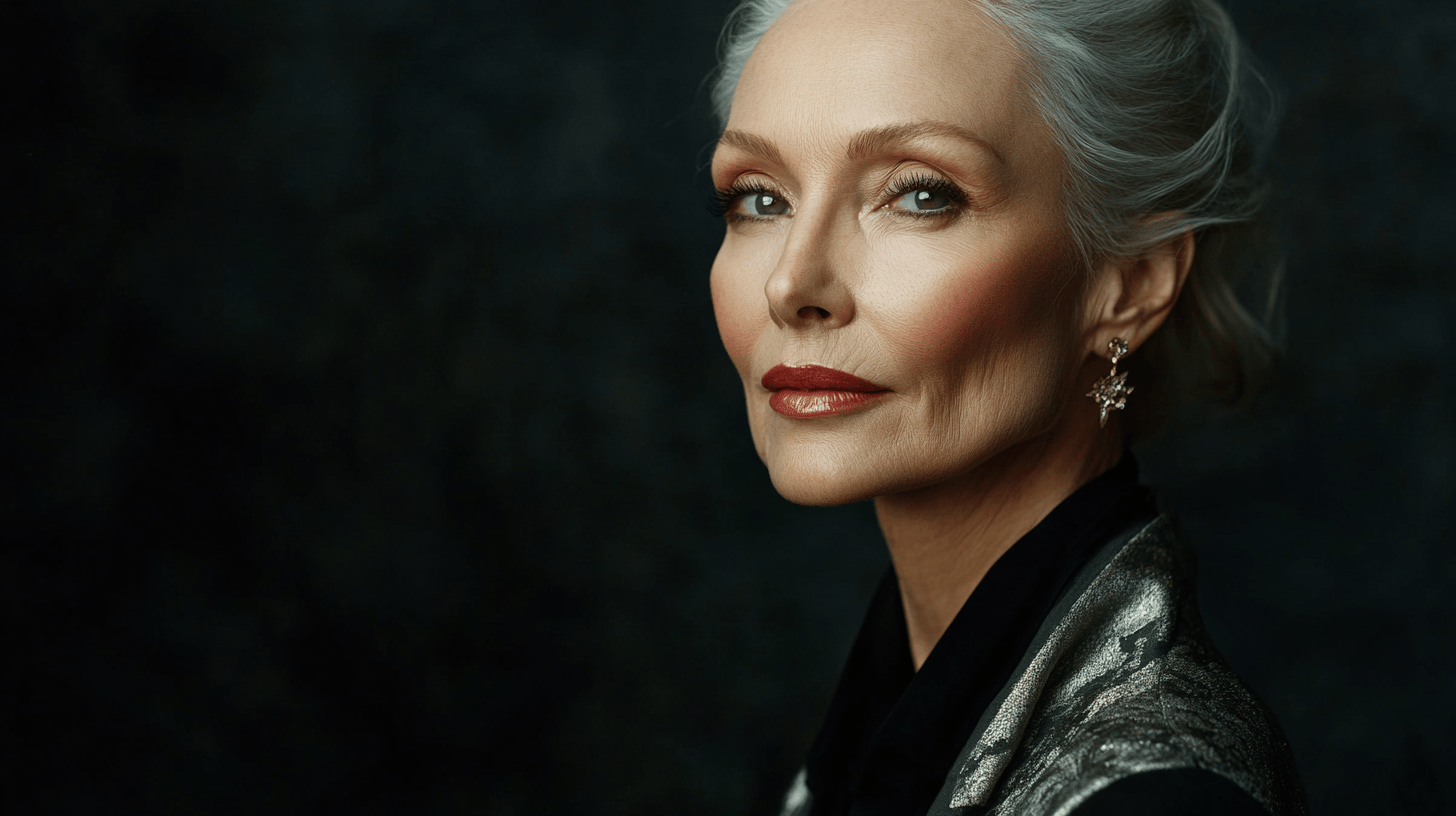
Eye contour care: anti-aging and firming
The periorbital area is the first region of the face to show signs of aging. Persistent dark circles, morning puffiness that seems to never disappear, more visible expression lines, loss of firmness in the eyelid fold: these manifestations are not inevitable. Understanding the particular structure of the skin around the eyes allows for choosing relevant active ingredients and adopting the right practices for visible and lasting results.
The particular anatomy of the periorbital area
The skin around the eyes is structurally different from the rest of the face. Its thickness is approximately 0.5 mm, compared to 2 mm on the cheeks, making it much more translucent and sensitive. It contains very few sebaceous glands and hair follicles, which results in a naturally reduced lipid film and an inherent tendency towards dryness.
The underlying tissue consists of a thin layer of orbicularis muscle, loose connective tissue, and compartmentalized periorbital fat. This loose tissue allows for expressive movements (blinking, squinting, smiling) but is also prone to fluid accumulation and gravitational descent with age. Repetitive movements—an average of 10,000 to 15,000 blinks per day—continuously stress this fragile area and contribute to the appearance of local fine lines.
The periorbital microcirculation is delicate. The very dense vascular network visible under this thin skin is associated with the appearance of vascular dark circles. Insufficient lymphatic drainage or slowed venous return (lying down at night, fatigue, heredity) are often associated with the swollen appearance of morning puffiness.
Dark circles, puffiness, wrinkles: causes and differences
Dark circles have three distinct origins that call for three different approaches. Vascular dark circles are bluish or purplish in color; they are linked to the visibility of blood vessels through the thin skin, accentuated by fatigue, cold, or heredity. Pigmented dark circles are brownish, often genetic, associated with a more localized pigmented appearance. Structural dark circles (or nasojugal grooves) actually correspond to shadows created by volume loss and sub-orbital hollowing; they are not pigmented but morphological.
Puffiness is mainly linked to an accumulation of fluid (lymphatic edema) or a protrusion of periorbital fat (more pronounced puffiness linked to age). Morning puffiness that fades during the day is generally lymphatic in nature and responds to draining techniques and topical caffeine. Permanent puffiness, which is fatty in nature, does not diminish with cosmetics.
Periorbital wrinkles are divided into expression lines (crow's feet, linked to repeated contractions of the orbicularis muscle) and surface fine lines linked to dryness and a less firm appearance. The periorbital area is one of the facial areas where the appearance of firmness changes most significantly with age, more so than on the rest of the face.
Brightening and visibly firming active ingredients for the eye contour
Retinol (and its derivatives) is one of the best-known active ingredients for the appearance of wrinkles. By supporting the skin's natural renewal, it helps to gradually reduce the appearance of surface fine lines and crow's feet. However, the periorbital area is very sensitive; start with a concentration of 0.025% twice a week, never too close to the mobile eyelid. The appearance generally improves over 12 to 16 weeks.
Peptides are an effective and better-tolerated alternative. Palmitoyl tripeptides (Matrixyl), acetyl hexapeptide-3 (Argireline), and pentapeptide-18 are known to help preserve the firm and smoothed appearance of the eye contour and reduce the appearance of expression lines. Topical collagen peptides are appreciated for their contribution to a more supple and plump appearance of the eye contour over weeks of regular use.
Caffeine at 3-5% is the best-established draining active ingredient to help reduce the appearance of puffiness. It helps to mattify the swollen appearance by supporting the comfort of the area. For lymphatic morning puffiness, its effect on appearance is generally perceived within 20-30 minutes of application.
Vitamin K (phytomenadione) is traditionally associated with the appearance of vascular dark circles and contributes to a more unified-looking eye contour.
Niacinamide at 2-5% is useful for the appearance of pigmented dark circles: it helps to unify the appearance of the complexion and reduce the visible appearance of more pigmented areas. It is very well tolerated, including on sensitive mature skin.
Mistakes to avoid with eye contour care
The first mistake is to apply your usual face care directly to the eye contour. Face formulas can contain concentrations of active ingredients (retinol, AHA, vitamin C acid) that are too high for the thin periorbital skin and cause discomfort, redness, or milia (small white cysts). A specifically formulated treatment is always preferable.
Second mistake: applying the product too close to the mobile eyelid or on the eyelid itself. Eye contour products are applied to the orbital bone (the bony ridge surrounding the eye), never directly to the eyelid. Body heat and natural movements carry the product to the necessary area.
Third mistake: rubbing or pulling the skin when applying the product. Exclusively use a gentle tapping motion with your fingertips, gently following the orbital bone from the outside inwards. Repeated pulling on this thin skin accentuates the sagging appearance.
Fourth mistake: expecting results in less than 4 weeks. Eye contour treatments support the skin's appearance, comfort, and smooth look. Visible results (reduction in the appearance of wrinkles, more unified dark circles) generally appear after 6 to 12 weeks of regular use, morning and evening without interruption.
Fifth mistake: forgetting periorbital sun protection. UV rays strongly mark the appearance of the eye contour. A mineral sunscreen around the eyes (ophthalmologist-tested formula) is essential in the morning, regardless of the season.
Complete routine for mature, dehydrated eye contour
In the morning: After cleansing, apply eye contour care first (before face serum), gently patting a pea-sized amount of product with your ring finger along the lower and upper orbital bone. Choose a product containing caffeine (for puffiness), niacinamide (for pigmented dark circles), and sodium hyaluronate (hydration). Finish with your mineral SPF extended to the orbital rim.
In the evening: A richer treatment, concentrated in peptides, low-concentration retinol (0.025-0.05%), and ceramides. Application is done in the same way, by tapping. If the skin is very dry, a thin layer of prickly pear seed oil can be applied over it as a nourishing night treatment: rich in sterols and vitamin E, it provides comfort and suppleness to the skin overnight.
Complementing topical treatments: daily anti-puffiness and anti-dark circle practices
The quality of rest directly influences the appearance of the eye contour. Less than 7 hours of sleep often results in a more pronounced appearance of puffiness and a duller periorbital complexion. A slightly elevated sleeping position (higher pillow) facilitates venous return and helps reduce the swollen appearance upon waking.
Periorbital drainage massage, performed daily for 2-3 minutes with the ring fingers, helps reduce the swollen appearance: start from the inner corner of the eye, follow the lower orbital rim outwards, move up under the eyebrow inwards, and finish with a delicate stroking motion towards the preauricular lymph nodes.
Diet plays a role: excess salt promotes water retention and amplifies the appearance of puffiness. Alcohol and lack of hydration dull the periorbital complexion. Drinking more than 1.5L of water per day and limiting salt (less than 5g per day) make a noticeable difference in the appearance of puffiness.
Why choose Nopal Life for visible radiance and firmness
Preserving the youthful appearance of the skin requires carefully selected active ingredients. Nopal Life prickly pear seed oil, rich in essential omega-6 and omega-9 fatty acids, vitamin E, and plant sterols, contributes to the suppleness and comfort of the skin's film. It helps preserve the skin's supple and plump appearance, reduces the look of dehydration fine lines, and supports the comfort of the epidermal barrier for a visibly smoothing effect from the first few weeks.
Combine it with our radiance and firmness night cream and our collagen serum for a complete synergy, day and night. Your skin regains a firm appearance, radiance, and lasting comfort. Discover the Nopal Life formulation designed for your skin profile with our free Skin Intelligence diagnosis.
Frequently asked questions about mature eye contour care
At what age should you start using eye contour care?
From 28-30 years old for prevention. The first periorbital fine lines (crow's feet) often appear in the thirties. Preventive care helps preserve the firm appearance of the skin before fine lines become more prominent.
Can eye contour care reduce the appearance of genetic dark circles?
The appearance of genetic pigmented dark circles partially fades with niacinamide and vitamin C over several months. Structural dark circles linked to volume loss do not respond to cosmetics; they fall under aesthetic traditions.
Can prickly pear seed oil be used directly on the eye contour?
Yes, in tiny amounts (one to two drops for both eyes) by tapping on the orbital bone. It is non-comedogenic and very well tolerated. Avoid direct contact with the eye.
Does eye cream really differ from face cream?
Yes. Eye contour treatments are formulated for thinner skin, with adjusted lower concentrations of potentially irritating active ingredients, and often without fragrance or colorants. The texture is generally lighter to avoid milia.
Does cold (iced spoons, ice cubes) help with puffiness?
Cold temporarily tightens the skin and helps reduce the swollen appearance. It is a helpful temporary measure in the morning for lymphatic puffiness, but it has no lasting effect. It does not replace an active caffeine treatment.
Do anti-dark circle patches work?
Hydrogel patches concentrated in hyaluronate, peptides, or caffeine provide intensive hydration and a temporary smoother appearance. They are useful before an event but only act on the surface appearance.
Information provided for cosmetic and educational purposes; it does not constitute medical advice.
Read more


Go further than this article
Get our skincare guides by email — and start with your free skin diagnostic: 2 minutes, advice tailored to your skin. We ship to the US, UK, Canada, Australia and 27 European countries; somewhere else? Sign up and you will be the first to know when we deliver to your country.
By signing up, you agree to our privacy policy. Unsubscribe in one click.

