Combining hyaluronic acid and glycerin: useful?
Combining two humectants is not absurd, but that's not where the results happen. Hyaluronic acid and glycerin do the same job: attracting and retaining water. Combining them offers little benefit; what this duo lacks is a third step.
The Essentials
- Compatibility: complete, they coexist in most formulas.
- Order: indifferent between them, both before emollients.
- Benefit of combining: modest, as both have the same function.
- What's missing: an oily layer to seal.
- Skin: must be damp at the time of application.
Why combining offers little benefit
A humectant captures available water. Adding a second one does not double the amount of water captured: a ceiling is quickly reached, limited by what the skin and air can provide.
This is why a hyaluronic acid serum applied under a glycerin cream does not produce twice the results. The benefit exists, but it's modest.
Many hyaluronic acid serums already contain glycerin in their formula. The combination is often already made without you choosing it.
What this duo truly lacks
An occlusive layer. Two humectants with nothing on top are like a reservoir without a lid: the captured water evaporates in about thirty minutes.
Always add a rich cream or a few drops of vegetable oil as the last step. It is this addition that transforms the duo into an effective routine, much more so than the choice between one humectant and another.
The complete protocol
After cleansing, pat your skin without wiping: it should remain damp. Apply the hyaluronic acid serum, wait one minute, then apply a cream containing glycerin.
Finish with an emollient if your skin still feels tight — two to three drops of vegetable oil are enough. In the morning, add sun protection.
The mistake that reverses the result
Applying a humectant to perfectly dry skin in dry air. With no available water, hyaluronic acid and glycerin draw moisture from wherever they can find it, including from the skin.
The correct gesture takes one second: pat instead of wiping, and apply immediately afterwards. This is the adjustment that makes the biggest difference, and it costs nothing.
Depending on your skin type
Oily skin: the duo works very well, with a light gel-cream as the last step.
Combination skin: suitable as is.
Dry skin: an emollient must be added. Two humectants will never compensate for a lack of lipids.
Sensitive skin: both are among the most well-tolerated ingredients in cosmetics.
Is hyaluronic acid worth paying for?
The question is legitimate. If your cream already contains well-dosed glycerin, adding a hyaluronic acid serum provides a superficial plumping effect — real but modest.
On a tight budget, it's better to invest in the missing oily layer than in a second humectant. This is the most useful advice on this page.
Regarding irritation
Neither hyaluronic acid nor glycerin cause irritation, except in extreme concentrations. If your skin reacts to a serum, look instead at the preservatives, fragrance, or another active ingredient present in the formula.
This is a common confusion: the advertised ingredient is blamed, rarely the one that actually causes the problem.
What you should know
These ingredients are cosmetics and improve skin comfort and appearance, without curative intent. A persistent reaction justifies stopping and seeking advice.
Two humectants, not a duplicate
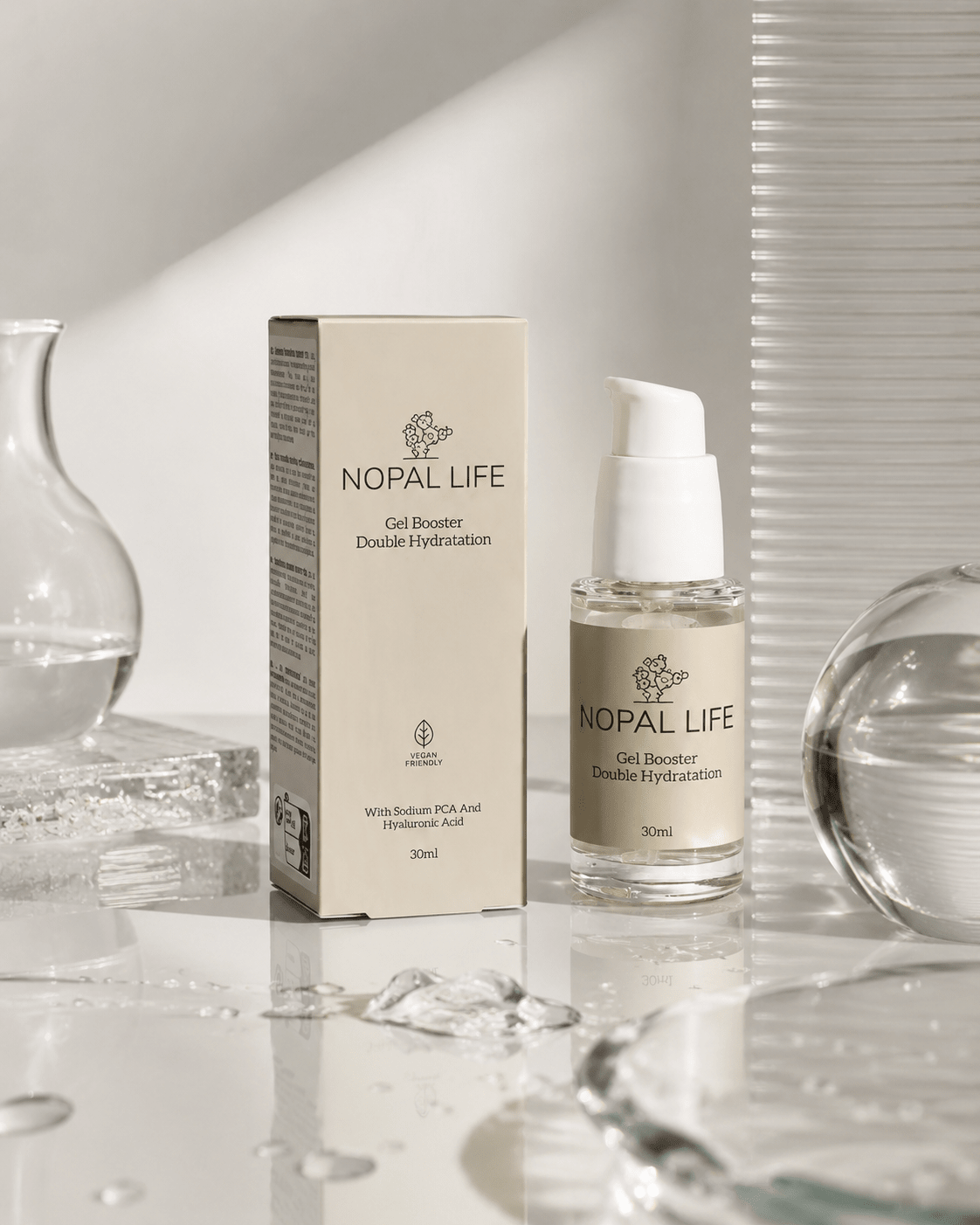
Glycerin retains water at the surface, hyaluronic acid locks in larger quantities: combining them is about layering, not redundancy. Apply a plumping hydrating gel on still-damp skin, then a glycerin-based cream on top to prevent anything from evaporating.
Our anti-aging treatments