Purifying face mask: clays, pores, and the right dosage
A useful purifying mask absorbs some of the surface lipids and temporarily improves the appearance of the T-zone without drying out the entire face. Kaolin, green clay or charcoal can reduce the feeling of an oily film, but they do not permanently change the functioning of the sebaceous glands. Success lies in the dosage, application time, and rinsing before complete drying.
Purifying does not mean stripping
Sebum is part of the surface film that limits water loss. Removing some of it can improve the shiny appearance of the nose, forehead, or chin, but removing too many lipids increases tightness. Very dry skin after application is therefore not proof of effectiveness, but often a sign of excessive absorption.
Blackheads contain a mixture of sebum and dead skin cells, the air-exposed part of which oxidizes. Clay can clean the surface, but it does not mechanically extract each plug. For visible pores, the regularity of a gentle routine matters more than an aggressive session.
A purifying face mask removes impurities deposited on the surface and absorbs excess sebum. What it doesn't do: strictly speaking, tighten pores. A unclogged pore looks finer, its size does not change.
Apply it to clean, dry skin, never to damp skin where the clay will slide without adhering. The skin type determines the treated area more than the formula: on combination skin, the T-zone is sufficient.
Kaolin, green clay, and charcoal: choose according to the area
| Ingredient | Profile | Application time | Main effect |
| White Kaolin | Combination or sensitive skin | 6 to 8 min | Moderate absorption |
| Green Clay | Oily T-zone | 4 to 6 min | Strong absorption |
| Rhassoul | Combination skin | 5 to 8 min | Mineral cleansing |
| Activated Charcoal | Targeted area | 5 min | Surface adsorption |
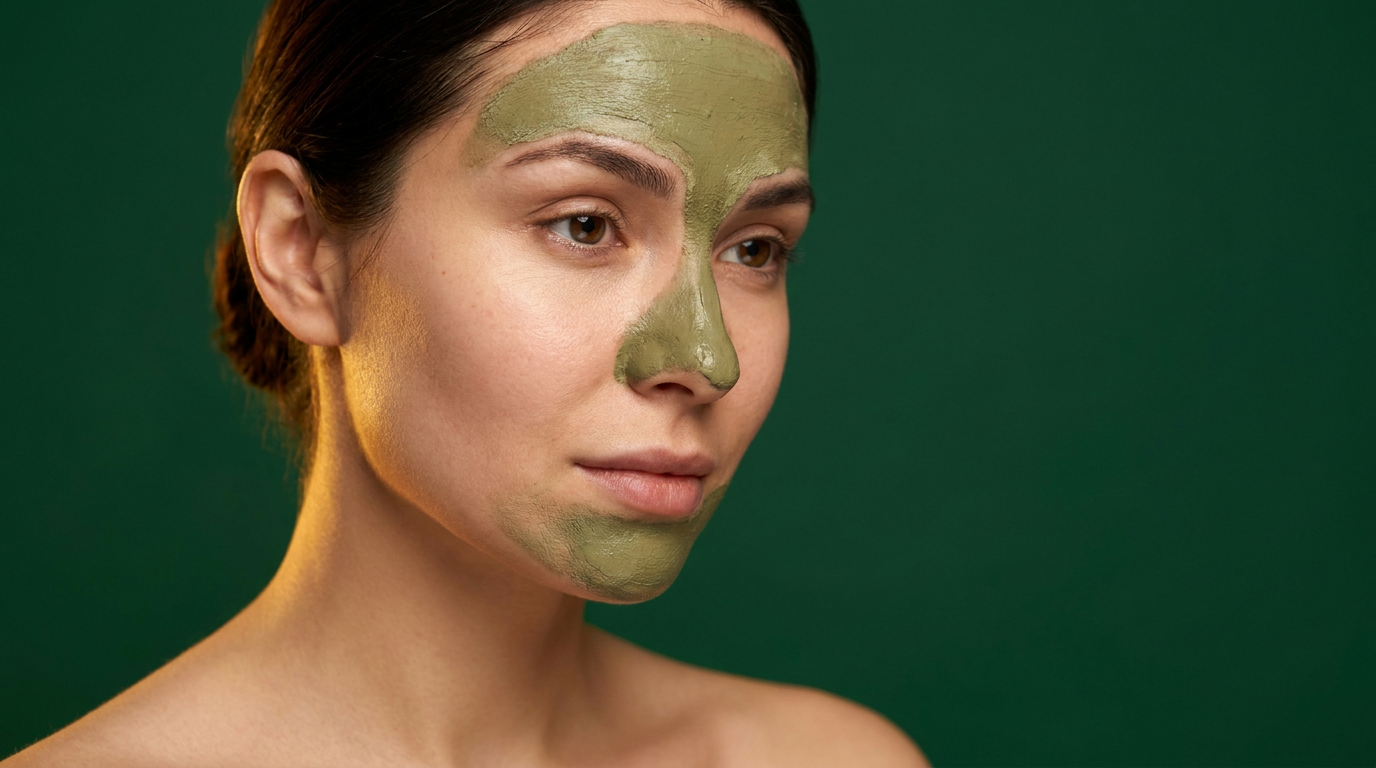
Kaolin is well suited for a first use, as it absorbs less harshly than some green clays. On combination skin, apply the clay only to the nose, forehead, and chin, then leave the cheeks free. This localized application better respects the differences between facial areas.
A simple recipe with measured quantities
Pour one tablespoon of kaolin into a clean bowl, then add two teaspoons of water and half a teaspoon of glycerin. Mix with a spatula until you get a smooth paste that stays on the skin without dripping. Spread a layer of about one millimeter on the T-zone, avoiding the eye contour.
Leave on for six to eight minutes. If the surface starts to crack, lightly moisten with your fingers instead of waiting for it to harden. Rinse with lukewarm water and then apply a light cream containing, for example, glycerin, panthenol, or squalane.
- 1 tablespoon kaolin
- 2 teaspoons water
- 1/2 teaspoon glycerin
- 6 to 8 minutes application time
- Once a week initially
When salicylic acid is more relevant than clay
A cosmetic formula with salicylic acid acts differently from an absorbent powder. Lipophilic, this active ingredient can be useful in a routine for pores and imperfections, but it is not necessary to layer it with clay on the same evening. Alternate actions to avoid combining exfoliation and strong absorption.
For example, use the powder on Sunday and a salicylic acid treatment on another evening of the week. Keep the cleanser and cream identical for three to four weeks to judge tolerance. Changing four products at once makes it impossible to identify what helps or irritates.
Frequency depends on the feeling the next day
Oily but comfortable skin can start with weekly use. Sensitive combination skin can space it out to ten or fifteen days and reserve application for the nose. If flaking appears or if the skin feels tight the next day, reduce the application time.
The best indicator is comfort after rinsing and the next morning. The complexion may appear clearer because the surface reflects light better after the removal of some residues, but this effect is temporary. A gentle daily routine remains the foundation.
Errors that increase redness
Avoid hot steam, abrasive brushes, and extraction with nails just before or after application. These actions add heat or pressure to already stressed skin. Also avoid lemon juice and baking soda, whose pH is not suitable for a regular skin routine.
A marked tingling sensation is not a goal. Increasing warmth, significant redness, or persistent discomfort after rinsing justify stopping. Next time, choose a gentler base or reduce the duration.
Dry powders should be stored away from moisture. Take them out with a clean spoon and never put an already hydrated mixture back into the jar. A homemade recipe containing water should be prepared for immediate use and the rest should be discarded.
On mature skin that is still oily on the nose, localized application is particularly useful. It avoids subjecting the cheeks to an absorbent product when these areas may lack lipids. Multi-masking here has a functional rather than aesthetic justification.
Rinsing deserves as much attention as application. Re-wet the paste completely for thirty seconds before removing it, then use your fingertips without rubbing. A soft towel pressed gently finishes the action without additional abrasion.
Pores, blackheads, and pimples: what really changes
A pore is not an adjustable opening. It cannot be tightened, and no clay permanently changes its diameter. What can be improved is its appearance: a pore cleared of its plug and surrounded by supple skin reflects less light, so it is less noticeable.
On blackheads, clay absorbs some of the excess sebum on the surface but does not mechanically dislodge the contents of the follicle. Salicylic acid formulas work deeper on this specific point, which is why they are often preferred when blackheads are the main concern.
As for pimples, a mask applied to an already established lesion does not erase it and can even accentuate the redness around it. It is better to bypass the area and allow the skin time to calm down.
Combination and oily skin: apply by zone
On combination skin, applying the same thickness everywhere means treating opposing needs identically. Reserve the clay for the forehead, nose, and chin, and leave the cheeks free or covered with a simple hydrating gel during the same application time.
On uniformly oily skin, full application is justified, but the feeling the next day remains the best judge: supple and clean skin indicates correct frequency, while skin that feels tight indicates the opposite, even if the mattified appearance seems flattering that evening.
What a purifying mask does not do
A purifying mask does not physically tighten pores or permanently remove blackheads. It can improve their appearance by reducing the lipid film and visible residues, but the pore structure remains the same. Nor does it replace a well-dosed exfoliation when the main problem lies in the pilosebaceous canal.
Nor should you expect it to provide a lasting disappearance of shine. Sebum production depends on biological factors that clay does not alter. Its role is more modest: to cleanse, absorb, and temporarily improve the surface appearance.


Go further than this article
Get our skincare guides by email — and start with your free skin diagnostic: 2 minutes, advice tailored to your skin. We ship to the US, UK, Canada, Australia and 27 European countries; somewhere else? Sign up and you will be the first to know when we deliver to your country.
By signing up, you agree to our privacy policy. Unsubscribe in one click.