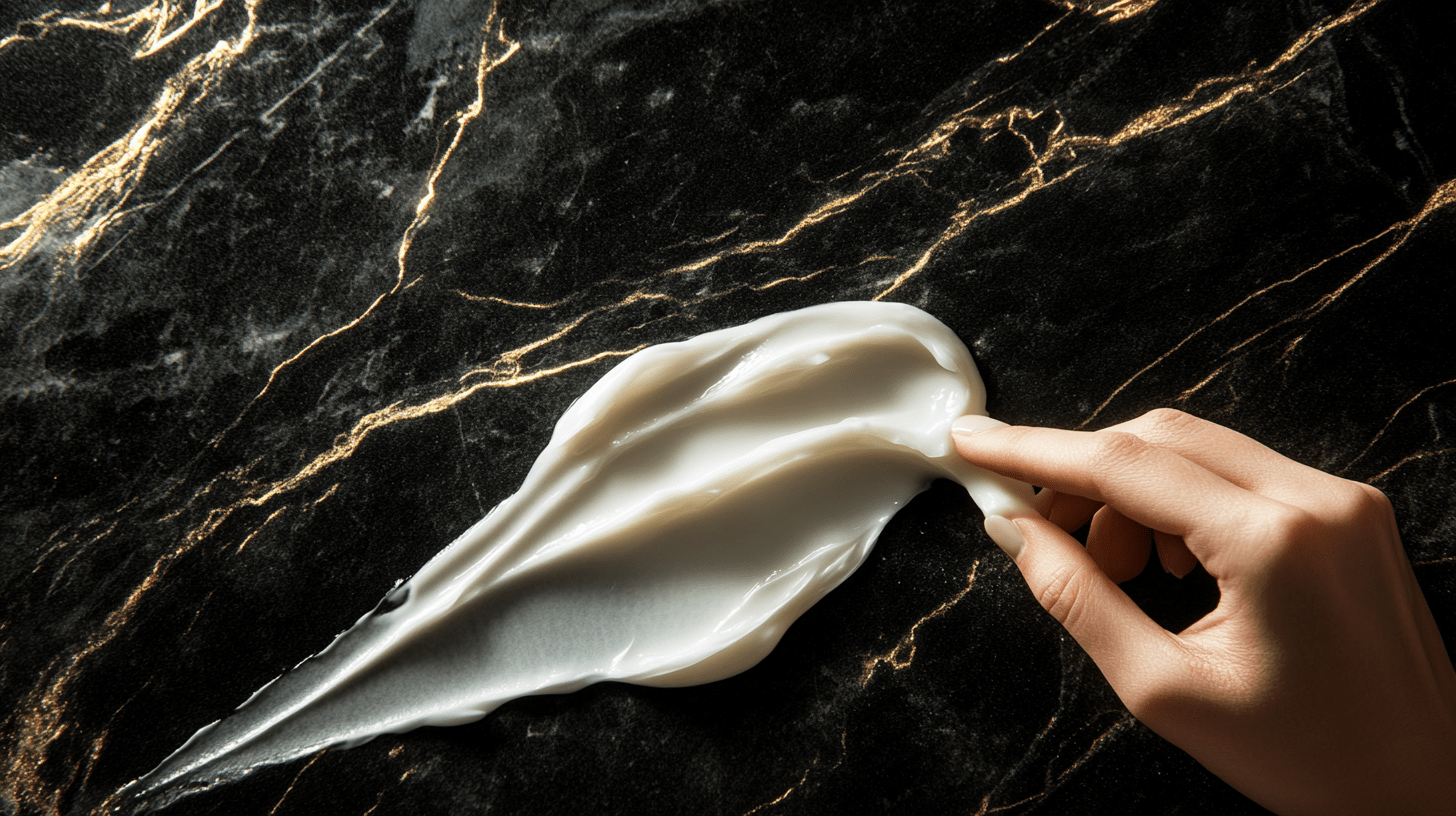
Skincare Routine: radiance and refined texture for dull and combination skin
Why the order of skincare determines its effectiveness: absorption mechanisms
The skin is not a passive sponge. It is organized into successive layers whose permeability varies according to the molecular size, fat solubility, and electrical charge of the active ingredients. The stratum corneum, the superficial layer of the epidermis, is the main diffusion barrier. Light and water-soluble molecules cross this barrier more easily than heavy and occlusive compounds. This fundamental principle explains why the order of skincare application is not an arbitrary convention, but a biochemical necessity.
For dull and combination skin, which simultaneously presents dry and oily areas, the prioritization of skincare is particularly critical. Excess sebum in the T-zone can create an impermeable film that prevents the absorption of serums and treatments applied over it. An incorrect sequence can therefore neutralize the action of otherwise effective products. A study published in the Journal of Cosmetic Dermatology (2017) showed that applying retinol after a rich cream decreased its penetration rate by almost 30% compared to direct application on clean, slightly damp skin.
The fundamental rule: from lightest to heaviest
The universal skincare sequence is based on a principle of increasing viscosity and concentration: the most fluid formulas are always applied first, and the richest last. This logic ensures that each product can reach the skin layers it targets without being blocked by a greasy barrier applied prematurely.
The typical sequence for dull combination skin in the morning is as follows: 1) gentle cleanser, 2) micellar water or light toner (pH preparer), 3) vitamin C or niacinamide serum (aqueous texture, high concentration of active ingredients), 4) eye contour (light gel texture), 5) light moisturizer (light water-in-oil emulsion), 6) SPF 30 minimum. In the evening, the sequence differs slightly: after double cleansing, the treatment (retinol, AHA or targeted active ingredient) is introduced before the serum, then the richer night cream, and finally a light fatty substance like prickly pear seed oil to seal in the moisture overnight.
Timing protocol: how long between each layer?
One of the most overlooked aspects of skincare order is the waiting time between each application. Applying the next product too soon, before the previous one is absorbed, dilutes the active ingredients and causes formulation instability. The practical rule is to wait until the skin is dry to the touch, which usually corresponds to 30 seconds to 2 minutes for aqueous serums, and 2 to 3 minutes for light emulsions.
For active ingredients sensitive to temperature or oxidation (vitamin C, retinol), the waiting time is even more important. Vitamin C (L-ascorbic acid) is particularly unstable: it requires a low skin pH to stabilize on the skin's surface. Waiting 2 to 3 minutes after application before applying cream allows it time to penetrate and reach its optimal pH. Applying a cream with a higher pH immediately afterwards can destabilize the molecule and reduce its antioxidant effectiveness.
In the morning, planning 5 to 8 minutes for the full sequence is a worthwhile investment. In the evening, treatments can be applied slightly slower, taking advantage of the relaxation ritual. SPF application should be the absolute last step in the morning, never covered by another cosmetic product.
Mistakes to avoid in the order of skincare for dull, combination skin
Applying oil before serum: Vegetable oil, even light, creates a lipid film that obstructs the penetration of water-soluble active ingredients. It should always be the last step, or the second to last before SPF in the morning. This mistake is very common among people who are introducing oil into their routine for the first time.
Mixing incompatible active ingredients in the same layer: Vitamin C and niacinamide applied simultaneously theoretically form ascorbyl niacinate, which is less active than vitamin C alone. In practice, at moderate cosmetic concentrations, the effect is limited, but it is better to separate them (vitamin C in the morning, niacinamide in the evening) to maximize their respective effectiveness.
Applying eye cream after day cream: Body or face cream can migrate to the periorbital area and interfere with the eye cream. Always apply eye cream before day cream, gently patting with your ring finger.
Neglecting the preparatory toner: For dull, combination skin, a slightly acidic treatment water (pH 5.0 to 5.5) after cleansing prepares the skin surface to absorb subsequent active ingredients. Skipping this step reduces the effectiveness of serums by about 15 to 20% according to some skin penetration studies.
Applying SPF too early: Chemical sunscreen needs 20 to 30 minutes to form an effective protective film. Applying it too early before going outside, or immediately covering it with foundation, compromises its effectiveness.
Optimizing the routine for radiance and texture
For dull, combination skin, two key active ingredients deserve a strategic place in the sequence. Niacinamide (vitamin B3), as confirmed by a study published in the British Journal of Dermatology (2019), reduces pigment spots and improves skin texture in 8 weeks at 5% concentration. It is applied as the first serum, on toned skin, for maximum absorption. Hyaluronic acid, on the other hand, is applied to slightly damp skin (not dry) to maximize its swelling effect through hygroscopy.
The rotation frequency of active ingredients is also an optimization factor. Rather than a linear routine that is the same every day, alternate active ingredients according to current needs: one evening intense hydration (hyaluronic acid + ceramides), one evening gentle exfoliation (AHA 5%), one evening regeneration (retinol 0.3%). This approach avoids desensitization to active ingredients and maintains cellular response at an optimal level.
The order of skincare application, step by step
Applying your skincare in the correct order, from the most fluid to the richest, ensures that each product penetrates properly. Here is the reference routine, morning and evening.
Morning Routine
- Gentle cleanser to wake up the skin
- Toning lotion to rebalance skin texture
- Antioxidant vitamin C serum
- Eye contour care
- Moisturizer adapted to your skin type
- Sun protection, an essential step
Evening Routine
- Make-up removal then facial cleanser
- Toning lotion
- Targeted serum (radiance, firmness)
- Eye contour
- Richer night cream or vegetable oil
Adapting the order of skincare to your skin type
The morning-evening framework remains the same, but textures change according to skin type. Combination skin will prefer a light serum and a fluid moisturizer; dry skin will layer serum, oil, and nourishing night cream. The golden rule of any skincare routine: apply products from most aqueous to most oily, allowing each layer to penetrate before the next.
Face care order: frequently asked questions
Serum before or after cream?
Always serum before cream: it is more concentrated and fluid, so it should touch the skin first. The moisturizer then seals in the active ingredients.
When to apply eye cream?
Eye contour cream is applied after serum and before cream, morning and evening, by gently tapping with fingertips.
Is sunscreen part of the morning routine?
Yes, it is the last step of the morning routine, even in winter: it protects the work of all previous skincare products.
Can you apply oil before moisturizer?
No, oil should always be applied after cream, or as the very last step. Its lipid film would block the absorption of subsequent active ingredients.
How long to wait between serum and cream?
At least 1 to 2 minutes, until the serum is absorbed and the skin is dry to the touch.
Are vitamin C and niacinamide incompatible?
Theoretically, yes at high concentrations. In cosmetic practice, they are separated (vitamin C morning, niacinamide evening) for maximum effectiveness of each active ingredient.
When to apply eye cream in the routine?
After serums and before day cream, by gently tapping with the ring finger, to prevent any cream migration.
Should SPF be the last step in the morning?
Yes, absolutely. No other skincare product should be applied over SPF, except makeup if desired.
How to use prickly pear seed oil on combination skin without a shiny effect?
Apply it only on dry areas (cheekbones, eye contour), avoiding the T-zone. 2 to 3 drops are sufficient.
Is it really necessary to use a preparatory toner?
It is not essential, but it significantly improves the penetration of subsequent active ingredients by rebalancing the skin's pH after cleansing.
Morning and evening: two complementary routines
The morning routine protects the skin from daily aggressions, with an antioxidant serum, a moisturizer, and sun protection. The evening routine focuses on nocturnal repair: after cleansing and toning lotion, a targeted serum is applied, followed by a richer night cream. This morning-evening alternation, adapted to each skin type (dry skin, combination skin), remains the foundation of an effective skincare routine and a radiant complexion day after day.
Prickly pear seed oil in the Nopal Life sequence
Prickly pear seed oil holds a special position in the Nopal Life skincare hierarchy: it is systematically placed as the last step in the evening routine, after all serums and creams, for two biochemical reasons. Firstly, its richness in linoleic acid (omega-6) gives it a natural affinity with cutaneous ceramides, strengthening the barrier from the outside. Secondly, its relatively low molecular thickness (despite its oil status) allows it not to block nocturnal skin respiration.
In the morning, for combination skin that fears a shiny effect, prickly pear seed oil can be used only on dry areas (cheekbones, eye contour, temples) before SPF. This targeted application bypasses the problem of shine in the T-zone while nourishing the areas that need it. Two to three drops are enough for the entire face: prickly pear seed oil is one of the most concentrated in active ingredients among cosmetic vegetable oils, and an excess would be counterproductive.
Q: Can I apply an oil before moisturizer?
A: No, oil should always be applied after cream, or as the very last step. Its lipid film would block the absorption of subsequent active ingredients.
Q: How long should I wait between serum and cream?
A: At least 1 to 2 minutes, allowing the serum to absorb and the skin to feel dry to the touch.
Q: Are vitamin C and niacinamide incompatible?
A: Theoretically, yes at high concentrations. In cosmetic practice, they are separated (vitamin C in the morning, niacinamide in the evening) for maximum efficacy of each active ingredient.
Q: When should I apply eye cream in my routine?
A: After serums and before day cream, by gently tapping with your ring finger, to prevent any cream migration.
Q: Should SPF be the last step in the morning?
A: Yes, absolutely. No other product should be applied over SPF, except makeup if desired.
Q: How do I use prickly pear seed oil on combination skin without a shiny effect?
A: Apply it only to dry areas (cheekbones, eye contour), avoiding the T-zone. 2 to 3 drops are sufficient.
Q: Is it really necessary to use a preparatory toner?
A: It's not essential, but it significantly improves the penetration of subsequent active ingredients by rebalancing the skin's pH after cleansing.
RECOMMENDED SKINCARE
Pure Prickly Pear Seed Oil
Natural formula · Origin Algeria
DISCOVER THIS SKINCARE →Information provided for cosmetic and educational purposes; it does not constitute medical advice.


Go further than this article
Get our skincare guides by email — and start with your free skin diagnostic: 2 minutes, advice tailored to your skin. We ship to the US, UK, Canada, Australia and 27 European countries; somewhere else? Sign up and you will be the first to know when we deliver to your country.
By signing up, you agree to our privacy policy. Unsubscribe in one click.