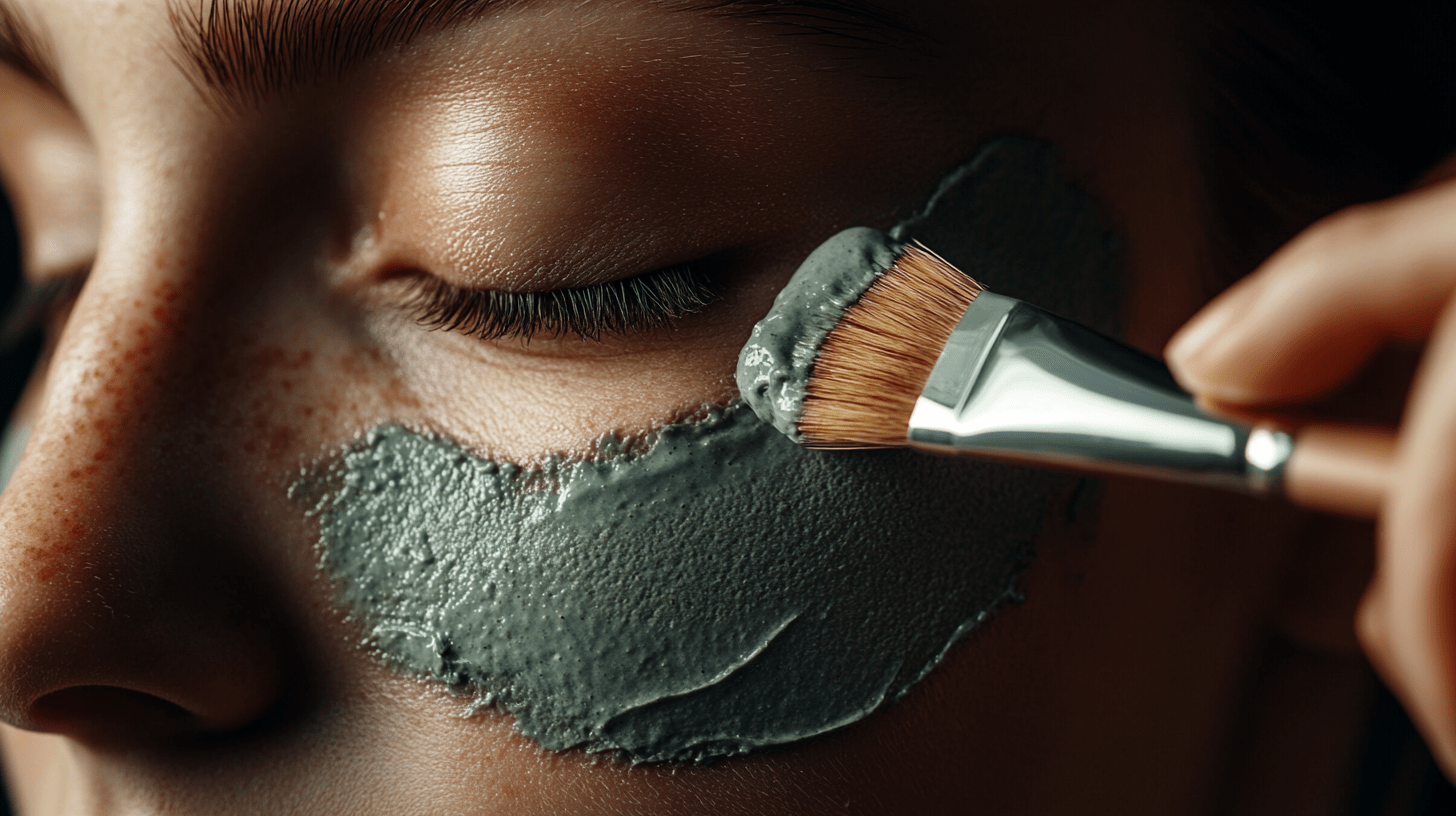
Mature skin mask: which one to choose and how often
Face mask for dry and mature skin: complete guide to hydrate, nourish, and preserve skin barrier balance
Dry and mature skin share a common problem: a weakened skin barrier that no longer retains enough water. Face masks are a concentrated step, capable of providing in a few minutes what a daily routine cannot always offer alone. But you still need to choose the right ingredients, the right clay, the right frequency — and avoid mistakes that worsen dryness instead of correcting it.
This guide presents the biological mechanisms involved, dermatologically validated active ingredients, and a complete protocol for integrating masks into your skincare ritual. For a personalized assessment of your skin type, the Skin Intelligence Diagnostic can identify your exact needs in two minutes.
Why dry and mature skin reacts differently to masks
Dry skin is characterized by insufficient sebum production and reduced intercellular water content. With age, the density of ceramides in the stratum corneum gradually decreases, which weakens the junction between corneocytes and facilitates transepidermal water loss (TEWL). A study published in the Journal of Lipid Research (2018) confirmed that the reduction of ceramide types 1 and 3 is directly correlated with an increase in TEWL in mature skin.
This biological reality has a direct implication for mask selection: astringent or absorbent formulas designed for oily skin are counterproductive for dry skin. They remove the last superficial lipids and worsen the sensation of tightness. The key lies in double-action masks: nourishing missing lipids and creating a temporary occlusive film that allows active ingredients to penetrate.
Which clay to choose for dry and mature skin
Clay is often associated with oily skin, but some varieties are perfectly suitable for dry skin, provided you know their properties.
White clay (kaolin) is the mildest. It gently cleanses without excessively absorbing natural lipids. Its fine granularity gives it a very light physical exfoliating power, sufficient to remove dead cells without creating microtrauma. It is suitable for dry, mature, and sensitive skin.
Pink clay, a mixture of kaolin and red clay, is slightly more toning. It slightly stimulates microcirculation while remaining gentle. Its action on complexion radiance is appreciated for dull skin linked to chronic dehydration.
Green clay and bentonite should be avoided on dry skin: their absorbent power is too high, and they create cracks on the skin surface that signal accelerated dehydration.
The practical rule: on mature dry skin, never let a clay mask dry completely. Rinse as soon as the texture begins to set, after a maximum of 8 to 10 minutes.
Essential moisturizing active ingredients in a mask for dry skin
The effectiveness of a mask depends less on the base (clay, cream, sheet) than on the active ingredients it contains. For dry and mature skin, three families of active ingredients are scientifically validated:
Hyaluronic acid is a humectant that captures water present in the deep layers and on the skin's surface. The Journal of Drugs in Dermatology (2018) showed that its topical application significantly improves skin hydration measured by corneometry after 8 weeks of regular use. In a mask, it creates an immediately perceptible hydration reservoir.
Niacinamide (vitamin B3) acts on several fronts simultaneously: it strengthens ceramide synthesis, reduces transepidermal water loss, and improves complexion uniformity. A publication in the British Journal of Dermatology (2019) demonstrated its effectiveness in strengthening the skin barrier in 4 weeks in subjects with dry and reactive skin.
Ceramides are the structural lipids of the stratum corneum. Their exogenous supply in a mask helps to compensate for endogenous deficits. A study in the Journal of Investigative Dermatology (2020) confirmed that ceramide-enriched formulas sustainably improve barrier function after repeated application.
Prickly pear seed oil, rich in linoleic acid (omega-6) and vitamin E, is a valuable addition to masks for dry mature skin. Its lipid composition, mimetic of skin lipids, allows it to be quickly absorbed without leaving a greasy film. It helps repair the barrier while providing natural antioxidants.
Application frequency: finding balance without over-stimulation
The ideal frequency for a mask for dry and mature skin is 1 to 2 times a week. Beyond that, there is a risk of disturbing the natural renewal of the stratum corneum or creating a dependence on external hydration that slows down the endogenous production of natural moisturizing factors (NMF).
Two weekly applications are recommended during periods of skin stress: winter (cold, dry air), seasonal transitions, or after prolonged sun exposure. Outside these periods, one application per week is sufficient in addition to a well-chosen daily routine.
Timing in the routine is also important: the mask is always applied to clean, make-up-free skin, before moisturizing treatments. It prepares the skin to receive subsequent active ingredients by slightly opening the pores and removing superficial residues. After rinsing, immediately apply a hydrating serum, then a nourishing cream to seal in the benefits.
Step-by-step protocol for an effective mask on dry, mature skin
Step 1 — Prepare the skin. Cleanse the face with a gentle, sulfate-free cleanser that does not destabilize the hydrolipidic film. Lukewarm water (never hot) preserves superficial lipids.
Step 2 — Apply the mask. In a thick, even layer over all dry areas. Avoid the eye and lip contour areas where the skin is even thinner. On less dry areas (sides of the nose, chin), a thinner layer is sufficient.
Step 3 — Respect the application time. 10 to 15 minutes for a cream or sheet mask. 8 to 10 minutes maximum for a gentle clay mask. Lightly mist with floral water if you feel the mask tightening.
Step 4 — Rinse with lukewarm water. Without rubbing. Use gentle circular movements with your fingers to remove the mask without irritating.
Step 5 — Apply the post-mask routine. Hydrating serum immediately after (skin still slightly damp to optimize penetration), then nourishing cream, then pure prickly pear seed oil as a final touch if the skin is very dry. Consult the Skin Guide to compose your complete routine.
Mistakes to avoid with masks on dry and mature skin
Leaving the mask to dry completely. A clay mask that cracks on the skin actively removes water and lipids. Watch the texture: as soon as it begins to set, rinse.
Using heating masks. Heat dilates vessels and accelerates transepidermal water loss. On already weakened skin, this worsens dehydration.
Applying an exfoliating mask too frequently. Chemical (AHA, BHA) or physical exfoliation is useful once a week at most. Beyond that, the stratum corneum becomes too thin, and skin reactivity increases.
Rinsing with cold water. Very cold water causes vasoconstriction, which slows down microcirculation. Lukewarm water is always preferable.
Not moisturizing immediately after. The first few minutes after rinsing are the most precious: the skin is in a state of maximum reception. A serum applied to still-damp skin penetrates two to three times better than when applied to dry skin.
Choosing a mask based on texture rather than ingredients. A rich mask can very well contain drying alcohols. Always read the INCI list and check for the presence of key active ingredients.
Why choose Nopal Life for anti-aging
The fight against skin aging requires active ingredients whose effectiveness is supported by dermatological research. Nopal Life prickly pear seed oil, rich in essential omega-6 and omega-9 fatty acids, vitamin E, and plant sterols, acts directly on the suppleness and density of the skin film. It supports collagen synthesis, reduces dehydration fine lines, and strengthens the epidermal barrier for a visible smoothing effect from the first weeks.
Combine it with our anti-aging night cream and our collagen serum for a complete synergy, day and night. Your skin regains firmness, radiance, and lasting comfort. Discover the Nopal Life formulation designed for your skin profile with our free Skin Intelligence diagnostic.
Frequently asked questions about face masks for dry and mature skin
Can I make a homemade mask for dry skin? Yes, provided you use safe ingredients: white clay, honey, yogurt, vegetable oil. Avoid lemon and pure essential oils which can be irritating on weakened skin.
Are sheet masks suitable for dry skin? Yes, especially microfiber or lyocell sheet masks soaked in serum. They maintain even active-skin contact, and their light occlusive effect improves the penetration of hydrating active ingredients.
How do I know if a mask is too aggressive for my skin? Warning signs are: tightness after rinsing, persistent redness, burning sensation during application, flaking within 24 hours. If any of these signs appear, stop using the product and switch to a gentler mask.
Can a mask be used on the eyes? Eye contour patches are formulated for the very thin skin in this area. Classic face masks should not be applied to the eye contour due to their concentration of active ingredients and the risk of eye irritation.
Can prickly pear seed oil be used as a mask? Yes, as a dry mask: apply a few drops of pure oil in a thin layer over the entire face, leave on for 15 to 20 minutes, then massage in the excess until completely absorbed. It's a nourishing mask particularly suitable for very dry skin.
Can a hydrating mask replace night cream? No, because its texture and concentration of active ingredients are not designed for prolonged application of 7 to 8 hours. A night mask is a separate category, designed to remain on the skin. A classic mask should always be rinsed within the indicated time.
In what season are masks most useful? In autumn-winter, when indoor heating and cold outdoor air create a double drying effect. In summer, the frequency can be reduced if ambient humidity is sufficient.
Can masks replace an anti-aging treatment? No, they complement the routine but do not replace it. Anti-aging active ingredients (retinol, peptides) require daily and continuous application to produce visible effects. The mask acts as a punctual complement, not a fundamental treatment.
Information provided for cosmetic and educational purposes; it does not constitute medical advice.
Read more


Go further than this article
Get our skincare guides by email — and start with your free skin diagnostic: 2 minutes, advice tailored to your skin. We ship to the US, UK, Canada, Australia and 27 European countries; somewhere else? Sign up and you will be the first to know when we deliver to your country.
By signing up, you agree to our privacy policy. Unsubscribe in one click.