Prickly pear or niacinamide?
Prickly Pear or Niacinamide: Which to Choose?
A signature skincare oil versus a versatile cosmetic active. They operate in different categories — which is why they pair so well.
At a Glance
| Criterion | Prickly Pear | Niacinamide |
|---|---|---|
| Nature | Natural signature oil/treatment | Cosmetic active (radiance/comfort) |
| Cosmetic Benefits | Nourishment, radiance, comfort | Radiance, even skin tone appearance, comfort |
| Typical Format | Seed oil | Serum / booster |
| Skin Types | Mature, dry, dull | Dull, combination, sensitive, mature |
| Key Benefit | Premium natural storytelling | Versatility and good tolerability |
The most useful distinction isn't about their effects, but their sourcing. Prickly pear is the fruit of a cactus, Opuntia ficus indica, and everything related to it varies: harvest depends on rain, composition changes from year to year and from one plot to another, and the price follows suit.
Niacinamide is a molecule produced synthetically, identical from one batch to the next, with a stable cost and a concentration specified down to the tenth. This is neither better nor worse; it's a different logic, and it explains the price difference far more than any difference in efficacy.
When to Prefer Prickly Pear
For a natural and premium routine, focused on nourishment and radiance, with a true brand identity.
This plant, also known as the Indian fig, has been used for centuries around the Mediterranean, first as food and then as a hedge. Its cosmetic properties were exploited much later, from the fruit's seeds.
A practical point follows: a prickly pear oil cannot display a titration like an isolated molecule would. Therefore, one checks for the Latin name Opuntia ficus indica on the INCI list, the mention of the part used, and the production date. These three indicators replace the percentage that won't be found.
When to Prefer Niacinamide
To target even skin tone appearance and skin comfort, in a light, well-tolerated serum.
NOPAL LIFE's Recommendation
Combine them: niacinamide as a radiance and comfort booster, prickly pear as a nourishing treatment. The duo covers both comfort and skin tone appearance.
👉 Build my routine (Ingredient Match) · Radiance & Evenness Actives
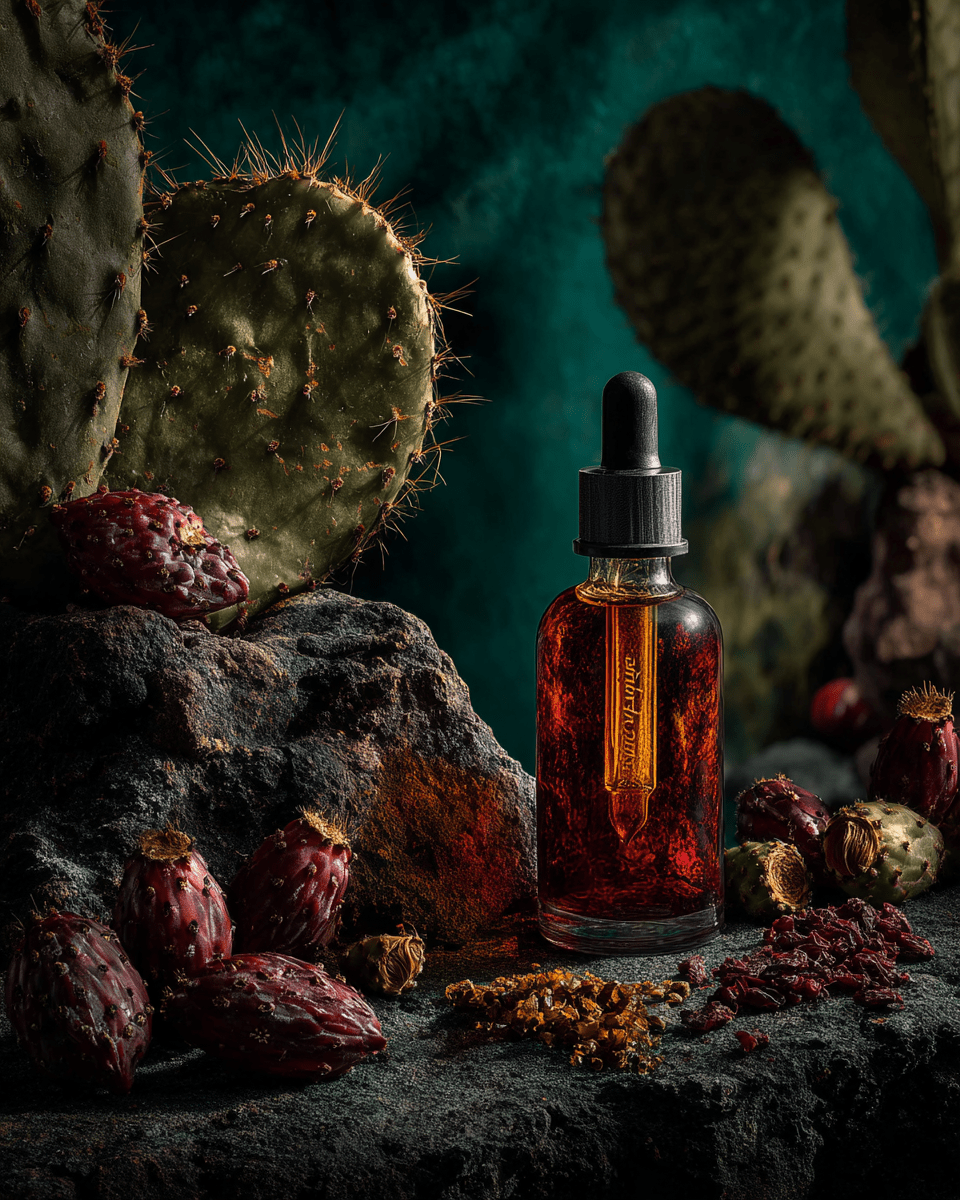
The prickly pear fruit is a fleshy berry, yellow to red depending on the variety and ripeness, covered with fine thorns. It is found in all warm regions where the Opuntia ficus indica has taken root, and it has been consumed fresh for centuries.
It is its seeds, not its pulp, that yield the oil used in cosmetics. It is called prickly pear seed oil in international markets and listed as Opuntia ficus indica seed oil on INCI lists. Its vitamin E content is what distinguishes it from other vegetable oils.
The benefits of prickly pear for the skin therefore stem from this composition: fatty acids and antioxidants that help protect the surface from what free radicals produce. It is a fundamental contribution, to be appreciated over several weeks.
Further Reading
Fact Sheets: Prickly Pear · Niacinamide · Benefit: Skin Barrier · Comparison: Bakuchiol vs Niacinamide
Information provided for cosmetic and educational purposes; it does not constitute medical advice. The choice depends on skin type, final formula, concentration, and ingredient quality.
Frequently Asked Questions about Prickly Pear vs. Niacinamide
Can they really be compared?
Not entirely: niacinamide is a water-soluble active (serum), prickly pear is an oil. They don't occupy the same step in a routine — and that's what makes them perfectly complementary.
Which one to even out skin tone appearance?
Niacinamide: that's its specialty (appearance of spots, pores, visible evenness). Prickly pear focuses more on radiance through nourishment and comfort.
In what order should they be applied?
Niacinamide first (aqueous serum), then prickly pear (sealing oil). The rule of applying from thinnest to richest applies perfectly to this duo.
Is this duo suitable for combination skin?
Ideally: niacinamide helps mattify the appearance of shiny areas, while the dry-touch oil nourishes without a greasy effect. It's one of the best combinations for combination skin looking for radiance and visible firmness.
Is there a risk of incompatibility?
None: no pH conflict or negative interaction. It's one of the safest duos in cosmetics.
Which one should I choose if I could only keep one?
Combination skin prone to blemishes: niacinamide. Dry or mature skin: prickly pear. But their strength is precisely not having to choose.
RECOMMENDED TREATMENT
Pure prickly pear oil
Natural formula · Origin Algeria
DISCOVER THIS TREATMENT →Read More
The product related to this topic


Mature skin · Dry skin

Go further than this article
Get our skincare guides by email — and start with your free skin diagnostic: 2 minutes, advice tailored to your skin. We ship to the US, UK, Canada, Australia and 27 European countries; somewhere else? Sign up and you will be the first to know when we deliver to your country.
By signing up, you agree to our privacy policy. Unsubscribe in one click.