Combining prickly pear oil and niacinamide: the right order
Yes, these two active ingredients pair very well. They don't act on the same layers of the skin or through the same mechanisms: niacinamide is a water-soluble active ingredient that works in the hydrolipidic film and superficial layers, while prickly pear seed oil is a lipid that seals everything in. There are no known chemical incompatibilities between them.
At a glance
- Order: niacinamide first, then prickly pear seed oil. Always from the thinnest to the richest consistency.
- Waiting time between the two: one minute is enough, just until the serum has absorbed.
- Frequency: morning and evening without difficulty for most skin types.
- Quantities: 3 to 4 drops of serum, 2 to 3 drops of oil.
- To watch out for: very reactive skin can start every other evening.
Why this duo works
Niacinamide, or vitamin B3, has been studied for a long time for its role in the comfort of skin prone to uneven tone and visible pores. It is a water-soluble molecule: it dissolves in water, is applied in an aqueous phase, and naturally comes early in a routine.
Prickly pear seed oil takes the exact opposite position. Rich in linoleic acid and tocopherols, it belongs to the oil phase and settles on the surface to limit the evaporation of water contained in the upper layers. It doesn't aim to penetrate deeply: its role is to retain.
In other words, one provides, the other retains. This is the most classic logic of skincare: an aqueous phase that hydrates, an oily phase that limits loss. Neither takes the place of the other.
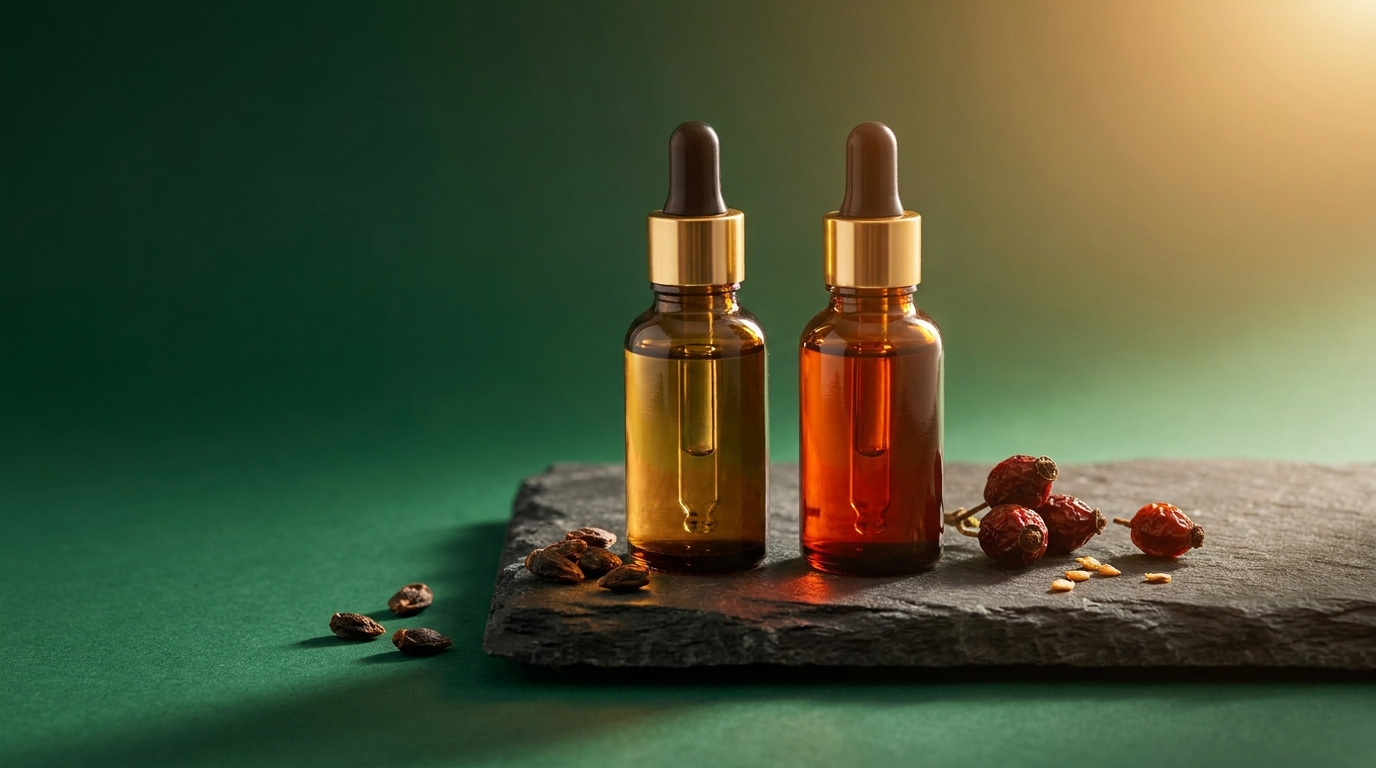
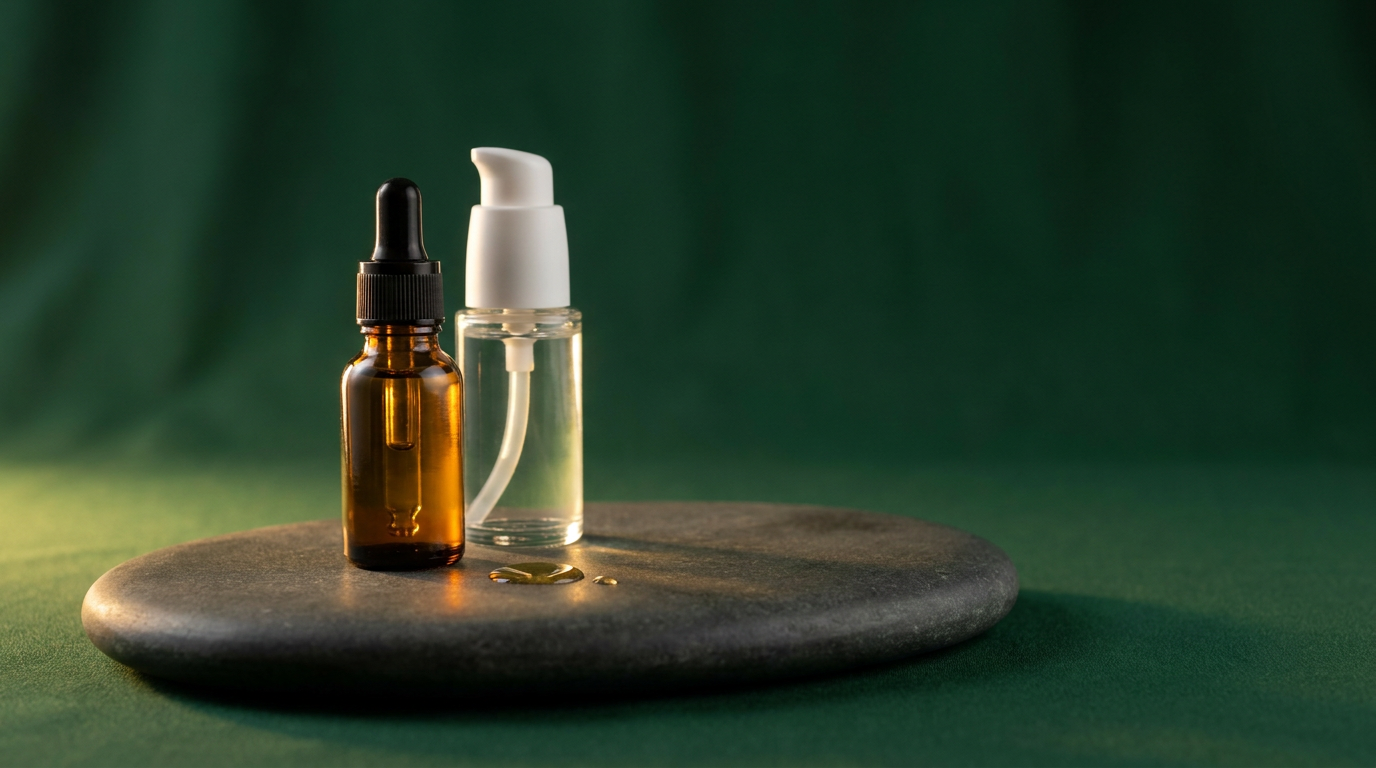
Both occupy different stages of the routine. Niacinamide is water-soluble and works in the aqueous phase; prickly pear seed oil seals the routine with a fatty phase. Neither interferes with the other, and the order is logical.
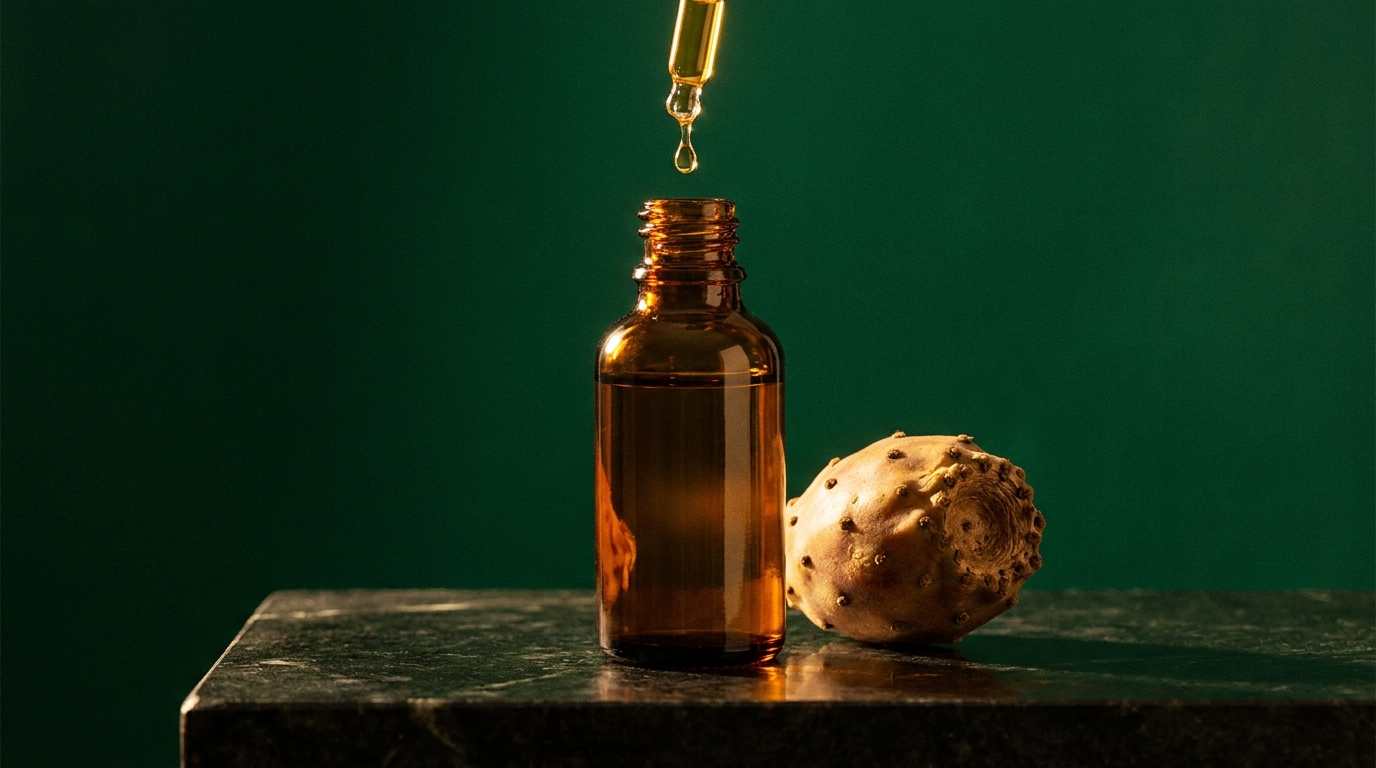
This vegetable oil is obtained by first cold pressing the seeds of the fruit. Its tocopherols and sterols place it in the anti-aging category, with benefits for suppleness and comfort rather than correction.
The protocol, step by step
1. Clean and slightly damp skin. After cleansing, do not dry completely: a slightly damp face facilitates the spreading of the serum.
2. Niacinamide serum. Three to four drops, distributed on the forehead, cheeks, and chin, then smoothed without rubbing. Leave for one minute.
3. Prickly pear seed oil. Two to three drops warmed between the palms, then pressed onto the face rather than spread. Pressing helps the oil distribute without pulling on the skin.
4. Eye contour, if needed. An additional drop dabbed with the ring finger, on the orbital bone and not on the movable eyelid.
Do you need a cream over it?
It depends on your skin and the season. Combination skin in summer will often find the oil sufficient as a last step. Dry skin in winter will appreciate a cream over it, applied when the oil has finished penetrating — allow two to three minutes.
The rule remains the same in all cases: from the thinnest to the richest. The oil comes after the serum, and the cream after the oil if you use one.
The two cases where it's better to separate them
Very reactive skin discovering niacinamide. Introduce one active ingredient at a time. Start with the serum alone for a week, then add the oil. If redness appears, you'll know which one is causing it.
A routine already rich in active ingredients. If you also use a chemical exfoliant or a retinoid, it's better to alternate evenings rather than layering everything. Tolerance is built gradually, it cannot be forced.
Morning or evening?
Both are suitable. In the morning, the oil provides a supple finish under makeup, provided it is applied in small quantities and allowed to absorb. In the evening, layering is more comfortable since nothing comes over it.
If you only choose one time, opt for the evening: this is when the skin remains in contact with the products for the longest, without friction from clothing or exposure.
What this combination doesn't do
It does not replace sun protection in the morning. It does not cure or treat any skin condition: these are cosmetic products, whose action focuses on skin comfort and appearance. Dermatological advice is still necessary for any lesions, pain, or unusual changes.
The origin of our oil
NOPAL LIFE prickly pear seed oil is produced in Algeria by Bio Nopal Cactus, from artisanal family farms in the arid high plateaus. The prickly pear grows without irrigation, making it a crop adapted to arid areas; the species is also among those selected for certain operations of the Algerian green dam. Our fruits come from family farms, independent of this public program. The seeds are cold-pressed.
Frequently Asked Questions
Can I mix the niacinamide serum and oil in my hand?
It's possible but less effective. By mixing them, the oil coats the serum and slows its diffusion. Layering in two steps gives a better result, for a few extra seconds.
What concentration of niacinamide should I choose with an oil?
Between 4 and 10% is suitable for the vast majority of skin types. Beyond that, additional benefit is not demonstrated, and discomfort increases for reactive skin. The subsequent presence of an oil does not change this choice.
Can prickly pear seed oil cancel out the effect of niacinamide?
No. The serum has already penetrated when the oil is applied. The oil settles on top and limits evaporation, which actually prolongs contact.
What if my skin is shiny after application?
Reduce the amount of oil to one or two drops, and apply it by pressing rather than massaging. Shine almost always comes from excess, rarely from the product itself.
This ingredient in our range


Mature skin · Dry skin

Go further than this article
Get our skincare guides by email — and start with your free skin diagnostic: 2 minutes, advice tailored to your skin. We ship to the US, UK, Canada, Australia and 27 European countries; somewhere else? Sign up and you will be the first to know when we deliver to your country.
By signing up, you agree to our privacy policy. Unsubscribe in one click.