Combining Vitamin C and Retinol: The Safe Method
Combining them is possible and desirable — provided they are not applied together. Vitamin C in the morning, retinol at bedtime: this simple separation resolves most tolerance issues and respects when each is most beneficial.
The essentials
- Morning: Vitamin C serum, cream, sunscreen.
- At night: Retinol on dry skin, followed by a richer treatment.
- Never: Both together when starting out.
- Progression: Retinol two nights a week, then more.
- Timeframe: Three to six months before judging results.
Why separate them
The reason is not chemical but practical. Both stress the skin, each in its own way, and applying them together in the same routine increases the risk of redness without multiplying the benefits.
The morning-evening separation also has its own advantage: vitamin C works during the day, when the skin faces radiation and pollution; retinol works well at night, during cell renewal.
The idea of a chemical incompatibility between them is largely exaggerated. What causes problems is the cumulative stress, not a reaction between molecules.
The morning protocol
1. Gentle cleansing.
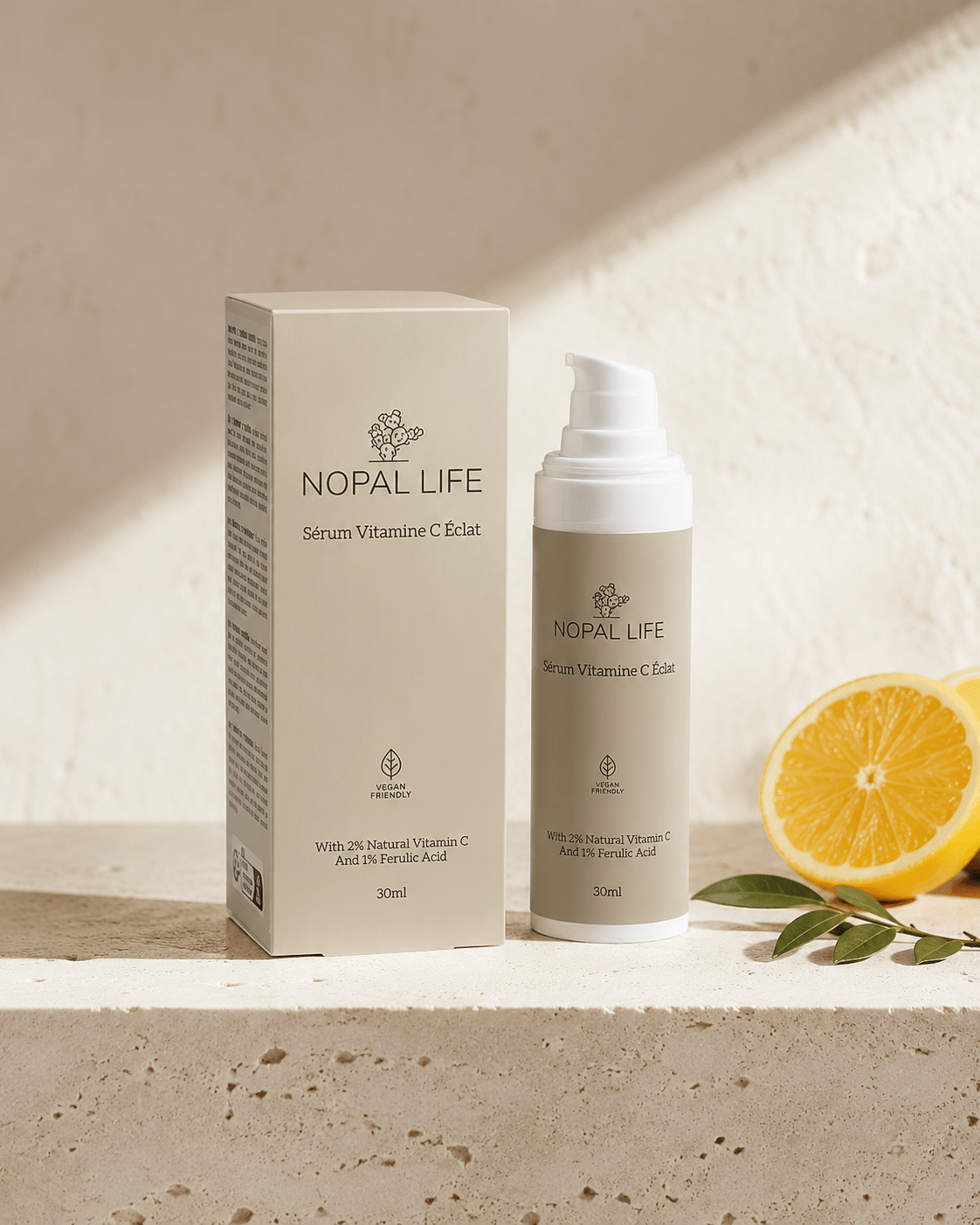
2. Vitamin C serum on clean skin, a few drops.
3. Your usual moisturizer.
4. Sun protection, without exception.
The night protocol
1. Cleanse, then dry thoroughly. Retinol should be applied to perfectly dry skin: applied to damp skin, it penetrates faster and irritates more.
2. A pea-sized amount for the entire face. More does not improve anything and aggravates irritation.
3. A moisturizing treatment on top.
Avoid the eye contour and nasal wings during the first few weeks: these are the areas that react most.
Progression, week by week
Weeks 1 and 2: Retinol twice a week.
Weeks 3 and 4: Every other night, if no flaking occurs.
Weeks 5 to 8: Four to five applications per week.
After that: Every night if the skin allows it. Many do very well with five applications per week, and the result does not suffer.
On off-nights, simply use your usual moisturizer. This is when the skin recovers.
The sandwich technique
For reactive skin, apply your moisturizer, then the retinol, then a second layer over it. Penetration is slowed, redness is significantly reduced, and efficacy is only slightly diminished.
This is a good compromise for long-term use. Retinol used for six months in a sandwich technique is more effective than pure retinol abandoned after three weeks.
What the combination brings
Vitamin C is involved in collagen production and protects against free radicals; retinol supports this same production through another mechanism and accelerates surface renewal.
For fine lines and wrinkles, the combination yields results that neither achieves alone. It is one of the rare combinations whose cumulative benefit is genuinely documented.
Mistakes that cause almost all irritations
Starting every night from the first week. Applying to damp skin. Using too much. Adding an exfoliant during the same period. And skipping sun protection.
These five mistakes account for almost all discontinuations. None are due to the combination itself.
What not to combine
Retinol and salicylic acid in the same application: alternate instead.
Retinol and mechanical exfoliation: choose one or the other.
And never introduce two new active ingredients in the same week: you wouldn't know which one is causing irritation.
The benefits of retinol and vitamin C, separately
The benefits of retinol apply to fine lines and wrinkles, texture, and pore appearance. It accelerates the renewal of surface cells and supports collagen production — it is the active ingredient whose action on the signs of aging is the best documented.
Use vitamin C for another purpose: radiance, dark spots, and neutralization of free radicals. Combining retinol and vitamin C therefore covers two families of needs that neither can address alone.
A complete facial care routine
A well-constructed skincare routine remains short. In the morning: cleansing, vitamin C, moisturizer, sunscreen. At night: cleansing, retinol, moisturizer.
Six steps in total, and nothing superfluous. Anything added on top — exfoliants, masks, targeted active ingredients — must find its place without displacing any of these six.
Adapt according to skin type
Sensitive skin: A stabilized vitamin C derivative, and low-dose retinol introduced very gradually. The sandwich technique is essential here.
Oily skin: Both are well suited, with fluid textures. Retinol is particularly useful here for pore appearance.
Dry skin: Be careful with cumulative dryness. Space out retinol applications and reinforce the final layer.
On dark spots
Both contribute, through different pathways. Vitamin C acts on pigment formation; retinol accelerates the removal of cells containing it.
This is one of the rare areas where the cumulative effect is significantly superior. Allow three months, and know that unprotected exposure negates the benefit faster than it is achieved.
Action on collagen through two mechanisms
Vitamin C is a necessary cofactor for collagen synthesis; retinol stimulates the activity of the cells that produce it. The two mechanisms are distinct and cumulative.
This is the foundation of this combination, and what distinguishes it from a simple stacking of trendy ingredients. Few combinations can say the same.
Limitations
These treatments are cosmetic and improve the appearance of the skin, without treating any condition. Retinol is not recommended during pregnancy and breastfeeding: seek advice from a healthcare professional.
Separate rather than layer
Applied in the same step, these two active ingredients interfere with each other, and discomfort quickly arises. Twelve hours apart is enough to resolve everything: a vitamin C serum in the morning, retinol at bedtime, and no additional precautions.
Our anti-aging treatments