Natural Vitamin E: Tocopherol and Skin Appearance
Behind every beautiful ingredient, there's a botanical story and specific uses. This guide dedicated to Natural Vitamin E gives you the essentials: what it is, for which skin types, how to use it — and what to combine it with in a NOPAL LIFE routine.
Natural Vitamin E: What is tocopherol and why does your skin love it?
Natural Vitamin E, also known as tocopherol, is a fat-soluble vitamin well-known in cosmetics. Unlike water-soluble Vitamin C, tocopherol dissolves in fats, allowing it to integrate well into the lipid phases of a skincare product and the skin's surface. This affinity makes it a valued active ingredient for the comfort and appearance of dull, uneven, or stressed skin exposed to external aggressors.
There are actually eight forms of tocopherols in nature, but alpha-tocopherol is the most common form in cosmetics for the skin. In natural cosmetics, it is found under various INCI names: Tocopherol, Tocopheryl Acetate (a more stable esterified form), or Mixed Tocopherols for complex plant extracts. The richest natural sources include prickly pear seed oil, wheat germ oil, argan oil, and sunflower or sweet almond oils.
For dull or combination skin, natural Vitamin E is appreciated on several levels: recognized for its antioxidant properties, it contributes to skin comfort and promotes a more harmonious and even complexion. This versatility makes it a key ingredient in any skincare routine focused on radiance and uniformity.
The benefits of natural Vitamin E for skin appearance
What natural cosmetic formulators have appreciated for decades is proven daily: natural Vitamin E is not just a preservative — it's a multifunctional active ingredient with varied uses.
1. Appreciated antioxidant properties. Alpha-tocopherol is one of the best-known antioxidants in cosmetics. By helping to protect the skin from daily external aggressions (sun, pollution), it helps maintain the skin's firm and plump appearance over time.
2. Excellent complementarity with Vitamin C. Tocopherol alone is not a sunscreen, but it pairs very well with water-soluble antioxidants like Vitamin C. This combination is a classic in cosmetics: together, the two vitamins form a valued duo to support the skin against the visible effects of sun exposure.
3. Support for skin barrier comfort. Due to its affinity with the skin's natural oils, Vitamin E contributes to the comfort of the skin barrier and a feeling of well-hydrated skin. For combination skin experiencing localized discomfort, this benefit is particularly appreciated.
4. Effect on radiance and texture. By helping to maintain the suppleness of the lipid phases of the product, tocopherol promotes the velvety feel and comfort of the skin surface. It also helps to diminish the visible appearance of textural irregularities, a highly sought-after benefit in radiance and uniformity skincare.
Its primary role is to limit the oxidation of surface lipids — the very ones that make up the protective film. This is why oxidative stress, caused by radiation and pollution, consumes it throughout the day.
Seeds and vegetable oils are the densest sources, which explains why you rarely find a virgin oil without it. These molecules work in a network with Vitamin C: isolated, Vitamin E depletes faster than when accompanied.
Natural Vitamin E vs. Synthetic Vitamin E: What the label hides
Not all Vitamin E is created equal, and the distinction between natural Vitamin E and synthetic is fundamental for effective formulation or choosing suitable skincare.
Natural Vitamin E (d-alpha-tocopherol) is primarily extracted from vegetable oils — soybean, sunflower, deforestation-certified palm oil — through a molecular distillation process. It has a unique molecular configuration, called the RRR (or d) form, which is particularly well-recognized by the skin.
Synthetic Vitamin E (dl-alpha-tocopherol), produced by chemical synthesis, is a mixture of several forms, only one of which corresponds to the natural form. To identify the form on a label, remember the simple rule: d- = natural, dl- = synthetic.
In a clean beauty approach, prioritizing the natural form is not just a marketing question: it's a choice of perceptible quality on the skin.
The natural form is called d-alpha-tocopherol; the synthetic, dl-alpha-tocopherol. Only one letter separates them on the label, and it changes the molecule's affinity with the skin's lipids.
The natural version is extracted from vegetable oils, most often sunflower or soybean seeds. Its role remains identical — to limit oxidation — but it integrates better into the skin's film, which explains formulators' preference despite a higher cost.
How to integrate Vitamin E into your radiance and uniformity routine
Natural Vitamin E is lipophilic: it has its affinity where fatty phases are present. Its integration into a skincare routine must therefore follow a few application principles to best leverage its benefits for dull and combination skin.
In the morning: Vitamin E is ideally used under sunscreen. Apply a serum or oil rich in tocopherol to clean, slightly damp skin, let the product absorb for 2 to 3 minutes, then apply your sunscreen. This sequence creates a double-action antioxidant routine against UV and urban pollution.
In the evening: this is a privileged time for skincare. At night, the skin is particularly receptive to cosmetic treatments. An oil concentrated in Vitamin E, such as prickly pear seed oil (an exceptional source of tocopherol with one of the highest levels in the plant kingdom), applied as the last step on clean skin, contributes to the fresh and rested appearance of the skin upon waking. Discover our Collagen Hydration Rebound Serum which combines tocopherol and radiance-enhancing active ingredients for a complete synergy.
Exfoliation as a prerequisite: for dull skin with an accumulation of dead cells on the surface, a gentle weekly exfoliation helps products absorb better. By refining the appearance of the skin's surface, you clear the way for lipid-soluble active ingredients.
The recommended frequency is once in the morning and once in the evening, with an evaluation phase after 4 weeks of regular use — the usual timeframe to observe visible changes in texture and radiance.
Its place is in the evening, in the fatty phase, after the aqueous serum. In the morning, it helps under sunscreen, where it complements what the screen lets through.
There's no need to buy it separately in most cases: a virgin vegetable oil already contains it, and that's even what allows it to preserve itself. The role of these molecules is primarily to protect the oil itself, with the skin only benefiting afterward.
Prickly pear seed oil: the densest natural source of Vitamin E
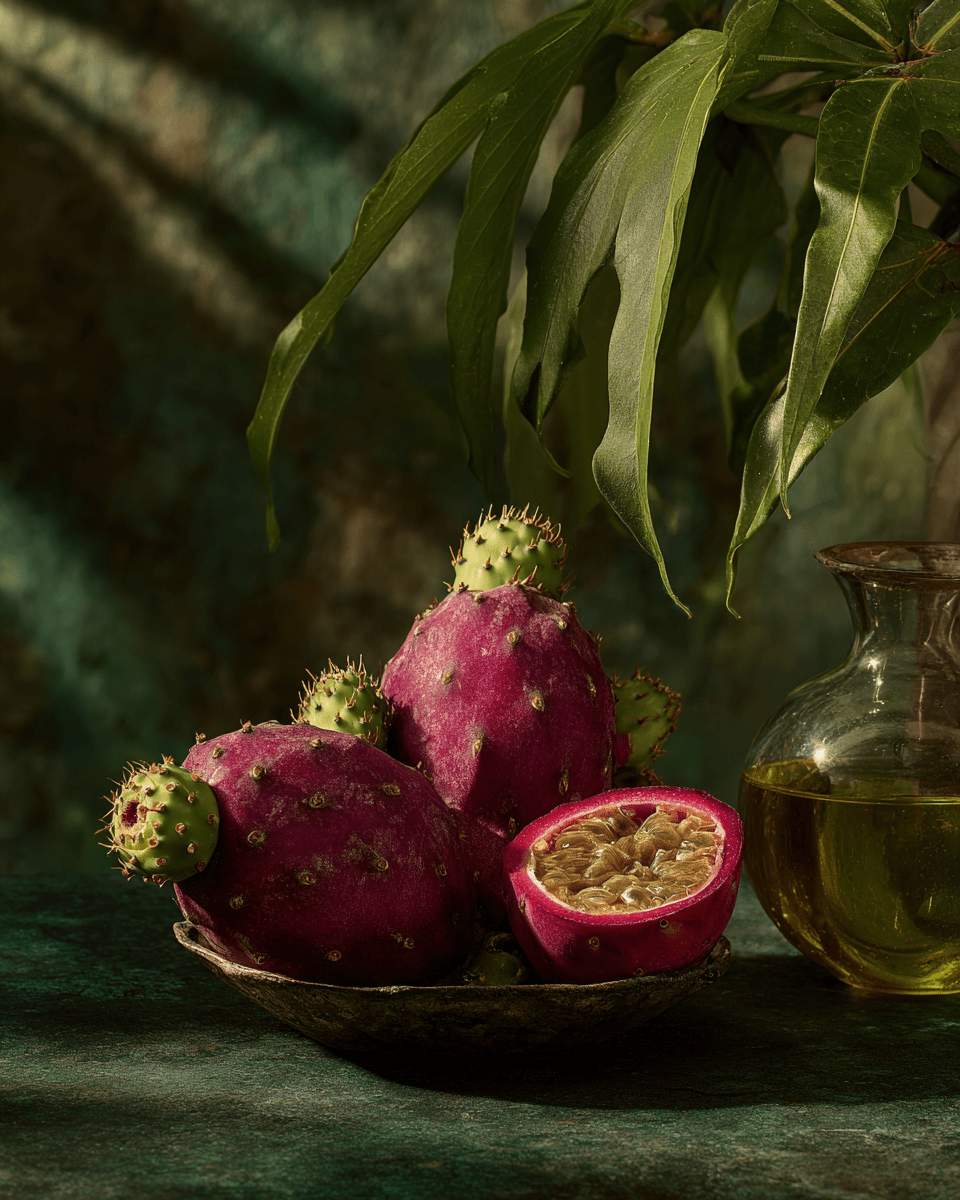
Among all vegetable oils renowned for their richness in tocopherols, prickly pear seed oil (Opuntia ficus-indica) holds a special place. Extracted by cold pressing the seeds of the cactus fruit, it concentrates a Vitamin E content that often surpasses that of argan oil, long considered the benchmark in luxury natural cosmetics.
This exceptional richness is explained by the very nature of the cactus: a xerophytic botanical plant adapted to extreme sun and drought conditions, Opuntia has developed a great abundance of antioxidant compounds during its evolution to protect its precious lipids. The oil extracted from it inherits this natural richness — and delivers it to your skin.
Specifically, prickly pear seed oil also contains plant sterols (beta-sitosterol) and unsaturated fatty acids (mainly linoleic acid) that work synergistically with Vitamin E to support the comfort of the skin's film, soothe the appearance of redness, and promote a more unified complexion on dull and uneven skin.
This is why prickly pear seed oil is at the heart of Nopal Life's formulation: not as a filler ingredient, but as a certified main active ingredient, present in generous concentrations to offer true skincare quality on the skin.
Mistakes to avoid with natural Vitamin E
Vitamin E is a valued active ingredient, but its improper use can limit its benefits, or even cause reactions in some skin types. Here are the most common mistakes to avoid.
Mistake #1: Applying pure undiluted Vitamin E. Pure tocopherol (100% concentrated Vitamin E oil) is very thick and can be uncomfortable on combination to oily skin. It should always be used diluted in a formulated product or mixed with a lighter vegetable oil such as jojoba or squalane.
Mistake #2: Combining it with incompatible active ingredients. Vitamin E combines well with Vitamin C, retinol (under control), and vegetable oils. However, combining high concentrations of tocopherol with exfoliating acids (AHA/BHA) at the same time is not ideal for the comfort of each active ingredient. Reserve AHA/BHA for separate steps.
Mistake #3: Neglecting the opening date. Natural tocopherol, despite its antioxidant properties, remains sensitive to light and air once the bottle is opened. Always store your Vitamin E product away from direct light, ideally in a cool place, and respect the PAO (period after opening) indicated on the packaging.
Mistake #4: Expecting immediate results. Vitamin E shows its benefits over time — it's a long-term treatment, not an express solution. The first visible results on radiance and texture usually appear between 3 and 6 weeks of regular use. Not persevering beyond a few days is one of the main causes of premature abandonment of otherwise suitable treatments.
Mistake #5: Ignoring your skin type. While Vitamin E is suitable for most skin types, very oily skin should pay attention to the texture of the vehicle used. In this case, prefer gel formulas or aqueous serums enriched with tocopherol rather than thick pure oils. To identify your precise skin profile and the most suitable active ingredients, try the Nopal Life Skin Intelligence™ diagnostic.
The first is to believe it is sufficient on its own. It is a link in a chain: once it has neutralized an oxidizing molecule, it needs to be regenerated, and Vitamin C takes care of that.
The second is to expect a visible effect quickly. Its role is preventive, and what it provides is measured by what does not happen — an unsatisfactory but honest reasoning.
FAQ — Natural Vitamin E and skincare
Can natural Vitamin E replace sunscreen?
No. Vitamin E is an antioxidant that complements and supports sun protection, but it does not filter UV rays. It cannot in any way replace an appropriate SPF. Use it as a base treatment, under your sun protection.
Can Vitamin E be used every day?
Yes. Unlike retinol or exfoliating acids which require gradual acclimation, natural Vitamin E is well tolerated for daily use, morning and evening, on most skin types.
Does Vitamin E help with the appearance of dark spots?
It helps promote a more unified complexion, but it is not known as an active ingredient specifically targeting the appearance of spots like niacinamide or kojic acid. To target the visible appearance of spots, combine it with these specific active ingredients.
What concentration of Vitamin E is needed in a product to be effective?
Cosmetic formulas usually contain 0.5% to 5%. Beyond that, the risk of discomfort increases without additional proportional benefit.
Is natural Vitamin E suitable for sensitive skin?
Yes, that is one of its strong points. Vitamin E is generally very well tolerated by sensitive and reactive skin. It does not irritate or sensitize — provided it is used in a balanced formula and not in a pure concentrated form.
Can a Vitamin E serum be used at the same time as a Vitamin C serum?
Absolutely — it's even recommended. Vitamins C and E form one of the most appreciated antioxidant combinations in cosmetics: they complement each other wonderfully to support skin radiance and comfort.
How do I know if my product contains natural or synthetic Vitamin E?
Look at the INCI list: Tocopherol or d-alpha-Tocopherol = natural form. dl-alpha-Tocopherol or Tocopheryl Acetate (often synthetic) = synthetic form. The "d-" prefix is your main indicator for identifying natural origin.
Ready to integrate natural Vitamin E into your routine?
Discover the Collagen Hydration Rebound Serum — formulated with ultra-concentrated prickly pear seed oil in natural tocopherol, to support the visible radiance, texture, and uniformity of the skin daily. And for a routine 100% adapted to your skin profile, use our intelligent diagnostic tool: Nopal Life Skin Intelligence™.
Why build your facial routine with Nopal Life
An effective skincare routine is not just a stack of products: it's a sequence of complementary active ingredients applied in the correct order, on clean skin, for visible and lasting results. Nopal Life has designed each product to work equally well alone as in synergy with other products in the range. Prickly pear seed oil is the common thread: present in several formulas, it ensures consistency and tolerance for all skin types.
Start with our free Skin Intelligence diagnostic. In 3 minutes, it identifies your skin type, your primary concerns, and suggests a personalized routine from our 6 skincare rituals.
Read more
Information provided for cosmetic and educational purposes; it does not constitute medical advice.


Go further than this article
Get our skincare guides by email — and start with your free skin diagnostic: 2 minutes, advice tailored to your skin. We ship to the US, UK, Canada, Australia and 27 European countries; somewhere else? Sign up and you will be the first to know when we deliver to your country.
By signing up, you agree to our privacy policy. Unsubscribe in one click.