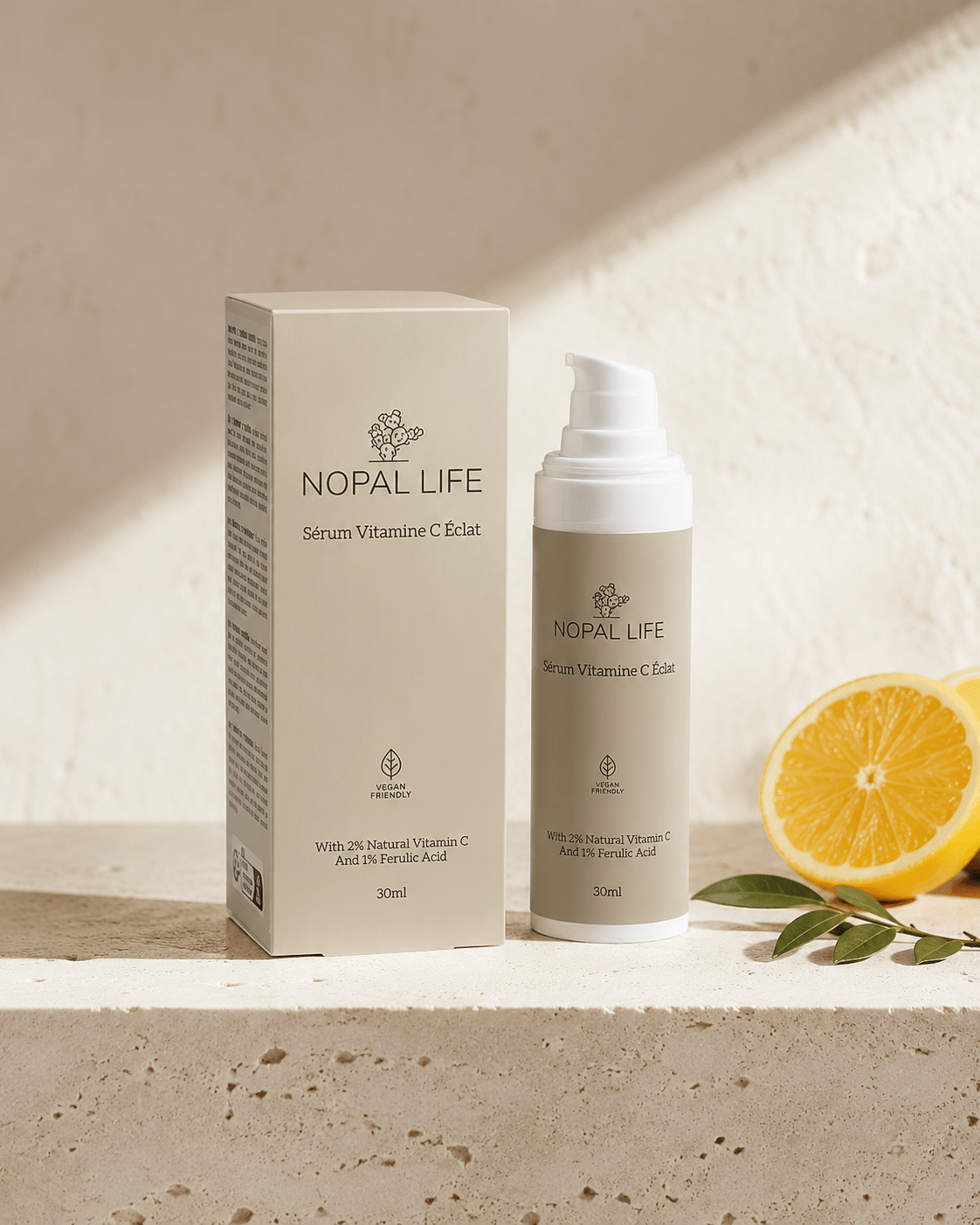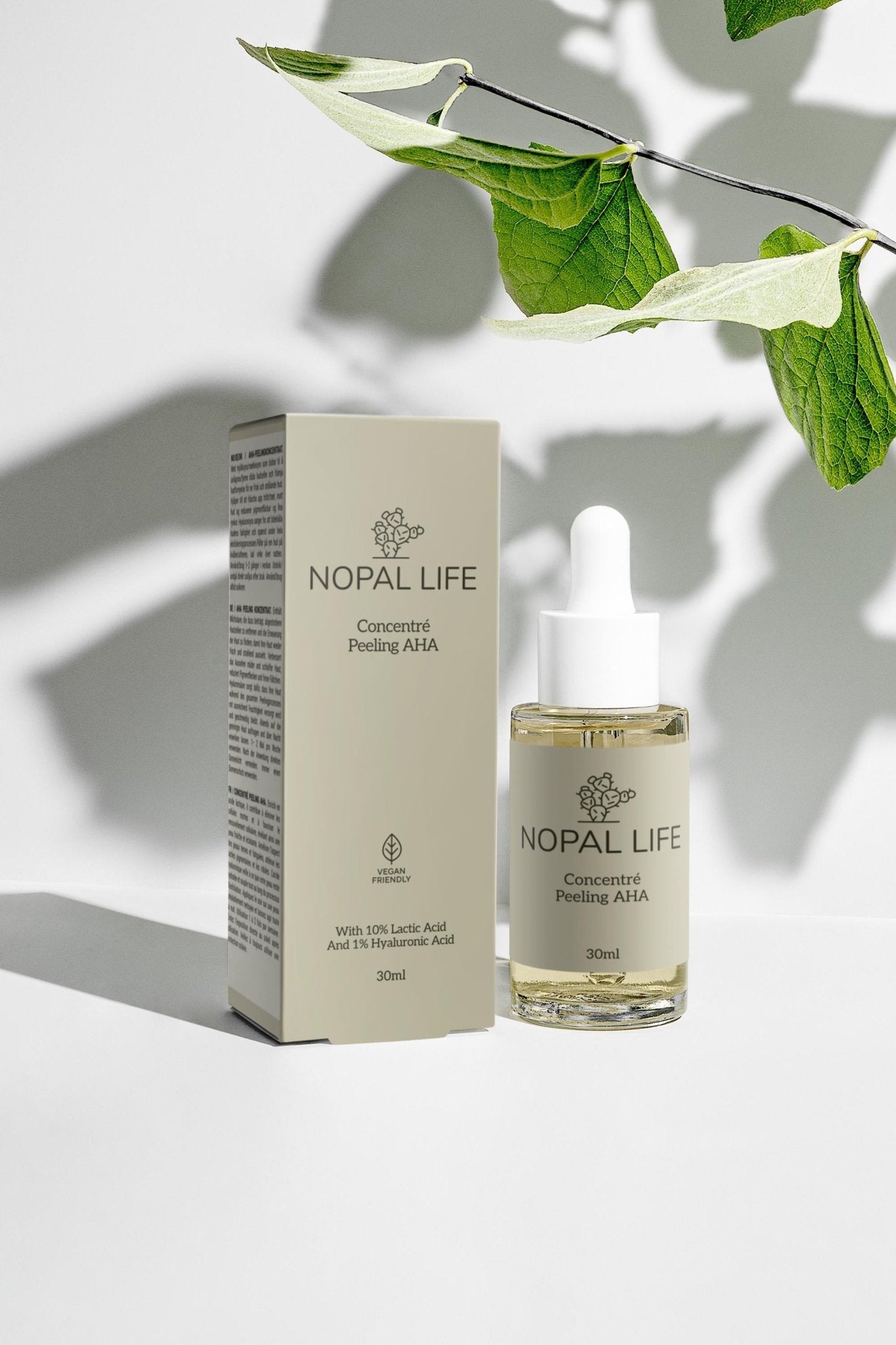
Combining vitamin C and AHAs: the method
The schedule does all the work: one in the morning, the other on certain evenings. Vitamin C protects and corrects pigmentation; AHA exfoliates the surface. Layering them doesn't provide more benefit than separating them, and reduces tolerance.
A typical week's schedule
Every morning: vitamin C, cream, sunscreen.
Two or three evenings: AHA on clean, dry skin, wait ten minutes, then a cream.
Other evenings: cleansing and cream. This is when the skin recovers.
This routine is suitable for most normal to oily skin types. For dry or reactive skin, one evening of exfoliation is enough.
Why not layer them
The reason is not chemical. Both are acids and stress the skin in their own way; combining them in the same application multiplies the risk of irritation without multiplying the benefit.
The idea of incompatibility between vitamin C and AHA is widely circulated. It is exaggerated: what causes the problem is the cumulative stress, not a reaction between molecules.
If you still need to use them consecutively
AHA first, on clean and perfectly dry skin. Wait a full ten minutes. Then vitamin C, then a cream.
Never reverse this order: an aqueous serum applied first would form a film that would prevent the acid from acting on the surface.
The addition that changes everything
A hyaluronic acid serum, applied to damp skin before vitamin C, makes this routine much more comfortable. Exfoliation depletes water from the surface; the humectant replenishes it.
This is the most cost-effective addition here, and the one most often overlooked when focusing on active ingredients.
What each brings
Vitamin C acts on dark spots and skin tone uniformity, with an antioxidant action against free radicals. Allow four to six weeks for radiance, two to three months for spots.
AHA improves radiance and skin texture regularity through surface renewal, in two to three weeks. It does not act on pigmentation itself.
For marks left by old imperfections, both work in the same direction at different speeds — this is the best reason to combine them.
Glycolic or lactic
Glycolic acid is the most penetrating and effective on skin texture, with lower tolerance. Lactic acid is gentler and suitable for sensitive skin.
For skin that has never been exfoliated, start with lactic acid. Vitamin C pairs well with both.
The cautious progression
Weeks 1 and 2: vitamin C only, every morning.
Week 3: AHA once a week.
Week 5: twice if no dryness occurs.
Then: three times maximum.
Introducing both in the same week makes it impossible to attribute a reaction to the correct product.
According to your skin type
Oily skin: the complete schedule, with a gel-cream.
Combination skin: AHA on the T-zone only.
Dry skin: one evening of exfoliation only, and a rich cream systematically.
Sensitive skin: vitamin C in a stabilized derivative, lactic acid once a week maximum.
Sun, non-negotiable
AHAs significantly increase sensitivity to ultraviolet rays, and vitamin C is useless if the cause it combats is allowed to persist. Daily sun protection conditions the overall result.
For spots, unprotected exposure can undo in a few weeks what three months have built.
How far this routine goes
It improves radiance, skin texture regularity, and skin tone uniformity. It is cosmetic and does not treat any condition: a spot whose contour is changing requires immediate dermatological advice.
Never in the same step
Two acids applied one after the other will undoubtedly cause discomfort without improving your complexion. A vitamin C serum in the mornings, AHA one or two evenings a week: spacing them out is the entire method here.
Our anti-aging treatments