Prickly pear seed oil or collagen: which to choose?
One penetrates, the other doesn't: this difference dictates everything else. Prickly pear seed oil is a fine vegetable oil, rich in essential fatty acids, that reaches the upper layers of the skin. Applied collagen is a protein too voluminous to cross the skin barrier—it remains on the surface.
The table of differences
| Criterion | Prickly Pear Seed Oil | Collagen |
|---|---|---|
| Nature | vegetable seed oil | structural protein |
| Penetration | good, fine texture | none, molecule too large |
| Contribution | essential fatty acids, tocopherols | surface film |
| Skin types | dry skin, mature skin | all, limited effect |
| Other route | external use only | dietary supplements |
| Rarity | very high | common |
What prickly pear seed oil really is
Prickly pear seed oil is extracted from the seeds of the Opuntia ficus indica fruit, a cactus from arid lands. It has nothing to do with the pulp: it is the tiny, numerous seeds that carry it.
Its profile is dominated by linoleic acid, often over 60%, accompanied by oleic and palmitic acid. It also contains tocopherols and sterols, these minor compounds that give virgin vegetable oil its value and which refining removes.
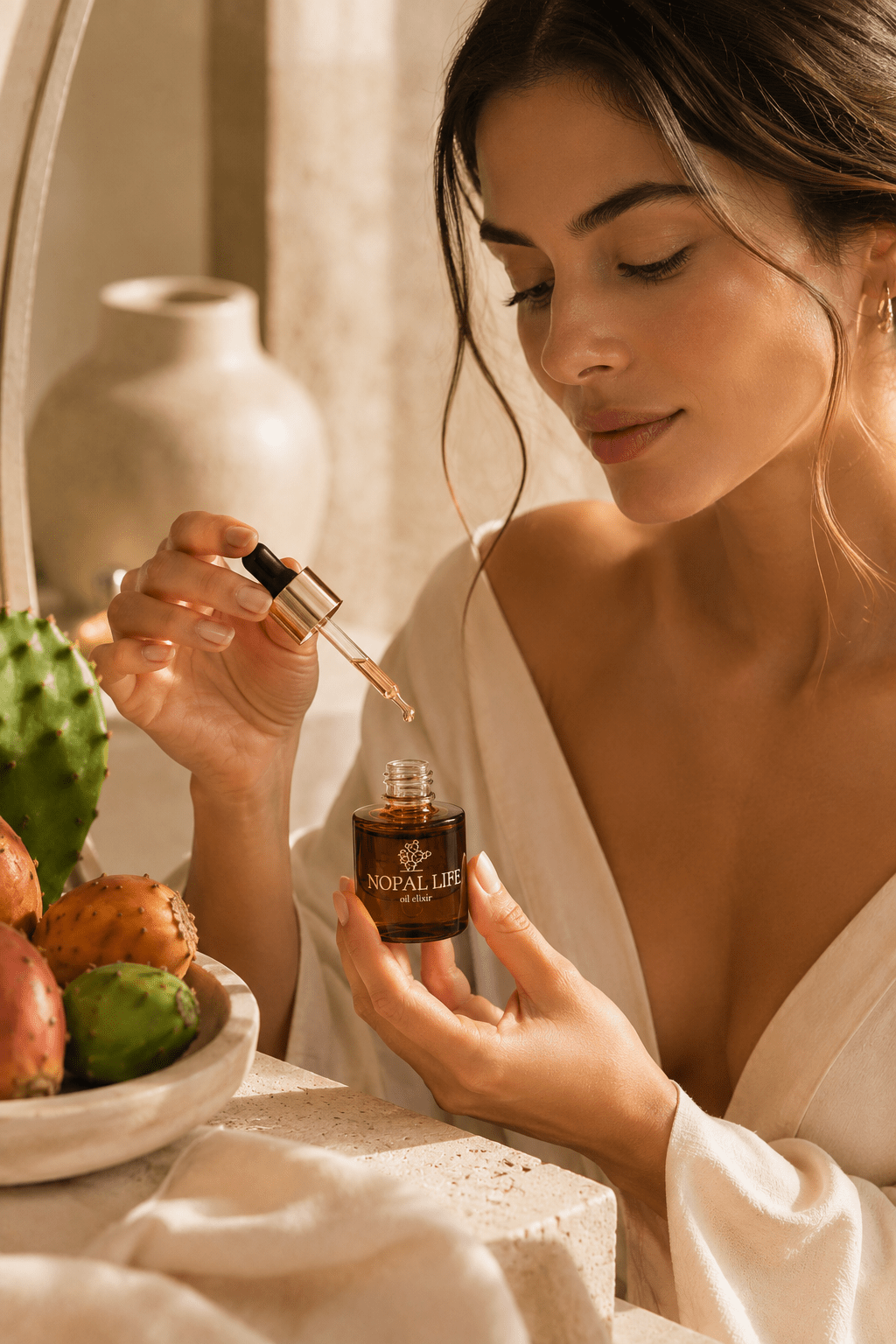
At NOPAL LIFE, this prickly pear seed oil comes from family farms in the arid highlands of eastern Algeria and Kabylia, where the prickly pear grows without irrigation. Extraction is done by first cold pressing.
Why this oil is so rare
Yield, exclusively. It takes nearly a ton of prickly pears to obtain one liter of oil: the seeds represent an infinitesimal fraction of the fruit, and they must be separated, dried, and then pressed.
A very cheap organic prickly pear seed oil therefore raises a legitimate question. At this yield level, the price is not a commercial choice but an agricultural constraint.
What applied collagen does—and doesn't do
The collagen molecule is too large to cross the stratum corneum. Applied as a cream, it forms a film that retains water and temporarily smooths the skin's texture. The result is real, and it is related to hydration.
It does not join the collagen of your dermis and does not participate in its reconstruction. Hydrolyzed collagen, cut into fragments, penetrates a little better, although the evidence of a structural action via external application is not convincing.
Free radicals and oxidative stress
Visible skin aging is largely due to oxidative stress: free radicals, produced by metabolism and amplified by radiation and pollution, degrade the lipids and fibers of the dermis.
This is where prickly pear seed oil gains a clear advantage. Its tocopherols act as antioxidants in the fatty phase of the skin, exactly where the attack occurs. Applied collagen has no such action.
What about dietary supplements?
Oral marine or bovine collagen follows a different logic, and research is more extensive for it than for topical application. The reported effects relate to hydration and elasticity, remain modest, and replace nothing.
If you take it, consider it a supplement. Prickly pear seed oil, on the other hand, is only for external use: it is not an edible oil.
Which to choose according to skin types
Dry skin: prickly pear seed oil, without hesitation. Essential fatty acids are exactly what is missing.
Mature skin: the oil too, for its antioxidant content as much as for its richness.
Combination skin: its fine texture is better than one might think. A single drop on dry areas is enough.
Oily skin: a light cream, with or without collagen, will be better than a fatty substance.
The right gesture with prickly pear seed oil
Two to three drops are enough for the entire face, as the last step in the routine, on still slightly damp skin. Warm them between your palms, then apply with gentle pressure without rubbing.
For the eye contour, a single drop patted with the tip of the ring finger. This is the thinnest area of the face and the one that tolerates material excesses the least.
Fine lines and wrinkles: setting expectations
Fine lines related to lack of water fade when the barrier retains better—this is the oil's domain, and results appear in three to four weeks. Established wrinkles are due to the structure of the dermis and do not change this way.
Neither prickly pear seed oil nor applied collagen erases them. The anti-aging action whose effect is best established remains daily sun protection.
Storing your oil
Tinted glass, away from heat, preferably outside the bathroom. Virgin prickly pear seed oil is rich in fragile compounds that do not tolerate light well.
A 30 ml bottle used daily lasts approximately two months. A rancid smell indicates an oil at the end of its life, even if its appearance has not changed.
The benefits of prickly pear seed oil, in plain terms
The benefits of prickly pear seed oil are due to three verifiable properties. It nourishes, thanks to its richness in linoleic acid. It provides vitamin E naturally present in prickly pear seeds. And its fine composition allows it to penetrate quickly, which is rare for such a concentrated oil.
From these three properties stems the essence of what is attributed to it: a more supple epidermis, a more regular texture, a slightly better radiance. Nothing spectacular, and nothing exaggerated either.
Serum, cream or vegetable oil: what does what
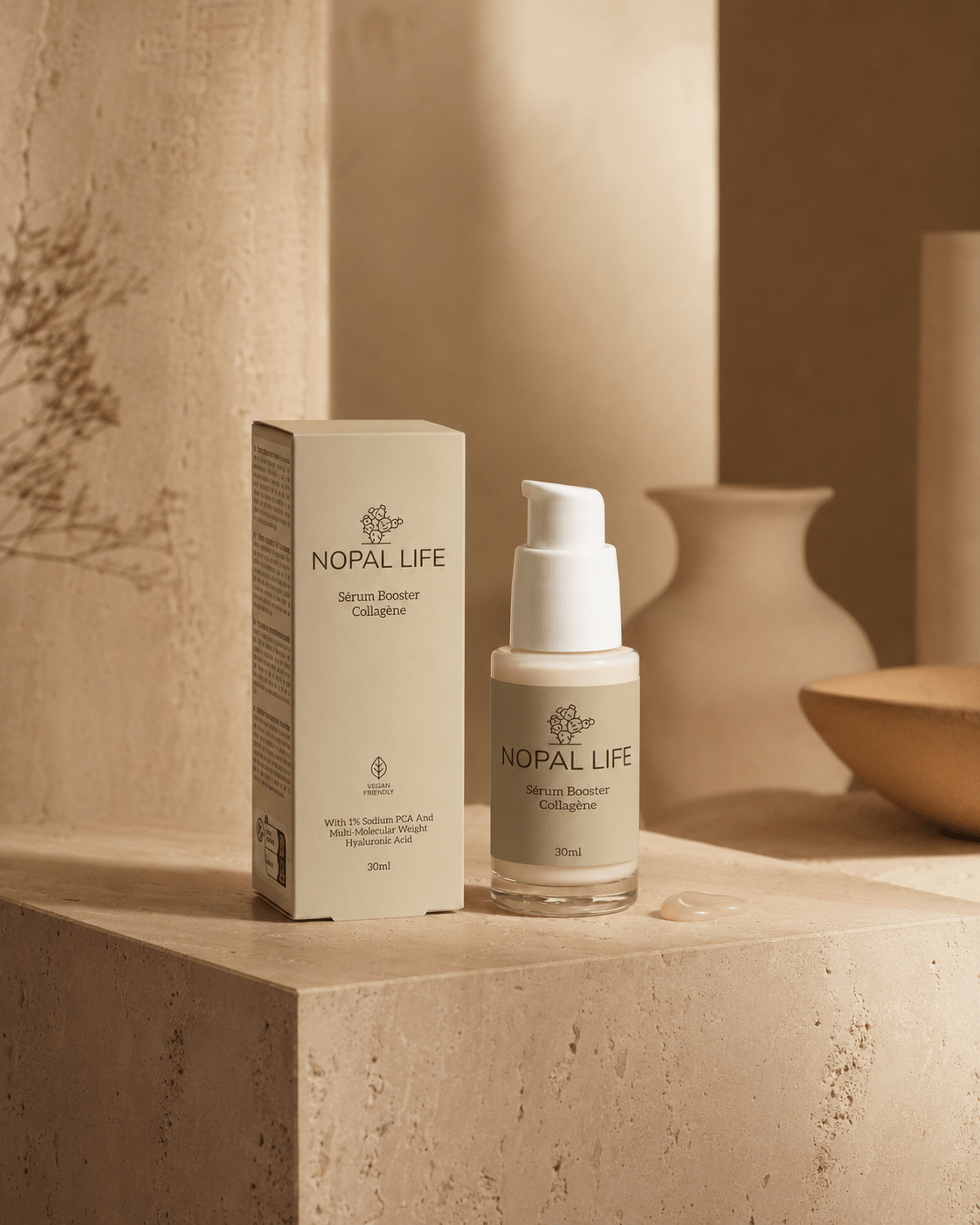
A serum concentrates active ingredients in a light base and is applied early in the routine. A cream combines an aqueous part and a fatty part. A vegetable oil provides only the latter, but it provides it undiluted.
A collagen cream falls into the second category: its moisturizing agents do the work, collagen mainly plays a role in texture. Knowing this avoids expecting from one product what another does better.
A regenerating action? What the word covers
The renewal of surface cells takes about twenty-eight days and slows down with age. No cosmetic significantly accelerates this cycle. What a regenerating oil actually does is allow this renewal to occur under better conditions.
This is why a judgment made before one month is premature. You are then observing skin that has not finished renewing itself under the new regime.
Reducing fine lines: what works
Dehydration fine lines fade as soon as the barrier retains water better. The active ingredients that contribute to this are humectants first, then fatty substances, and prickly pear seed oil belongs to the second family.
A humectant serum followed by two drops of oil therefore gives a better result than either alone. The combination matters more than the choice of a single product.
Limitations
These products are cosmetics. They improve the skin's suppleness, comfort, and appearance, with no curative aim. Persistently uncomfortable or reactive skin warrants dermatological advice.
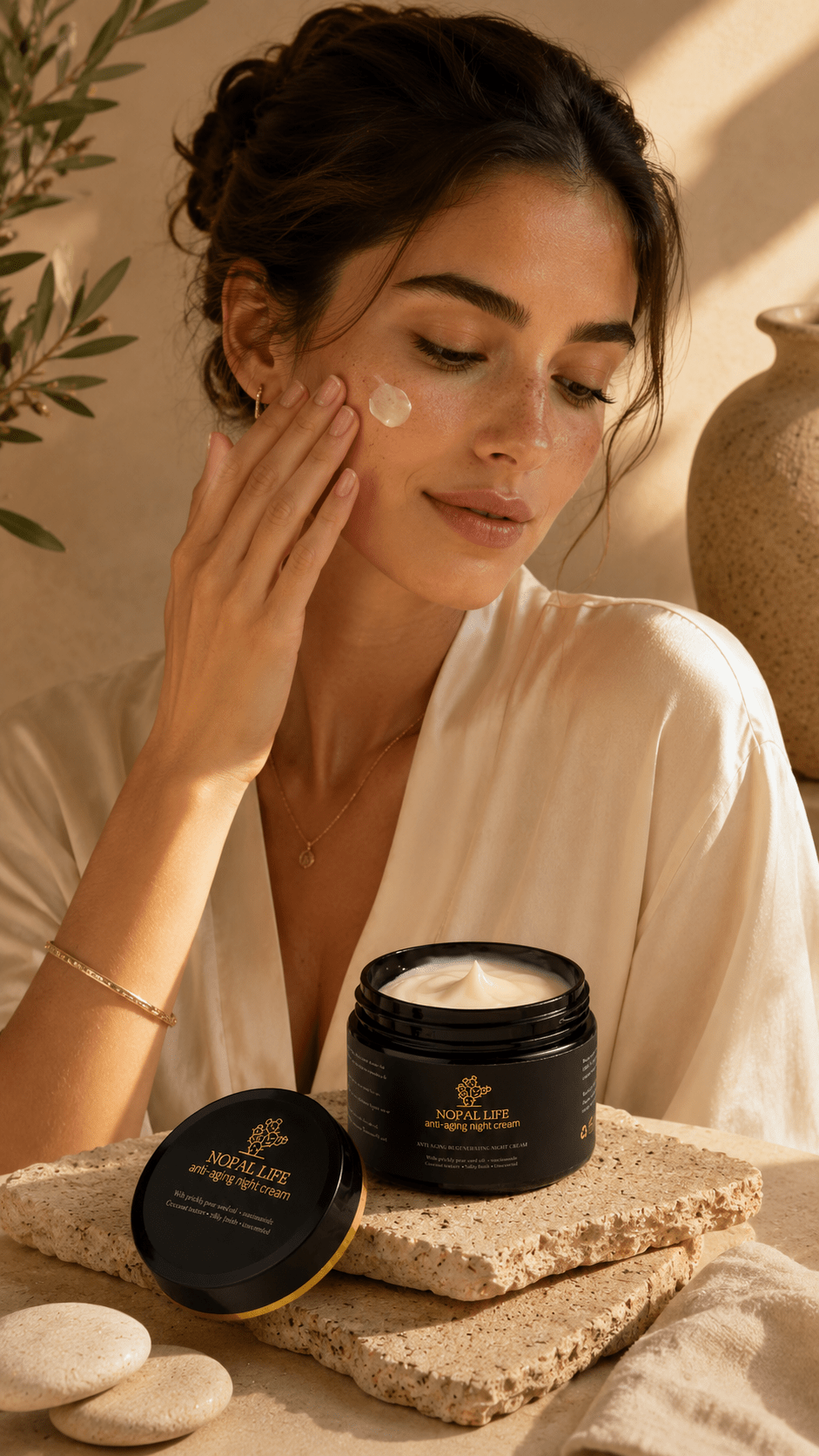
Our anti-aging treatments