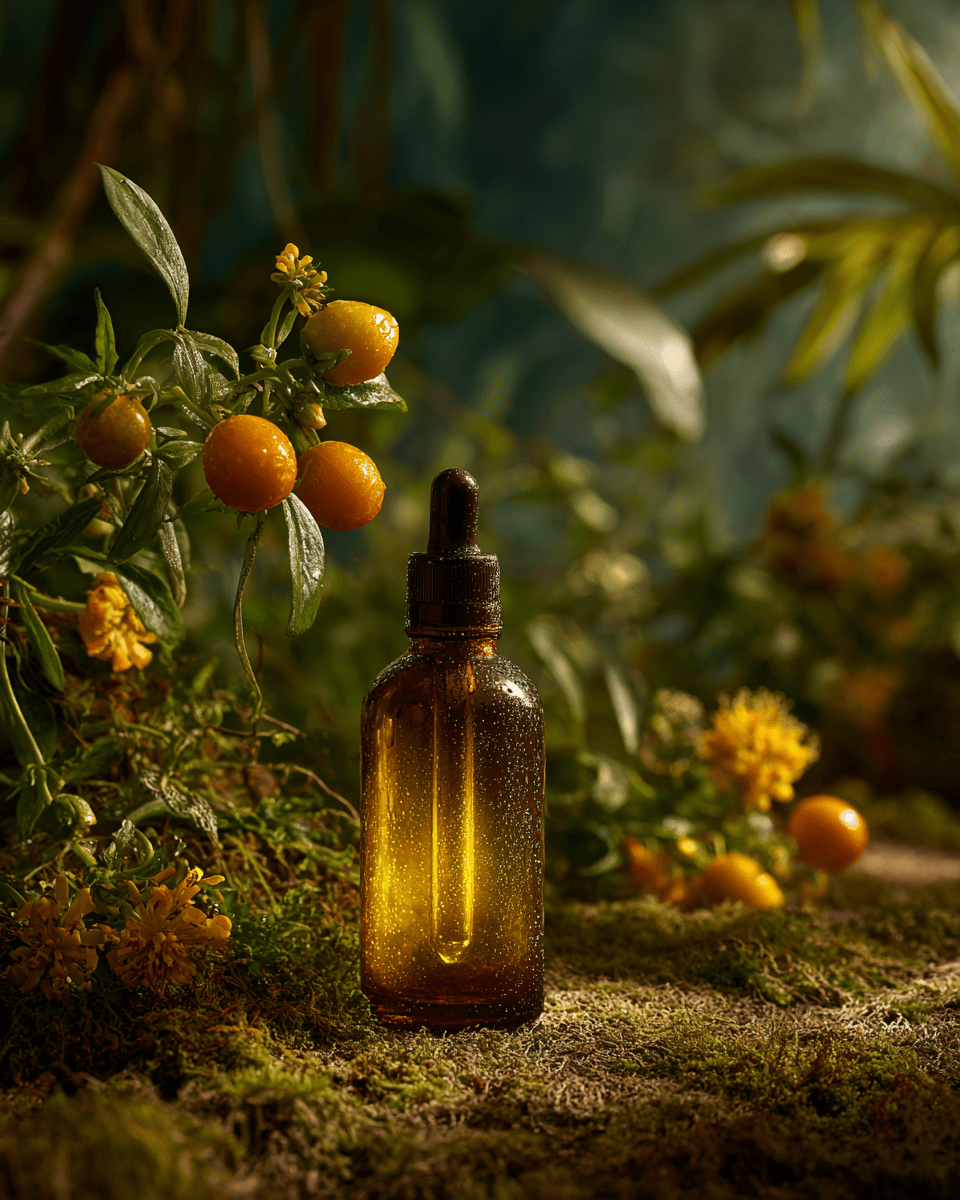
Vitamin E tocotrienols: membrane photoprotection, radiance, and texture for dull combination skin
Vitamin E is often reduced to a single compound in cosmetic formulations—alpha-tocopherol. Yet, the complete vitamin E family includes eight distinct molecules, among which are tocotrienols, largely unrecognized and often highlighted for their affinity with the skin's lipid layers. If your skin is dull and combination, understanding the place of tocotrienols among antioxidants better can change your relationship with skincare.
Tocotrienols vs. Tocopherols: two forms of vitamin E, two profiles
Natural vitamin E comes in two main families: tocopherols (alpha, beta, gamma, delta) and tocotrienols (alpha, beta, gamma, delta). While tocopherols are the most present in nutritional intake and cosmetic formulations, it is their tocotrienol cousins that have attracted the most interest in recent years.
The structural difference is notable: tocotrienols have an unsaturated side chain with three double bonds, whereas tocopherols have a saturated chain. This particularity gives them a good affinity with lipid environments, making them interesting for fat-rich skincare. Tocotrienols are renowned for their strong antioxidant profile in lipid environments.
For combination skin showing signs of dullness, this is not an insignificant detail: the skin's surface is exposed daily to UV rays, pollution, and external aggressions, which can dull the complexion's appearance. A well-distributed antioxidant in a lipid-rich formula supports the comfort and visible radiance of the skin.
The key role: antioxidant support against external aggressions
When UV-A and UV-B radiation reach the skin, they contribute to the appearance of oxidative stress on the surface. The free radicals thus generated are one of the factors associated with the appearance of a dull and tired complexion over time. Preserving the appearance of radiant skin notably involves good daily antioxidant hygiene.
Tocotrienols are valued at this stage. Their unsaturated structure gives them a good affinity with the fatty substances in skincare formulas, where they provide antioxidant support. They are often combined with vitamin C, whose presence is complementary in a radiance routine.
Gamma-tocotrienol is of particular interest among vitamin E forms for the care of skin whose radiance and texture deserve to be revived. This antioxidant and apparently soothing profile is particularly sought after for the visible comfort of the skin.
Prickly pear seed oil: a natural source of complementary tocopherols
In a complete routine, tocotrienols do not work alone. Prickly pear seed oil (Opuntia ficus-indica) provides a remarkable concentration of natural tocopherols, particularly alpha-tocopherol and gamma-tocopherol. With a vitamin E content among the highest of vegetable oils—up to 900 mg per 100 g depending on the origin—it is an excellent complement for a generous antioxidant routine.
The complementarity of tocopherols / tocotrienols is often mentioned: tocopherols and tocotrienols are distributed in the different lipid phases of skincare formulas. Together, they offer broader antioxidant coverage to support the skin's appearance against external aggressions. For skin seeking radiance and uniformity, this combination helps preserve the luminous aspect of the complexion and the regular appearance of the texture.
Prickly pear seed oil also contains essential fatty acids (linoleic at 55-65%) recognized for helping to preserve the comfort of the skin barrier and limit the sensation of tightness—a valuable point for combination skin which tends to present uncomfortable areas despite shiny areas in the T-zone.
Practical application: integrating natural vitamin E into a routine for dull combination skin
Natural vitamin E differs from synthetic vitamin E (dl-alpha-tocopherol) by its reportedly superior bioavailability and stability. In cosmetics, it is found in several types of formulations. For dull, combination-prone skin, here's how to structure the application:
Morning: After gentle cleansing, apply an antioxidant-rich serum including vitamin E (natural tocotrienols or tocopherols) combined with vitamin C. This combination is appreciated for helping to revive immediate radiance. Vitamin C and vitamin E are classic antioxidant partners in a morning routine. Finish with mineral sun protection—antioxidants do not replace sunscreen, they complement and support its action.
Evening: Time for care and comfort. Applying a serum or oil containing natural vitamin E (including via prickly pear seed oil) during the night supports the skin's natural renewal. Night is a privileged moment to give the skin an antioxidant and nourishing touch that supports its rested appearance upon waking.
The Nopal Life antioxidant & anti-aging collection integrates this logic of complementarity in formulations designed for the European climate and skin habits.
Mistakes to avoid with vitamin E in skincare
1. Confusing synthetic and natural vitamin E. dl-alpha-tocopherol (synthetic) is considered less bioavailable than d-alpha-tocopherol (natural). In cosmetics, the difference is real in terms of formula stability. Check INCI: "tocopherol" alone does not guarantee the natural form.
2. Using pure, unformulated vitamin E. Pure alpha-tocopherol is viscous and can be uncomfortable on combination skin. It benefits from being incorporated into a balanced formula with other active ingredients to preserve skin comfort.
3. Neglecting oxidative stability. Vitamin E oxidizes in light and air. An opaque pump bottle is essential. Oxidized vitamin E loses its interest and pleasantness of use.
4. Using it alone without vitamin C. Vitamin C and vitamin E form a classic antioxidant duo. Combining them in a routine helps make the most of each over time.
5. Over-applying thinking "more = better". At high unformulated concentrations, vitamin E may be less well tolerated by sensitive skin. Pleasant and well-tolerated cosmetic concentrations are generally between 0.5 and 5%.
6. Neglecting the morning in favor of only the evening. Light exposure occurs during the day. The presence of tocotrienols in the morning, before exposure, is relevant in a preventive skincare approach as much as in the evening.
What to remember for combination and dull skin
Several points are particularly useful for understanding the interest of tocotrienols on dull combination skin:
Tocotrienols, especially gamma and delta, are often mentioned for supporting the balanced appearance of combination skin, particularly in the T-zone. Furthermore, by helping to preserve the appearance of rested skin against external aggressions, they contribute to the visible aspect of a more homogeneous complexion and the reduction of the appearance of residual marks, a source of uneven complexion on combination skin.
For radiance, the link is direct: well-preserved skin reflects light better than tired skin. Dullness is partly the visible aspect of an accumulation of skin fatigue that can alter the uniformity of the skin's surface and reduce its natural radiance.
Why choose Nopal Life for a luminous and even complexion
Achieving a radiant and even complexion relies on a global approach: supporting the skin's natural renewal, helping to unify the complexion's appearance, and nourishing the skin barrier for a healthy glow. Nopal Life has selected active ingredients renowned for this objective: stabilized vitamin C, plant-derived AHAs, and antioxidant prickly pear seed oil. These active ingredients are combined in balanced formulations, tested under dermatological control.
The difference is visible: a unified complexion, refined pores, and visibly smoother skin texture. Our radiance care products are suitable for all skin tones and ages. Discover your personalized radiance routine with our Skin Intelligence diagnostic.
PERSONALIZED ROUTINE
Nopal Life Skin Intelligence™
Free diagnostic · 2 minutes
DISCOVER MY ROUTINE →Frequently asked questions about natural vitamin E in skincare
Q: What is the practical difference between tocotrienols and tocopherols for my skin?
A: Tocotrienols have a good affinity with lipid environments thanks to their unsaturated chain. They distribute well in fat-rich formulas and are valued for their antioxidant profile. In practice, a serum formulated with tocotrienols offers a complementary approach to a product containing only standard alpha-tocopherol.
Q: Can I use a vitamin E product if I have combination skin with a tendency to imperfections?
A: Yes, provided the formula is light and non-comedogenic. Prickly pear seed oil—rich in linoleic acid—is particularly suitable for combination skin because it is valued for helping to preserve the balance and visible comfort of skin prone to imperfections. Avoid pure, overly thick oils applied alone.
Q: Does vitamin E replace sun protection?
A: No. Tocotrienols and tocopherols are antioxidants that support the skin against external aggressions related to exposure. They complement sun protection but do not filter UV rays. Applying SPF 30-50 remains essential every morning.
Q: How do I know if my product contains natural vitamin E?
A: In the INCI list, "Tocopherol" or "Mixed Tocopherols" designates the natural form. "Tocopheryl Acetate" is a stable esterified form but reportedly less bioavailable. "dl-alpha-Tocopherol" or "dl-alpha-Tocopheryl Acetate" indicates the synthetic form, reportedly less active.
Q: How often should I use an active ingredient with vitamin E?
A: Vitamin E can be used morning and evening, daily. It is well tolerated at usual cosmetic concentrations (0.5 to 5%). A morning application is particularly useful as a preventive measure before light exposure.
Q: Are tocotrienols present in prickly pear seed oil?
A: Prickly pear seed oil is primarily a source of tocopherols (alpha and gamma), not tocotrienols. These are mainly found in red palm oil, rice bran oil, and annatto oil. The complementarity between prickly pear seed oil (tocopherols) and a serum formulated with tocotrienols allows for more complete antioxidant coverage.
Q: My complexion is dull but I don't have prominent wrinkles. Is vitamin E useful for me?
A: Absolutely. Dullness is often one of the first visible signs of skin fatigue, even before the appearance of wrinkles. Tocotrienols are appreciated at this early stage, for supporting the appearance of fresh-looking skin which conditions the visible radiance of the complexion.
The Collagen Hydration Bounce Serum for Skin combines antioxidants with a moisturizing complex to help revive radiance and visible texture on dull combination skin.
Discover the Collagen Serum Nopal Life Skin Intelligence™Read more
Information provided for cosmetic and educational purposes; it does not constitute medical advice.


Go further than this article
Get our skincare guides by email — and start with your free skin diagnostic: 2 minutes, advice tailored to your skin. We ship to the US, UK, Canada, Australia and 27 European countries; somewhere else? Sign up and you will be the first to know when we deliver to your country.
By signing up, you agree to our privacy policy. Unsubscribe in one click.