



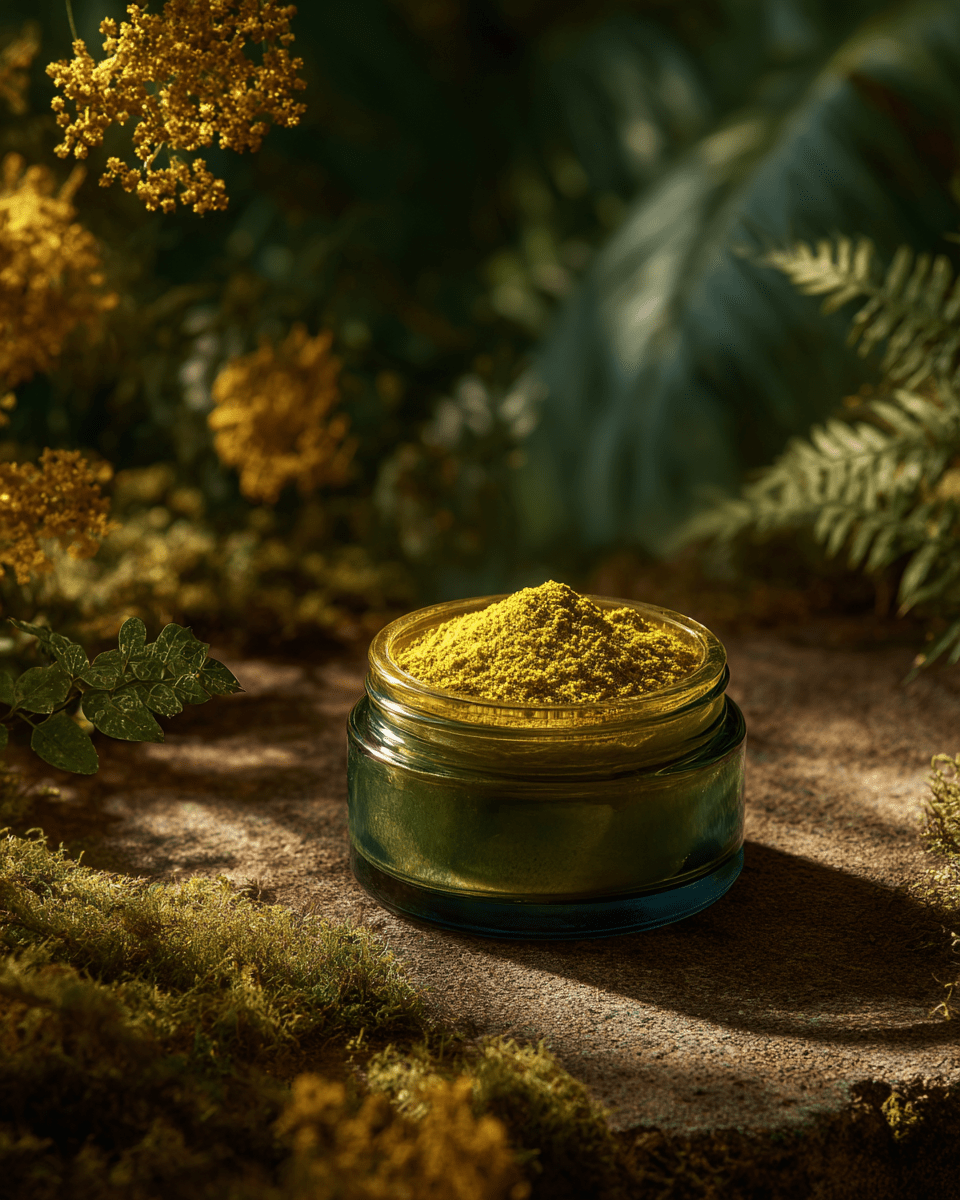
Natural vitamin E tocopherols: fat-soluble antioxidant and radiance for dull, combination skin
Vitamin E is often reduced to a simple "antioxidant" in cosmetic formulas. However, behind this label lies a complex molecular family, whose natural version is often distinguished from its synthetic counterpart. For dull and combination skin, understanding the difference between natural tocopherols and synthetic tocopherol means choosing skincare according to your preferences and desired composition.
In this guide, we explore the composition of natural vitamin E, its place among antioxidant ingredients, its traditional association with vitamin C, and how to integrate it into a routine adapted for dull, combination skin.
Natural vs. Synthetic Vitamin E: A Molecular Difference
Natural vitamin E, denoted as RRR-alpha-tocopherol (or d-alpha-tocopherol), is a chiral molecule derived from plant sources: sunflower seeds, wheat germ, nuts — and prickly pear seed oil, cited as one of the most concentrated sources of tocopherols among vegetable oils. Its stereochemical form is specific to its natural origin.
Synthetic vitamin E, denoted as all-rac-alpha-tocopherol (dl-alpha-tocopherol), is a racemic mixture of eight stereoisomers. Only one of them corresponds to the natural form. The natural and synthetic forms thus differ in their composition. In cosmetics, many prefer the natural form for its plant origin and its affinity with lipid-rich skincare.
The natural family is not limited to tocopherols: tocotrienols (alpha, beta, gamma, delta) share the same basic structure but possess an unsaturated side chain. They complete the antioxidant profile of this family of molecules and are valued in natural formulas.
A Liposoluble Affinity with Skin Lipids
Vitamin E is liposoluble: it has a natural affinity for the lipids present on the skin's surface, in the same environment as the lipid compounds of the epidermis. This lipid environment is sensitive to oxidative stress linked to UV rays and pollution, factors often associated with dull skin over time.
Alpha-tocopherol is one of the most studied antioxidants in this lipid environment. It is traditionally associated with vitamin C (ascorbic acid) present in the adjacent aqueous medium — this is the vitamin C / vitamin E association, a classic duo in antioxidant skincare.
For combination skin prone to imperfections, this antioxidant contribution helps preserve the comfort and soothed appearance of the skin against external aggressions. Vitamin E is thus a valued ingredient in skincare for combination skin exposed to daily stressors.
Vitamin C / Vitamin E Association: The Reference Antioxidant Pair
Vitamin C (L-ascorbic acid) is water-soluble; vitamin E is fat-soluble. Together, they cover both the aqueous and lipid phases of a formula. This tandem is often referred to as an "antioxidant network" in cosmetic skincare.
In practice, the two molecules complement each other at the water-lipid interface of formulas. Vitamin E supports the stability of vitamin C in a lipid environment, and vice versa. This association is valued for helping the skin better cope with sun exposure, in addition to appropriate sun protection.
For dull combination skin, this association is particularly valuable: it helps to even out skin tone and maintain the skin's smooth and homogeneous appearance, two parameters that determine visible radiance. It is one of the most sought-after duos in brightening skincare.
Role in Radiance and Texture of Dull, Combination Skin
Dull skin is often perceived as the result of three concomitant phenomena: accumulation of dead cells on the surface, skin sensitivity, and fragility of the lipid barrier. Natural vitamin E is a valued ingredient for supporting skin comfort in these different aspects.
Firstly, it helps preserve the comfort of the skin barrier by providing lipids to the surface, helping to limit discomfort associated with dryness. Comfortable and supple skin appears smoother and brighter.
Secondly, its gentleness supports the skin's natural renewal: the appearance of skin texture becomes more regular, and micro-roughness is visually reduced with continued application.
Thirdly, tocotrienols complement the antioxidant profile of the ingredient and contribute to the comfort of combination areas prone to texture irregularities.
Prickly pear seed oil (Opuntia ficus-indica), particularly rich in natural tocopherols and linoleic acid (omega-6), combines these qualities with an emollient action on dry areas of the extended T-zone. It ranks prominently among the most complete vegetable oils for facial care with combination skin issues.
For dull and combination skin, the benefit of vitamin E lies in its affinity with surface lipids. It settles there and remains, which explains why it is found in formulas for areas that feel tight as well as those designed for oily areas.
Available studies primarily focus on its protective role against oxidation. What is observed regarding texture stems from good tolerance and regained comfort, not a corrective action: better protected skin appears more regular, without the texture itself having changed.
Mistakes to Avoid with Vitamin E in Your Skincare Routine
Despite its qualities, vitamin E is often misused, which can negatively impact the user experience or skin comfort.
Mistake 1 — Confusing dl-alpha-tocopherol and d-alpha-tocopherol on the INCI list. The "dl-" prefix indicates the synthetic racemic form. Many prefer formulas mentioning "d-alpha-tocopherol" or "tocopherol" (without "l").
Mistake 2 — Applying pure vitamin E to blemish-prone skin without a buffer. Tocopheryl acetate in high concentration (pure or nearly pure) may be poorly tolerated by some skin types. Prefer a concentration of 0.5 to 2% in a formulated serum, rather than pure tocopherol.
Mistake 3 — Combining vitamin E and retinol at the same time without precaution. For a better experience, many apply retinol in the evening and reserve vitamin E for morning care.
Mistake 4 — Neglecting formula stability. Tocopherol is sensitive to light and heat. A serum in a clear bottle, stored in a hot and humid bathroom, can lose its freshness over weeks. Opt for opaque and airtight packaging.
Mistake 5 — Expecting immediate results. Vitamin E is appreciated over time. Visible effects on radiance and texture generally appear after several weeks of regular application. Consistency is key.
Mistake 6 — Ignoring the combination with vitamin C. Using vitamin E without a vitamin C source in the routine deprives the skincare of a valued antioxidant duo. Both benefit from being present, even if not in the same formula.
The first is to choose it without looking at its origin. Vitamin E extracted from sunflower oil comes in a form that the skin recognizes better than its synthetic version, and this difference appears on the INCI list.
The second is to rely on it alone against free radicals. Available studies show that it works in tandem with vitamin C: isolated, it depletes faster, and its effect on radiance is proportionally reduced.
Integrating Vitamin E into a P1 Routine for Dull Combination Skin
A P1 (first-level protocol) routine for dull, combination skin with natural vitamin E is organized into four clear steps, morning and evening.
Morning: Gentle cleansing (pH 5.5), followed by application of an antioxidant serum combining vitamin C (10–15%) and vitamin E (0.5–1%). SPF 30+ sun protection completes the routine, as vitamin E does not replace a UV filter. The Nopal Life Collagen Hydration Rebound Serum combines targeted and antioxidant active ingredients in a formula designed for combination skin lacking radiance.
Evening: Double cleansing if wearing makeup, then application of a vegetable oil rich in natural tocopherols — primarily prickly pear seed oil — mixed in or as a finishing touch over the serum. The gentle occlusion overnight extends the comfort provided by the fat-soluble active ingredients.
Weekly: A gentle exfoliating mask (fruit acids, 5–8% AHA) helps remove dead cells that mask natural radiance, complementing the vitamin E.
To determine the exact combination of active ingredients suited to your skin profile, Nopal Life Skin Intelligence™ analyzes your parameters with 11 questions and generates a personalized routine based on 8 skin dimensions.
Also explore our specialized resources: articles on dull combination skin, on radiance, texture and renewal, on radiance and even skin tone, and our complete dossier on natural vitamin E. Our antioxidants & anti-aging collection gathers formulas selected for their richness in tocopherols and polyphenols.
FAQ — Natural Vitamin E and Skincare
Q: What is the difference between tocopherol and tocopheryl acetate on the INCI list?
A: "Tocopherol" refers to the free form, ready to act as an antioxidant in the formula. "Tocopheryl acetate" is an ester form (acetate), which is more stable but gradually transforms on contact with the skin to release tocopherol. The free form (tocopherol) is directly available in the product.
Q: Is prickly pear seed oil truly rich in vitamin E?
A: Yes. The seed oil of Opuntia ficus-indica is cited among the vegetable oils most concentrated in tocopherols, comparable to wheat germ oil, a historical reference in natural cosmetics. It primarily contains gamma-tocopherol, valued in natural skincare.
Q: Can vitamin E clog pores on combination skin?
A: Pure tocopherol has a moderate comedogenic index (2 out of 5). However, when diluted in a serum formula at 0.5–2%, this risk is negligible for most skin types. If your skin is very reactive, prefer light gel-serum formulas over dense oils.
Q: How long does it take to see the effects of vitamin E on radiance?
A: For radiance and texture, visible improvements are often felt after a few weeks of daily application. The antioxidant comfort provided by the care is appreciated from the first applications, but the visible aspect benefits from long-term use.
Q: Should vitamin E be applied before or after moisturizer?
A: Fat-soluble vitamin E is often applied to slightly damp skin or under a moisturizer. Generally: serum (vitamin C + E) → moisturizer → if needed, oil finish. The moisturizer creates a slight reservoir effect that extends the comfort of lipid active ingredients.
Q: Are tocotrienols better for the skin than tocopherols?
A: They are complementary. Tocopherols (especially alpha) are the most naturally abundant antioxidants in the skin. Tocotrienols (especially gamma and delta) provide additional soothing benefits. A formula containing the natural blend (like prickly pear seed oil) is preferable to a single-molecule formula.
Q: Does vitamin E truly protect against UV rays?
A: Vitamin E is not a UV filter in the regulatory sense (it does not significantly absorb UV rays). Its role is complementary: it provides antioxidant comfort against stress related to exposure. It complements — but does not replace — chemical or mineral sun protection.
Why Choose Nopal Life for a Radiant and Even Complexion
Achieving a radiant and even complexion relies on a holistic approach: supporting natural skin renewal, helping to even out skin tone, and nourishing the skin barrier for a healthy glow. Nopal Life has selected active ingredients valued for this goal: stabilized vitamin C, plant-derived AHAs, and antioxidant prickly pear seed oil. These active ingredients are combined in balanced formulations, tested under dermatological control.
The difference is visible: a more even complexion, smoother skin texture. Our radiance treatments are suitable for all skin tones and ages. Discover your personalized radiance routine with our Skin Intelligence diagnosis.
Read More
Information provided for cosmetic and educational purposes; it does not constitute medical advice.


Go further than this article
Get our skincare guides by email — and start with your free skin diagnostic: 2 minutes, advice tailored to your skin. We ship to the US, UK, Canada, Australia and 27 European countries; somewhere else? Sign up and you will be the first to know when we deliver to your country.
By signing up, you agree to our privacy policy. Unsubscribe in one click.
