Stabilized Vitamin C: Natural Skincare Benefits and Routine P1
Stabilized vitamin C has emerged as one of the most popular active ingredients in cosmetic care, and for good reason. However, for dry and mature skin, its use often raises essential questions: which form to choose, how to integrate it without discomfort on a fragile skin barrier, and above all, how to best benefit from its contribution to skin radiance and comfort? Pure vitamin C, ascorbic acid, is known to be unstable and oxidizable, making its use delicate. Stabilized forms—ascorbyl glucoside, 3-glucoside ascorbic acid, magnesium ascorbyl phosphate—offer a pleasant and better tolerated alternative. This article guides you step-by-step: form and characteristics, practical tips, a protocol adapted for dry and mature skin, and common mistakes to avoid. You will discover how stabilized vitamin C can support your daily Radiance & Evenness routine. Whether you are new to this active ingredient or wish to refine your approach, this comprehensive guide provides you with answers from a skincare enthusiast.
Stabilized Vitamin C: Characteristics and Why Form Matters
Stabilized vitamin C refers to a set of ascorbic acid derivatives designed to overcome the chemical instability of the original molecule. Ascorbic acid (pure form) oxidizes quickly upon contact with air, light, and water, losing its qualities even before being applied to the skin. Stabilized forms, such as ascorbyl glucoside or 3-O-ethyl ascorbic acid, are chemically protected by the addition of a molecular group that dissociates upon contact with the skin, thereby restoring ascorbic acid where it is needed. For dry and mature skin, this represents a significant advantage: gradual diffusion, without uncomfortable jolts, ideal for epidermises whose barrier function is often weakened.
Vitamin C is also a well-known ingredient for its role in maintaining the skin's firm and plump appearance. For mature skin, whose firm appearance naturally tends to fade over time, this is precisely what we aim to preserve: a complexion that retains its supple and toned appearance. Stabilized vitamin C fits into this logic, supporting the skin's smooth and comfortable appearance with each application.
Stabilized vitamin C is also an antioxidant ingredient valued for helping to protect the skin from daily external aggressions (UV, pollution). It readily combines with vitamin E in formulas for a complementary antioxidant effect. For dry or mature skin, whose comfort is often challenged, this contribution is valuable for helping to preserve the skin's healthy and luminous appearance.
Useful Reference Points: What to Remember About Stabilized Vitamin C
Stabilized forms of vitamin C, such as ascorbyl glucoside, are appreciated in cosmetics for their good tolerance and stability, particularly beneficial for sensitive or mature skin. Many users report a sensation of radiance and skin comfort over weeks of daily use, making it a key active ingredient for a radiance and evenness-oriented routine.
3-glucoside ascorbic acid is one of the forms sought to help unify the appearance of the complexion. This effect on the visible aspect of the skin allows stabilized vitamin C to support several dimensions of complexion radiance and evenness: helping to reduce the visible appearance of spots, and supporting the apparent homogeneity of skin texture. For mature skin, whose complexion may appear irregular, this contribution represents a valuable cosmetic asset.
Concentration and pH matter in the feel of formulas containing stabilized vitamin C. Unlike pure ascorbic acid, which requires a pH below 3.5—which can be uncomfortable—stabilized derivatives remain pleasant at neutral or slightly acidic pH values (5.5 to 7), which are much better tolerated by dry and delicate skin. A concentration between 5% and 20% is generally suggested for a visible effect on the apparent homogeneity of the complexion and the skin's firm appearance.
Practical Protocol: Integrating Stabilized Vitamin C into a Radiance & Evenness Routine
To get the most out of stabilized vitamin C on dry or mature skin, the double cleansing protocol is an essential preparatory step. Double cleansing involves first applying a cleansing oil or balm to dissolve oily residues (SPF, makeup, excess sebum), followed by a gentle aqueous cleanser to remove residual impurities without dehydrating. This two-step method prepares a clean skin surface, free of oily films that could hinder the diffusion of the subsequent vitamin C serum. For dry or mature skin, it is essential to choose cleansers formulated without harsh sulfates to preserve the comfort of the natural hydrolipidic barrier.
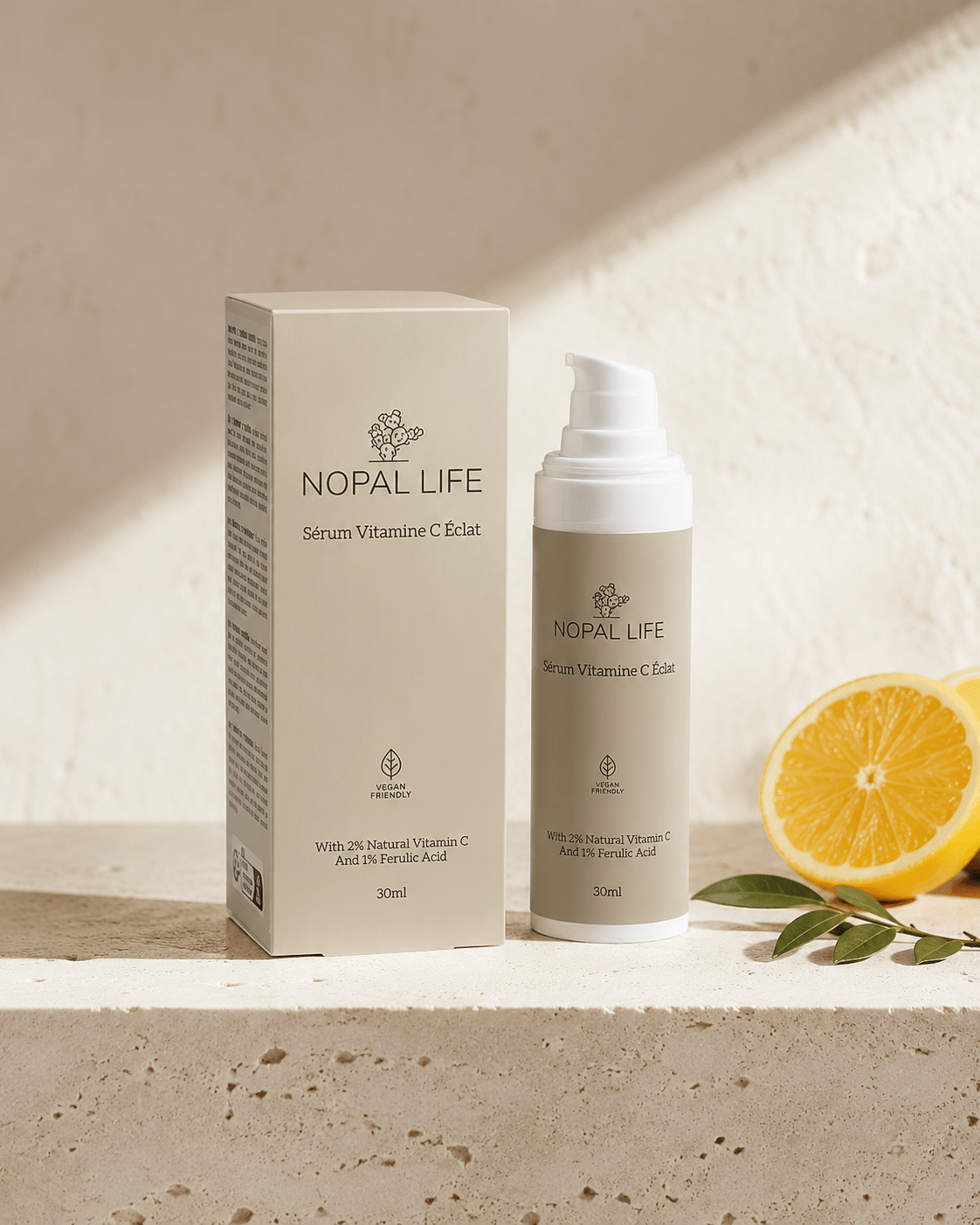
After double cleansing, apply the stabilized vitamin C serum to slightly damp skin: a few drops are enough (3 to 5), spreading from the center of the face towards the temples and neck with upward strokes. Allow to penetrate for 2 to 3 minutes before applying your daily moisturizer. This sequence—cleansing / serum / moisturizer—forms the core of the spot radiance routine recommended for dry and mature skin. In the morning, always finish with an SPF 30 to 50: vitamin C does not replace photoprotection; the two actions are complementary.
Regularity is key to benefiting from the active ingredient. Visible effects on the apparent homogeneity of the complexion and radiance are generally observed between 4 and 8 weeks of daily use. To best benefit from a radiance and even complexion routine, combine stabilized vitamin C in the morning with niacinamide in the evening—these two active ingredients are complementary for an even complexion appearance and can follow each other without compatibility issues, contrary to some widespread myths. If your skin is particularly reactive, start with a frequency of 3 times a week before progressing to daily application.
Mistakes to Avoid and Complementary Care for Dry and Mature Skin
The most common mistake concerns product storage. Stabilized vitamin C, even if it is more resistant than pure ascorbic acid, remains sensitive to heat and light. An open bottle stored on a sunny windowsill or in a steamy bathroom will gradually lose its qualities. Opt for an opaque or amber bottle, stored away from heat. If your serum turns dark orange or brown, it's a sign of advanced oxidation: the product has lost most of its qualities and may even become less pleasant on dry and sensitized skin.
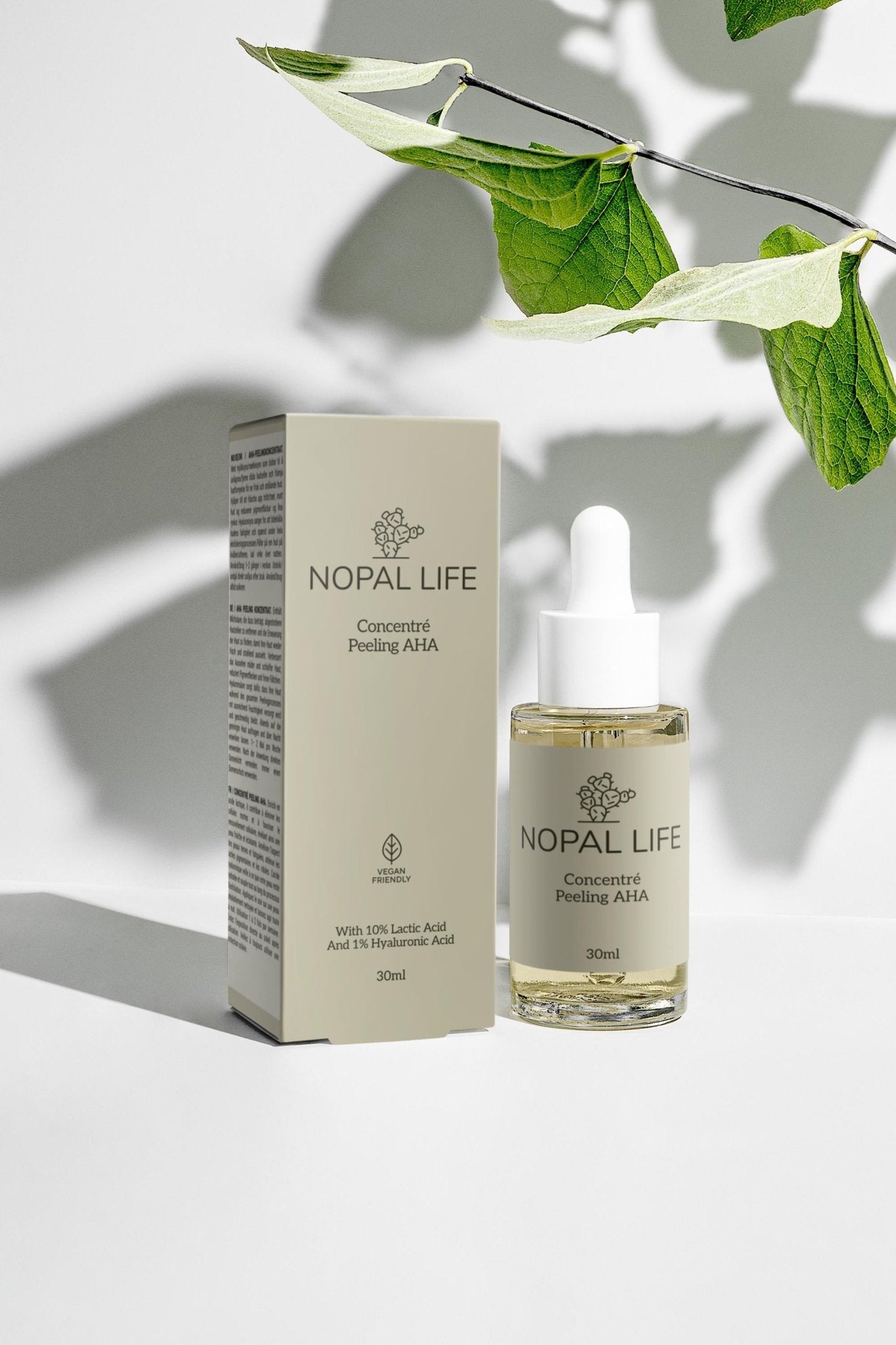
Another mistake is to combine stabilized vitamin C with powerful exfoliating acids (AHA/BHA) in the same application. For mature skin that uses glycolic or salicylic acids, it is preferable to stagger them: vitamin C in the morning, acids in the evening. This alternation avoids any sensory overload and preserves the comfort of the skin barrier, which is particularly stressed on dry skin. Similarly, simultaneous use with pure retinol in the same layer should be avoided; alternate evenings according to your needs. For personalized support for your routine, the Nopal Life Skin Intelligence™ skin diagnosis can guide you towards the most suitable combination of active ingredients for your unique skin profile.
Also, do not neglect the importance of adequate hydration in addition to stabilized vitamin C. On dry or mature skin, the active ingredient will be better tolerated and more pleasant if the skin barrier is first comforted by humectants (hyaluronic acid, glycerin) and emollients (ceramides, squalane). Thinking of stabilized vitamin C as an isolated active ingredient would be a mistake: it is part of a global skincare strategy where hydration, sun protection, and apparent complexion uniformity mutually support each other to reveal the best of mature skin.
Stabilized Vitamin C: The Natural Ally for Radiance and Comfort of Dry Skin
Stabilized vitamin C offers dry and mature skin a range of cosmetic benefits that go far beyond mere superficial radiance. By supporting the skin's firm and plump appearance, it contributes to the dense and toned look of the epidermis, two parameters whose appearance evolves with age and chronic lack of hydration. On mature skin, it helps to reduce the appearance of texture irregularities—visible pores, micro-roughness—by supporting the skin's natural renewal. The visible result: a brighter complexion, sharper-looking contours, and skin that gradually regains its vibrant and radiant appearance.
Topical vitamin C is widely appreciated for helping to improve the overall appearance of the skin. Stabilized forms are particularly popular for the comfort they provide to sensitive and mature skin, with a sensation of smoother skin texture, less noticeable fine lines, and a more even complexion over weeks. This contribution is often considered even more relevant by users aged 45 and over, which highlights the particular interest of this active ingredient for mature skin.
To effectively use stabilized vitamin C daily on dry or mature skin, remember these fundamental principles: apply it in the morning after double cleansing, on clean and slightly damp skin, before your moisturizer and SPF. Choose an appropriate concentration (10 to 20% for a visible effect, 5% to start on sensitive skin), in a formula with a neutral pH for optimal tolerance. Use it continuously for at least 8 weeks before appreciating the results on your skin's radiance, evenness, and comfort.
Why choose Nopal Life for a luminous and even complexion
Achieving a radiant and even-looking complexion relies on a holistic approach: supporting the skin's natural renewal, helping to unify the appearance of the complexion, and nourishing the skin barrier for a healthy-looking reflection. Nopal Life has selected active ingredients recognized for this objective: stabilized vitamin C, plant-derived AHAs, antioxidant prickly pear oil. These active ingredients are combined in balanced formulations, tested under dermatological control.
The difference is visible: an even-looking complexion, refined-looking pores, and a smoother-looking skin texture. Our radiance care products are suitable for all skin tones and ages. Discover your personalized radiance routine with our Skin Intelligence diagnosis.
Frequently Asked Questions
Q: What is the difference between pure ascorbic acid and stabilized vitamin C?
A: Pure ascorbic acid is the native form of vitamin C, but it oxidizes quickly and requires a very acidic pH (below 3.5) to remain active, which can be uncomfortable for dry and sensitive skin. Stabilized vitamin C refers to chemically protected derivatives (ascorbyl glucoside, magnesium ascorbyl phosphate, etc.) that remain stable longer, tolerate neutral pH values, and gradually release ascorbic acid upon contact with the skin. For dry or mature skin, stabilized forms are generally better suited.
Q: How often should I use stabilized vitamin C on dry skin?
A: For dry or mature skin, start with daily application in the morning. If your skin is very reactive, begin 3 times a week and gradually increase. Visible effects on radiance and apparent evenness are generally noticed after 4 to 8 weeks of regular use. Consistency is more important than intensive frequency: continuous daily application is better than irregular high-concentration use.
Q: Is stabilized vitamin C compatible with double cleansing?
A: Absolutely. Double cleansing ideally prepares the skin to receive stabilized vitamin C. By removing residual oily films (SPF, makeup, excess sebum) with a cleansing oil, then impurities with a gentle aqueous cleanser, you create a clean and receptive skin surface that promotes the diffusion of the subsequently applied vitamin C serum. For dry skin, be sure to choose sulfate-free cleansers so as not to compromise the comfort of the skin barrier before applying the active ingredient.
Q: Can I use stabilized vitamin C if I have very dry and tight skin?
A: Yes, provided you take a few precautions. Apply the vitamin C serum to slightly damp skin to facilitate diffusion and limit any sensation of tightness. Follow immediately with a moisturizer rich in humectants and emollients (hyaluronic acid, glycerin, ceramides, squalane). If, despite these precautions, you experience discomfort, temporarily opt for a lower concentration (5 to 7%) or a formula enriched with hydrating agents.
Q: Can stabilized vitamin C replace sunscreen?
A: No. Stabilized vitamin C is an antioxidant ingredient appreciated for helping to protect the skin from external aggressions, but it does not absorb UV radiation like a sunscreen does. These two products are complementary and not interchangeable. Always apply your SPF 30 to 50 after your vitamin C serum in the morning: sun protection remains the number one preventative measure, essential for mature skin.
Q: How do I know if my stabilized vitamin C serum has expired or is oxidized?
A: Signs of advanced oxidation are visible to the naked eye: the product, which was initially colorless, white, or slightly yellowish, becomes bright orange, dark orange, or brown. A slightly rancid smell or a smell different from the initial scent is also an indicator. An oxidized product has lost most of its cosmetic qualities and, in some cases, may become less pleasant on the skin. Respect the period after opening (PAO) indicated on the packaging.
Q: Can stabilized vitamin C help reduce the appearance of dark spots on mature skin?
A: Yes, this is one of its most appreciated cosmetic uses. Stabilized vitamin C helps reduce the visible appearance of spots and supports the skin's even appearance. It also helps to homogenize the appearance of existing spots by supporting the skin's natural renewal. Visible results are generally observed after 8 to 12 weeks of daily application, combined with rigorous sun protection to preserve the apparent uniformity of the complexion.
Q: At what step of my routine should I apply stabilized vitamin C?
A: Stabilized vitamin C should be applied after cleansing and toning (if you use one), before moisturizer and SPF. On slightly damp skin, a few drops (3 to 5) are sufficient, spread with gentle movements from the center of the face towards the temples. Allow 1 to 3 minutes to absorb before the next layer. This sequence promotes diffusion and prevents any dilution of the active ingredient by subsequent moisturizing layers.
Information provided for cosmetic and educational purposes; it does not constitute medical advice.
Read More
Our anti-aging treatments