The effect of Vitamin C on wrinkles: what you need to know
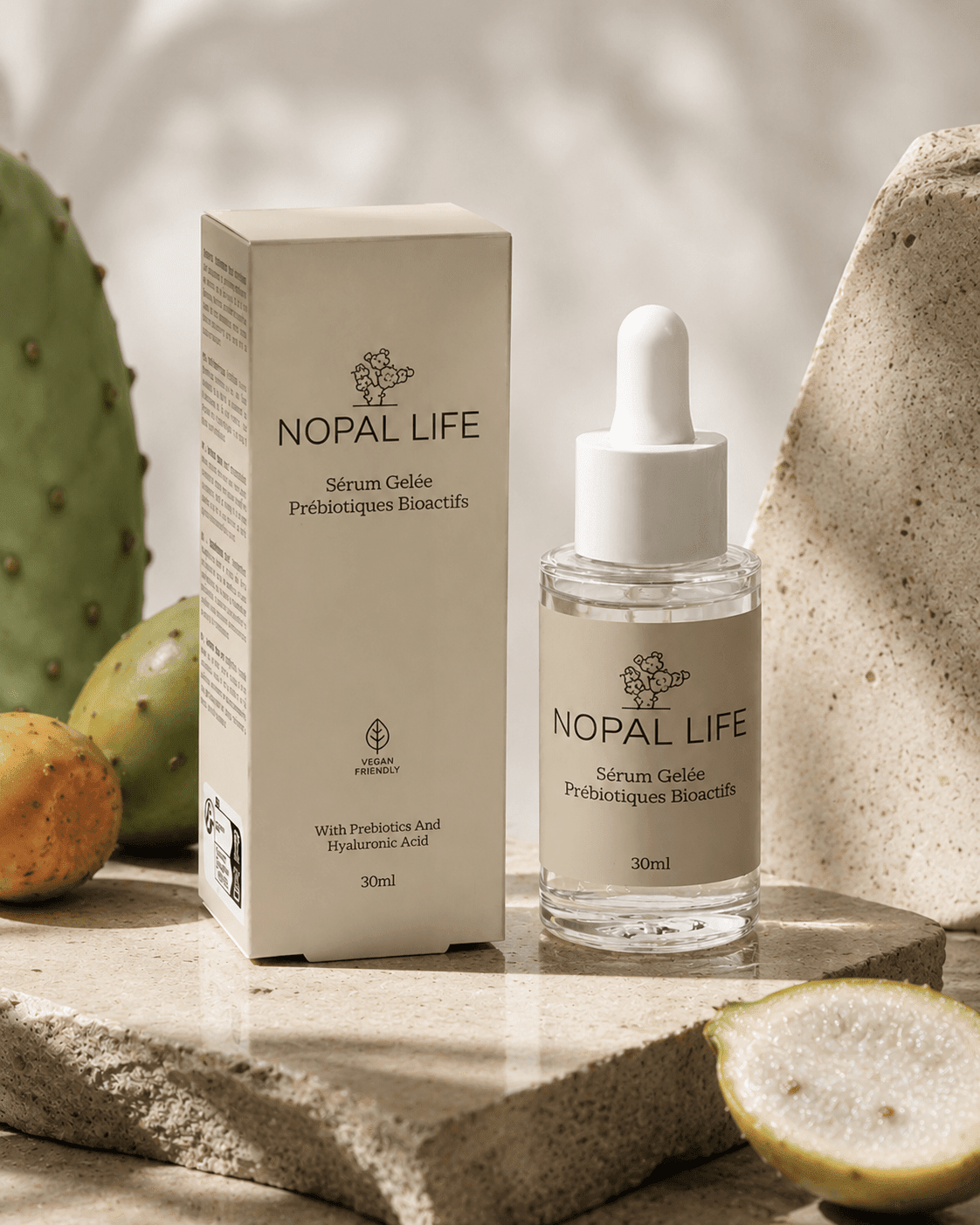
Mature skin faces several natural challenges: decreased collagen production, loss of elasticity, and the appearance of fine lines and more pronounced wrinkles. In this context, certain cosmetic active ingredients can help support the skin's natural mechanisms and preserve its radiance. Vitamin C is one of these particularly beneficial ingredients, especially when incorporated into natural skincare products concentrated with anti-ageing actives .
Among the most studied anti-ageing cosmetic ingredients, Vitamin C holds a prominent place. Renowned for its antioxidant and brightening properties, it is now widely incorporated into facial care products designed to prevent the signs of skin ageing. But what is the actual effect of vitamin C on wrinkles? Can it smooth the skin, improve its firmness, or simply revive the complexion's radiance?
Mature skin faces several natural phenomena: decreased collagen production, loss of elasticity, appearance of fine lines and more pronounced wrinkles. In this context, certain cosmetic active ingredients can help support the skin's natural mechanisms and preserve its radiance. Vitamin C is one of these particularly interesting ingredients, especially when incorporated into natural anti-ageing concentrated care products.
In this article, we delve into the effects of vitamin C on wrinkles, its action on the skin, its benefits for mature skin, and the best ways to incorporate it into a natural and effective skincare routine.
What is Vitamin C and why is it used in cosmetics?
Vitamin C, also known as ascorbic acid, is an essential vitamin for the proper functioning of the body. In cosmetics, it is particularly sought after for its antioxidant properties and its role in collagen production.
A powerful natural antioxidant
Skin is constantly exposed to environmental stress factors:
-
pollution
-
UV rays
-
oxidative stress
-
tobacco
-
fatigue
These elements promote the formation of free radicals that accelerate skin ageing.
Vitamin C acts as an antioxidant shield, helping to neutralise these free radicals and protect skin cells.
A key active ingredient for collagen production
Collagen is an essential protein for skin structure. It helps maintain:
-
firmness
-
elasticity
-
skin density.
With age, collagen production naturally decreases. Vitamin C plays an important role in its synthesis, which explains its interest in anti-ageing care.
Why do wrinkles appear with age?
To understand the effect of vitamin C on wrinkles, it is important to understand the mechanisms of skin ageing.
Several biological phenomena are involved:
-
decrease in collagen and elastin
-
reduction in skin hydration
-
slowing of cell renewal
-
accumulation of oxidative damage.
These changes lead to:
-
a loss of firmness
-
the appearance of fine lines
-
more pronounced wrinkles
-
a less radiant complexion.
Anti-ageing treatments therefore aim to act on several levers: hydration, antioxidant protection, and stimulation of skin regeneration.
 
|
 |
The effects of vitamin C on wrinkles
Stimulating collagen production
One of the main effects of vitamin C on wrinkles is its role in collagen synthesis.
By supporting the activity of fibroblasts (the cells that produce collagen), it can help to:
-
improve skin firmness
-
strengthen dermal structure
-
slow down the appearance of wrinkles.
Better supported skin is generally smoother and more toned.
Improving skin texture
Vitamin C also promotes cell renewal. This helps to improve:
-
skin texture
-
complexion radiance
-
overall skin appearance.
More regularly renewed skin often appears more even and radiant.
Reducing visible signs of ageing
Thanks to its antioxidant action, vitamin C helps protect the skin against aggressions responsible for premature ageing.
It can help to:
-
reduce the appearance of fine lines
-
improve complexion radiance
-
even out skin tone.
Vitamin C and hydration: an indirect but essential role
Vitamin C is not a hydrating active ingredient per se. However, it indirectly contributes to improving skin hydration.
When combined with hydrating active ingredients like Hyaluronic Acid, it helps to:
-
maintain skin elasticity
-
improve skin suppleness
-
smooth fine lines related to dehydration.
These combinations are particularly interesting in routines for mature skin that needs intense hydration and targeted anti-ageing active ingredients.
Vitamin C and complementary active ingredients: what synergies for mature skin?
To maximise the effects of vitamin C on wrinkles, it is often combined with other cosmetic active ingredients.
Vitamin C and hyaluronic acid
This combination helps to:
-
intensely hydrate the skin
-
improve skin suppleness
-
enhance the plumping effect.
Vitamin C and retinol
Retinol is an active ingredient known for stimulating cell renewal.
Combined with vitamin C, it can help to:
-
improve skin texture
-
reduce the appearance of wrinkles
-
promote skin regeneration.
Vitamin C and vegetable oils
Natural oils rich in antioxidants provide essential fatty acids that nourish the skin and strengthen the skin barrier.
Certain vegetable oils are particularly valued in natural anti-ageing routines for their richness in vitamin E and sterols.
How to incorporate vitamin C into an anti-ageing skincare routine?
Step 1: Cleanse the skin
Gentle cleansing removes impurities and prepares the skin to receive active ingredients.
Natural cleansers respect the skin's balance and avoid irritating sensitive skin.
Step 2: Apply a vitamin C serum
Serums are often the most concentrated products in active ingredients.
A vitamin C serum can help to:
-
brighten the complexion
-
protect the skin against external aggressions
-
support collagen production.
Step 3: Hydrate and nourish the skin
A face cream or vegetable oil helps to:
-
strengthen the skin barrier
-
maintain hydration
-
nourish the skin.
Some routines also incorporate plant-based active ingredients rich in antioxidants to support the regeneration of mature skin.
Step 4: Supplement with targeted treatments
Masks and gentle exfoliants help to:
-
remove dead cells
-
promote the penetration of active ingredients
-
improve complexion radiance.
 |
 
|
Common mistakes with vitamin C in cosmetics
Using too low a concentration
Some products contain very little vitamin C. In this case, the effects on the skin may be limited.
Neglecting formula stability
Vitamin C is an active ingredient sensitive to oxidation. A well-stabilized formulation is essential to guarantee its effectiveness.
Forgetting sun protection
UV protection remains essential to prevent skin ageing.
Expert advice for maximising the effects of vitamin C
To optimize the effects of vitamin C on wrinkles:
-
choose certified organic natural cosmetics
-
select formulas rich in concentrated active ingredients
-
adopt a regular routine adapted to the skin's needs.
Treatments combining several natural anti-ageing active ingredients often achieve more visible results, particularly for mature skin that needs hydration, nourishment, and antioxidant protection.
FAQ – Effect of vitamin C on wrinkles
Can vitamin C reduce wrinkles?
It does not eliminate deep wrinkles, but it can improve the appearance of the skin by supporting collagen production and protecting against oxidative stress.
At what age should vitamin C be used?
It can be used from the first signs of ageing, generally around 30 years old.
Can vitamin C be used every day?
Yes, vitamin C is often used daily in skincare routines.
Is vitamin C suitable for sensitive skin?
Yes, provided that appropriate and well-dosed formulations are chosen.
Can vitamin C be combined with other anti-ageing active ingredients?
Yes. It combines very well with hyaluronic acid, plant oils or certain regenerating active ingredients.
Conclusion
The effect of vitamin C on wrinkles is mainly based on two mechanisms: its protective antioxidant action and its role in collagen production. Thanks to these properties, it helps improve skin firmness, revive complexion radiance, and support skin regeneration.
For mature skin, vitamin C is thus a valuable active ingredient in a natural skincare routine. Combined with hydrating and nourishing active ingredients, it helps preserve skin suppleness and slow down the visible signs of skin ageing.
Integrated into natural skincare products with concentrated active ingredients, it is fully part of a global approach to skin beauty, respectful of its balance and needs over time.


Go further than this article
Get our skincare guides by email — and start with your free skin diagnostic: 2 minutes, advice tailored to your skin. We ship to the US, UK, Canada, Australia and 27 European countries; somewhere else? Sign up and you will be the first to know when we deliver to your country.
By signing up, you agree to our privacy policy. Unsubscribe in one click.