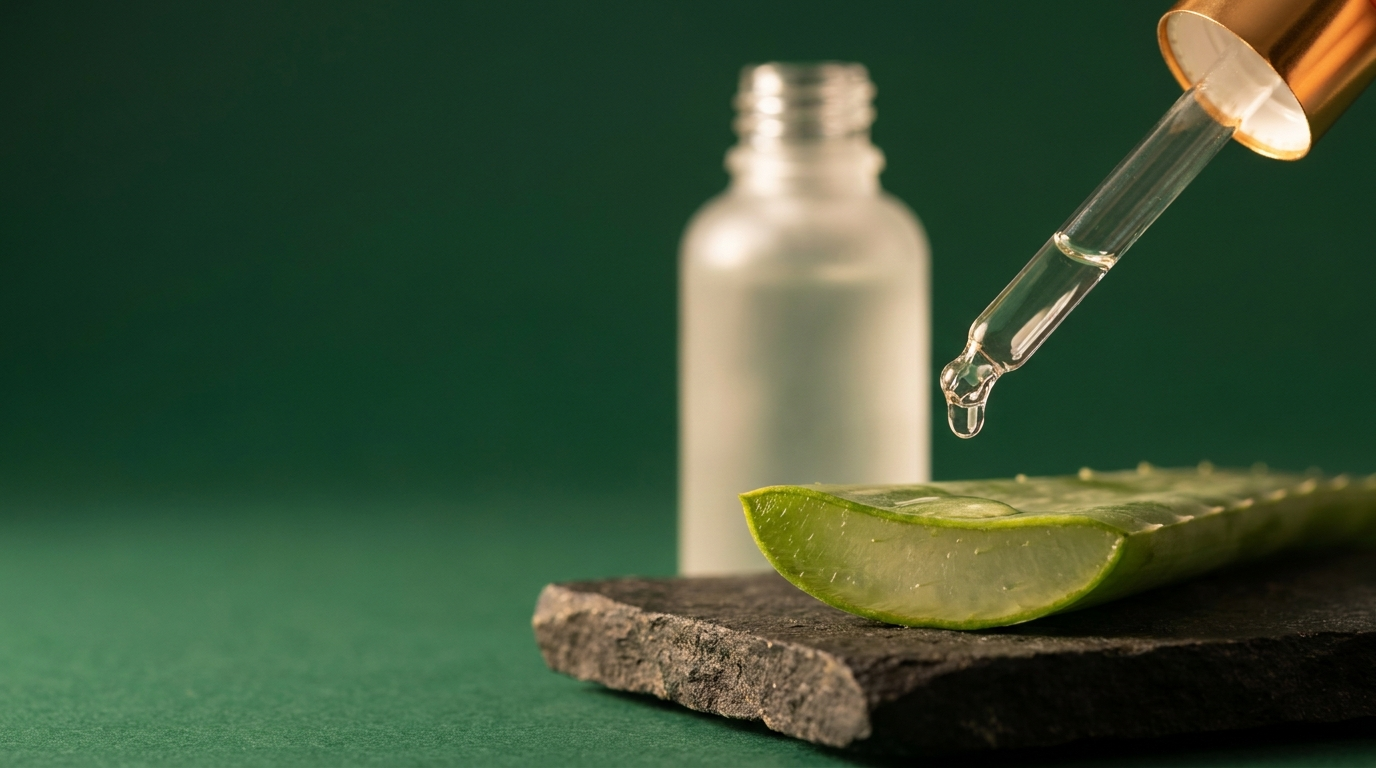
Niacinamide or Aloe Vera: Which one for your skin?
They don't operate on the same time scale. Aloe vera gel soothes and refreshes immediately upon application; niacinamide works on skin texture and pores in six to eight weeks. One relieves, the other transforms. If your skin feels hot, use aloe. If its appearance bothers you, use niacinamide.
Side-by-side comparison
| Criterion | Niacinamide | Aloe vera |
|---|---|---|
| Nature | vitamin B3, isolated molecule | plant gel, complete ingredient |
| Perceived effect | gradual, 6 to 8 weeks | immediate, upon application |
| Skin type | visible pores, uneven complexion, shine | heated skin, temporary redness, discomfort |
| Usual concentration | 4 to 10 % | pure gel, in a thin layer |
| Tolerance | good, possible tingling at first | excellent if the formula is simple |
| Texture | fluid serum | fresh, non-greasy gel |
What niacinamide does
Vitamin B3 is one of the best-documented active ingredients in cosmetics. It helps strengthen the skin barrier by supporting the synthesis of lipids that ensure the cohesion of the superficial layers. A stronger barrier retains moisture better and withstands aggressions better.
It is also associated with regulating sebum production and a visible refinement of skin texture. These changes require patience: allow six to eight weeks of regular use before judging.
What aloe vera does
Aloe vera gel is mostly composed of water, accompanied by polysaccharides that retain it on the surface. It has long been used for skin that is heated or shows temporary redness.
Its advantage is twofold: an immediate perceived effect and excellent tolerance. One caveat, however—many commercial gels contain fragrance and alcohol, which are the most frequent cause of reactions mistakenly attributed to aloe. A short ingredient list is better than a high percentage advertised on the label.
According to your skin type
Oily or combination skin: niacinamide is the best first choice. Aloe gel can be used as a light layer on the T-zone, without fatty substances.
Sensitive or reactive skin: start with aloe, which is better tolerated and does not require acclimatization. Introduce niacinamide afterwards, at 4 or 5%, every other day.
Dry skin: neither is sufficient on its own. Both require a fatty substance on top, otherwise the added water will evaporate.
Combining them, which resolves most cases
They are perfectly compatible, and the order is simple: aloe gel first, niacinamide serum next, and a fatty substance to finish.
Wait one to two minutes between the gel and the serum, until the aloe no longer feels sticky. Without this pause, the application becomes irregular and the sensation unpleasant.
A common mistake
Introducing both on the same day. If redness appears, you won't know which one to blame. One active ingredient at a time, three to four weeks apart: this is the rule for all cosmetic active ingredients, and it saves time rather than costing it.
Formulas, concentrations, and proper use
For niacinamide, concentration matters more than the brand: four to ten percent covers most needs. For aloe vera, it's the position of the extract in the ingredient list that matters, more than the advertised percentage.
One to two applications per day are sufficient in both cases. Beyond that, you don't get more: you consume more.
Where their action ends
Neither replaces sun protection. These products are cosmetic treatments: their role is limited to comfort and appearance. Persistent redness or worsening despite a gentle routine warrant dermatological advice.
Frequently Asked Questions
Can both be used in the same routine?
Yes. Aloe vera gel first, niacinamide serum one to two minutes later, then a fatty substance. There is no incompatibility between them.
Which one to choose for visible pores?
Niacinamide, without hesitation. This is one of the areas where it is best documented, with gradual results over six to eight weeks.
Can aloe vera irritate?
Aloe itself is very well tolerated. Reactions almost always come from the fragrance or alcohol present in some gels. Check the ingredient list.
What concentration of niacinamide to start with?
Four to five percent. Higher concentrations do not provide a demonstrated benefit and increase discomfort in reactive skin.
When tolerance decides
Niacinamide is well tolerated, but it is still an active ingredient: on very reactive skin, it requires a gradual increase in use. Aloe vera requires no such gradual increase. Starting with an aloe vera day cream for sensitive skin helps stabilize comfort before introducing anything else.


Go further than this article
Get our skincare guides by email — and start with your free skin diagnostic: 2 minutes, advice tailored to your skin. We ship to the US, UK, Canada, Australia and 27 European countries; somewhere else? Sign up and you will be the first to know when we deliver to your country.
By signing up, you agree to our privacy policy. Unsubscribe in one click.