Hyaluronic acid or jojoba: which one for your skin?
Jojoba is not an oil in the strict sense, and this particularity explains everything. It's a liquid wax whose composition is similar to human sebum, which makes it unusually well-tolerated by combination and oily skin. Hyaluronic acid, on the other hand, is a humectant: it retains water without adding any fatty compounds.
Two Natures, Two Roles
| Criteria | Hyaluronic Acid | Jojoba |
|---|---|---|
| Nature | water-soluble humectant | liquid wax, plant esters |
| Place | beginning of routine | end of routine |
| Role | retain water on the surface | limit evaporation, soften |
| Combination and Oily Skin | yes | yes, its strong point |
| Texture | fluid, non-greasy | fine, absorbs quickly |
| Preservation | stable | very stable, rarely goes rancid |
What Hyaluronic Acid Does
It retains water in the upper layers and provides a visible plumping effect within a few days. Its action is superficial and reversible: it lasts as long as application is regular.
There's always one condition: it must be sealed. A serum applied alone in dry air can worsen tightness instead of reducing it.
What Jojoba Does
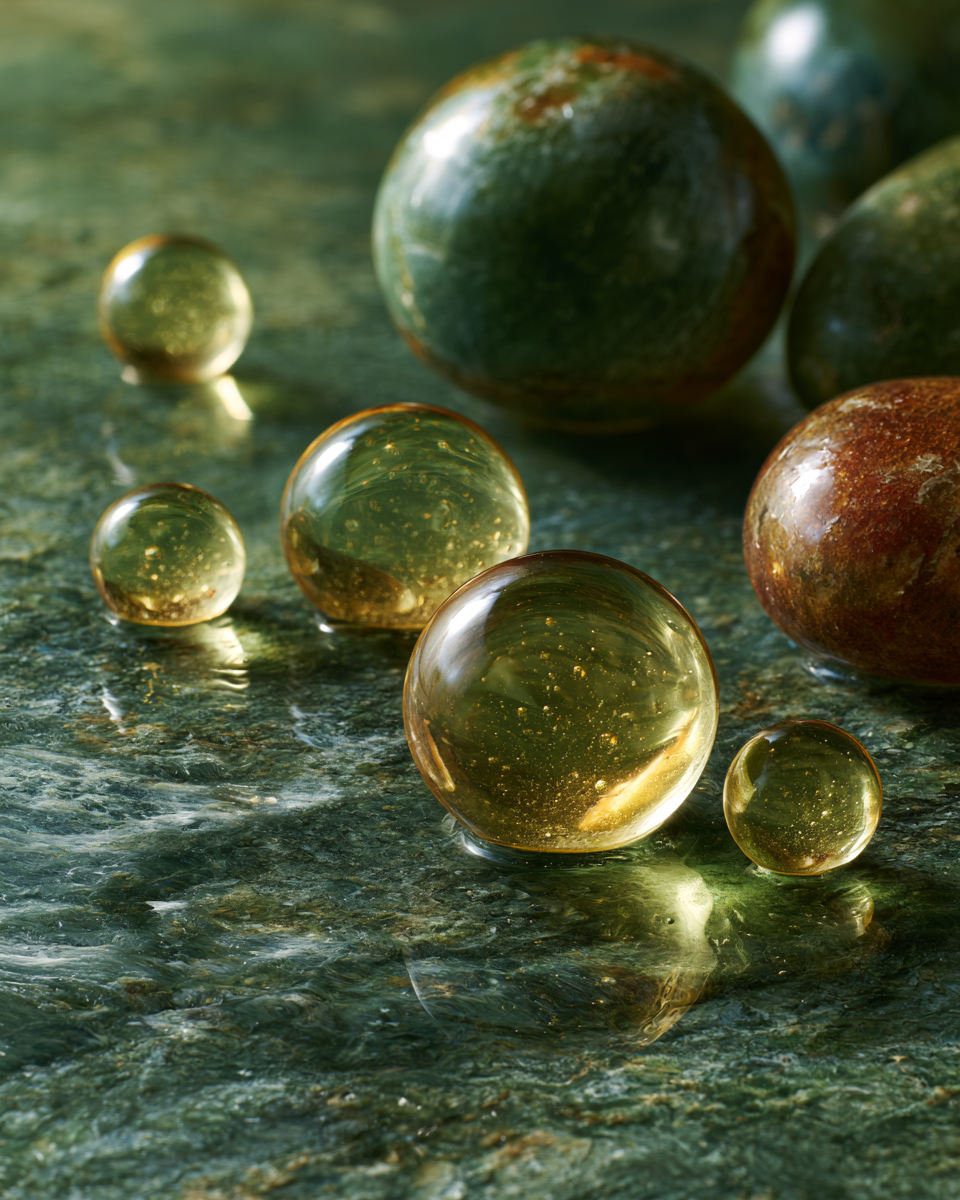
What is called "jojoba oil" is a liquid wax composed of esters whose structure is similar to that of sebum. This similarity explains its reputation for skin that produces a lot of sebum: it doesn't overload, absorbs quickly, and leaves a dry-to-the-touch finish.
It softens and limits evaporation. It doesn't provide water — that's the role of the serum, not its own.
Which One to Choose
Dehydrated skin, regardless of type: hyaluronic acid first. Lack of water cannot be compensated with a fatty substance.
Combination or oily skin that feels tight: jojoba is the best-tolerated fatty substance. A single drop is often enough.
Very dry skin: jojoba alone is a bit light. A richer oil is more suitable, or jojoba as a supplement.
Combining Them, Which Solves Most Cases
It's simple, and the order is dictated by physics.
1. Hyaluronic acid serum on slightly damp skin.
2. Wait one minute.
3. One to two drops of jojoba, pressed in.
Jojoba here acts as the final layer, performing the role a cream would. For combination skin, this is often the most comfortable formula of all: it seals without feeling heavy.
A Light Anti-Aging Routine
This combination forms a simple base to which other active ingredients can be added. Niacinamide is applied in the aqueous phase, before jojoba. An anti-aging active is integrated in the same way.
Neither of them acts directly on wrinkles. They improve comfort and appearance, making the skin look smoother without changing its structure.
Storage and Quantities
Jojoba is remarkably stable: its wax nature makes it less susceptible to oxidation, unlike oils rich in polyunsaturated fatty acids. A bottle can be stored for a long time without special precautions.
One to two drops are enough for the face. This is less than for a classic oil, as its texture provides better coverage.
Limitations
Neither replaces sunscreen. These are cosmetics: their scope is limited to the comfort and appearance of the skin.
Frequently Asked Questions
Is jojoba really an oil?
Technically no: it's a liquid wax composed of esters similar to human sebum. This similarity explains its good tolerance for combination and oily skin.
Can I replace my cream with jojoba?
For combination or oily skin, often yes. For very dry skin, it's a bit light: a richer oil or cream would be more suitable.
In what order should they be applied?
Hyaluronic acid serum first on damp skin, then jojoba. Always from aqueous to oily.
Is jojoba suitable for blemish-prone skin?It is generally well-accepted due to its similarity to sebum. Like any fatty substance, a patch test on a small area remains the best precaution.
For combination skin, the starting point is simple
Jojoba is an ester similar to what the skin produces itself, which makes it comfortable but oily to the touch. If your concern is about water and not the finish, a plumping hydrating gel solves the problem without adding material, and can be worn under makeup.
Our anti-aging treatments