Skin barrier protection: smoothed fine lines and firmness
The skin barrier of mature skin: understanding its structure and how it weakens with age
The skin barrier is a complex system that contributes to two essential functions: helping to limit transepidermal water loss (TEWL) and participating in protection against external aggressions. It is made up of a very precise lipid architecture – the lipid lamellae of the stratum corneum – composed of ceramides (approximately 50%), free fatty acids (25%), and cholesterol (25%). In mature skin, this system gradually weakens. With age, the content of cutaneous ceramides tends to decrease. This evolution explains why mature skin often exhibits increased TEWL, sensations of tightness, persistent dehydration even after applying moisturizing products, and increased sensitivity to irritants. A weakened barrier is also associated with a duller complexion and a less firm and plump appearance over time. Therefore, helping to preserve and maintain the comfort of this barrier is the number one priority for all dehydrated mature skin.
The stratum corneum is the outermost layer of the epidermis: about twenty layers of flattened cells, bound by a lipid cement. It is the first line of defense against external aggressions, and it renews itself completely in three to four weeks.
With age, this renewal slows down and the cement becomes depleted. The barrier function then performs less effectively: the skin surface retains less water and lets through more irritants.
TEWL and dehydration: understanding transepidermal water loss
TEWL (TransEpidermal Water Loss) refers to the amount of water that passively evaporates through the skin. On healthy skin, it usually remains below 10 g/m²/h. On mature skin with a weakened barrier, it can exceed 15 to 25 g/m²/h, which is accompanied by a sensation of dehydration. Skin dehydration is not simply a lack of water: it is accompanied by a less flexible stratum corneum, accentuates the visibility of fine lines, and gives the skin a more reactive appearance. NMF (Natural Moisturizing Factor) — a complex of amino acids, urea, pyrrolidone carboxylic acid, and lactates naturally present in the stratum corneum — plays an essential hygroscopic role: it helps to capture water from the environment and retain it in the surface cells. With age, the presence of NMF decreases, which accentuates the dehydrated appearance. Humectant active ingredients like hyaluronic acid, glycerin, and allantoin help compensate for this deficit by providing exogenous hygroscopic molecules. The skin's hyaluronic acid content also tends to decrease with the years, which highlights the importance of regular exogenous supply.
Ceramides, lipids, and barrier comfort: key active ingredients
Support for the lipid barrier involves the external supply of the three basic components of lipid lamellae. These topical components (ceramide NP, AP, EOP notably) are related to the lamellar structure of the stratum corneum. Topical ceramides are known to help improve the hydrated appearance of the skin over weeks. To perform at their best, these components are generally formulated in an emulsifying vehicle that respects the organization of lipids (physiological formulations). Essential fatty acids — especially linoleic acid (omega-6) — are associated with these constituents. This is why vegetable oils rich in omega-6 (prickly pear oil, rosehip, evening primrose) are particularly valued for helping to reinforce barrier comfort. Topical cholesterol completes the triad by supporting the overall suppleness. Niacinamide is a recognized active ingredient for helping the skin to appear more comfortable and even-toned. Finally, panthenol (pro-vitamin B5) helps to soothe the appearance of the skin and contributes, through the formation of a flexible but breathable film, to a lasting feeling of comfort.
Mistakes to avoid for the protection of mature skin barrier
The first major mistake is the excessive use of exfoliants: on mature skin with a weakened barrier, too frequent exfoliation (more than twice a week with concentrated AHAs, or daily use of strong retinol) can increase discomfort and the sensation of tightness. The rule is: the more fragile the barrier, the gentler and less frequent the exfoliation should be. The second mistake is to use strong detergent cleansers (SLS, SLES) which remove surface lipids along with impurities. A cleanser based on alkyl glucosides or cocoamphodiacetate respects the barrier more. The third mistake is to apply watery skincare without occlusion: a hyaluronic acid serum alone, without cream or oil on top, can increase discomfort by capturing water from the surface rather than from the environment (in dry conditions). Always seal with a gentle occlusive (shea butter, ceramides, vegetable oil). The fourth mistake is to neglect the thinnest areas (eye contour, expression lines) where the skin is thinnest and most prone to dehydration — these areas benefit from additional applications of ceramide serums or nourishing oils.
The first is over-cleansing. The stratum corneum takes hours to rebuild what an aggressive surfactant removes in a minute, and on mature skin this time is extended.
The second is to multiply active ingredients. Each new product stresses the barrier function, and an overloaded skincare routine maintains a surface fragility that is then attributed to age.
Firmness and barrier: the link between surface comfort and dermal appearance
The skin barrier and firmness seem to belong to two different realms, but they are closely linked in appearance. A weakened barrier often goes hand in hand with skin that appears less firm and duller. Conversely, a comfortable barrier helps the skin maintain a plumper appearance. The firm appearance and visible elasticity of the skin also tend to evolve with age — an evolution that seems more pronounced when the barrier is uncomfortable. Active ingredients that support both barrier comfort and the skin's firm appearance are therefore doubly valuable: niacinamide (comfort + soothing in appearance), ceramides (comfort + hydrated appearance), linoleic acid (related to ceramides), gentle retinol (radiance and visible firmness with progressive support for barrier comfort). The goal is to help the skin appear more comfortable, more even-toned, and firmer over time.
The Nopal Life routine for dehydrated mature skin
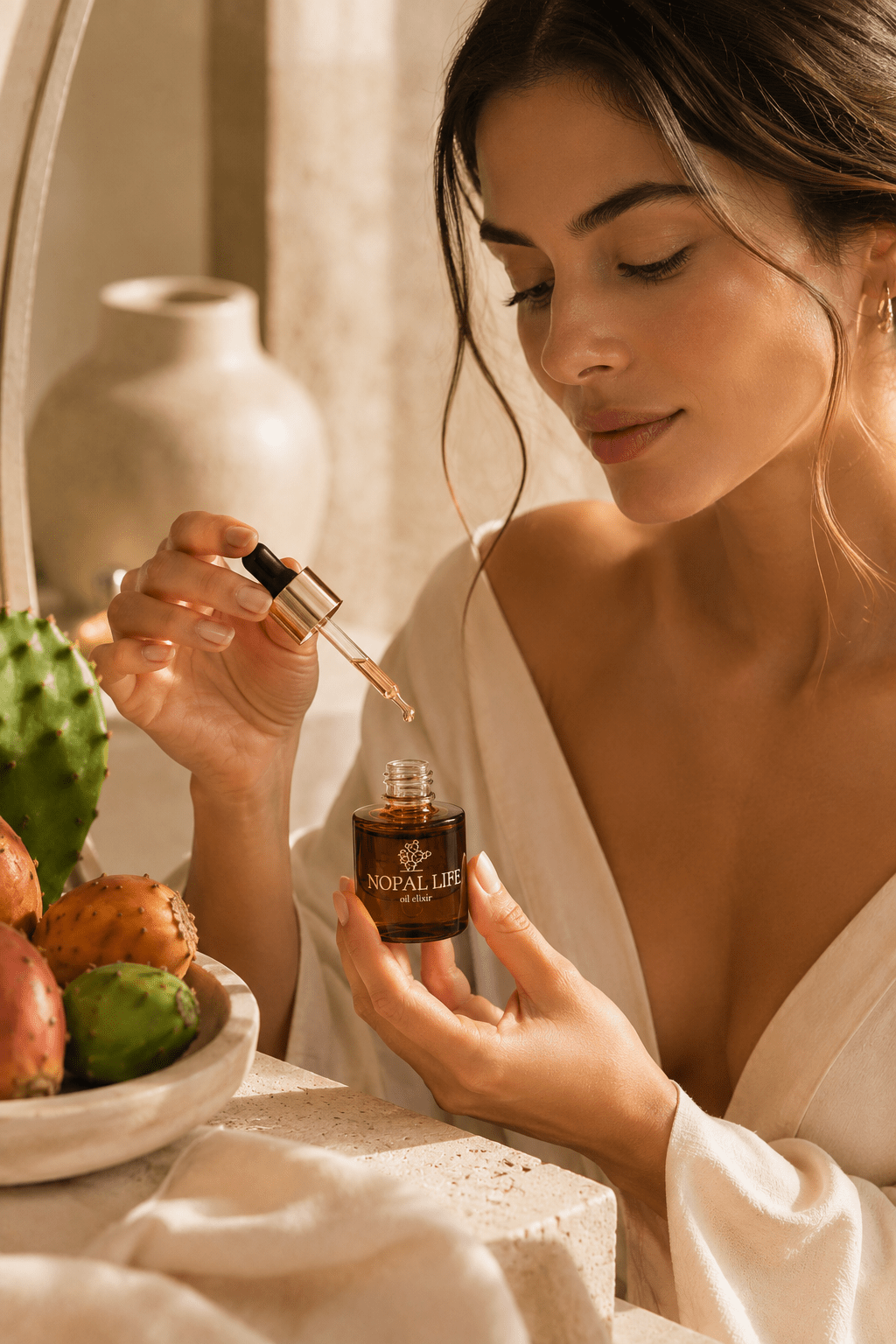
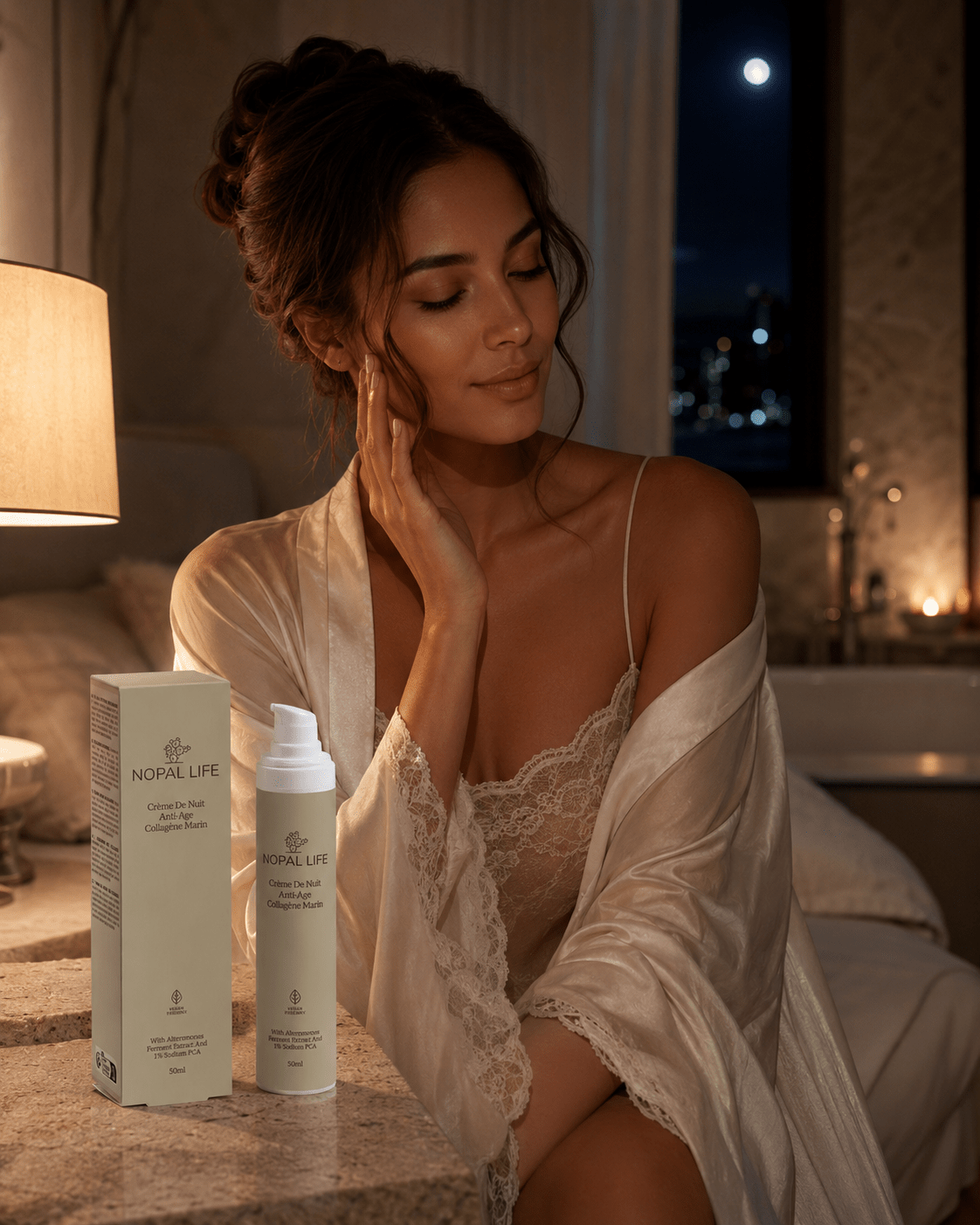
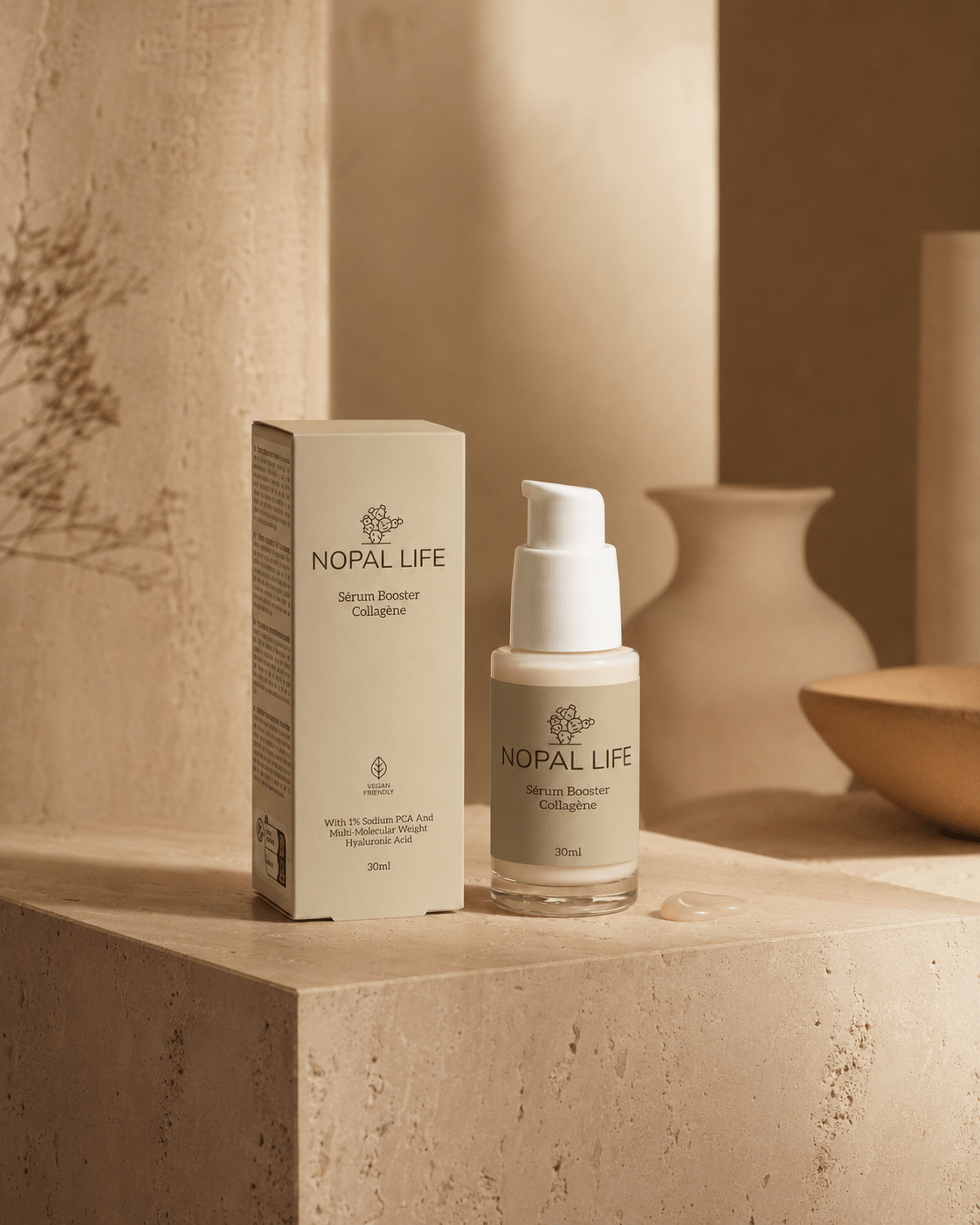
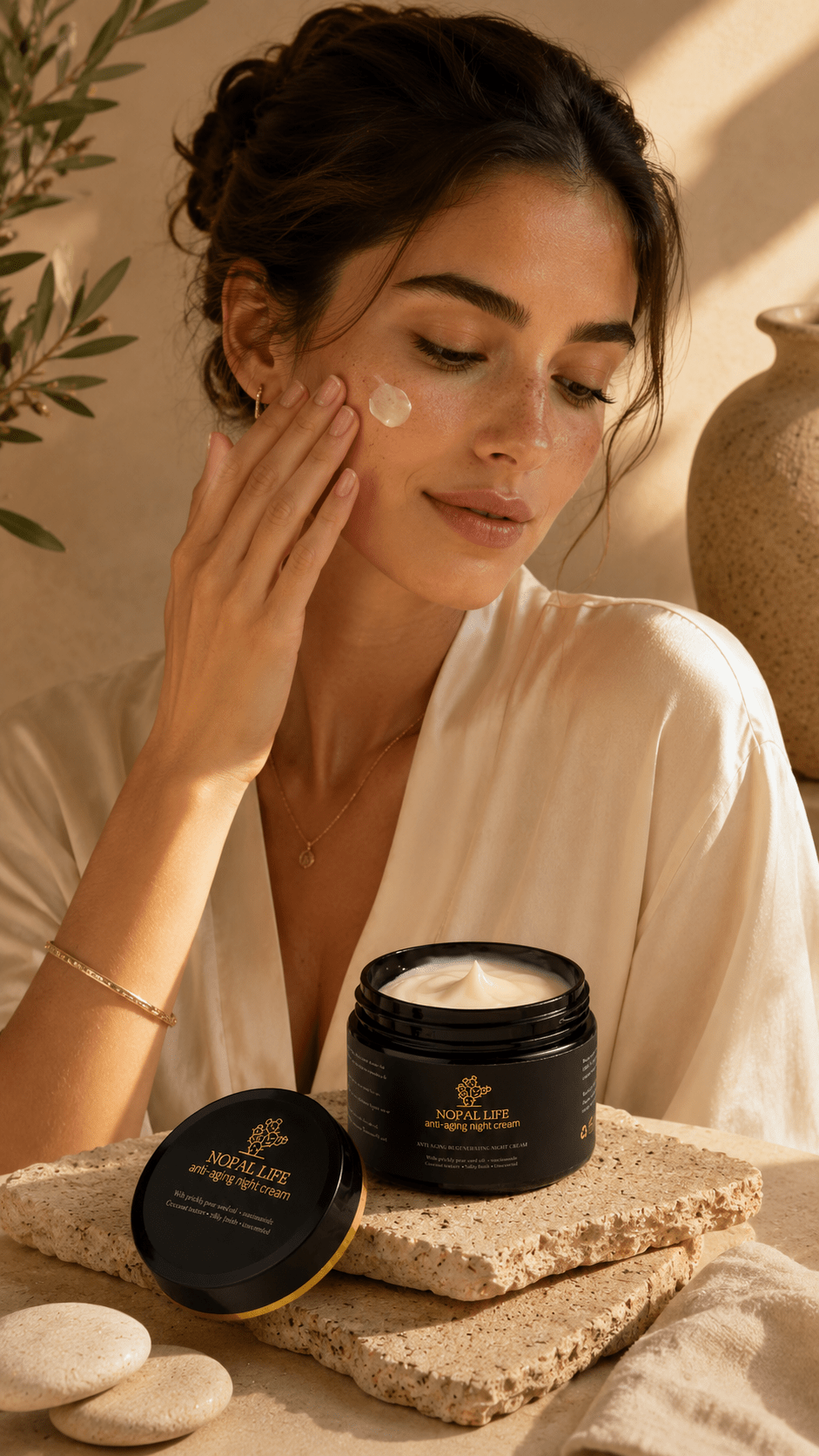
For dehydrated mature skin, the Nopal Life routine follows a progressive three-pronged reinforcement protocol. Axis 1: intense hydration. Bi-molecular hyaluronic acid serum applied to slightly damp skin, followed by a ceramide moisturizer to seal. Axis 2: lipid nutrition. A few drops of Nopal Life pure prickly pear oil as a third step in the evening: its richness in linoleic acid (related to this constituent) and tocopherols (antioxidants) makes it ideally suited for barrier comfort. Its lipid profile is similar to the composition of sebum in young skin, which promotes its good tolerance. Axis 3: active care. Niacinamide 5% in the morning to help the skin appear more even-toned and comfortable, combined with SPF 30-50. A low-dose retinol (0.025-0.05%) 2 nights a week completes the protocol to support the skin's natural renewal and firm appearance, while avoiding further weakening the barrier. Our Skin Intelligence diagnostic assesses the apparent state of the skin barrier and customizes this protocol.
Frequently Asked Questions
Q: How do I know if my skin barrier is weakened?
A: Typical signs: tightness after cleansing, reactive redness, tingling when applying products, persistent dehydration despite care, increased sensitivity to products usually well-tolerated.
Q: How long does it take to restore comfort to a damaged skin barrier?
A: With an appropriate protocol (ceramides, niacinamide, omega-6 vegetable oil, stopping irritants), noticeable improvement in comfort usually occurs within 2 to 4 weeks. Achieving optimal comfort often requires 2 to 3 months.
Q: Can thermal water help strengthen the barrier?
A: No, quite the opposite. Spraying thermal water without an occlusive on top can increase water loss through evaporation. Always apply an occlusive immediately after thermal water.
Q: Can retinol be used on a weakened barrier?
A: Yes, but very cautiously. Start with an encapsulated 0.025% retinol, every other night, sandwiched between two layers of moisturizer to buffer the irritating effect.
Q: Are ceramides effective in cream or only in serum?
A: Both are suitable. Ceramide serums offer a more fluid texture, while creams provide an additional occlusive effect. For very dehydrated skin, ceramide cream is often preferred.
Q: Can prickly pear oil replace a ceramide cream?
A: It does not replace it because it does not provide this preformed constituent. But by providing linoleic acid (related), it supports skin comfort and complements the effect of a ceramide cream.
Q: How often should prickly pear oil be applied to mature skin?
A: Daily in the evening, 2 to 3 drops. For very dry skin, a light application in the morning under SPF is also beneficial — its dry texture works under sunscreens without creating a heavy feel.
RECOMMENDED CARE
Pure Prickly Pear Seed Oil
Natural formula · Origin Algeria
DISCOVER THIS PRODUCT →PERSONALIZED ROUTINE
Nopal Life Skin Intelligence™
Free diagnostic · 2 minutes
DISCOVER MY ROUTINE →Ceramides, omega, and restorative cream: the key ingredients for a weakened barrier
Supporting a weakened skin barrier relies on a trio of fundamental ingredients: ceramides, omega-3 and omega-6, and an water-based occlusive cream that respects the natural hydrolipidic gradient. These components represent 50% of the intercellular lipids and contribute to the cohesion between corneocytes. A cream formulated with at least 3% ceramides (ceramide NP, EOP, and AP) helps to fill in less abundant lipid areas associated with insensitive water loss (TEWL) observed in weakened skin.
Omega-3 (alpha-linolenic acid) and omega-6 (linoleic acid) are associated with ceramides naturally present in the skin. Topical products containing these essential vegetable fatty acids — especially flaxseed oil for omega-3 and sunflower oil for omega-6 — are valued for supporting daily skin comfort.
Hydration and the role of water in healthy skin
The free water contained in the stratum corneum helps maintain the suppleness and extensibility of the skin surface. In healthy skin, its level ranges between 15 and 25%. Below 10%, the barrier appears less comfortable and products are less well tolerated on the surface. A purified water-based cream combined with humectant agents (urea 2–5%, glycerin, betaine) helps to capture atmospheric moisture and retain it in the surface layers. This two-step mechanism — attraction and retention — explains why the best hydrating ingredients always combine hydration and light occlusion for skin with a weakened barrier.
Ceramides, cholesterol, and fatty acids: the skin barrier trio
Ceramides never work alone. In the cement that binds surface cells, they combine with cholesterol and fatty acids to form a coherent protective film. It is the balance of this lipid trio that helps the skin stay supple, hydrated, and comfortable in appearance. When it becomes depleted — due to cold, age, or overly aggressive cleansers — the skin feels tight, reddens, and appears dehydrated more quickly.
How to choose a product to strengthen the skin barrier
To support the skin's barrier, look for a cream or serum that combines several lipids related to those of the skin surface, ideally with hyaluronic acid and vegetable glycerin for hydration. A rich texture, applied morning and evening on slightly damp skin, helps to seal in water and restore comfort to dry, sensitive, or mature skin.
Ceramides, omega, and restorative cream: the key ingredients for a weakened barrier
Supporting a weakened skin barrier relies on a trio of fundamental ingredients: ceramides, omega-3 and omega-6, and an water-based occlusive cream that respects the natural hydrolipidic gradient. These components represent 50% of the intercellular lipids and contribute to the cohesion between corneocytes. A cream formulated with at least 3% of this constituent (ceramide NP, EOP, and AP) helps to fill in less abundant lipid areas associated with insensitive water loss (TEWL) observed in weakened skin.
Omega-3 (alpha-linolenic acid) and omega-6 (linoleic acid) are associated with this gel naturally present in the skin. Topical products containing these essential vegetable fatty acids — especially flaxseed oil for omega-3 and sunflower oil for omega-6 — are valued for supporting daily skin comfort.
Hydration and the role of water in healthy skin
This content is for informational and educational purposes only; it does not replace medical advice, diagnosis, or dermatological consultation. In case of doubt or persistent skin problems, consult a qualified healthcare professional.
Our anti-aging treatments