Vegetable glycerin: hygroscopic humectant, skin barrier, and hydration for dehydrated skin
What is vegetable glycerin and where does it come from?
Vegetable glycerin—also known as glycerol—is a trihydroxy organic compound (C₃H₈O₃) primarily obtained as a byproduct of the saponification of vegetable oils. Specifically, when a vegetable oil reacts with a strong base (caustic soda or potash) to produce soap, the triglyceride molecule breaks down into fatty acids on one side and glycerol on the other. This purified glycerol constitutes the vegetable glycerin found in the vast majority of modern cosmetic formulas.
Its plant-based origin—derived from raw materials such as palm oil, rapeseed oil, or copra oil—clearly distinguishes it from glycerin of animal origin (from animal fats) or petrochemical synthetic glycerin. For sensitive skin and consumers concerned with naturalness, this plant-based traceability is an essential selection criterion.
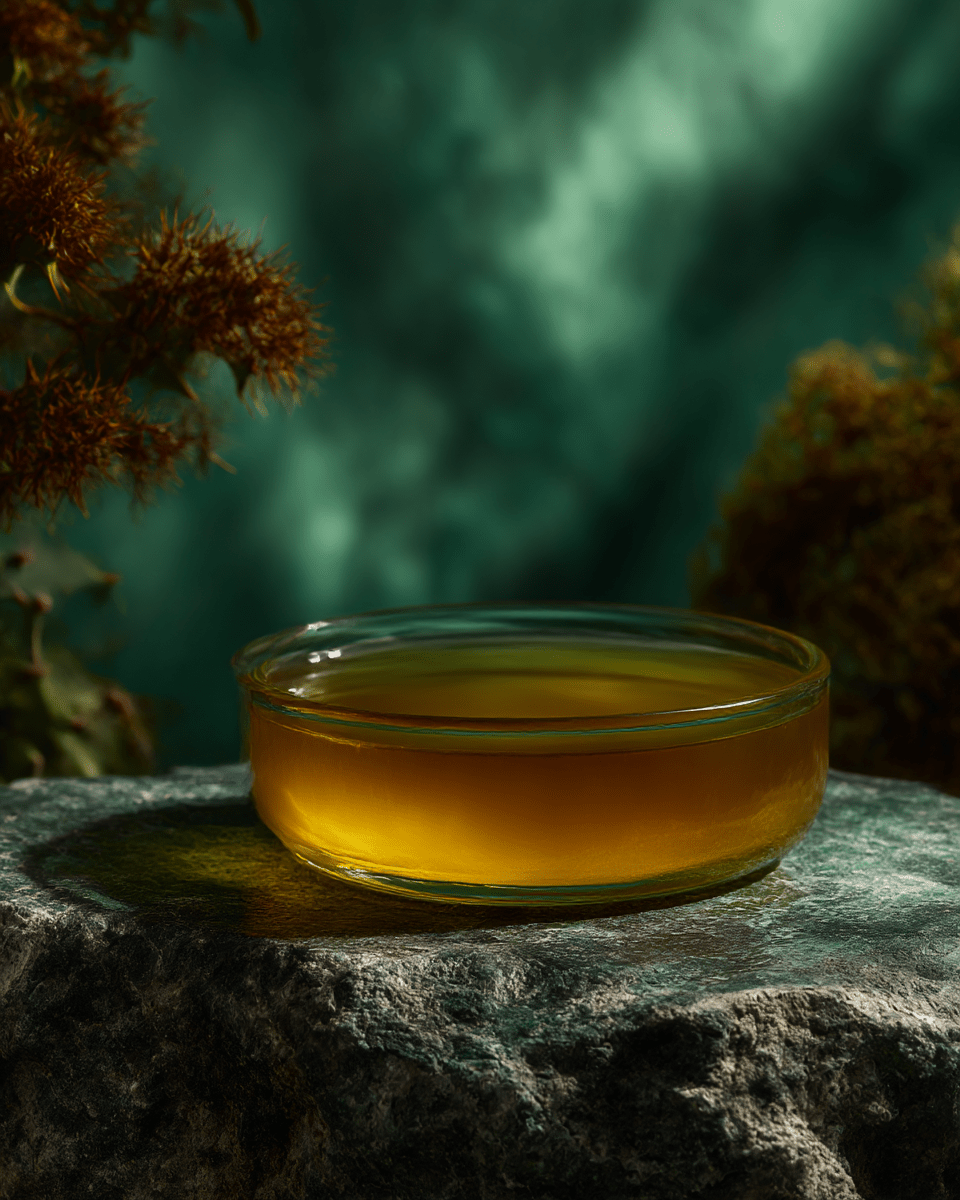
A viscous, colorless, odorless liquid with a slightly sweet taste, vegetable glycerin is considered a benchmark active ingredient in certified natural cosmetics. It is among the most scientifically documented ingredients, with decades of studies confirming its exceptional tolerance profile, including for dehydrated and reactive skin.
The hygroscopic mechanism: how glycerin truly hydrates the skin
Unlike vegetable oils, which form an occlusive film on the skin's surface to limit water loss, vegetable glycerin acts according to a fundamentally different mechanism: it is a hygroscopic humectant. This means it actively attracts water molecules—whether from the surrounding atmosphere or from the deep layers of the epidermis (the dermis)—and retains them in the superficial layers of the stratum corneum.
This water-attracting process relies on the specific chemical structure of the glycerol molecule: its three hydroxyl groups (-OH) are strongly hydrophilic and establish hydrogen bonds with water molecules. Glycerin thus acts as a true molecular sponge within the stratum corneum, maintaining optimal hydration levels even in dry climatic conditions or in the context of a compromised skin barrier.
This mechanism is particularly valuable for dehydrated skin: where sebum production may be normal but intracellular water content is insufficient, glycerin directly compensates for this deficit. It also interacts with aquaporins (protein channels facilitating water transport across cell membranes), thereby amplifying the epidermis's natural ability to regulate its hydration. A review published in the Journal of Investigative Dermatology confirmed that glycerin significantly improves barrier function via the activation of cutaneous aquaporin-3s.
2% vs 5% vs 10% concentration: what dose for your skin?
The effectiveness of vegetable glycerin in cosmetic formulations directly depends on its concentration, and the choice of dosage is one of the key decisions for the formulator. Clinical studies now provide a precise mapping of effects based on concentration:
At 2%: glycerin primarily plays a supporting and textural role. It improves the glide of the formula, facilitates spreading, and contributes to the immediate sensation of comfort after application. Its moisturizing effects are measurable (an increase in corneal hydration of about 8 to 12%) but remain modest and short-lived—generally 2 to 4 hours. This dosage is suitable for "leave-on" products applied frequently (multi-layer serums, light essences, mists) or formulas rich in active ingredients where glycerin plays a secondary role.
At 5%: considered the "effective" reference dosage in cosmetic scientific literature, this level corresponds to the optimal balance between moisturizing efficacy and skin tolerance. At 5%, glycerin increases epidermal hydration by 18 to 25% over 8 hours, improves skin suppleness, and gradually strengthens the barrier function with daily application. This is the preferred concentration for daily care targeting chronic dehydration and comfort for normal to combination sensitive skin.
At 10%: high-concentration glycerin formulas offer intense and prolonged humectant effects (up to 12 hours measured by corneometry). This dosage is particularly indicated for very dry, atopic skin or during aggravating winter conditions. However, beyond 10-12%, some skin types—especially acne-prone skin or skin with enlarged pores—may perceive an excess sticky film or a slightly uncomfortable occlusive sensation. A balanced formulation combining glycerin with other active ingredients can circumvent this drawback.
Vegetable glycerin and prickly pear seed oil: an exceptional barrier synergy
While glycerin excels at attracting and retaining water within the stratum corneum, it has a limitation inherent to its hygroscopic nature: in very dry atmospheres (relative humidity below 40%), it can, paradoxically, extract water from the deep layers of the skin rather than from the atmosphere, temporarily aggravating dehydration. This is precisely where the combination with prickly pear seed oil comes in.
The oil extracted from the seeds of Opuntia ficus-indica—the prickly pear—is one of the richest active ingredients in linoleic acid (omega-6, 55 to 65%) in the plant kingdom. Linoleic acid is the direct precursor of cutaneous ceramides, those intercellular lipids that form the "cement" of the skin barrier. Skin deficient in linoleic acid has a porous barrier, permeable to irritants, and unable to properly retain water.
The glycerin-prickly pear seed oil synergy operates at two complementary and distinct levels:
- Aqueous phase (glycerin): attracts and retains water in the superficial layers of the epidermis, ensuring immediate hydration and cellular turgor.
- Lipid phase (prickly pear seed oil): reconstitutes the surface lipid film, seals the humectant in place, fills inter-ceramide gaps, and limits transepidermal water loss (TEWL).
This humectant-emollient-occlusive complementarity constitutes the fundamental trinity of barrier care recommended by dermatologists. Prickly pear seed oil also provides a record concentration of vitamin E (tocopherols, up to 1,000 mg/kg), plant sterols (beta-sitosterol) with soothing properties, and antioxidant phenolic compounds that neutralize oxidative stress often associated with dehydrated sensitive skin and the degradation of barrier components. Discover our complete range in the humectants and moisturizers collection.
How to integrate vegetable glycerin into your P1 sensitive dehydrated skin routine
The effectiveness of vegetable glycerin depends as much on its dosage as on its positioning in the skincare routine. The P1 routine—designed specifically for sensitive dehydrated skin—integrates glycerin according to a rigorous layering logic:
Step 1 — Gentle cleansing: use a sulfate-free cleanser that preserves the hydrolipidic film. Glycerin is often present in these formulas as a softening co-surfactant, helping to maintain a slightly acidic pH (5.5) favorable to protective cutaneous microflora.
Step 2 — Toner or treatment water (glycerin 2-3%): apply to skin that is still slightly damp after cleansing. This step "primes" the skin's hydrating capacity and prepares the ground for subsequent active ingredients. Residual moisture amplifies glycerin's hygroscopic effect.
Step 3 — Concentrated serum (glycerin 5%): the core of the moisturizing routine. Apply 3 to 4 drops to the entire face with light patting motions (do not rub to avoid friction on fragile skin). Allow to penetrate for 60 seconds.
Step 4 — Pure prickly pear seed oil: 2 to 3 drops of Nopal Life pure prickly pear seed oil, applied immediately after the still-absorbing serum. This sequence ensures that the glycerin remains "sealed" under the lipid phase, optimizing the duration of its humectant effect. In the morning, prickly pear seed oil also makes an excellent natural primer under sunscreen.
In the evening, the same sequence can be enriched with a slightly higher dose of oil (4 to 5 drops) to benefit from the skin's natural nightly repair. As natural renewal is more active between 10 PM and 2 AM, the glycerin-prickly pear seed oil synergy actively supports this barrier regeneration process. Don't know your skin type yet? Use the Nopal Life Skin Intelligence™ diagnostic to identify your exact skin profile.
Mistakes to avoid with vegetable glycerin
Despite its excellent tolerance profile, vegetable glycerin can be misused and produce disappointing or even counterproductive effects. Here are the most common mistakes observed:
Mistake 1 — Using 100% pure undiluted glycerin: some consumers, convinced that "pure = more effective," apply pure vegetable glycerin directly to the skin. This is a significant mistake. At very high concentrations, glycerin becomes so hygroscopic that it absorbs water contained within the epidermal cells themselves, causing paradoxical dehydration. It should always be formulated in an aqueous solution (water, hydrosols) at concentrations between 2 and 15%.
Mistake 2 — Applying to dry skin in a very dry environment: as mentioned previously, in conditions of low ambient humidity, glycerin alone can draw water from deep layers to the surface, then lose it through evaporation. Always apply to slightly damp skin and seal imperatively with an emollient or prickly pear seed oil.
Mistake 3 — Ignoring the quality and origin of glycerin: not all glycerins are equal. Petrochemical-derived glycerin (synthetic propanediol, sometimes confused) or glycerin from animal fats does not offer the same guarantees of purity or compatibility with organic-certified formulas. Always check for "vegetable" or "végétale" mention and COSMOS or Ecocert certification.
Mistake 4 — Not adjusting the concentration according to the season: in summer (humid air), 5% glycerin is generally sufficient. In winter (indoor heating, dehydrated air), increasing to 8-10% or layering an additional amount of prickly pear seed oil is recommended to maintain optimal hydration.
Mistake 5 — Combining glycerin with denaturing active ingredients: some concentrated chemical exfoliants (AHAs at very low pH, strong retinoids) can interfere with the effectiveness of humectants on already fragile skin. If you integrate exfoliating active ingredients into your routine, apply them at a distinct time (evening only, alternately) and always complete with the glycerin + prickly pear seed oil sequence to support barrier restoration.
Ready to naturally strengthen your skin barrier?
Nopal Life pure prickly pear seed oil seals the action of vegetable glycerin and durably rebuilds your lipid film. An ideal combination for sensitive dehydrated skin.
Conclusion
As a hygroscopic humectant, vegetable glycerin captures water and retains it in dehydrated skin. It supports the barrier and restores comfort without feeling heavy. Its tolerance makes it universal. Integrated into a routine, glycerin ensures lasting suppleness and hydration.
FAQ — Vegetable glycerin skincare: your frequently asked questions
Is vegetable glycerin suitable for oily and acne-prone skin?
Yes, provided it is used at moderate concentrations (2 to 5%) in a light, non-comedogenic formula. Glycerin is non-comedogenic by nature, but its association with rich oils may not be suitable for very seborrheic skin. For dehydrated combination to oily skin, an aqueous serum based on glycerin (without oil) is an ideal moisturizing solution.
Can vegetable glycerin be used during pregnancy?
Yes, vegetable glycerin is considered a safe ingredient during pregnancy. It has no known endocrine-disrupting properties and is frequently recommended in skincare for pregnant women, particularly to prevent stretch marks in combination with vegetable oils like prickly pear seed oil.
What is the difference between vegetable glycerin and hyaluronic acid?
Both of these active ingredients are hygroscopic humectants, but their mechanisms and molecular weights differ. Hyaluronic acid (high molecular weight) forms a hydrating film on the surface; low molecular weight fragments penetrate the epidermis. Glycerin, being smaller molecularly, rapidly penetrates the stratum corneum and hydrates more uniformly and deeply in the short term. Their effects are complementary, and their combination (3% glycerin + 1% hyaluronic acid) is considered one of the most effective humectant combinations in cosmetics.
Can vegetable glycerin irritate sensitive skin?
At normal formulation concentrations (up to 15%), vegetable glycerin is exceptionally well tolerated by sensitive skin. True allergic reactions are extremely rare. However, highly concentrated formulas (above 30%) can cause temporary stinging sensations. Always prefer balanced formulas and perform a tolerance test on a small skin area when introducing a new product.
How long does it take to see the moisturizing effects of glycerin?
Immediate effects (hydration and comfort) are noticeable from the first application, within 10 to 15 minutes. Lasting barrier effects—improved elasticity, reduced sensitivity, decreased reactivity—require regular daily use over 3 to 4 weeks. Corneometric measurements show a progressive and cumulative improvement in skin hydration over 28 days of continuous use.
Does prickly pear seed oil contain glycerin?
Pure cold-pressed prickly pear seed oil is composed of triglycerides and does not contain free glycerin. However, when applied to the skin, cutaneous lipases slowly begin to hydrolyze the triglycerides, releasing a tiny amount of endogenous glycerol. This remains marginal and is not the primary hydration pathway of prickly pear seed oil—which primarily acts as an emollient and lipid barrier reconstructive agent.
Can pure glycerin be applied as a night mask?
Yes, provided it is diluted in a hydrosol or floral water at a maximum of 5-10%, never pure. A homemade "sleeping mask" with glycerin + rose water + prickly pear seed oil (a few drops) constitutes a very effective nightly barrier treatment for very dehydrated skin. Apply a thin layer, leave on overnight, and rinse lightly in the morning.
Is vegetable glycerin compatible with niacinamide?
Absolutely. Vegetable glycerin and niacinamide (vitamin B3) form a particularly beneficial synergistic combination for sensitive dehydrated skin: glycerin provides direct cellular hydration, while niacinamide stimulates the synthesis of ceramides and improves the cohesion of corneocytes. This combination is often used in anti-spot and anti-redness formulas targeting sensitive dehydrated skin.
Why choose Nopal Life for deep and lasting hydration
Skin hydration is not limited to applying water to the skin: it requires film-forming active ingredients that retain water in the deeper layers of the epidermis. Nopal Life formulates each product around clinically validated humectants (hyaluronic acid, aloe vera, prebiotics) combined with prickly pear seed oil, an exceptional natural emollient that seals in hydration and restores the lipid barrier.
The result: plump, supple, and comfortable skin for over 24 hours. Each formula is dermatologically tested and adapted to your skin type. Take your free diagnosis to identify the ideal hydration routine for you.
Information provided for cosmetic and educational purposes; it does not constitute medical advice.


Go further than this article
Get our skincare guides by email — and start with your free skin diagnostic: 2 minutes, advice tailored to your skin. We ship to the US, UK, Canada, Australia and 27 European countries; somewhere else? Sign up and you will be the first to know when we deliver to your country.
By signing up, you agree to our privacy policy. Unsubscribe in one click.