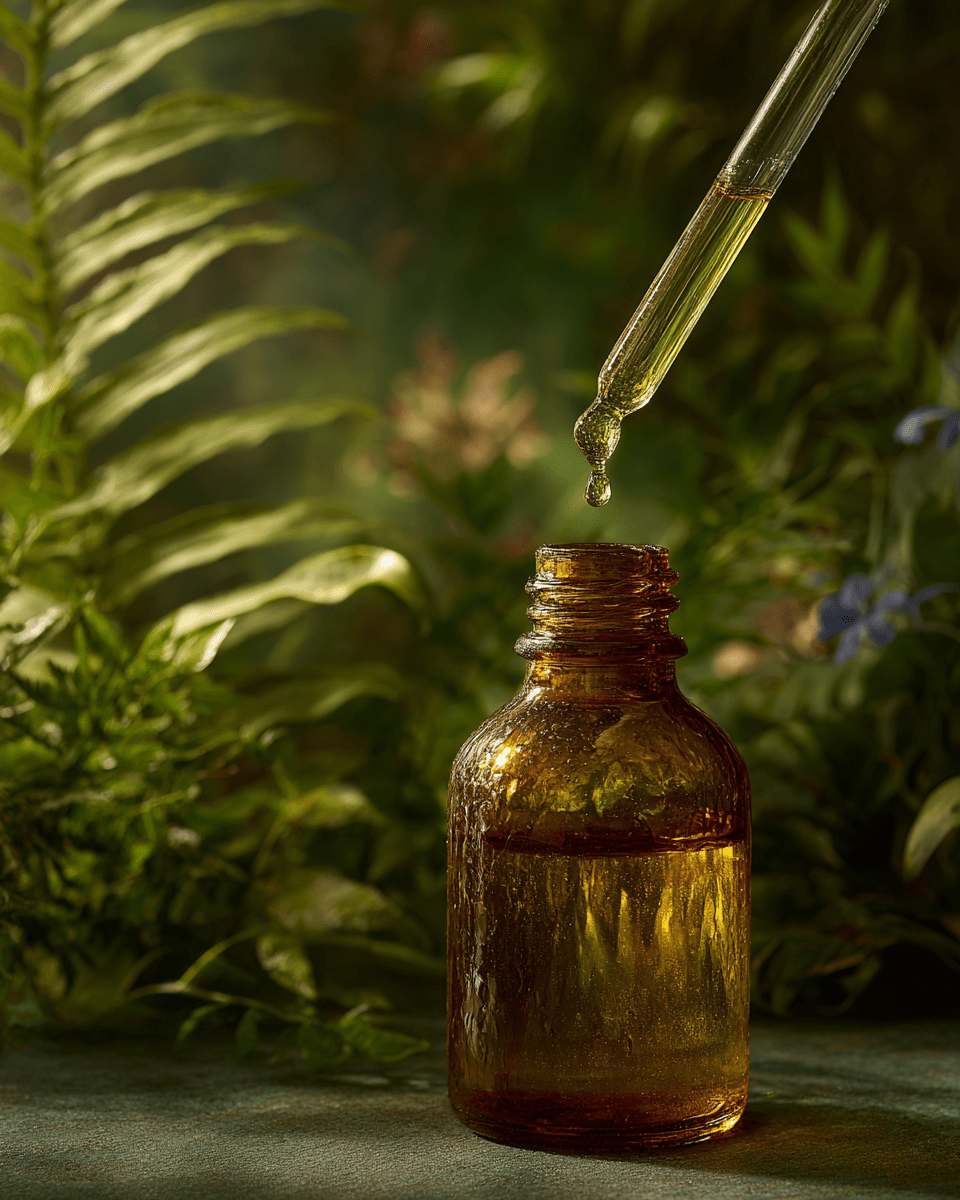
Aloe Vera: Radiance and Texture for Dull Combination Skin
Behind every beautiful ingredient, there's a botanical story and specific uses. This guide to aloe vera gives you the essentials: what the gel actually contains, which skin types it works for, how to use it daily—and what to combine it with in a NOPAL LIFE routine when your complexion lacks radiance and your skin texture is uneven.
Key takeaways
- Aloe vera gel contains 96 to 99% water: it's a humectant, never an occlusive. It attracts moisture but doesn't retain it on its own.
- For combination skin, the right dose is 2 pumps (about 0.7 ml) over the entire face, followed by 3 drops of oil on the dry areas only.
- Useful aloe vera can be identified on the INCI list: Aloe Barbadensis Leaf Juice as one of the first three ingredients, with residual aloin under 10 ppm.
- The detailed Nopal Workshop protocol below spans 21 days in 3 phases, with a simple record of T-zone shine.
- The duo that works for a dull, combination complexion: aloe vera first, then prickly pear—the aqueous phase before the fatty substance, never the other way around.
What aloe vera gel truly contains
Aloe vera (Aloe barbadensis Miller) is one of the most anciently documented plants for skincare uses. Its leaf has a three-layer structure: a green, leathery cuticle, a thin layer of yellow latex just beneath, and in the center, the translucent parenchyma—the famous gel used in formulations. This anatomy is not a botanical detail: it alone explains why two products labeled "aloe vera" can be completely different in terms of quality.
The heart of the leaf is a very aqueous medium, containing 96 to 99% water. The remaining dry fraction—only one to four percent—concentrates most of the interesting skincare properties: polysaccharides (primarily acemannan), simple sugars, organic acids, amino acids, minerals (calcium, magnesium, zinc), and small amounts of vitamins A, C, and E. While small in mass, their surface effect is significant because these nutrients work on the very first layers of the epidermis, where the appearance of the complexion is determined.
The latex layer, however, contains aloin, a bitter anthraquinone with irritant potential. Properly produced aloe vera is rid of it by activated charcoal filtration. We will return to this in detail in the label reading guide, as it is the first serious criterion for distinguishing between a good formula and a decorative one.
For dull and combination skin, this profile is particularly suitable. Combination skin has two seemingly contradictory needs: it requires hydration everywhere and fatty substances only in certain areas. A highly aqueous, non-comedogenic, and lipid-free active ingredient perfectly addresses the first half of the equation. Aloe vera doesn't weigh down the T-zone while providing an immediate feeling of comfort on the cheekbones and eye contour, where the skin often feels tight by the end of the day.
Aloe vera, aloe barbadensis, juice or extract: disentangling the terminology
Commercial terminology is vague, but regulatory terminology is not. Here are the four mentions you'll encounter on INCI lists, and what they actually say about the product you hold in your hand.
| INCI Mention | What it is | Usual concentration in formula | What it's worth |
|---|---|---|---|
| Aloe Barbadensis Leaf Juice | Filtered gel juice, not reconstituted | 10 to 99% | The most interesting form when at the top of the list |
| Aloe Barbadensis Leaf Juice Powder | Atomized powder, then reconstituted | 0.1 to 1% (i.e., 10 to 200× diluted) | Correct, but check the reconstitution ratio if indicated |
| Aloe Barbadensis Leaf Extract | Extract, often on a glycerin base | 0.5 to 5% | Variable: entirely depends on the supplier's process |
| Aloe Barbadensis Leaf Water | Aromatic aqueous phase, very diluted | Partial solvent substitution | Mostly marketing: the dry fraction is marginal |
Remember the simple rule: the closer the mention is to juice and the higher it is on the list, the more of the plant's beneficial fraction is present. An aqueous phase of aloe vera placed as the second ingredient does not provide more polysaccharides than a juice placed as the fifth.
Acemannan and polysaccharides: the heart of the gel
Acemannan is an acetylated mannan, meaning a long chain of sugars bearing acetyl groups. It is the dominant polysaccharide of the plant and one of its most studied components. It is traditionally associated with several properties related to appearance and sensation:
- A hydrophilic surface film. The chains organize into a network on the epidermis surface, forming a film that helps retain the moisture provided by the formula. This film is perceived as a slight second-skin sensation once the gel dries.
- A supple and plump appearance. By keeping surface cells better hydrated, the polysaccharide network helps maintain a plump look, especially where dehydration lines appear by the end of the day.
- A smoother surface appearance. A properly hydrated stratum corneum reflects light more uniformly: this is the optical mechanism behind the feeling of a revived complexion after a few days of application.
- Immediate softness. Polysaccharides are traditionally valued for their ability to soothe the burning sensation of skin that tingles after an overly detergent cleanse or after a walk in the wind.
In addition to acemannan, the plant contains other polysaccharides—glucomannans, pectins, arabinogalactans—as well as mucilages that contribute to the same retention mechanism. This molecular diversity is one of the reasons why the whole gel behaves differently from an isolated polysaccharide.
Vitamins, minerals, and nutrients: what to expect
Vitamins A, C, and E are present in naturally low concentrations. Vitamin C is traditionally associated with radiance and a unified complexion; vitamin E is known for its antioxidant qualities and also protects the formula itself from oxidation; vitamin A is often cited for supporting renewed skin appearance. Additionally, there are free amino acids—several of which contribute to the natural moisturizing factor—and trace minerals.
A word of honesty here, because this is what distinguishes a useful guide from a sales pitch: these nutrients are present in quantities far lower than those in a vitamin serum formulated for that purpose. An aloe vera is not a vitamin C serum. Its value is not the dose of micronutrients, but the aqueous vehicle and the polysaccharide network it provides, and its ability to prepare the skin to receive subsequent treatments.
A humectant, not a complete moisturizer: the distinction that changes everything
An effective routine relies on a distinction few people make: humectant, emollient, occlusive. A humectant attracts moisture molecules—from the formula, from the underlying dermis, or from the ambient air if it's humid. An emollient fills the gaps between surface cells and gives a smooth feel. An occlusive forms a physical barrier that slows down evaporation. Three functions, three families of raw materials, and aloe vera belongs only to the first.
This is good news for combination skin, which struggles with rich textures on the forehead, nose, and chin, but it's also a constraint to be aware of: applied alone, without anything after it, a humectant can leave a sensation of tightness once the moisture evaporates. The correct approach is always to follow it with a product that locks in hydration—a light cream, a few drops of prickly pear oil, or an emollient fluid.
This is also why the phrase "deeply moisturizes" deserves to be nuanced. A humectant works on the stratum corneum, which means the few tens of micrometers closest to the surface. It does not act deeply, and that's perfectly fine: it's precisely at this level that the complexion's appearance, its softness to the touch, and how it captures light are determined. Saying that an active ingredient hydrates the surface is accurate; claiming it reaches the dermis deeply is not.
A study published in Skin Research and Technology (Dal'Belo, Gaspar & Maia Campos, 2006) measured the effect of formulations containing 0.10%, 0.25%, and 0.50% aloe vera extract by corneometry: after fifteen days of application, the water content of the stratum corneum was higher than that of the vehicle alone, even at the lowest concentration tested. This data is interesting for two reasons. First, because it validates the humectant logic over short durations. Second, because it shows that a formula does not linearly benefit from being more concentrated: the dose is not the only lever; what's around it matters just as much.
Comparative data: aloe vera versus other humectants
Here's how aloe vera compares to the most common humectants, presented in concrete columns. The dosages indicated are typical ranges for facial skincare.
| Humectant | Usual facial dosage | Feel after drying | Behavior on T-zone | Sealing needed? |
|---|---|---|---|---|
| Aloe vera (juice) | 10 to 99% | Supple, non-sticky film | Neutral, non-greasy | Yes, on dry areas |
| Vegetable Glycerin | 3 to 10% | Sticky above 8% | Can accentuate shine | Recommended |
| Hyaluronic Acid (high molecular weight) | 0.1 to 0.5% | Perceptible tightening film | Neutral | Yes, imperative below 40% humidity |
| Panthenol (pro-vitamin B5) | 0.5 to 5% | Neutral, very subtle | Neutral | Desirable |
| Urea (topical use) | 2 to 5% on the face | Soft, slightly smoothing | Neutral, sometimes tingling | Yes |
| Honey | 1 to 10% (or pure mask) | Sticky, to be rinsed | Less suitable for daily use | No, mask format |
Read this way, the appeal of aloe vera becomes clearer: it's not the most powerful humectant per molecule, but it's the one whose feel is most compatible with combination skin daily. It can be used at high dosages without being sticky or shiny, which neither glycerin nor honey can achieve. For skin that rejects anything that weighs down the central part of the face, this is a decisive argument.
Aloe vera and hyaluronic acid: competitors or complementary?
The question constantly comes up, and the answer is clear: complementary. High molecular weight hyaluronic acid remains on the surface and forms a tightening film; low molecular weight hyaluronic acid diffuses a little more into the upper layers. Aloe vera, on the other hand, provides a more heterogeneous array of polysaccharides and a slightly acidic pH, around 4.5 to 5.5 depending on the formula, similar to that of the skin.
In practice, layering a hydrating hyaluronic acid serum over a still-damp aloe vera base works very well: the gel provides the watery input, and the hyaluronic acid provides the film structure. Order matters — thinnest first, then thickest. And in both cases, the same rule applies: in dry air, both need to be sealed with an emollient, otherwise they evaporate, taking with them some of the skin's moisture.
Radiance, Texture, Renewal: What You Actually See
Let's talk about what you can observe in the mirror, without overpromising. The visible benefits of regular use on dull, combination skin fall into three categories, with different timelines.
First, the appearance of radiance. Properly hydrated surface skin reflects light more uniformly than skin with a dehydrated and flaky stratum corneum. This is primarily optics: the complexion appears brighter because the surface is more even. This effect is the fastest of all – many notice it within the first few days, and it stabilizes over three to six weeks.
Next, texture. On combination skin, the texture is rarely uniform: enlarged and slightly rough on the nose and forehead, finer and sometimes rough on the cheeks. By supporting natural surface renewal and maintaining the suppleness of the stratum corneum, aloe vera helps to create a clearer and more even appearance. Pores appear less prominent, not because they shrink — they don't — but because the skin around them is tighter and the shadows are reduced.
Finally, renewed appearance. This is the slowest dimension, and the most dependent on consistency. A well-hydrated stratum corneum exfoliates more orderly. The visible result is a complexion that looks fresher, less gray, and makeup that lasts better — a very reliable indicator of surface condition, often more telling than a photo.
What aloe vera does not do
An honest guide must close as many doors as it opens. Four useful clarifications:
- Regarding the appearance of brown spots, aloe vera contains aloesin, a component known to help maintain skin tone uniformity. However, its benefit is moderate compared to dedicated active ingredients like vitamin C, niacinamide, or kojic acid. It mainly helps to maintain an even-looking complexion, rather than altering the appearance of already well-established marks.
- Regarding enlarged pores, no humectant changes the diameter of a pore. What changes is the shadow and texture around it.
- Regarding irritations, a comfort active is not a treatment. If discomfort persists, spreads, or returns, the correct approach is to consult a healthcare professional, not to layer on additional products.
- Regarding sun protection, no plant or botanical replaces a tested and labeled sunscreen product. An oil does not have an SPF rating. SPF is a distinct step, never a property of an ingredient.
Read Your Combination Skin Zone by Zone Before Dosing
Most routine failures come from an oversimplified diagnosis: we approach "combination skin" when in reality we have three distinct territories on the same face. Before setting the doses, map it out. This takes two minutes, in the morning, four hours after cleansing — never right after, when all skin feels comfortable.
| Zone | Sign observed at H+4 | Aloe vera dose | Sealant after |
|---|---|---|---|
| Forehead and nose | Clear shiny film on tissue | 1 pump, thin layer | None, or non-greasy fluid |
| Chin | Variable shine depending on cycle | 1/2 pump | Depending on the season |
| Cheekbones | Dry tissue, slight tightness | 1 pump | 2 drops of prickly pear oil |
| Eye contour | Pronounced dehydration lines | Trace, patted in | Residue left on fingers, patted in |
| Jaw and neck | Often forgotten, dull appearance | 1/2 pump | 1 drop |
The tissue test, four hours after morning cleansing, without makeup: press a thin paper tissue on each zone for a few seconds and look against the light. This mapping is your starting point, and also your comparison point at three weeks. Added together, the doses in the table give the benchmark we refer to everywhere else: 2 pumps of gel for the whole face, 3 drops of oil for dry areas only.
The Atelier Nopal Protocol: 21 Days, 3 Phases
Here's the method we recommend for integrating aloe vera into a dull, combination skin routine without disrupting the existing balance. It's intentionally gradual: only one step is added at a time, which allows you to identify what works and what doesn't. Each phase lasts seven days.
| Phase | Days | Action added | Exact dose | Check point |
|---|---|---|---|---|
| 1. Tolerance | D1 to D7 | Aloe vera in the morning only, on damp skin | 2 pumps (~0.7 ml) | No stinging beyond 60 seconds |
| 2. Sealing | D8 to D14 | Prickly pear in the evening, after aloe vera | 3 drops, dry zones only | T-zone unchanged upon waking |
| 3. Radiance | D15 to D21 | Express aloe vera mask, 2 evenings per week | Thick layer, 10 minutes | New tissue test on D21 |
The gesture in detail, morning and evening
Morning — hydration sequence (approx. 3 minutes):
- Gentle cleansing — a non-detergent gel or foam, 30 seconds, with lukewarm water. Rinsing with water that is too hot is the primary enemy of a dull complexion: it strips the surface film and leaves skin feeling tight.
- Aloe vera on still-damp skin — 2 pumps in the palm of the hand, spread in a thin layer. Do not completely dry the face beforehand: this damp window, within 60 seconds of rinsing, helps optimize the deposition of polysaccharides.
- Active serum — Nopal Life Skin Rebound Collagen Hydration Serum is applied at this stage, on the still-fresh layer, to support the humectant action.
- Light fluid or cream on dry areas only — cheekbones, eye contour, jawline.
- SPF 30 minimum — last step in the morning, without exception, including in winter and on cloudy days.
Evening — comfort sequence (approx. 4 minutes):
- Double cleansing if you have worn makeup or sunscreen: a cleansing oil first, then a gentle cleanser.
- Aloe vera — 2 pumps, same gesture as in the morning.
- Prickly pear — 3 drops of prickly pear oil warmed between the palms, applied with light presses on dry areas. On combination skin, deliberately avoid the nose and forehead.
- Two evenings a week (phase 3): before the emollient, a thick layer left for 10 minutes as an express mask, then blotted without rinsing. The polysaccharide residue serves as a humectant base for the night.
Reference frequency: daily morning and evening, twice a week for the mask. The first changes in texture and light become noticeable between 3 and 6 weeks; the renewed appearance of the complexion is appreciated over 8 to 12 weeks of consistency. If you wish to calibrate this protocol to your specific profile rather than an average, the Nopal Life Skin Intelligence™ tool analyzes 11 skin parameters and generates a customized sequence.
Choosing a Good Aloe Vera: The Reading Guide
This is probably the most valuable section of this guide. A mediocre formula applied perfectly will always yield less than a good formula applied correctly. Here are the five points to check, in order, while holding the bottle.
1. Position on the INCI list
Aloe vera should be among the first three ingredients, ideally in the first or second position as Aloe Barbadensis Leaf Juice. Placed after preservatives or at the end of the list, its concentration is less than 1% and is merely a label claim. A common special case: if Aqua is at the top followed by Aloe Barbadensis Leaf Juice in the second position, it is still a very good sign.
2. Residual aloin content
The International Aloe Science Council's certification standard sets the aloin content at a maximum of 10 ppm for topical application products. Few brands display the figure, but the presence of the IASC seal or an organic certification like COSMOS indicates a serious filtration process. Failing that, a perfectly translucent gel without bitterness is a better sign than a cloudy, vivid green gel.
3. Colorants and fragrance
Aloe vera is naturally colorless to slightly amber. A fluorescent green systematically indicates a colorant (often CI 19140 and CI 42090). This is not dangerous; it's simply a sign of a product designed for display rather than for the skin. For skin prone to visible redness or minor irritations, also look for "fragrance-free": this is the primary avoidable discomfort factor in this category of skincare.
4. The preservative system
An environment with 96-99% humidity is an ideal growth medium. Aloe vera juice must be preserved, and a product that claims "preservative-free" while being presented in an open jar should alert you. Common and well-tolerated pairings combine an organic acid — sodium benzoate, potassium sorbate, levulinic acid — with a pH regulator.
5. Packaging
An airless pump bottle preserves better than a wide-mouthed jar, where each finger scoop reintroduces microorganisms. After opening, observe the period of use indicated by the open jar symbol (often 6 to 12 months) and keep the bottle away from direct light, between 15 and 25 °C. A texture that changes color, lightens, or loses its viscosity has aged: it no longer has any skincare benefit.
What to pair aloe vera with — and in what order
Aloe vera is one of the easiest to combine, but the order of application and intervals matter. This table summarizes common combinations.
| Associated active ingredient | Order | Time | Practical remark |
|---|---|---|---|
| Hyaluronic acid | Aloe vera then serum | Morning and evening | Simplest combination; sealing mandatory |
| Niacinamide | Aloe vera then serum | Morning | Good duo for visible skin tone uniformity |
| Vitamin C | Serum then aloe vera | Morning | Vitamin C is applied on dry skin; aloe vera comes after |
| AHAs (glycolic, lactic) | Exfoliant then aloe vera | Evening, 2×/week | Wait 10 minutes; aloe vera provides soothing afterwards |
| Cosmetic retinoid | Aloe vera then retinoid | Evening | Sandwich method: aloe vera, retinoid, emollient |
Gel, serum, cream or mask: which texture to choose?
Aloe vera can be found in almost all categories of skincare products, and the format is as important as the concentration. A pure gel, a serum, and a cream do not serve the same purpose: the first provides the aqueous phase, the second targets a specific objective, the third seals the sequence. Here's how the benefits are distributed according to the format.
| Format | Aloe Vera content | Expected benefits | Targeted skin types | Frequency |
|---|---|---|---|---|
| Pure gel | 90 to 99% | Aqueous supply, fresh feel | Combination to oily | Twice a day |
| Gel-cream | 20 to 60% | Hydrating and sealing compromise | Dehydrated combination | 1 to 2 times a day |
| Serum | 5 to 30%, plus targeted active ingredients | Specific objective: radiance, texture, firmness | All skin types | Once a day |
| Cream | 2 to 15% | Long-lasting sealing, supple feel | Dry to combination | 1 to 2 times a day |
| Mask | 70 to 99% | Occasional freshness boost, 10 minutes | Dull, tired | Twice a week |
| Lotion or mist | 10 to 40% | Skin preparation, touch-up | All skin types | As needed |
For dull, combination skin, the most effective cosmetic combination remains simple: a gel in the morning, a targeted serum afterwards, and a mask twice a week in the evening. There's no need to accumulate six products containing the same active ingredient — you would pay three times for the same humectant action without adding anything to the sequence.
Pure gel or compounded formula: which to choose?
A pure gel has the advantage of clarity: few components, a clear action, and a modest cost. It encourages a simple and easy-to-maintain routine, which is often what ambitious routines lack the most. Its limitation is also its simplicity: it contains neither emollients nor active ingredients targeted at dark spots or firmness.
A compounded formula — enriched gel, hydrating serum, emulsion — combines aloe vera with other targeted agents and a more sophisticated texture system. It costs more, but it promotes a shorter routine, which is important when time is short. A good guideline: if your routine consists of three steps in the morning, pure gel is sufficient; if you are aiming for several objectives at once, a compounded hydrating formula will be more rational.
The term "organic" deserves a clarification here. An organic label guarantees a method of plant cultivation and specifications for admitted inputs; it guarantees neither the concentration of aloe vera nor the hydrating performance of the formula. Both pieces of information are useful and are not interchangeable: read the label and the INCI list.
The benefits of aloe vera at a glance
- On surface hydration — this is its strong point: a light, non-comedogenic hydrating active ingredient, suitable for combination skin without weighing it down.
- On comfort — polysaccharides help soothe a sensation of heat and provide freshness, especially when applied thickly.
- On radiance — the effect is indirect but real: a better-hydrated surface reflects light more uniformly.
- On the appearance of dark spots — only a supporting role, far less effective than dedicated formulas.
- On the lipid barrier — no contribution: this is the role of an emollient rich in essential fatty acids, not a humectant.
These benefits relate to appearance and sensation, as with all cosmetic products. They do not claim any health indications: persistent discomfort should be addressed by a professional, not a skincare aisle. It is precisely this boundary that separates an honest reading of the properties of a natural active ingredient from a sales pitch, and it is the framework within which our cosmetic formulas, like all natural products sold in Europe, are developed.
The aloe vera and prickly pear duo
This is the combination we work with at NOPAL LIFE, and it deserves to be explained rather than merely stated. The two raw materials do not occupy the same category: they are complementary precisely because they have nothing in common.
Aloe vera is aqueous and humectant: it provides surface hydration and the network of polysaccharides that retains it. Prickly pear oil, on the other hand, is lipidic and emollient: rich in linoleic acid—an essential fatty acid that the skin does not synthesize—in vitamin E and plant sterols, it provides comfort and helps maintain the appearance of a supple skin barrier. It does not replace the aqueous phase; it prevents it from evaporating too quickly.
For dull and combination complexions, this division of labor solves the central problem: hydrating everywhere without weighing down the T-zone. Aloe vera is applied all over the face, while the emollient only goes where the skin needs it. Three drops are enough for the cheekbones, jawline, and eye contour of an adult face. Beyond that, there's no benefit, only excess.
A detail on the application method, often overlooked: emollients are applied with pressing motions, flat palms, and not with circular massage. On combination skin, repeated mechanical rubbing does not add anything and can temporarily accentuate redness. Press, wait thirty seconds, and absorption will happen on its own.
Mistakes to avoid with aloe vera
Despite its reputation for tolerability, aloe vera is often misused, which diminishes its benefits or, in some cases, creates discomfort wrongly attributed to the ingredient itself.
Mistake 1 — Settling for a highly diluted formula. Products that list aloe vera after preservatives, or that add colorants and fragrance in significant quantities, lose most of their appeal. Refer to the reading guide above before purchasing: thirty seconds spent on the label is better than three months of applying a hollow product.
Mistake 2 — Applying to perfectly dry skin, then nothing afterwards. This is the most common and counterproductive mistake. A humectant applied alone to dry skin in dry air can leave a feeling of tightness once the moisture has evaporated. Two corrections: apply to still damp skin, and always finish with a plant-based emollient on the areas that need it.
Mistake 3 — Confusing fresh leaf with stabilized gel. The mucilage directly extracted from a leaf contains aloin, an anthraquinone concentrated in the yellow layer beneath the cuticle, which can be irritating and photosensitizing. Properly filtered formulas are free of it. Never apply untreated fresh leaf juice to your face.
Mistake 4 — Making it a complete substitute for moisturizing cream. Even pure, aloe vera does not contain essential fatty acids. For combination skin with localized dry areas, it should be combined with a lipid active ingredient — jojoba, squalane, prickly pear — for truly complete hydration.
Mistake 5 — Skipping the tolerance test. Although rare, sensitivity to aloe vera exists, particularly in people reactive to plants from the Asphodelaceae family or to Asteraceae. Perform a patch test in the crook of your elbow for 48 hours before any regular use on the face.
Mistake 6 — Piling on three new products in the same week. If you introduce aloe vera at the same time as an exfoliant and a new cleanser, you will never know which of the three is responsible for what you observe. This is the whole logic of the three-phase protocol: one step added, seven days of observation.
Mistake 7 — Expecting immediate results. Aloe vera is not an instant corrector. It performs best gradually and cumulatively, over 3 to 12 weeks. Consistency far outweighs intensity — two pumps every morning for three months are better than a thick mask every two weeks.
Aloe vera and skin tone uniformity: the lowdown on dark spots
This is one of the most frequent expectations among those who discover aloe vera, and it is also the one that requires the most nuance. Dark spots—those that appear with age on the cheekbones, temples, and back of the hands—result from a slow mechanism, and no botanical gel will make them disappear. What aloe vera can provide is a more favorable environment: better hydrated surface skin reflects light more uniformly, which visually reduces the contrast between pigmented areas and the rest of the face.
The molecule cited in this context is aloesin, present in small quantities in the gel. It is one of the plant components studied for its skin tone uniformity properties. But in a finished product, its concentration remains much lower than that of agents specifically formulated for this purpose. Practical translation: if skin tone uniformity is your priority, aloe vera is a companion, not the main solution.
| Active Ingredient | Usual Concentration | Time to observe results | Precaution |
|---|---|---|---|
| Aloe vera (aloesin) | Traces in the juice | Not measurable alone | None, very well tolerated |
| Niacinamide | 4 to 10% | 8 to 12 weeks | Temporary redness above 10% |
| Vitamin C (ascorbic acid) | 10 to 20% | 8 to 12 weeks | Unstable in light; opaque bottle |
| Kojic acid | ≤ 1% | 10 to 16 weeks | Reserved for tolerant skin |
| Daily SPF | SPF 30 to 50 | Continuous prevention | The only non-negotiable step |
This table states a simple truth: without daily sun protection, everything else works against the current. An evening tone-evening serum and a morning aloe vera gel will never compensate for unprotected exposure. This is why the protocol described above places SPF as the last step in the morning, without seasonal exception.
A final, often useful, benchmark: photograph your face in daylight, without makeup, on the first day and then every four weeks, always in the same place and at the same time. This is much more reliable than memory and avoids abandoning a routine that works because you no longer notice the gradual changes in your own reflection.
Tolerance, irritations and good practices for use
Aloe vera is one of the best-tolerated raw materials in the industry, which does not mean that precautions for use should be neglected. Here are the guidelines we systematically provide.
The preliminary test. Before the first use on the face, apply a small amount in the crook of the elbow and leave for 48 hours without rinsing. If no reaction appears, you can proceed to the face. This step takes two days and avoids many disappointments, particularly in people who react to plants of the Asteraceae family.
Signs that should make you stop. A brief tingling sensation upon application, which fades in less than a minute, is common and harmless. However, persistent irritation, a burning sensation, patches, or persistent itching warrant discontinuation of the product. If these irritations do not subside within a few days, or if they spread, consult a healthcare professional: this is no longer a matter of daily skincare.
The question of age. There is no particular minimum age for a well-formulated gel, and its use remains relevant at any adult age. However, its place in skincare evolves, as we detail below: main moisturizer when the skin is young and tolerant, then first preparatory layer.
Pregnancy, breastfeeding, specific medical conditions. Topical aloe vera gel does not pose any known difficulties, but any questions regarding a specific medical condition should be resolved with a healthcare professional, never with an online guide – including this one.
What not to layer. Avoid applying aloe vera gel immediately after a mechanical scrub, peel, or facial hair removal session: wait until the skin has calmed down, usually a few hours. The impulse to soothe immediately is understandable, but freshly stimulated skin absorbs everything applied to it more quickly, including preservatives and fragrance. It's better to soothe with coolness alone, then resume skincare the next day.
Proper storage. A bottle forgotten in a toiletry bag in the sun will lose its qualities long before its expiration date. Store it in a cool, dark place, close it after each use, and never transfer gel into an unsterile container for travel: this is the best way to turn a good product into a breeding ground.
Adjusting your routine according to season and environment
A humectant behaves differently depending on air humidity, and this is a variable that almost no one takes into account. Below approximately 40% relative humidity – typical of a heated office in winter, a car interior, or an airplane cabin – a humectant left bare on the surface tends to release its moisture into the ambient air rather than capturing it. Lipid sealing is then no longer optional; it's a prerequisite for the action to be effective.
- Winter, heated indoors. Keep the 2 pumps, but increase to 4 drops in the evening and add a light fluid in the morning on the cheekbones. A humidifier bowl placed on the bedroom radiator does more for your complexion than many treatments.
- Summer, humid air. Aloe vera is often sufficient on its own in the morning; reserve the fatty substance for the evening, and only on dry areas. This is also the season when a 10-minute mask is most pleasant, with the bottle kept in the refrigerator.
- Dry climate or altitude. Double the sealing rather than the humectant dose: more aloe vera won't change anything, more emollient will.
- After sun or wind exposure. A generous, cool layer provides an immediate softening sensation and helps soothe the perceived warmth. This obviously does not replace prior protection.
Aloe vera according to age and skin type
The question of age often comes up, and the answer is more nuanced than a simple "suitable for everyone." Aloe vera is indeed suitable for the vast majority of skin types, but its role in the routine changes with age.
Between 20 and 30 years old, on combination to oily skin, it works very well as a primary morning moisturizer, with minimal sealing. This is often the period when routines are overloaded: aloe vera, on the contrary, allows for simplification.
Between 30 and 45 years old, surface dehydration becomes more visible and the complexion duller. It retains its full interest but transitions to a preparatory role: it precedes an active serum and a more significant sealing. This is the configuration described in the 21-day protocol.
After 45 years old, lipid needs significantly increase. Aloe vera remains useful as a hydration vector and a comforting base, but it becomes a first layer among others, systematically followed by a fatty substance, including on the central area of the face.
As for reactive skin, prone to visible redness: the fragrance-free, alcohol-free, short-ingredient-list version is the one that suits. Test it for 48 hours, then introduce it alone, with nothing else natural or new around it.
Beyond the face: hair, body, and daily gestures
Aloe vera is not limited to facial care, and this is useful to know when you already have a bottle in the bathroom. On hair, it can be used as a pre-shampoo on the lengths, 15 minutes before washing, or as a light styling base on curly hair: polysaccharides provide softness for detangling without a greasy feel. For fine hair, stick to the lengths and avoid the roots.
On the body, it finds its place after hair removal, after wind exposure, or on areas that chafe, where it provides immediate freshness. Two common sense caveats: it is not a health product and does not replace any professional advice; and on damaged skin, it is better to abstain and seek advice from a healthcare professional.
Why choose Nopal Life for visible radiance and firmness
Caring for your skin's appearance involves raw materials chosen with exacting standards and dosed to serve a purpose. Nopal Life prickly pear seed oil, rich in essential omega-6 and omega-9 fatty acids, vitamin E, and plant sterols, helps preserve the suppleness and comfort of the skin's lipid film. It helps maintain a firm and plump appearance, reduces the look of dehydration fine lines, and provides softness for a visible smoothing effect over weeks.
Combine it with our radiance and firming night cream and our collagen serum for a consistent routine, day and night, and make aloe vera the first aqueous layer of this set. Skin regains a firm contour, luminosity, and lasting comfort — without overloading the central area of the face.
RECOMMENDED CARE
Collagen Hydration Skin Bounce Serum
Step 3 of the morning protocol
DISCOVER THIS CARE →PERSONALIZED ROUTINE
Nopal Life Skin Intelligence™
11 parameters analyzed · 2 minutes
START MY FREE DIAGNOSIS →FAQ — your frequently asked questions about aloe vera
Is aloe vera suitable for all skin types?
In a properly formulated product, aloe vera is suitable for the vast majority of skin types: normal, combination, oily, sensitive, mature, and blemish-prone. It is non-comedogenic and well-tolerated. However, individuals with a known sensitivity to Asphodelaceae or Asteraceae should avoid it, and everyone benefits from performing a 48-hour patch test on the crook of the elbow before the first application on the face.
Can pure aloe vera gel be used daily?
Yes. A de-aloined and stabilized texture can be applied daily morning and evening, using 2 pumps (approximately 0.7 ml) per application on the entire face. Prolonged use is well-tolerated, and it is precisely regularity that makes the difference in luminosity and comfort. Just remember to always follow with a sealant on dry areas.
How long does it take to see results on dull skin?
The feeling of comfort is immediate, from the first application. The effect on radiance and texture can be appreciated between 3 and 6 weeks of regular use. A renewed complexion and improved visible uniformity require 8 to 12 weeks of consistency. The 3-phase protocol described above includes a check-up at D21, with the tissue test as an objective benchmark.
Should aloe vera be applied before or after serum?
Before, in almost all cases: apply from thinnest to thickest. Aloe vera is applied to still damp skin, then the serum, then the cream or fatty substance. The exception is vitamin C, which prefers dry skin: in this case, the serum goes first and aloe vera comes 2 minutes later.
Does aloe vera help with the appearance of dark spots and skin tone uniformity?
It contains aloesin, a component valued for helping maintain an even skin tone. Its effectiveness on the appearance of dark spots remains moderate compared to dedicated active ingredients like vitamin C, niacinamide, or kojic acid. It is primarily useful for maintaining a complexion that appears homogeneous, rather than for altering the appearance of existing marks. No product eliminates spots: we are talking about appearance and uniformity.
Can aloe vera be combined with prickly pear seed oil?
Yes, and this is the combination we recommend for dull and combination skin. Aloe vera is applied as the first layer — the aqueous phase before the fatty substance — then 3 drops of prickly pear seed oil seal in hydration, only on dry areas. Polysaccharides prepare the surface to receive essential fatty acids.
Can aloe vera replace moisturizer?
Not completely. It is an excellent humectant, but it contains neither essential fatty acids nor occlusive compounds. For complete hydration, it must be combined with an emollient or a plant-based fatty substance, especially in winter and below 40% relative humidity, where a bare humectant loses its hydration to the ambient air.
How to choose a good aloe vera product?
Check that Aloe Barbadensis Leaf Juice is among the first 3 ingredients on the INCI list, ideally in 1st or 2nd position. Prioritize a translucent, dye-free texture, properly preserved, in a pump bottle. A COSMOS organic certification or the IASC seal — which caps residual aloin at 10 ppm — are good indicators of the filtration process.
Is aloe vera photosensitizing?
A de-aloined formula is not considered photosensitizing. Untreated fresh leaf juice, however, contains aloin and should never be applied to the face. In all cases, a minimum SPF 30 remains the last step in the morning: no plant or plant-based fatty substance has a protection factor.
How long does an open aloe vera gel last?
Refer to the open jar symbol on the packaging, usually 6 to 12 months. Keep the bottle away from light, between 15 and 25 °C. A texture that lightens, changes odor, or loses its viscosity has aged. An airless pump format lasts longer than a jar opened with a finger.
Can aloe vera be used around the eyes?
Yes, in very small quantities, dabbed with the tip of the ring finger without stretching the skin, and without approaching the mucous membrane. This is an area where dehydration fine lines appear first, and where a trace followed by a drop of fatty substance often yields visible results faster than elsewhere on the face.
Is aloe vera gel suitable for blemish-prone skin?
Its non-comedogenic, oil-free texture is well-suited for combination to oily skin, including when it has blemishes. It provides comfort without occlusion. However, it does not act on the cause of blemishes: if it is an established or painful issue, the advice of a healthcare professional remains the appropriate approach.
Sources
- Dal'Belo S.E., Rigo Gaspar L., Berardo Gonçalves Maia Campos P.M., “Moisturizing effect of cosmetic formulations containing Aloe vera extract in différent concentrations assessed by skin bioengineering techniques”, Skin Research and Technology, vol. 12, no. 4, 2006, pp. 241-246.
- Surjushe A., Vasani R., Saple D.G., “Aloe vera: a short review”, Indian Journal of Dermatology, vol. 53, no. 4, 2008, pp. 163-166.
- European Commission, CosIng database — INCI nomenclature of Aloe barbadensis derivatives, and Regulation (EC) No 1223/2009 on cosmetic products (labeling, INCI list in descending order, period after opening).
- International Aloe Science Council, certification standard for topical products (residual aloin threshold).
Read More
Information provided for cosmetic and educational purposes; it does not constitute medical advice.


Go further than this article
Get our skincare guides by email — and start with your free skin diagnostic: 2 minutes, advice tailored to your skin. We ship to the US, UK, Canada, Australia and 27 European countries; somewhere else? Sign up and you will be the first to know when we deliver to your country.
By signing up, you agree to our privacy policy. Unsubscribe in one click.